Artwork
The Man Sweeping the Interpreter's Parlor
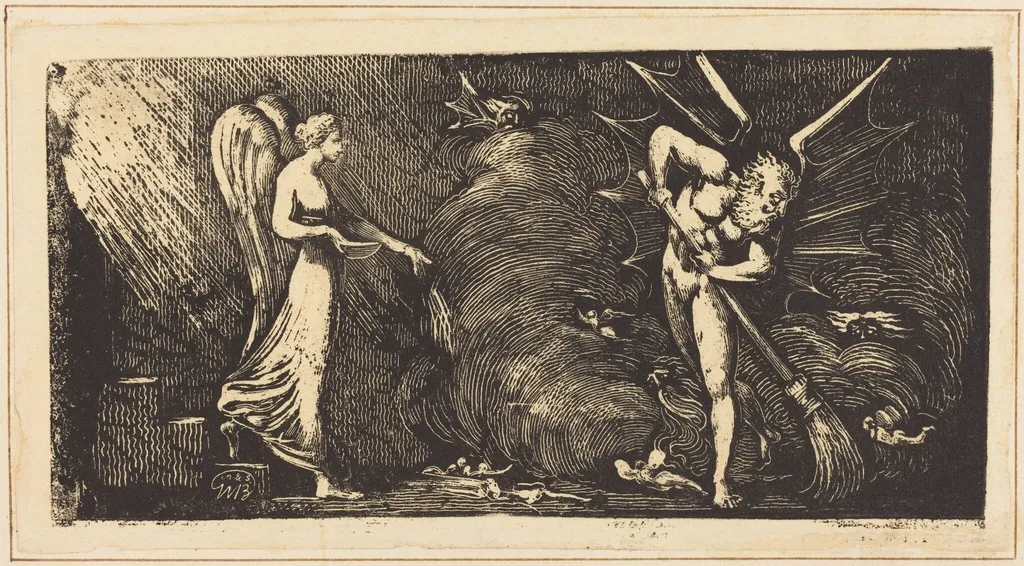
The Man Sweeping the Interpreter's Parlor is a print by the Romanticist artist William Blake. It dates from 1821 and is held in the collection of the National Gallery of Art.
About this work
Overview
The Man Sweeping the Interpreter's Parlor is a print created by William Blake around 1821 using the white-line metalcut technique.
Subject & Meaning
The print depicts a dramatic scene with two winged figures: one calm and serene, the other struggling with a broom amidst chaotic clouds and a stormy sky. The figures' wings and flowing robes suggest a symbolic or mythical significance, contrasting with the mundane task of sweeping.
Technique & Style
Blake employed sharp lines and stark contrasts to convey movement and tension, characteristic of his distinctive style. The white-line metalcut technique allowed for bold, graphic forms that emphasize the figures and their actions.
Context
Blake's work often blended everyday life with deeper symbolic meanings, reflecting his interest in the imagination and the Romantic ideals of his time.
Artist & collection
Artist
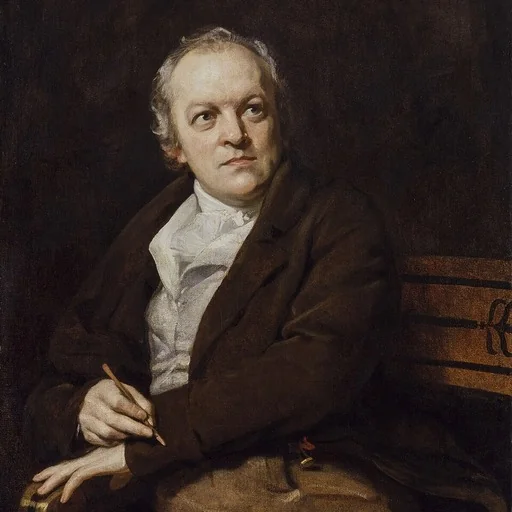
William Blake (28 November 1757 – 12 August 1827) was an English poet, painter and printmaker.

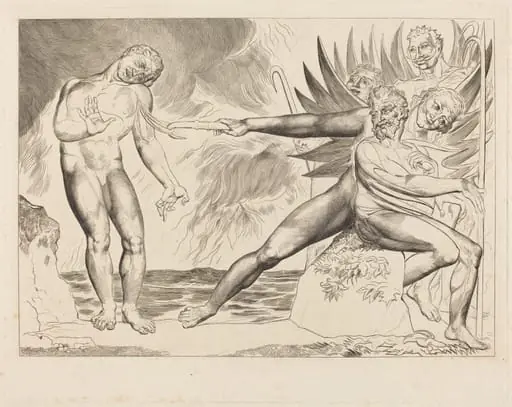 The Circle of the Corrupt Officials; the Devils Tormenting Ciampolo
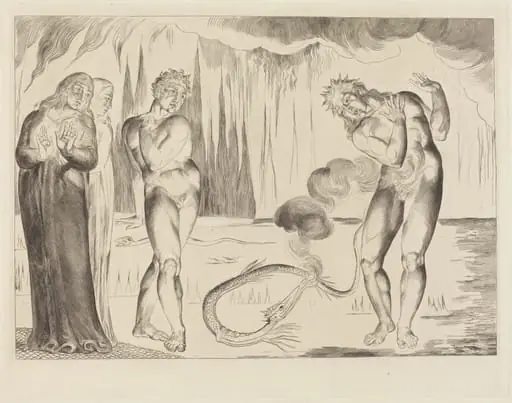 The Circle of the Thieves; Buoso Donati Attacked by the Serpent
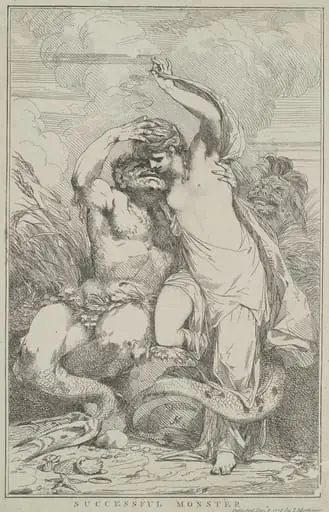 Successful Monster
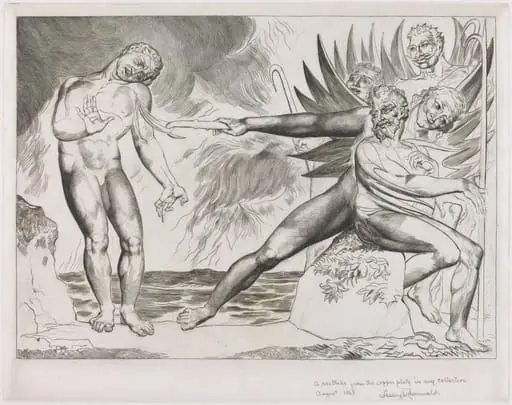 The Circle of the Corrupt Officials; the Devils Tormenting Ciampolo
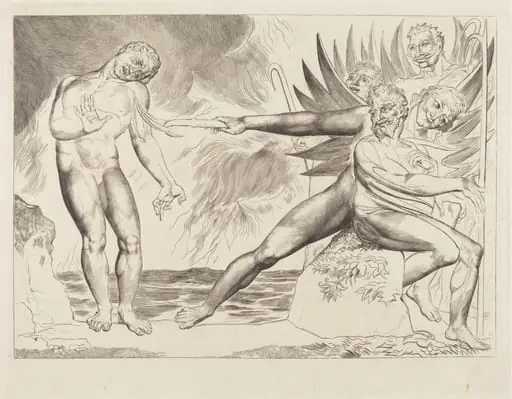 The Circle of the Corrupt Officials; the Devils Tormenting Ciampolo
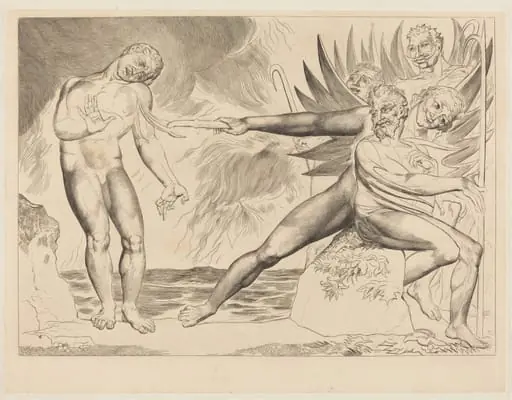 The Circle of the Corrupt Officials; the Devils Tormenting Ciampolo
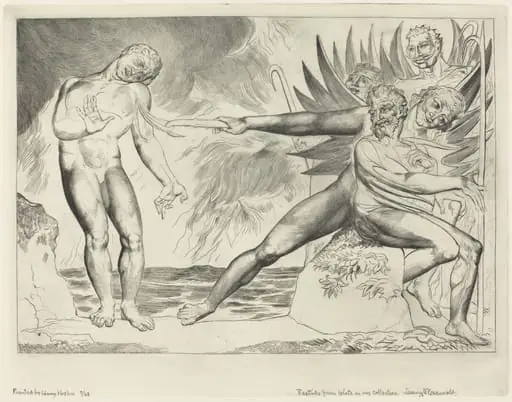 The Circle of the Corrupt Officials; The Devils Tormenting Ciampolo
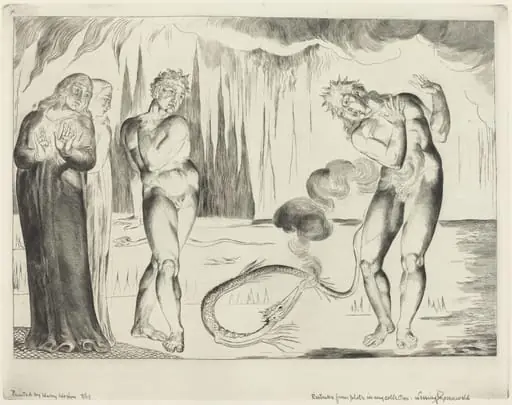 The Circle of the Thieves; Buoso Donati Attacked by the Serpent
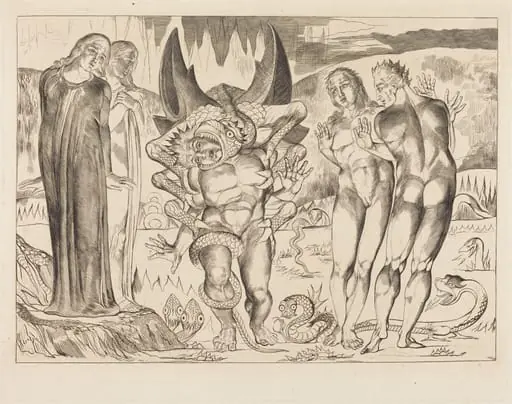 The Circle of the Thieves; Agnolo Brunelleschi Attacked by a Six-Footed Serpent
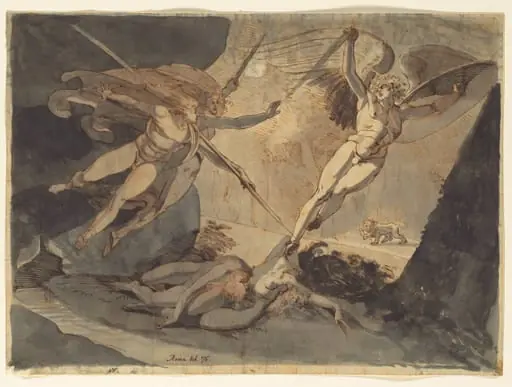 Satan Starts from the Touch of Ithuriel's Spear
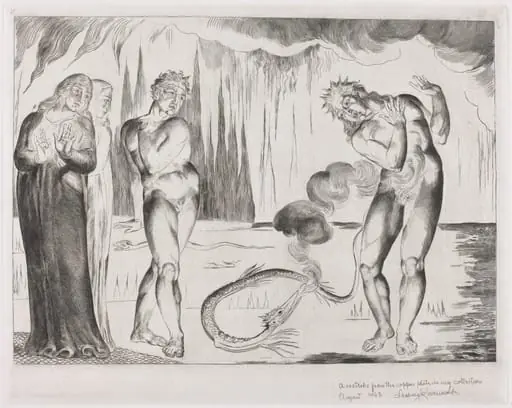 The Circle of the Thieves; Buoso Donati Attacked by the Serpent
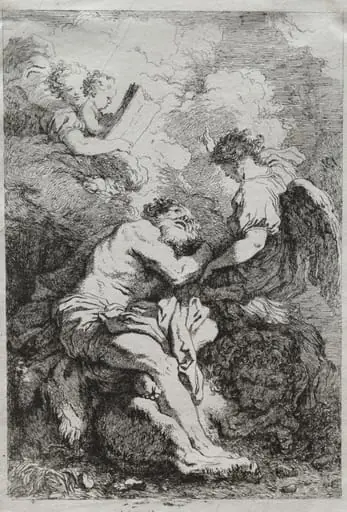 Saint Jerome