Artwork
Two Legs
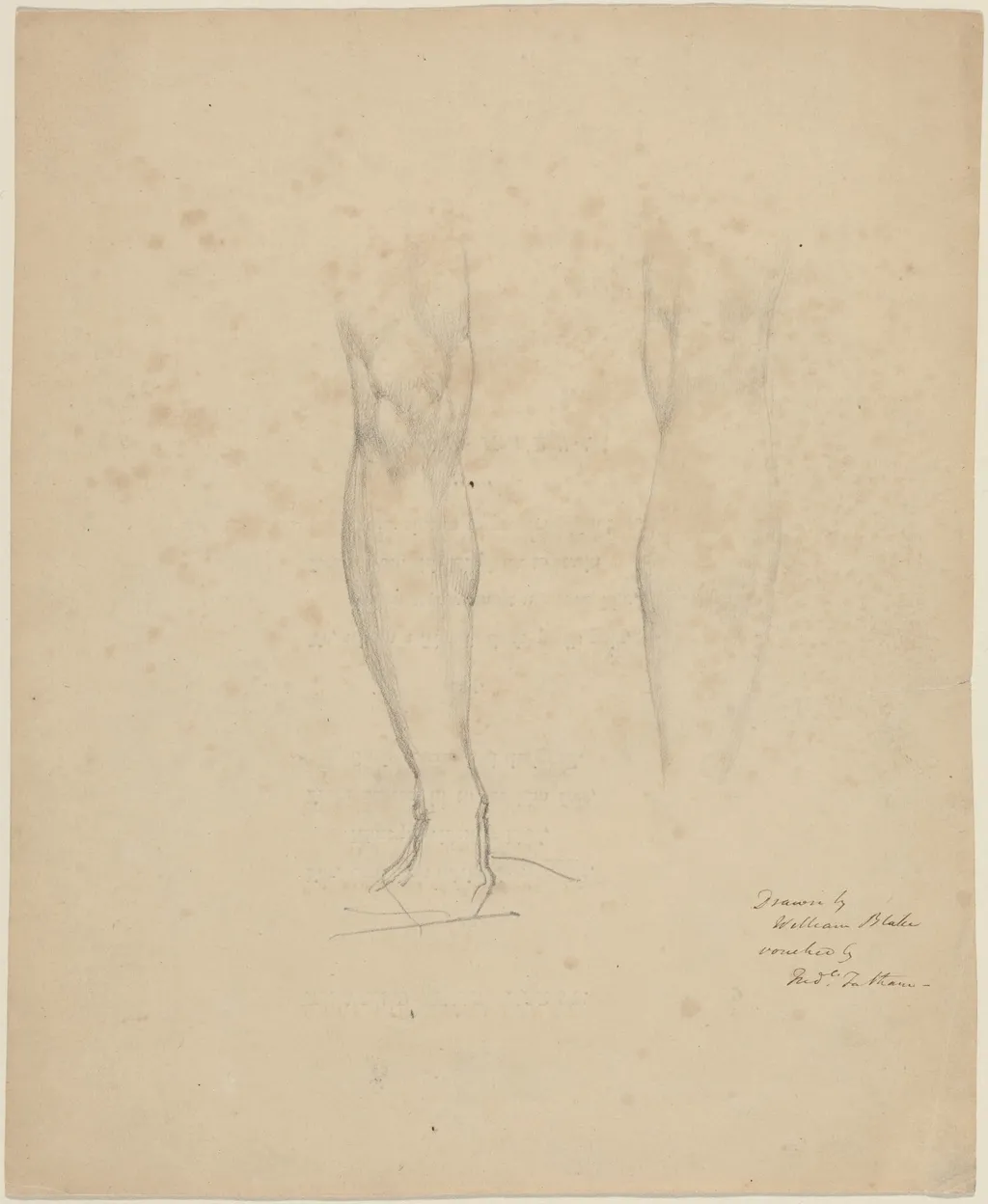
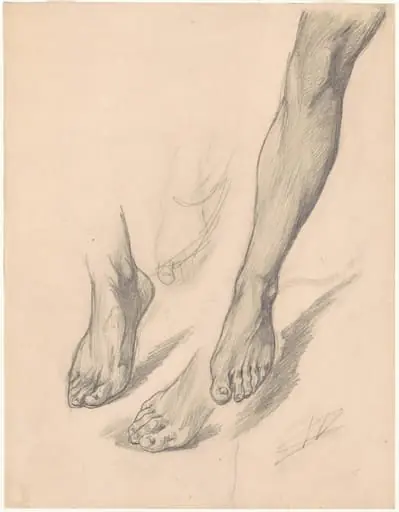
Two Legs is a graphite drawing by the Romanticist artist William Blake. It dates from 1808 and is held in the collection of the National Gallery of Art.
About this work
Overview
Though modest in scale and medium, the work reveals Blake’s ongoing exploration of anatomy, distinct from his more elaborate mythological compositions.
Created around 1808, *Two Legs* is a graphite drawing by William Blake, produced during his later years in London. It belongs to a series of intimate studies that reflect his persistent engagement with the human form. Though modest in scale and medium, the work reveals Blake’s ongoing exploration of anatomy, distinct from his more elaborate mythological compositions. Its unadorned presentation underscores a private, observational mode of working.
Subject & Meaning
The drawing depicts two human legs in a standing posture, one slightly advanced, rendered without context or narrative. There is no indication of identity, clothing, or environment—only the structural presence of the limbs. This abstraction suggests a focus on form over story, possibly serving as a preparatory study or a meditation on the body’s physicality. Blake’s choice to isolate this fragment may reflect his interest in the symbolic weight of bodily parts.
Technique & Style
Executed in graphite on a pale paper, the drawing employs subtle tonal gradations to suggest volume and musculature. Lines are economical, avoiding fine detail in favor of broad, confident strokes that define mass and shadow. The medium’s flexibility allowed Blake to modulate pressure for depth, creating a sense of solidity without ornament. The style is direct and unembellished, aligning with his habit of using drawing as a tool for internal inquiry rather than public display.
History & Provenance
The drawing emerged during a period when Blake’s work received little public acclaim. It remained within his personal archive and was later dispersed among collectors after his death in 1827. Its survival reflects the interest of later generations in his lesser-known studies. The piece is now held in a public collection, where it contributes to scholarly understanding of his working methods beyond his illuminated books and paintings.
Context
In early 19th-century England, academic art emphasized idealized forms and historical subjects. Blake’s focus on isolated anatomical fragments stood apart from prevailing norms. His drawings like *Two Legs* were not intended for exhibition but for personal exploration, rooted in his belief that true vision arose from inner perception. This work aligns with Romanticism’s inward turn, even as it resists its sentimental tendencies.
Legacy
Though obscure in his lifetime, Blake’s anatomical sketches have since become vital to understanding his artistic process. *Two Legs* exemplifies how he treated the human body as a site of spiritual and formal inquiry. Modern scholars value such works not for their finish, but for their insight into his method—revealing a mind constantly observing, questioning, and reimagining the physical world through line and tone.
Artist & collection
Artist
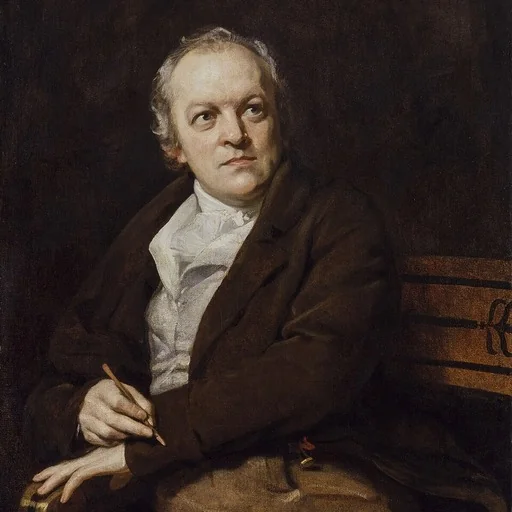
William Blake (28 November 1757 – 12 August 1827) was an English poet, painter and printmaker.

![The Belvedere Torso [verso], by William Blake](https://artifactworldgallery.com/img/william-blake--the-belvedere-torso-verso--3124534f87673a3a-w320.webp)
![Standing Figure [verso], by James McNeill Whistler](https://artifactworldgallery.com/img/james-mcneill-whistler--standing-figure-verso--3089b1e67635ba44-w320.webp)