Artwork
Henry Clay
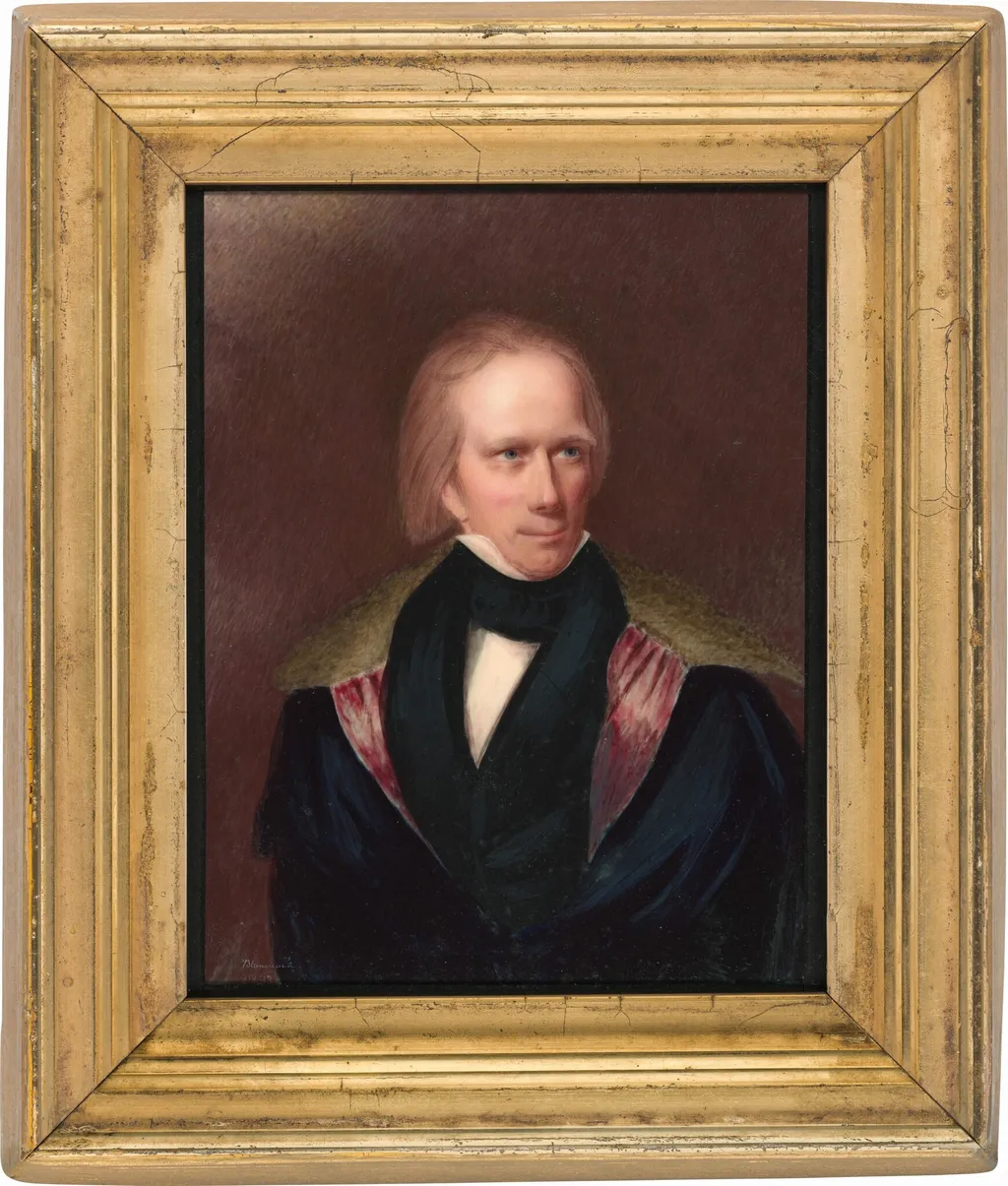
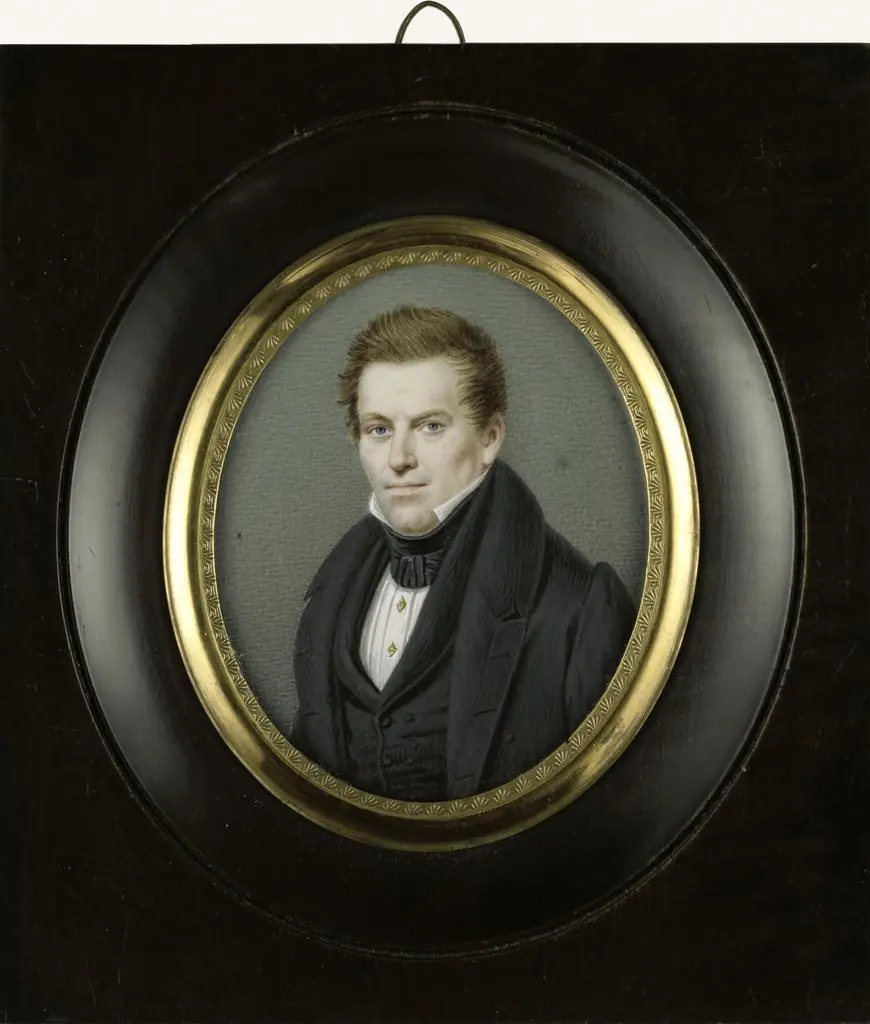
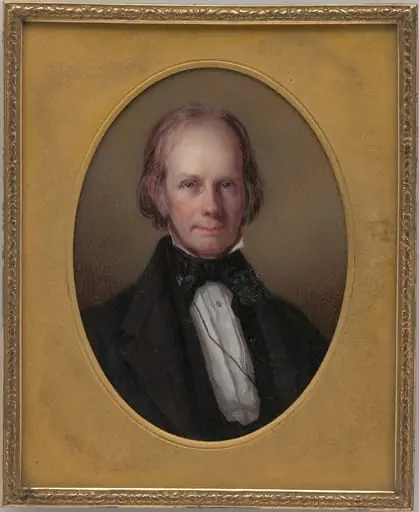
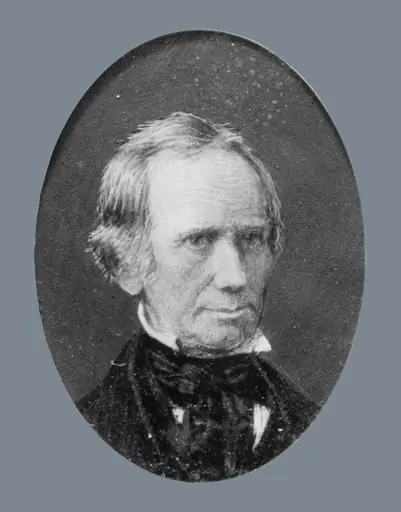
Henry Clay is a watercolor drawing by the Romanticist artist Washington Blanchard. It dates from 1842 and is held in the collection of the National Gallery of Art.
About this work
If you're interested in learning more about the Romanticism movement, which influenced this painting, you can explore the works of other artists from that era.
This portrait features a man with short, light-colored hair, dressed in a black coat with a red lining and a black scarf around his neck. He wears a white shirt underneath. The background of the painting is a dark brown color.
The man's attire and hairstyle suggest that the portrait was created in the 19th century. The use of watercolor on ivory as the medium adds a touch of elegance to the overall piece.
If you're interested in learning more about the Romanticism movement, which influenced this painting, you can explore the works of other artists from that era.
Overview
Washington Blanchard’s 1842 watercolor portrait depicts the American statesman Henry Clay. Rendered on a thin ivory support, the work measures a modest size typical of portrait miniatures of the period. The composition centers the figure against a subdued dark brown backdrop, emphasizing the sitter’s features and attire.
Subject & Meaning
The subject is presented with short, light‑colored hair, a white shirt, and a black coat trimmed in red, complemented by a black scarf at the neck. The dignified pose and formal dress reflect Clay’s public stature and the conventions of early‑nineteenth‑century portraiture, aiming to convey both his personal character and political prominence.
Technique & Style
Blanchard employed watercolor on ivory, a medium prized for its smooth surface and luminous quality. The delicate washes allow subtle modeling of flesh tones, while the darker pigments define the coat and background. The restrained palette and precise brushwork align with the realist tendencies that coexisted with Romantic influences in American portraiture of the era.
History & Provenance
Created in 1842, the portrait was likely commissioned during Clay’s active years in the U.S. Senate. It has remained in private collections before entering its current institutional setting, where it serves as a visual record of a key figure in antebellum politics.
Artist & collection