Artwork
Adoration of the Eternal Father
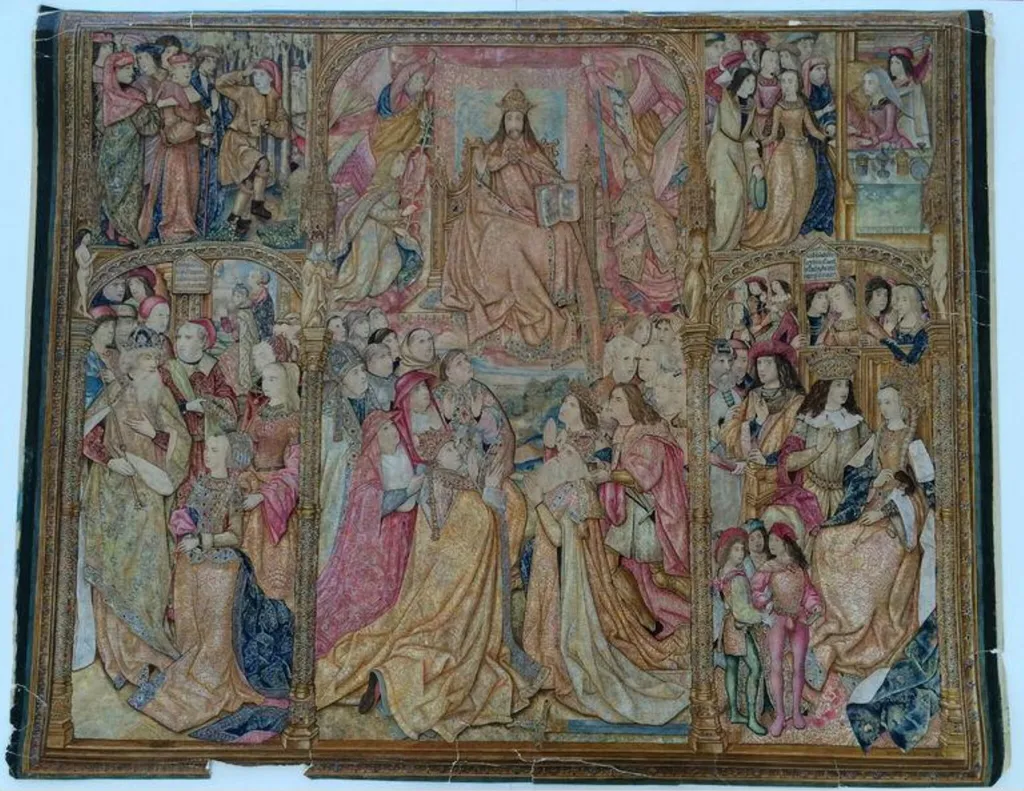
Adoration of the Eternal Father is a drawing by Blanche F Hunter. It dates from 1904 and is held in the collection of the Victoria and Albert Museum. This 1904 watercolour drawing, created by Blanche F.
About this work
Overview
This 1904 watercolour drawing, created by Blanche F. Hunter, is a copy of a circa 1500 Flemish tapestry. It depicts a scene of devotion with a central figure surrounded by a large group, incorporating intricate details and multiple subsidiary scenes.
Subject & Meaning
The drawing represents the Adoration of the Eternal Father, a religious theme. The composition features a central figure flanked by numerous attendants, with additional smaller scenes and figures woven around them, conveying a sense of reverence and narrative depth.
Technique & Style
Executed in watercolour, the work exhibits muted tones punctuated by gold, pink, and blue accents. The style is characterized by meticulous attention to detail, evident in the intricate patterns on clothing and backgrounds, reflecting both the original tapestry's era and Hunter's faithful replication technique.
History & Provenance
Discovered in storage in 1933, the drawing was likely produced for a V&A exhibition of J. Pierpont Morgan’s collection. Blanche F. Hunter, often in collaboration with her sister Ada, created similar watercolour copies and hand-coloured photographs for the museum between the 1890s and 1900s.
Context
This work is part of a collection of reproductions and photographs created by the Hunter sisters to complement textile fragments in the V&A's Textiles and Fashion collection, serving as an example of early 20th-century museum practices in replicating and preserving historical textiles.
Artist & collection
Artist
Blanche F. Hunter made religious drawings and small paintings in the late 1800s. Her 1904 drawing *Adoration of the Eternal Father* shows delicate lines and soft shading around a central figure. She also left two…

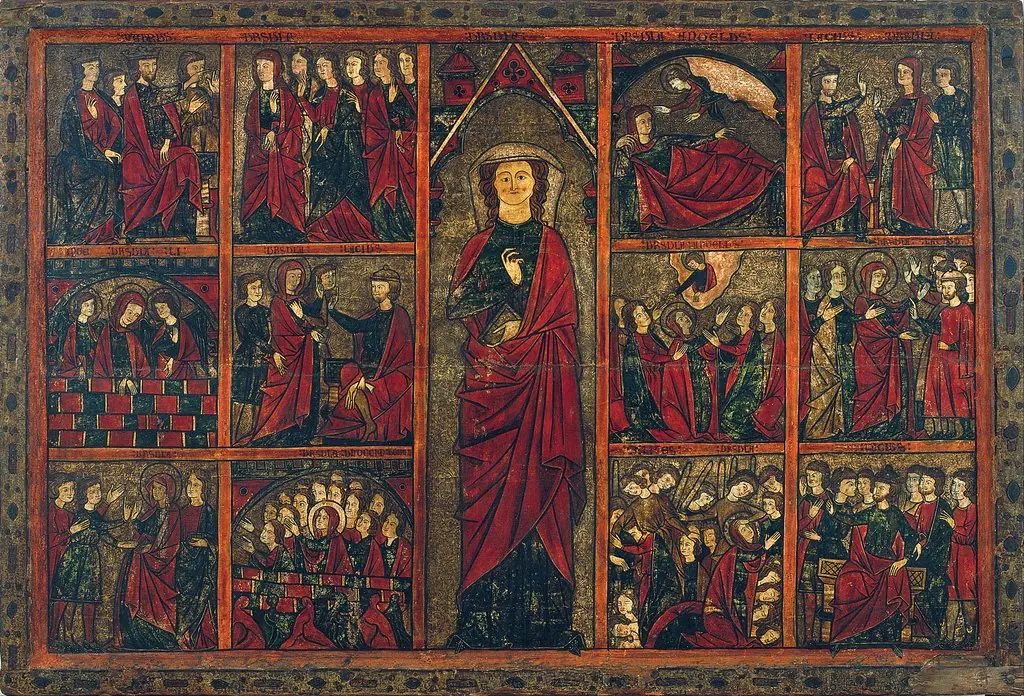 Panel of Saint Ursula
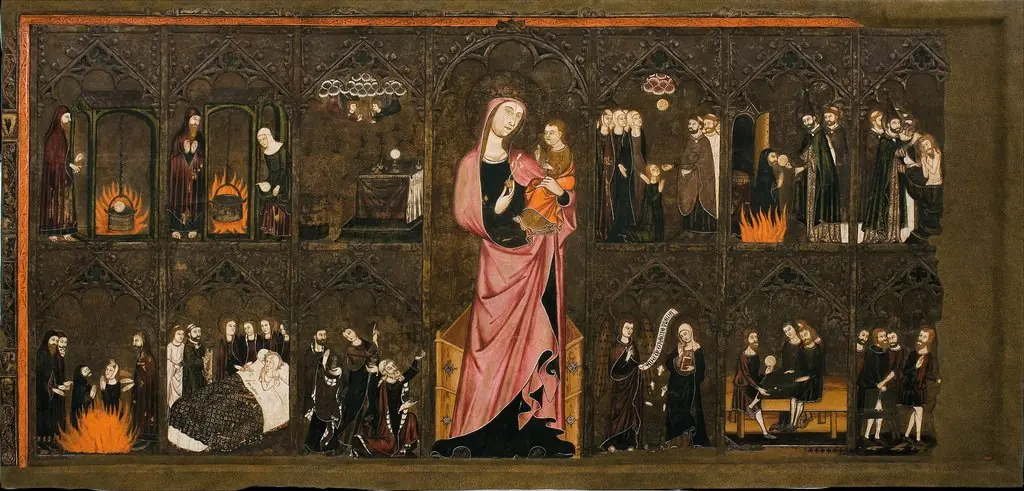 Altar frontal of the Corpus Christi
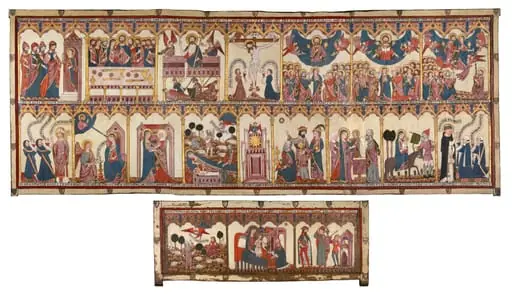 Retable and Frontal of the Life of Christ and the Virgin
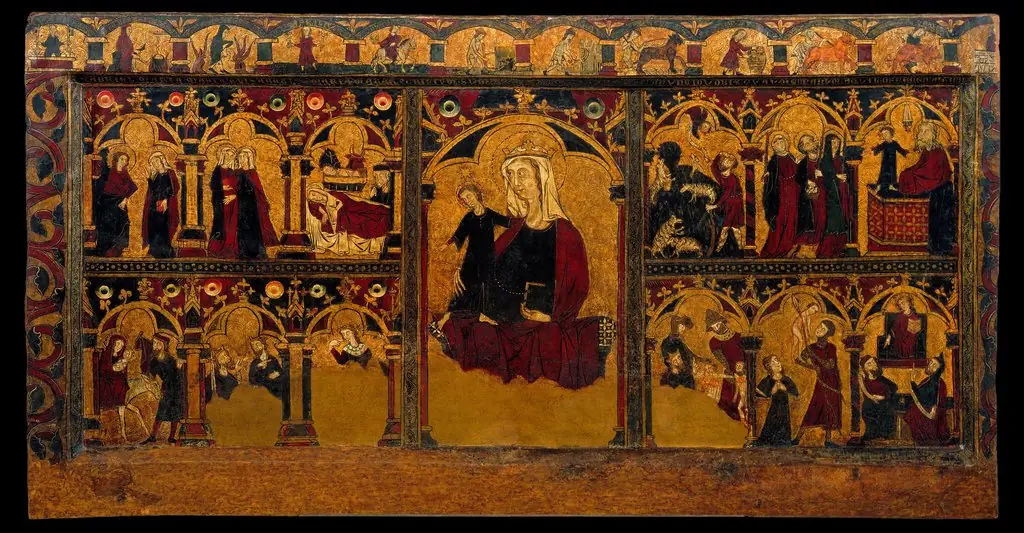 Altar frontal of Jesus' childhood
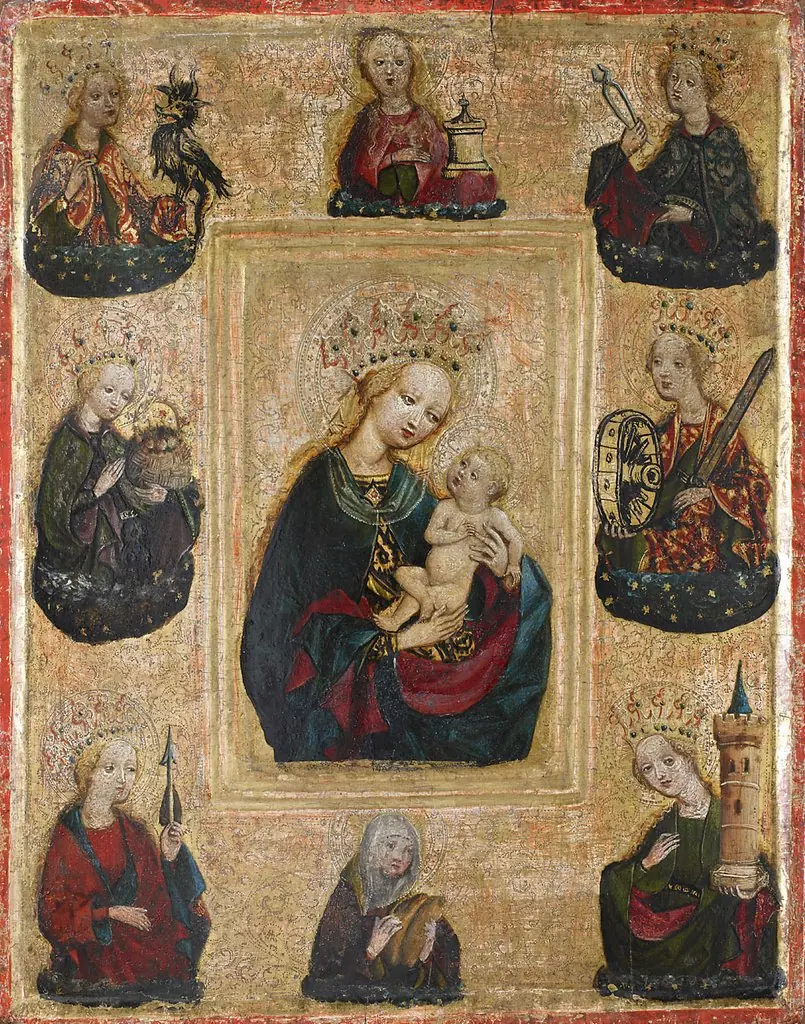 Maria mit Kind
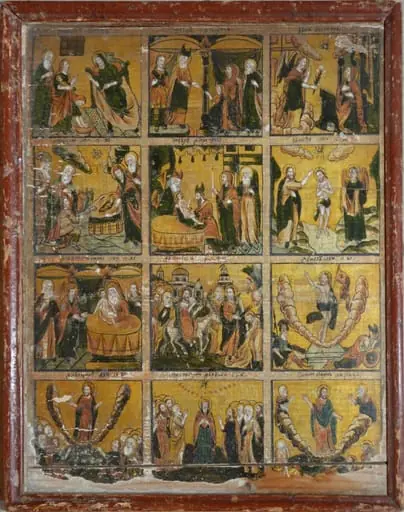 Prăznicar cu 12 scene
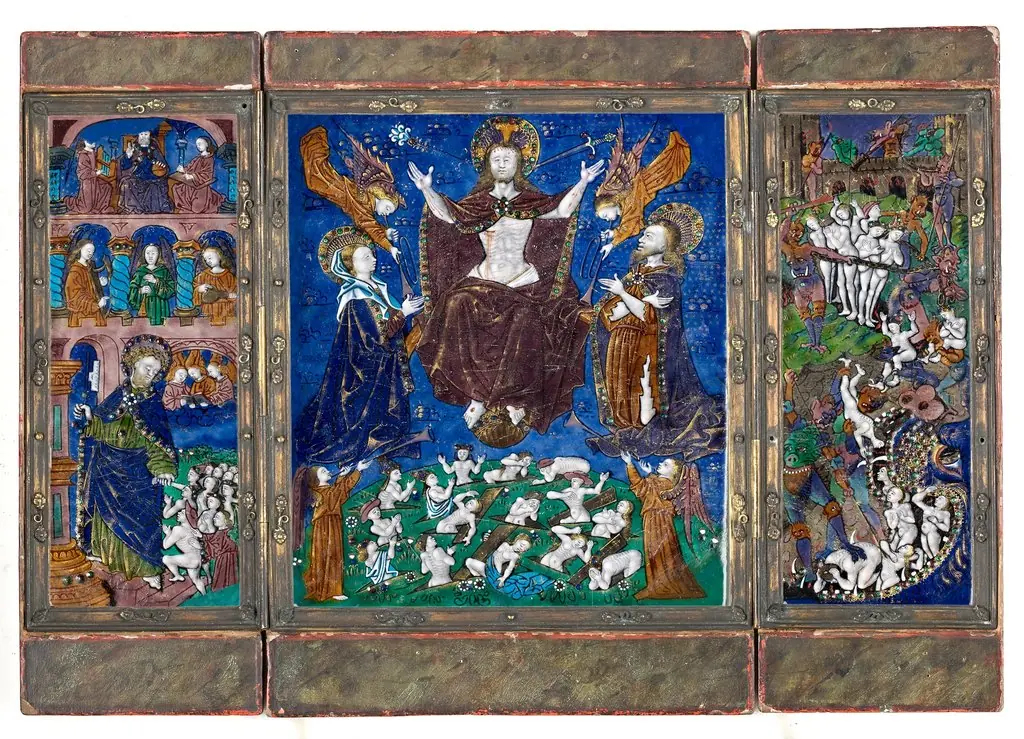 Triptych: The Last Judgment
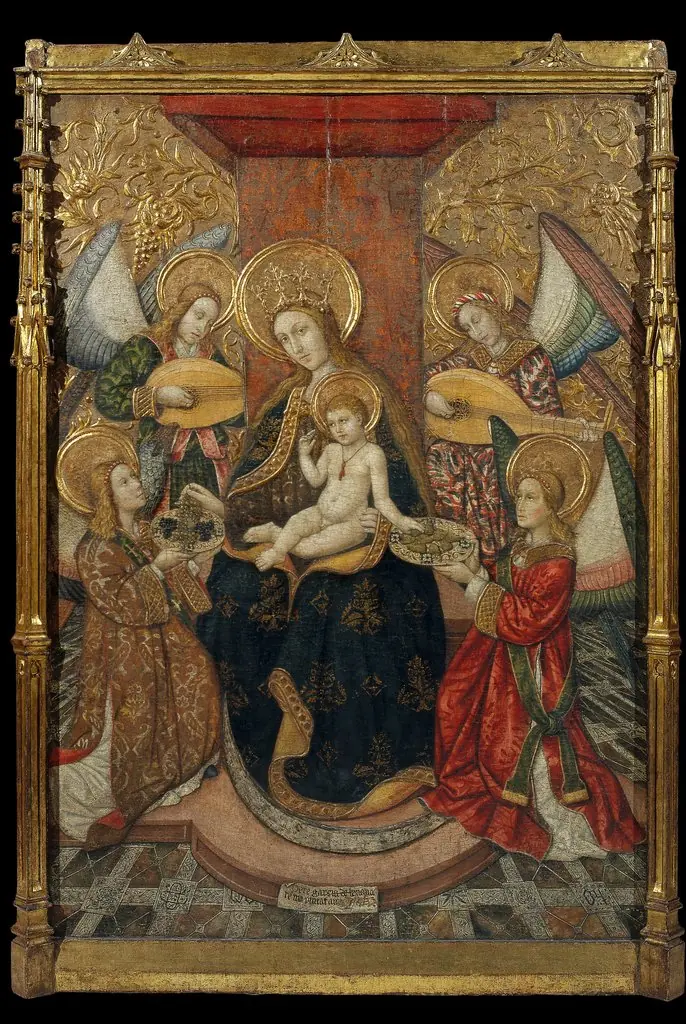 Virgin and Angels
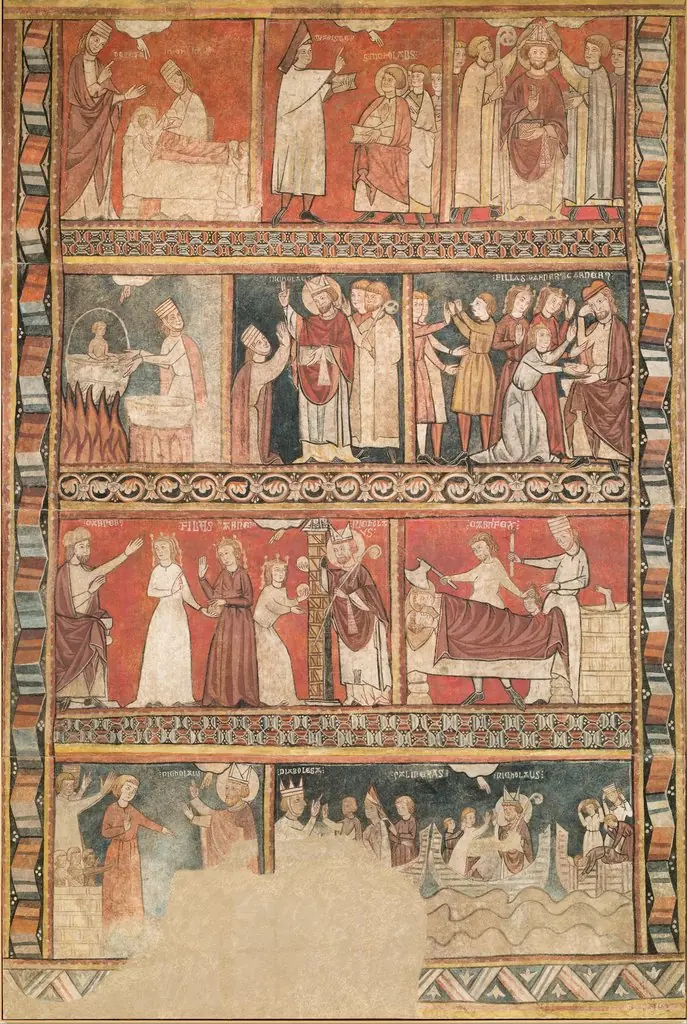 Life of Saint Nicholas
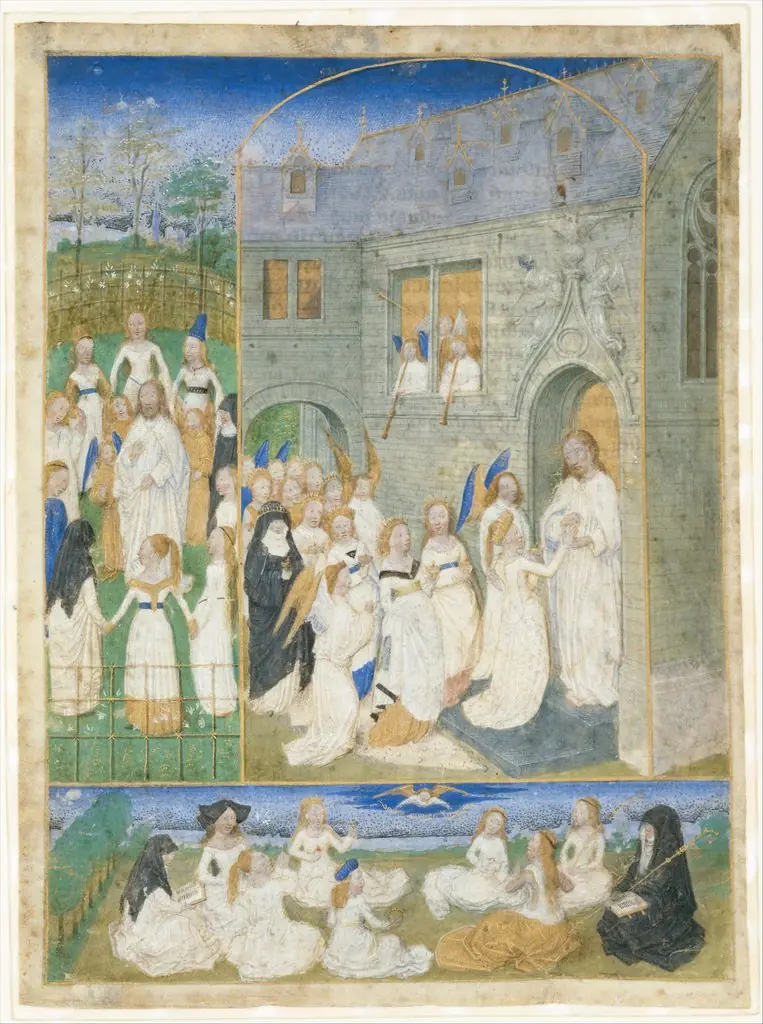 The Holy Virgins Greeted by Christ as They Enter the Gates of Paradise
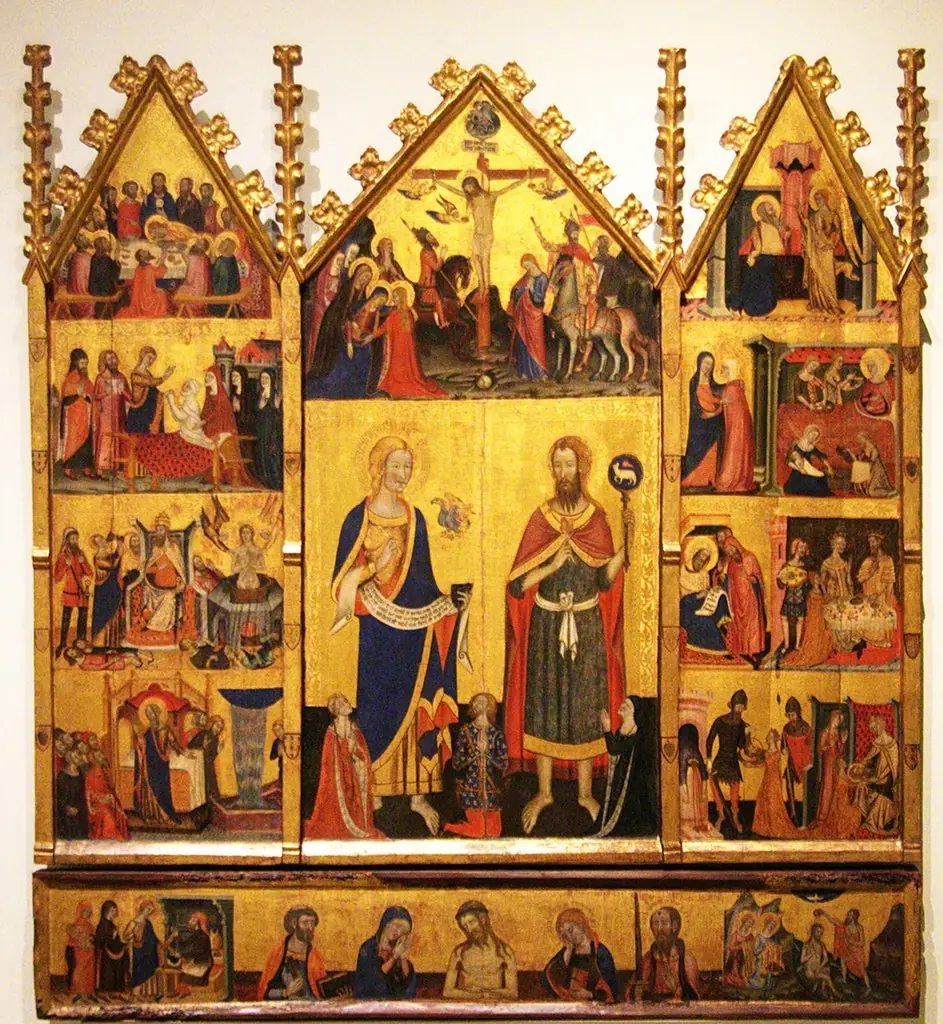 Altarpiece of the Saints John
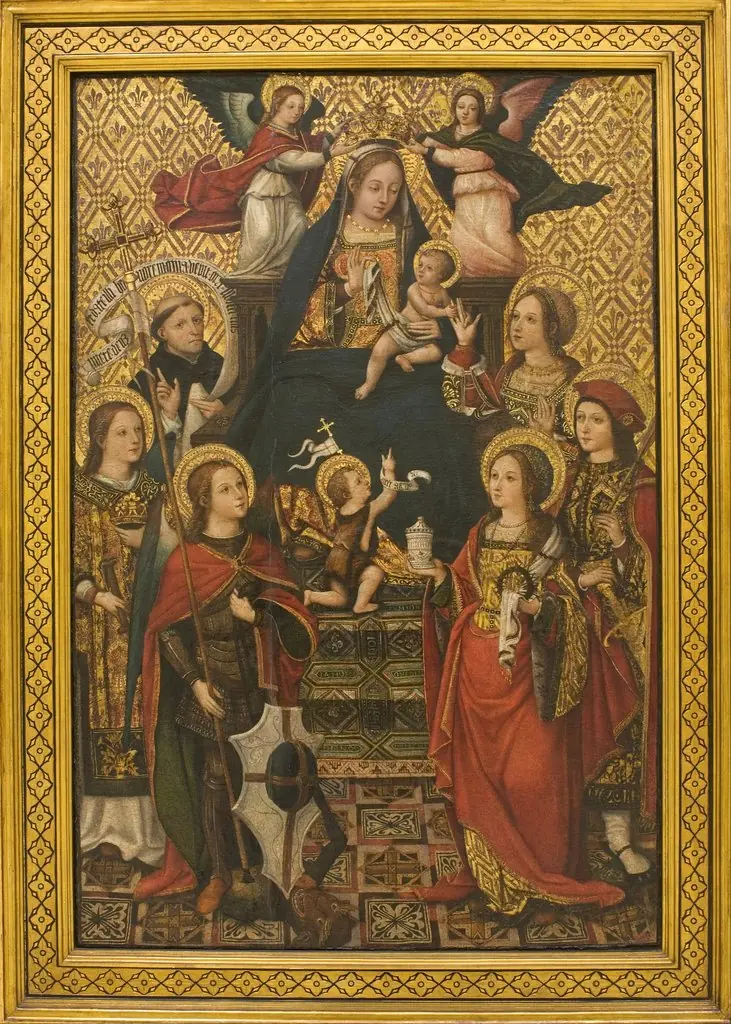 Virgin and Child, Saints and Angels