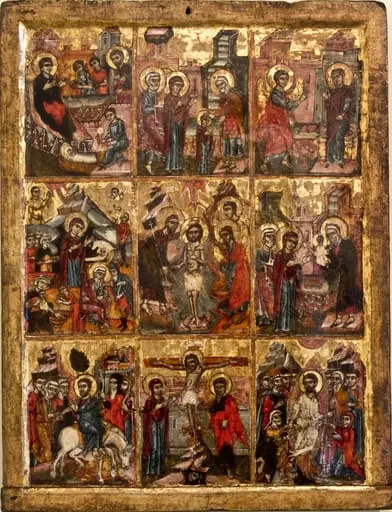
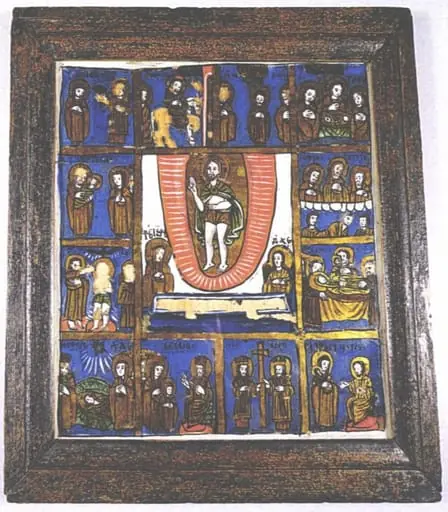
Artwork
Prăznicar cu 12 scene
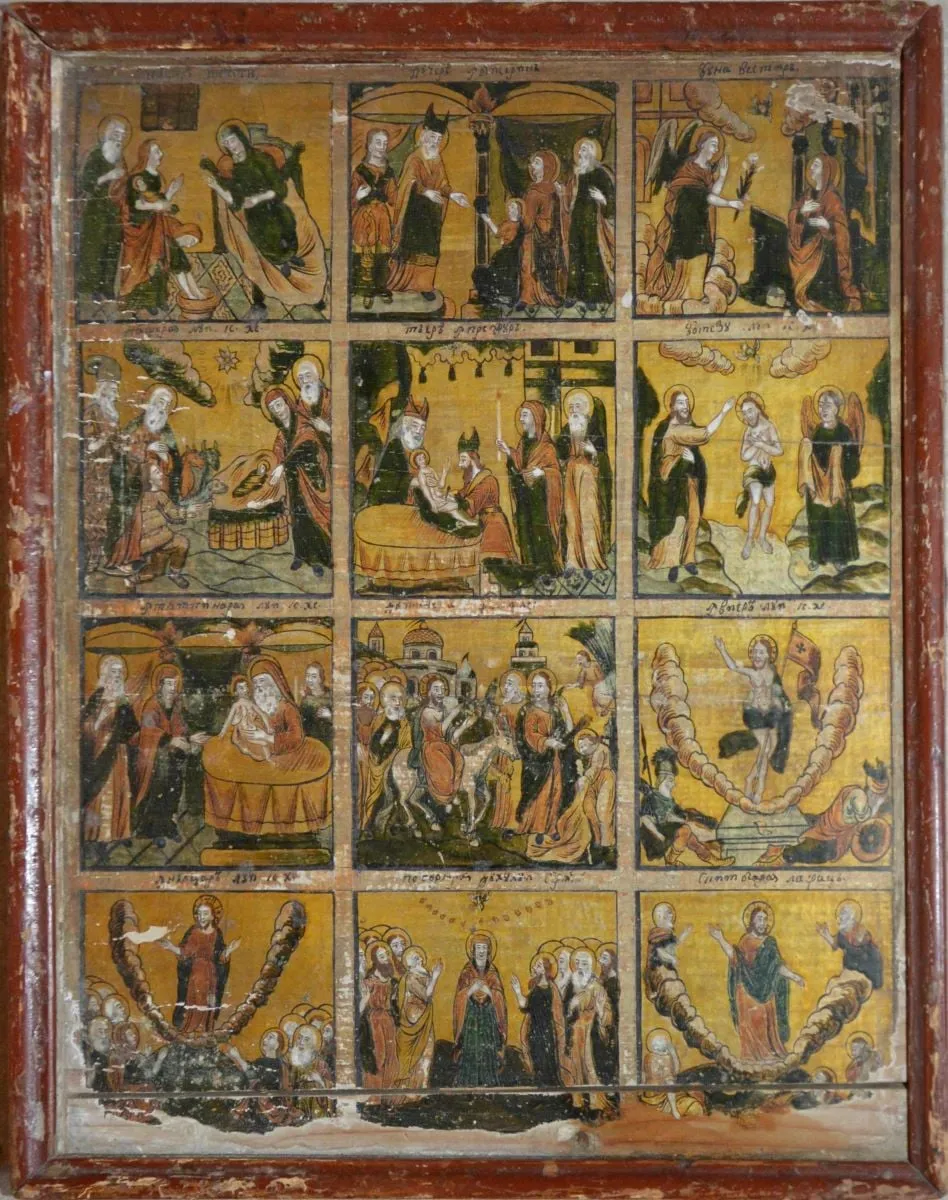
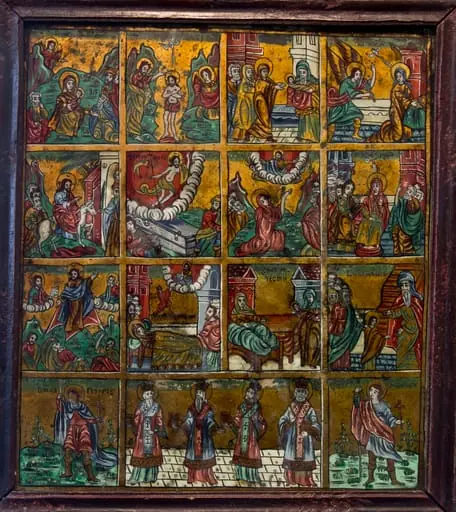
Prăznicar cu 12 scene is a drawing by the Baroque artist Unknown. It dates from 1850 and is held in the collection of the Alba Iulia Orthodox Archdiocese. This panel features twelve small, framed scenes arranged in a grid.
About this work
Overview
Figures are stylized and flattened, lacking depth or perspective, with uniform facial features marked by large eyes and minimal detail.
This panel features twelve small, framed scenes arranged in a grid. Each compartment depicts a distinct moment, rendered in vivid hues of gold, red, and green against a uniform gold background. Figures are stylized and flattened, lacking depth or perspective, with uniform facial features marked by large eyes and minimal detail. Inscriptions beneath each scene are written in a non-Latin script, suggesting liturgical or devotional content.
Subject & Meaning
The twelve scenes likely illustrate episodes from Christian narrative, possibly the life of Christ or the Virgin Mary, given the formal composition and devotional context. Figures are engaged in actions such as prayer, holding infants, or reading texts—common symbols in religious iconography. The repetition of posture and gesture across panels reinforces a didactic purpose, guiding viewers through sacred stories in a structured, meditative sequence.
Technique & Style
Painted in tempera or similar medium, the figures are rendered with flat planes and minimal modeling, emphasizing outline over volume. Gold leaf backgrounds create a luminous, otherworldly space, typical of medieval icon traditions. Facial features are standardized, with little individualization, prioritizing symbolic clarity over naturalism. The rigid composition and lack of spatial depth reflect a liturgical aesthetic focused on spiritual presence rather than earthly realism.
History & Provenance
The panel likely originated in a Byzantine or Eastern Orthodox context, possibly from the Balkans or Romania, where such multi-scene devotional panels were common in churches or private chapels. Its preservation suggests it was venerated over time, possibly removed from an altar or iconostasis during periods of religious upheaval. Exact provenance remains undocumented, but stylistic parallels exist in 14th–16th century ecclesiastical art from the region.
Context
This type of panel functioned as a visual catechism for largely illiterate congregations, condensing complex theological narratives into accessible, repetitive imagery. Similar formats appear in Byzantine and Slavic iconography, where the gold ground symbolized divine light and the grid structure mirrored the order of sacred time. The use of non-Latin script aligns with local liturgical languages, reinforcing communal religious identity beyond Latin ecclesiastical norms.
Legacy
Though not widely known outside regional collections, such panels influenced later Orthodox icon painting traditions by standardizing narrative formats and symbolic gestures. Their emphasis on repetition and spiritual clarity, rather than individual expression, persisted in Eastern Christian art well into the early modern period. Today, they serve as important artifacts for understanding how religious communities visualized faith through structured, communal imagery.
Artist & collection
 Domestic Scene
 Giacomo and Cardinal Marco, investing Andrea, Abbot of San Zeno, with his Benefice
 The Nymph of Fontainebleau
 Portrait of a Woman
 Madonna and Child with Saints in the Enclosed Garden
 Venus and Minerva
 Family Group of Four on Sofa
 Wall painting from Room H of the Villa of P. Fannius Synistor at Boscoreale