Artwork
Retable and Frontal of the Life of Christ and the Virgin
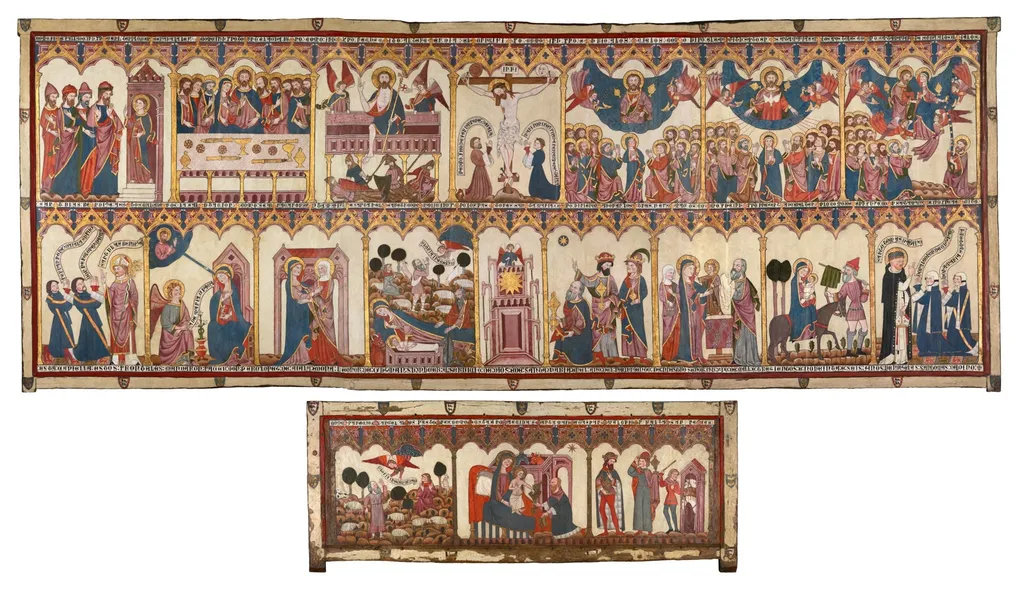
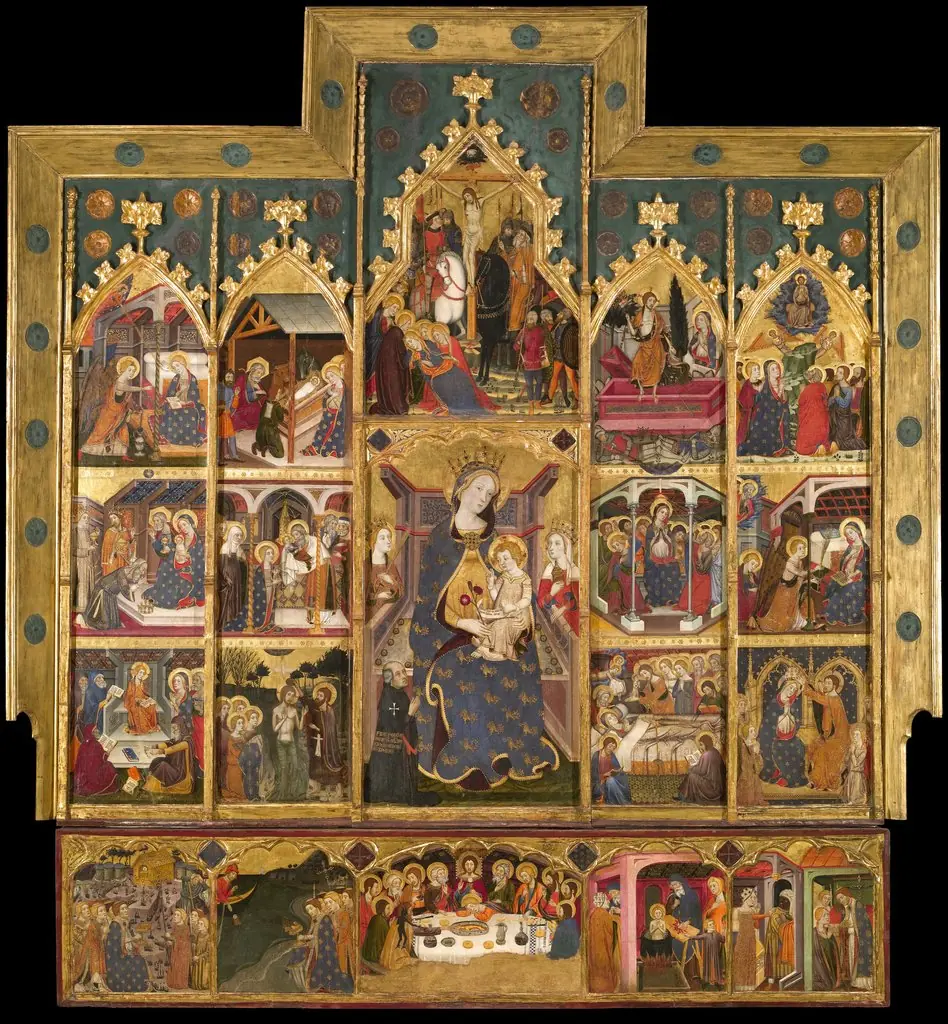
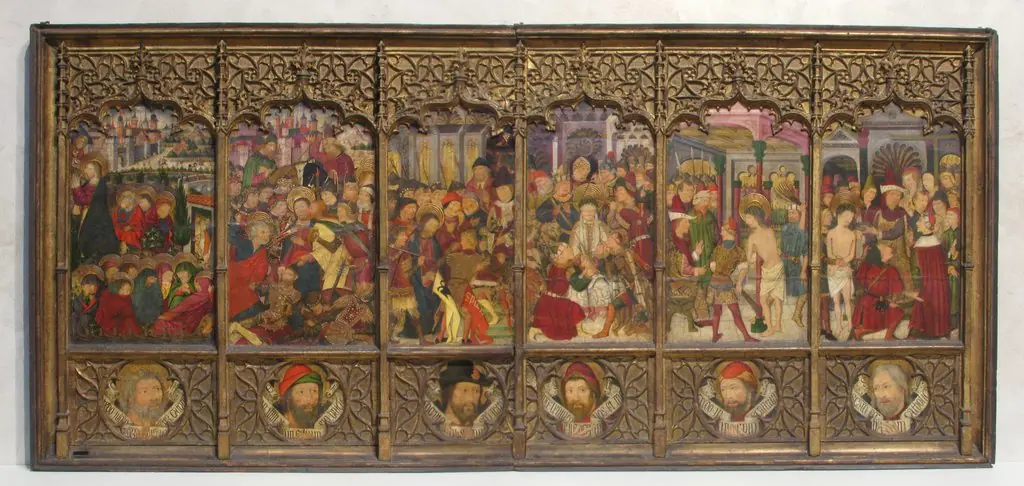
Retable and Frontal of the Life of Christ and the Virgin is a tempera painting by the Byzantine icon painting artist Unknown. It dates from 1396 and is held in the collection of the Art Institute of Chicago. This altarpiece consists of a retable and frontal, both painted in tempera and gold leaf on wooden panels.
About this work
Overview
Commissioned by Pedro López de Ayala for his family’s private chapel in northern Spain, it served both liturgical and commemorative functions.
This altarpiece consists of a retable and frontal, both painted in tempera and gold leaf on wooden panels. Commissioned by Pedro López de Ayala for his family’s private chapel in northern Spain, it served both liturgical and commemorative functions. Its scale and materials reflect the owner’s status and devotion, blending religious narrative with personal legacy in a setting meant for intimate worship rather than public display.
Subject & Meaning
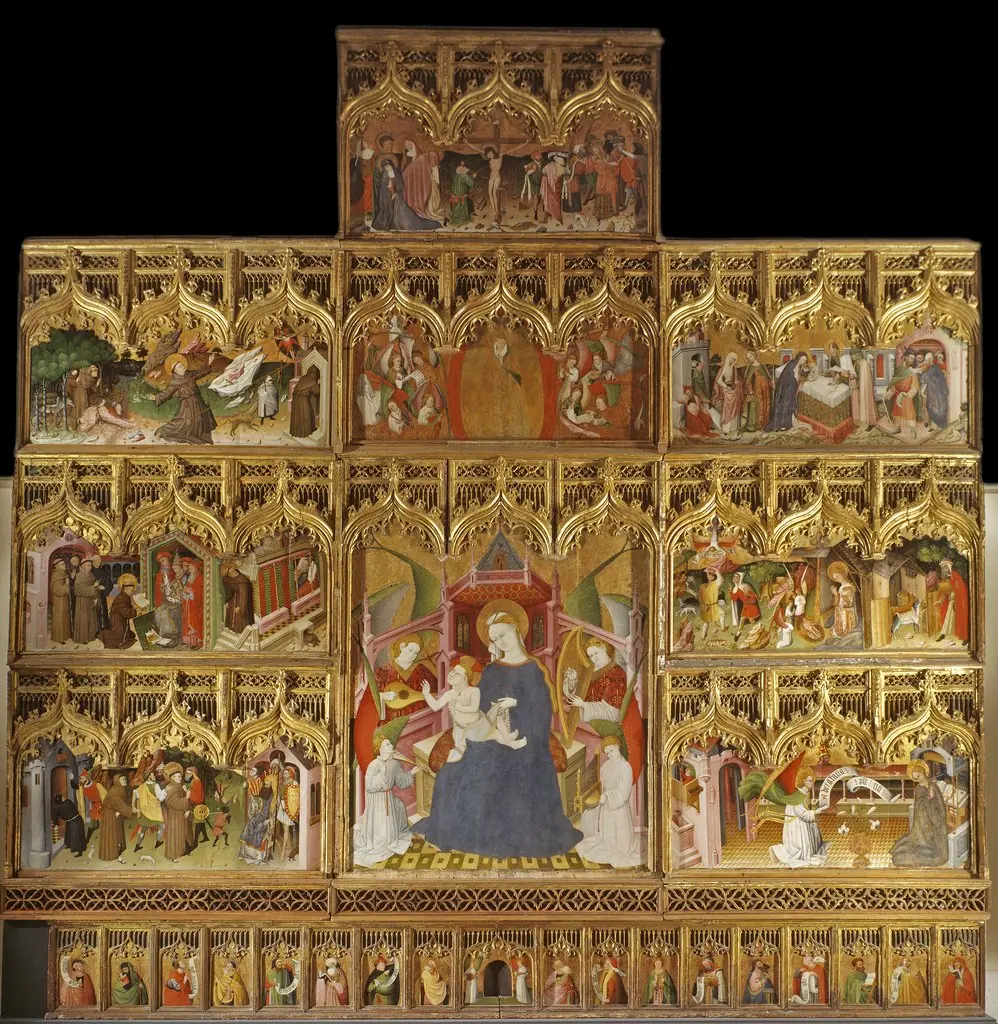
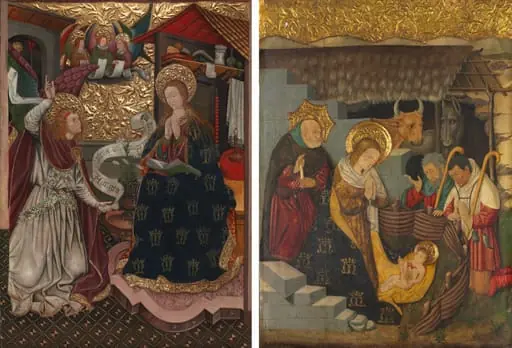
The panels depict key episodes from the lives of Christ and the Virgin Mary, arranged to guide contemplation and prayer. Central imagery includes the Crucifixion and an empty throne, likely designed to hold a statue of the Virgin and Child. These scenes were not merely decorative but functioned as spiritual aids, intended to secure divine intercession for Ayala and his lineage, reinforcing the connection between earthly piety and eternal salvation.
Technique & Style
Painted with tempera and enhanced with gold and silver leaf, the work employs flat, non-perspectival compositions reminiscent of manuscript illumination and earlier architectural reliefs. Figures are arranged within arcaded frames against plain backgrounds, rejecting illusionistic depth in favor of symbolic clarity. The use of ultramarine blue, derived from lapis lazuli, underscores the expense and sacred intent behind the commission.
History & Provenance
Commissioned by Pedro López de Ayala, a high-ranking Castilian courtier and chancellor, the altarpiece was created for his family’s chapel within their palace. Local artisans executed the work, likely within the chapel itself due to its size. It remained in situ for over five centuries, preserving its original context and function until its eventual transfer to a museum collection.
Context
In late-medieval Spain, private chapels in noble residences were spaces where faith and lineage intertwined. Ayala’s commission reflects a broader trend among the elite to use religious art as both spiritual investment and dynastic statement. The altarpiece’s style aligns with regional traditions that favored symbolic clarity and material richness over naturalism, bridging Byzantine influences and emerging Iberian devotional practices.
Legacy
Though no longer in its original setting, the altarpiece endures as a rare example of a privately commissioned devotional ensemble from late medieval Spain. Its survival offers insight into the intersection of aristocratic power, religious devotion, and artistic production. It remains a key reference for understanding how elite families used sacred art to assert identity and seek eternal remembrance.
Artist & collection

 Domestic Scene
 Giacomo and Cardinal Marco, investing Andrea, Abbot of San Zeno, with his Benefice
 The Nymph of Fontainebleau
 Portrait of a Woman
 Madonna and Child with Saints in the Enclosed Garden
 Venus and Minerva
 Family Group of Four on Sofa
 Wall painting from Room H of the Villa of P. Fannius Synistor at Boscoreale