Artwork
The Deposition
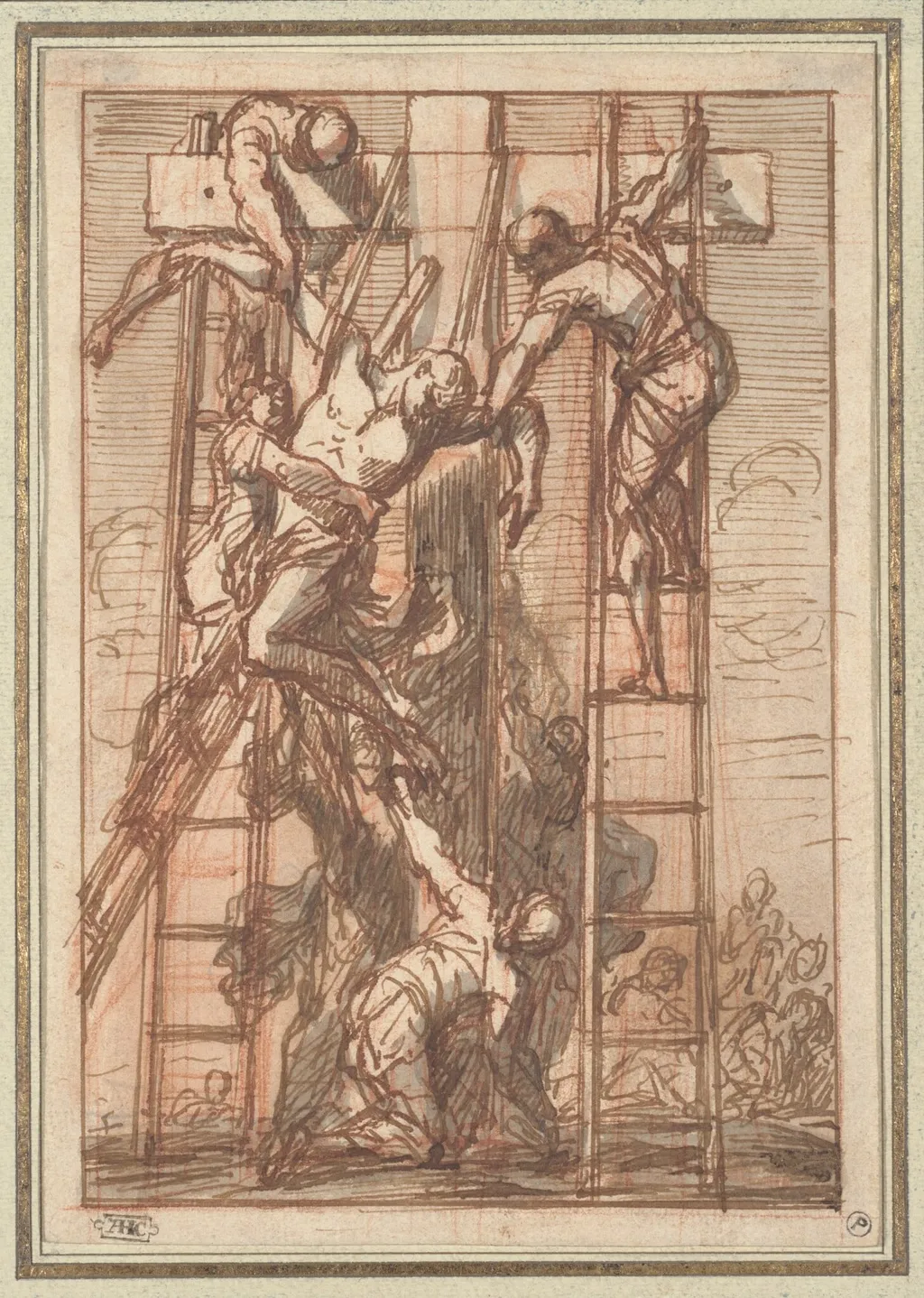
The Deposition is an ink drawing by the Baroque artist Thomas Blanchet. It dates from 1674 and is held in the collection of the National Gallery of Art.
About this work
Overview
Created circa 1674 by the French polymath Thomas Blanchet, this drawing records the biblical moment when Christ’s body is taken down from the cross. Executed on laid paper and later affixed to an older mounting, the work combines drawing and wash to convey the solemnity of the scene.
Subject & Meaning
The composition focuses on the Deposition, the act of lowering the crucified Christ, a theme recurrent in Christian art. By gathering the mourners around the lifeless figure, Blanchet emphasizes both the physical weight of the body and the emotional gravity of the event.
Technique & Style
Blanchet employs a layered approach: red chalk outlines the forms, brown ink reinforces contours, and a gray wash adds tonal depth. Cross‑hatching and subtle shading create volume, while the interplay of media reflects drawing practices of the late 17th century, aimed at rendering texture and atmosphere on paper.
History & Provenance
The drawing is mounted on an older support, indicating it was preserved or displayed after its initial creation. Its survival on laid paper, a common substrate of the period, suggests it was valued enough to be rebound, though specific ownership records prior to modern collection remain undocumented.
Artist & collection
Artist
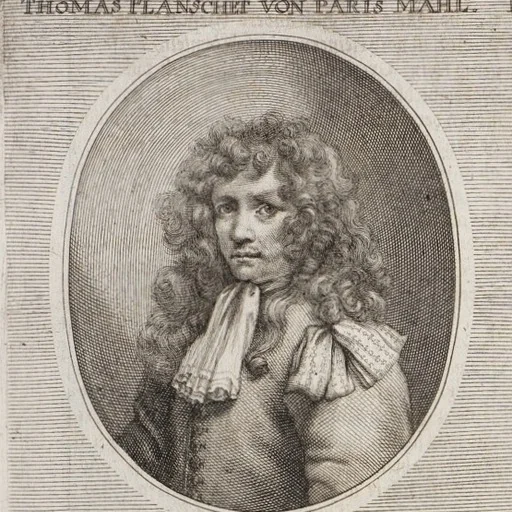
Thomas Blanchet (French pronunciation: ; 1614 – 21 June 1689) was a French painter, draughtsman, architect, sculptor and printmaker.

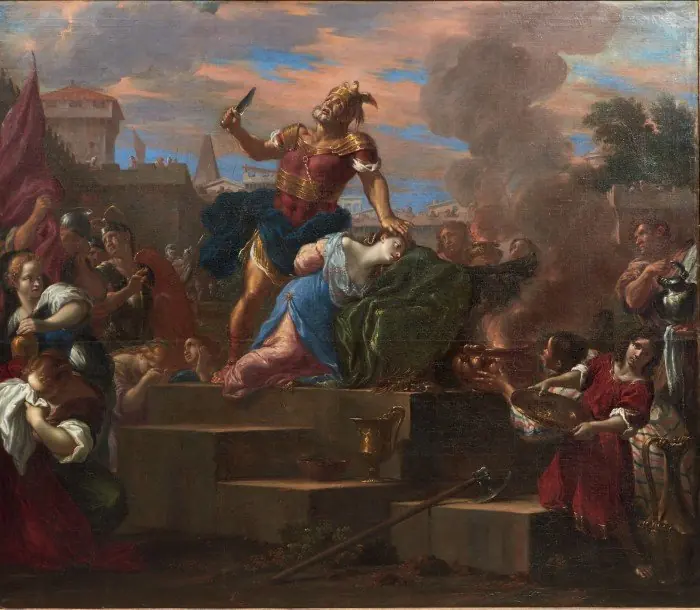
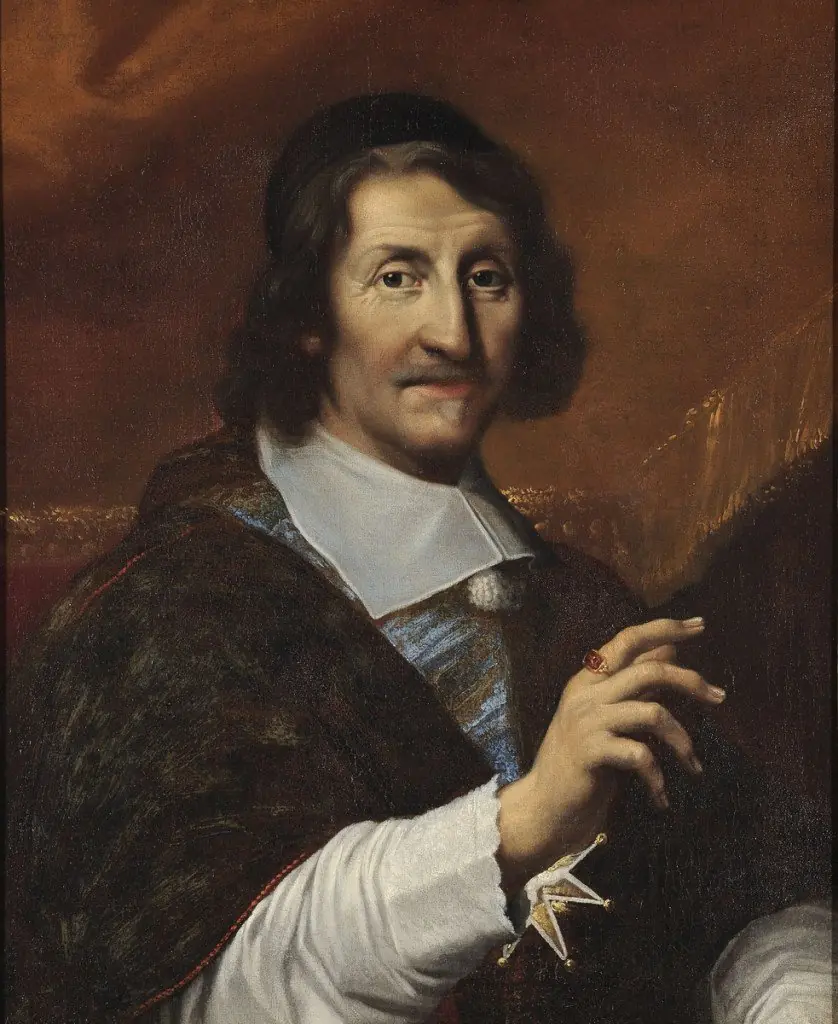
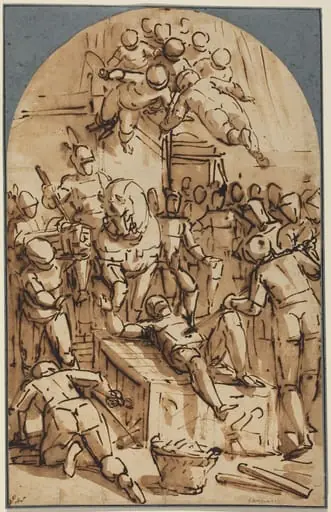 The Martyrdom of Saint Lawrence
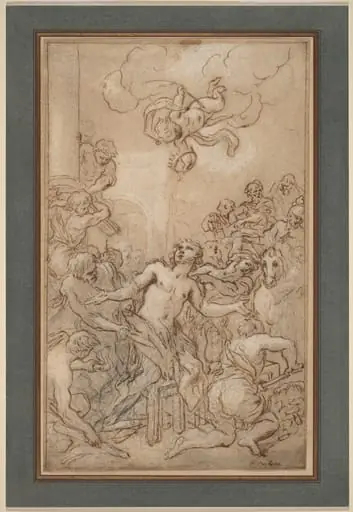 The Martyrdom of Saint Lawrence
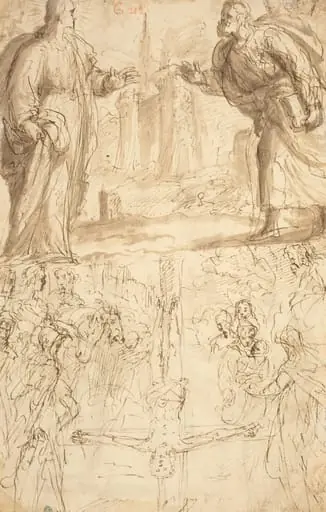 Crucifixion of Saint Peter
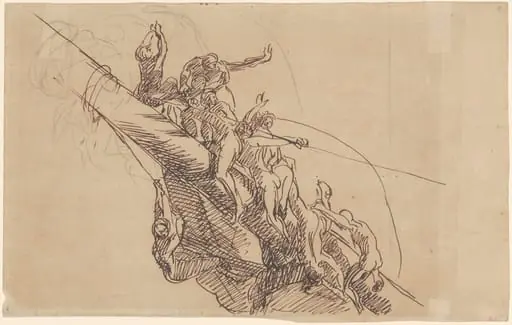 Study for "The Defeat of the Floating Batteries at Gibraltar"
![Saint Matthew and Saint Jerome [verso], by Correggio](https://artifactworldgallery.com/img/correggio--saint-matthew-and-saint-jerome-verso--233cd3c0f2701d8c-w320.webp) Saint Matthew and Saint Jerome [verso]
Saint Matthew and Saint Jerome [verso]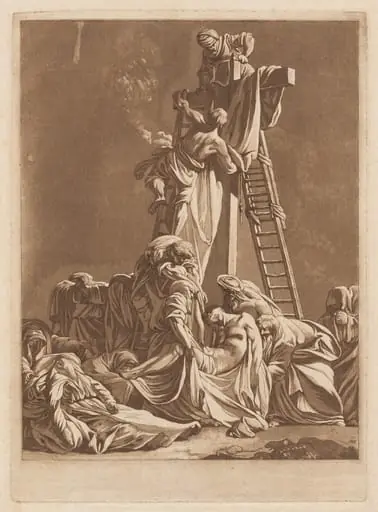 Descent from the Cross
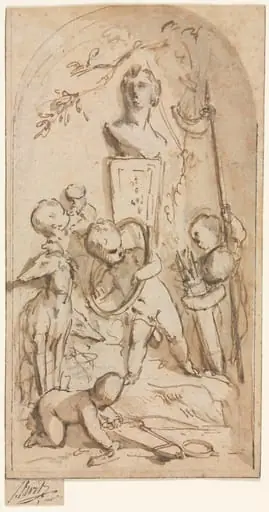 Bust of Diana with Putti and Hunting Attributes
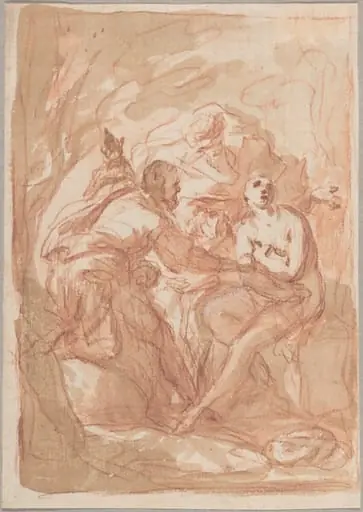 Susanna and the Elders
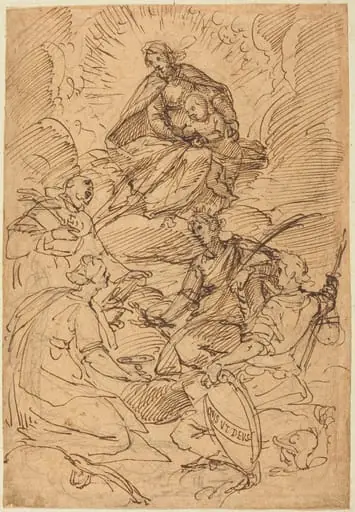 The Madonna and Child in Glory Adored by Saints
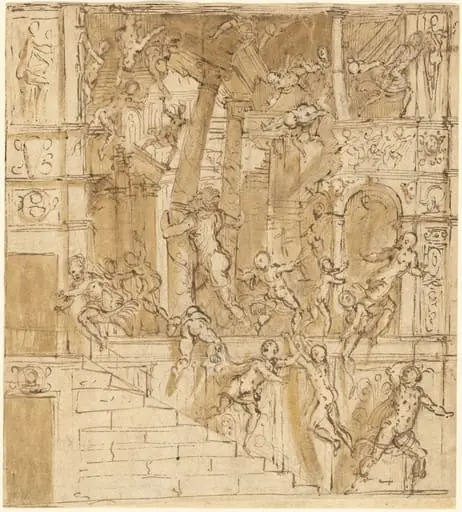 Samson Destroying the Temple