Artwork
Study for "The Defeat of the Floating Batteries at Gibraltar"
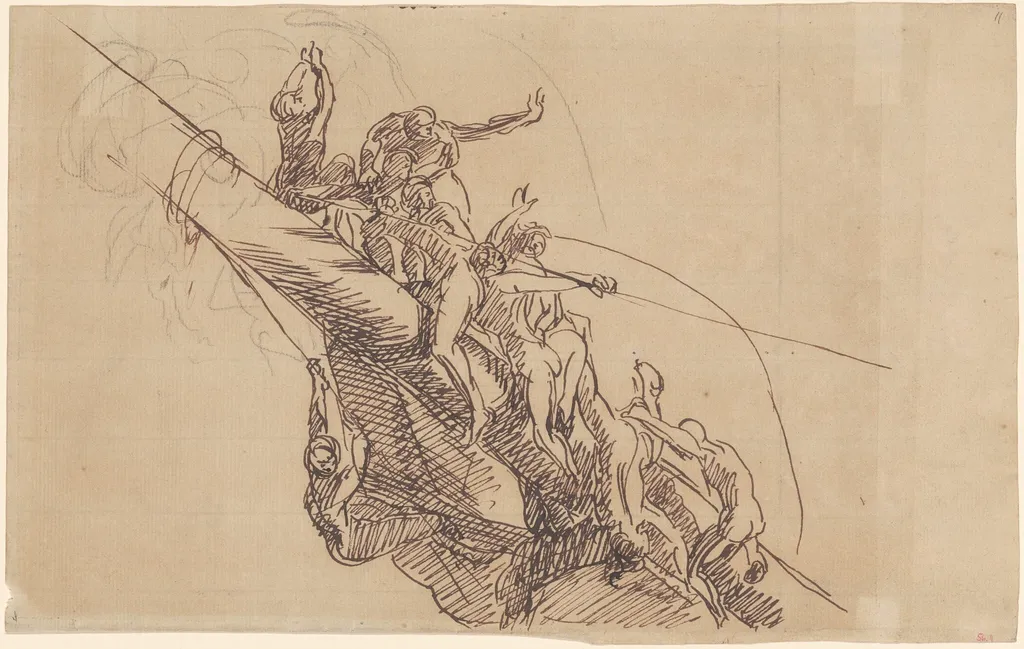
Study for "The Defeat of the Floating Batteries at Gibraltar" is an ink drawing by the Romanticist artist John Singleton Copley. It dates from 1784 and is held in the collection of the National Gallery of Art.
About this work
This painting is called "Study for The Defeat of the Floating Batteries at Gibraltar".
It was made by John Singleton Copley between 1783 and 1786.
The artist used pen, brown ink, and graphite on laid paper to create this work, which is an allegory.
This mix of media and the allegory genre make it interesting.
You can learn more about the movement that influenced this piece, Romanticism.
Overview
This drawing is a preparatory study by John Singleton Copley for a larger work, created between 1783 and 1786.
Technique & Style
Executed in pen and brown ink with graphite on laid paper, the drawing showcases Copley's use of mixed media. The work is an allegory, a representation that conveys a symbolic meaning.
Subject & Meaning
The drawing depicts a scene related to 'The Defeat of the Floating Batteries at Gibraltar', suggesting a historical or commemorative theme.
Context
The work is associated with the artistic movement of Romanticism, which emphasized emotion, imagination, and individualism.
Artist & collection
Artist
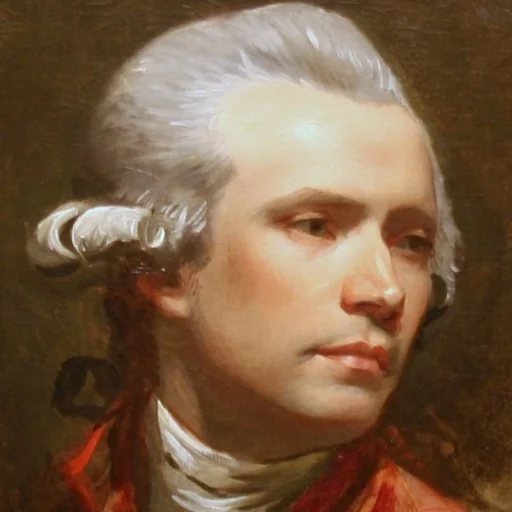
John Singleton Copley (July 3, 1738 – September 9, 1815) was an American-born British painter active in both the Thirteen Colonies and England.

![Saint Matthew and Saint Jerome [verso], by Correggio](https://artifactworldgallery.com/img/correggio--saint-matthew-and-saint-jerome-verso--233cd3c0f2701d8c-w320.webp) Saint Matthew and Saint Jerome [verso]
Saint Matthew and Saint Jerome [verso]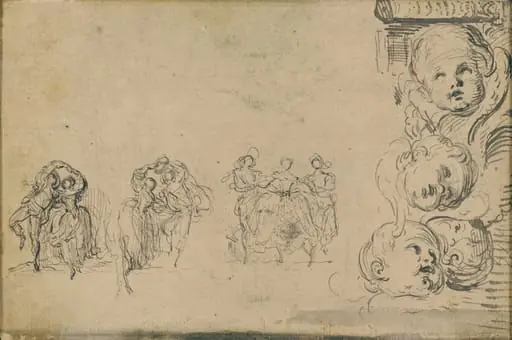 Sketches of Dancers and Heads of Putti
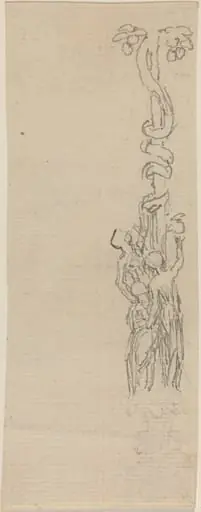 Design for a Candelabrum Representing the Three Graces Gathering the Apples of Hesper
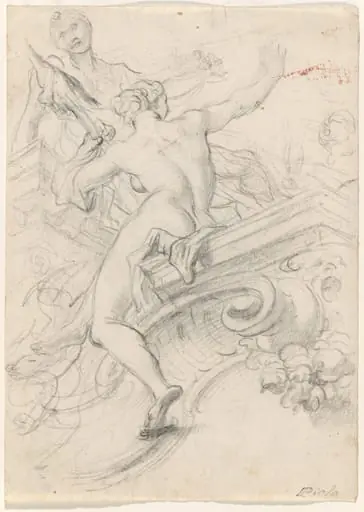 A Female Figure Seated on an Entablature, Holding a Distaff
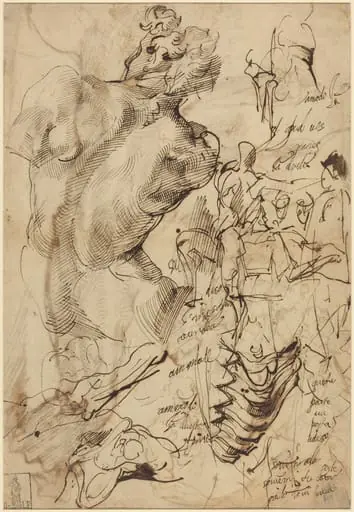 Studies of a Sculpture of a Male Nude, Vertebrae, and Gesturing Figures
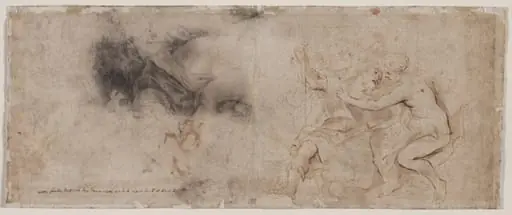 Venus Disarming Mars, Drapery Study (verso)
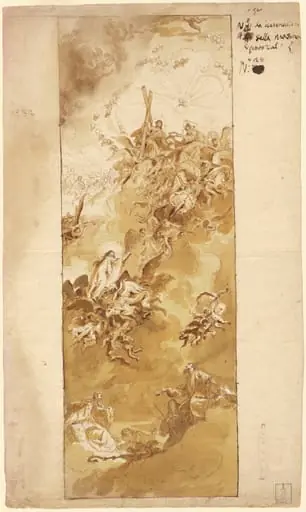 The Assumption of the Virgin
 Monumental Stairway
 Landscape
 Two composition sketches for the votive painting of Doge Pasquale Cicogna, Sala del Pregadi, Palazzo Ducale, Venice
 Creation of the Universe
![Los and His Spectre [verso], by William Blake](https://artifactworldgallery.com/img/william-blake--los-and-his-spectre-verso--615ad7f82d334e5f-w320.webp) Los and His Spectre [verso]
Los and His Spectre [verso]