Artwork
Samson Destroying the Temple
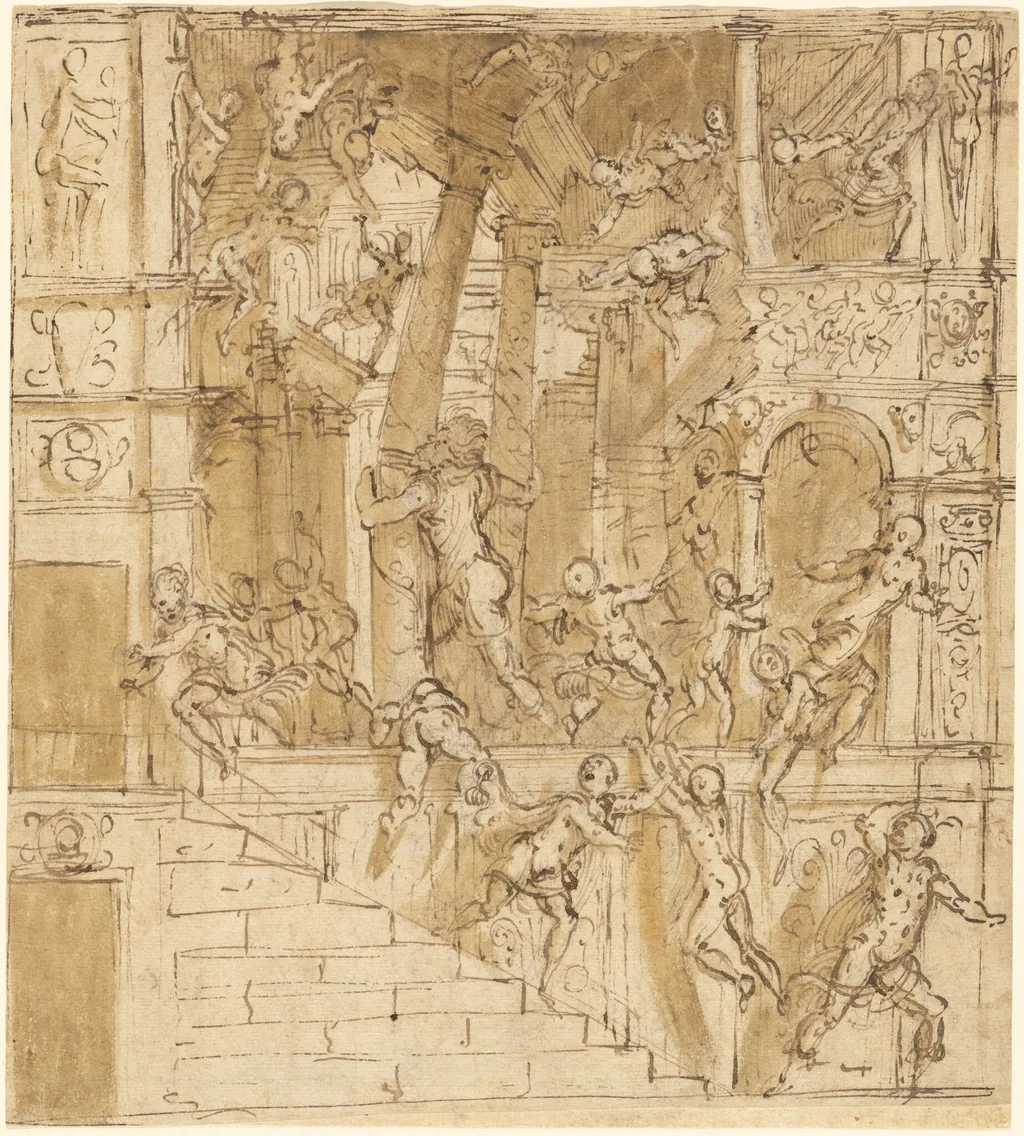
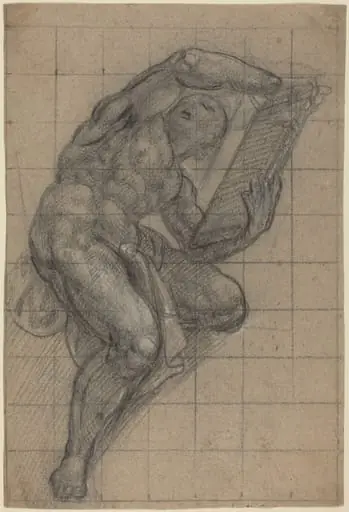
Samson Destroying the Temple is a chalk drawing by the Renaissance artist Lattanzio Gambara. It dates from 1554 and is held in the collection of the National Gallery of Art.
About this work
Overview
Created around 1554, this drawing by Lattanzio Gambara depicts the biblical moment of Samson’s final act. Executed in pen and brown ink with brown wash over black chalk, it captures the collapse of the Philistine temple as Samson braces himself against its central pillars. The medium allows for both precise line work and soft tonal gradients, emphasizing the drama of the scene.
Subject & Meaning
The drawing illustrates the climax of the Book of Judges, in which Samson, blinded and imprisoned, brings down the temple upon himself and his enemies. The act is portrayed not as vengeance alone but as a fatal sacrifice, aligning with themes of divine retribution and personal redemption. The composition focuses on the physical strain of Samson’s last effort, underscoring the weight of his fate.
Technique & Style
Gambara employed black chalk for initial contours, refined with pen and ink for definition, then layered brown wash to model volume and shadow. The technique balances linear clarity with atmospheric depth, characteristic of mid-16th-century Italian draftsmanship. Figures are rendered with muscular tension, while architectural elements are simplified to direct focus toward the central action.
History & Provenance
The drawing’s early ownership is undocumented, but it has been associated with collections in northern Italy since at least the 18th century. It entered its current institutional holding in the 20th century, following standard acquisition practices for Renaissance drawings. No significant alterations or restorations are recorded in its conservation history.
Context
Gambara worked in Brescia during a period when religious subjects dominated artistic commissions. His drawings often responded to Counter-Reformation ideals, emphasizing moral clarity and emotional intensity. This work reflects broader trends in Lombard draftsmanship, where narrative immediacy and expressive force took precedence over decorative detail.
Legacy
Though not widely reproduced, the drawing remains a representative example of Gambara’s graphic output and the expressive potential of ink and wash in mid-century Italy. It contributes to scholarly understanding of how biblical narratives were visually interpreted outside major artistic centers like Florence or Rome.
Artist & collection


 Two Kings and a Woman Leaving an Elaborate Palace
 A Baldachin with a Painting of the Annunciation
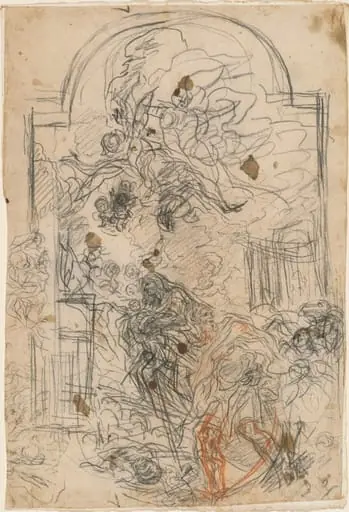 The Flight into Egypt
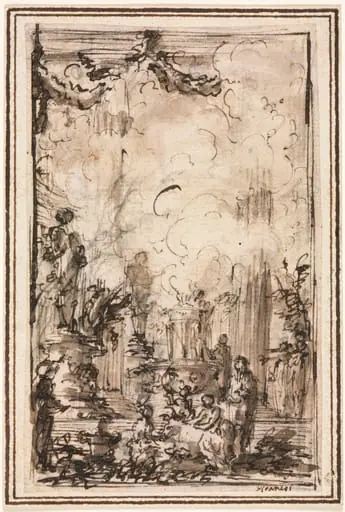 Sacrificial Offering in a Temple
![A Party in a Roman Villa [recto], by Pirro Ligorio](https://artifactworldgallery.com/img/pirro-ligorio--a-party-in-a-roman-villa-recto--46231d09a49584cb-w320.webp) A Party in a Roman Villa [recto]
A Party in a Roman Villa [recto]![Presentation of the Virgin in the Temple [verso], by Antonio Zanchi](https://artifactworldgallery.com/img/antonio-zanchi--presentation-of-the-virgin-in-the-temple-verso--450080eaf8685583-w320.webp) Presentation of the Virgin in the Temple [verso]
Presentation of the Virgin in the Temple [verso]![Studies for Judith and Holofernes, David and Goliath, The Finding of Moses, and Others [recto], by Veronese](https://artifactworldgallery.com/img/veronese--studies-for-judith-and-holofernes-david-and-goliath-the-find--e7509a7c8dd48fbb-w320.webp) Studies for Judith and Holofernes, David and Goliath, The Finding of Moses, and Others [recto]
Studies for Judith and Holofernes, David and Goliath, The Finding of Moses, and Others [recto]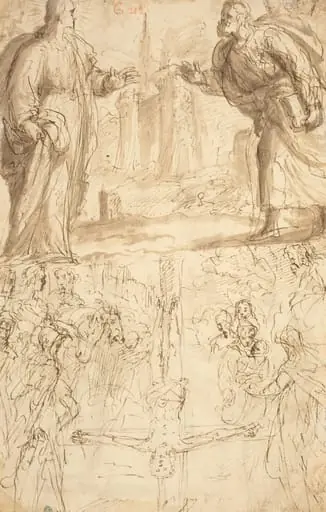 Crucifixion of Saint Peter
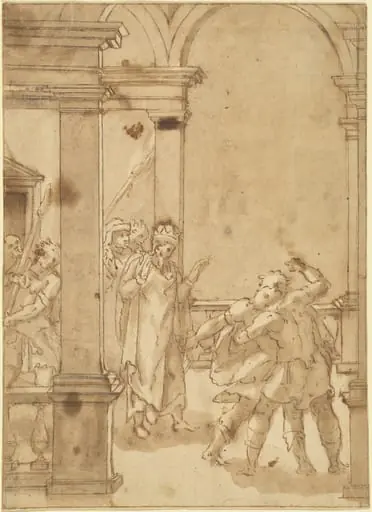 Two Figures Struggling before a King
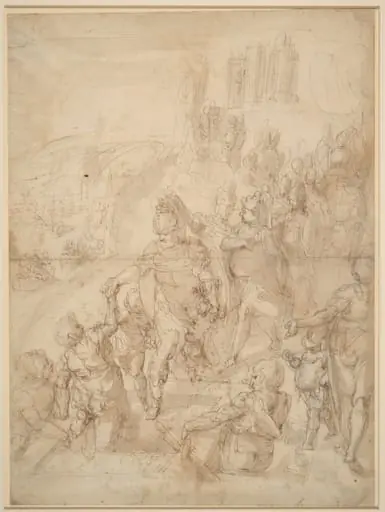 The Embarkation of Aeneas from the Ceraunian Headland
![Presentation of the Virgin in the Temple [recto], by Antonio Zanchi](https://artifactworldgallery.com/img/antonio-zanchi--presentation-of-the-virgin-in-the-temple-recto--b60030c863fe5e3b-w320.webp) Presentation of the Virgin in the Temple [recto]
Presentation of the Virgin in the Temple [recto]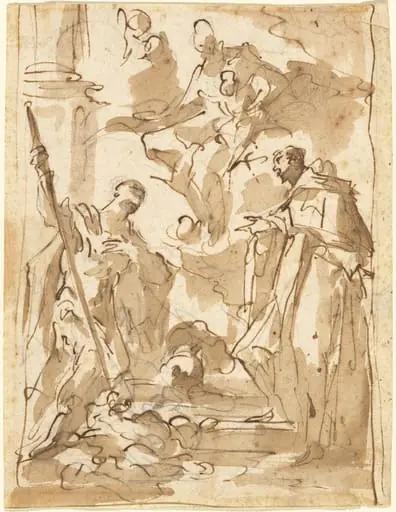 The Madonna and Child in Glory with Saint Theodore and a Monastic Saint