Artwork
Ritual Washing of the Israelites
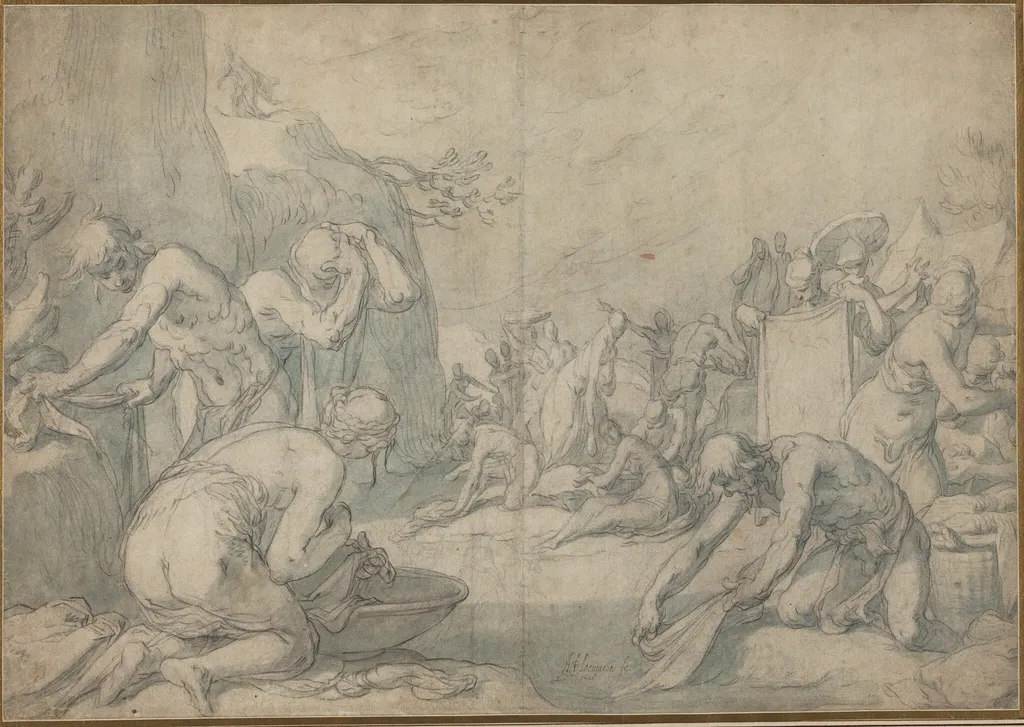
Ritual Washing of the Israelites is a chalk drawing by the Baroque artist Abraham Bloemaert. It dates from 1606 and is held in the collection of the National Gallery of Art.
About this work
Overview
Abraham Bloemaert’s *Ritual Washing of the Israelites* is a drawing executed in 1606, combining black chalk with a delicate blue-green wash on laid paper.
Abraham Bloemaert’s *Ritual Washing of the Israelites* is a drawing executed in 1606, combining black chalk with a delicate blue-green wash on laid paper. The work reflects Bloemaert’s engagement with both Mannerist influences and the emerging Baroque sensibility, marking a transitional moment in his artistic development. As a foundational figure in Dutch art, Bloemaert’s draftsmanship here prioritizes compositional dynamism over meticulous detail.
Subject & Meaning
The scene depicts a biblical episode, likely referencing a moment of purification or ritual cleansing among the Israelites. Figures cluster around a central basin, their gestures suggesting urgency or devotion, while others hover in the background, possibly alluding to divine presence. The subject aligns with Bloemaert’s frequent exploration of historical and religious narratives, where human action intersects with sacred significance.
Technique & Style
Bloemaert employs loose, expressive strokes to convey movement, with the chalk’s immediacy capturing fleeting gestures and emotional intensity. The pale blue-green wash subtly models forms, enhancing spatial depth without overpowering the sketch’s spontaneity. This approach exemplifies Baroque tendencies—dramatic contrast, fluidity, and a focus on narrative energy—while retaining the draftsman’s economy of means.
History & Provenance
Created in 1606, the drawing originates from Bloemaert’s mature period, when his work began to reflect broader shifts in European art. As a prominent artist and educator in Utrecht, he influenced a generation of painters, including the later Utrecht Caravaggisti. The work’s survival on laid paper suggests it may have served as a preparatory study or an independent composition, though its early ownership history remains unrecorded.
Context
During the early 17th century, Dutch artists increasingly turned to biblical and historical themes, often infusing them with heightened emotional and physical drama. Bloemaert’s drawing emerges from this milieu, bridging Northern Mannerist traditions and the Baroque’s emphasis on movement and theatricality. His role as a teacher further cemented his impact on Utrecht’s artistic community, where such works circulated as models of expressive draftsmanship.
Artist & collection

Artist
Abraham Bloemaert (25 December 1566 – 27 January 1651) was a Dutch painter and printmaker who used etching and engraving.

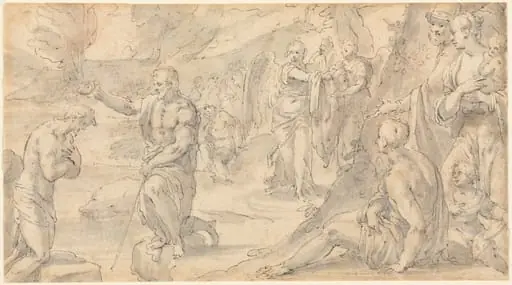 The Baptism of Christ
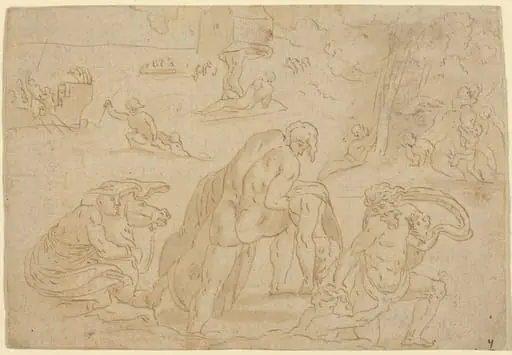 The Deluge, from the Loggia of the Vatican
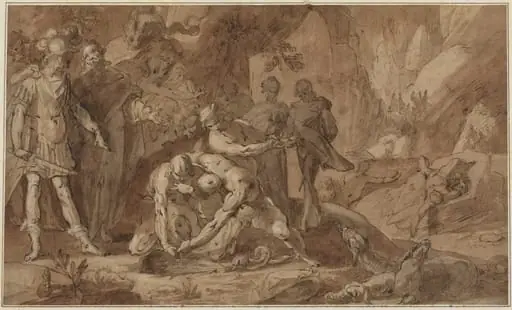 Odysseus and Teiresias
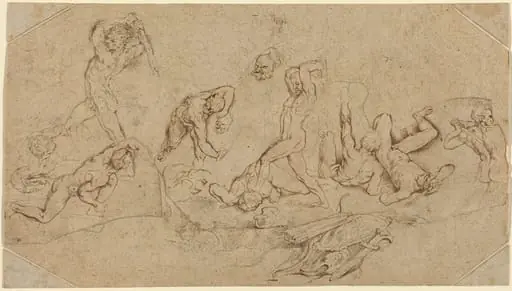 Battle of Nude Men
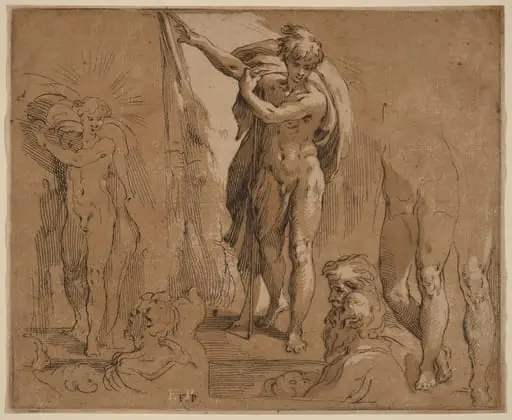 Saint John the Baptist
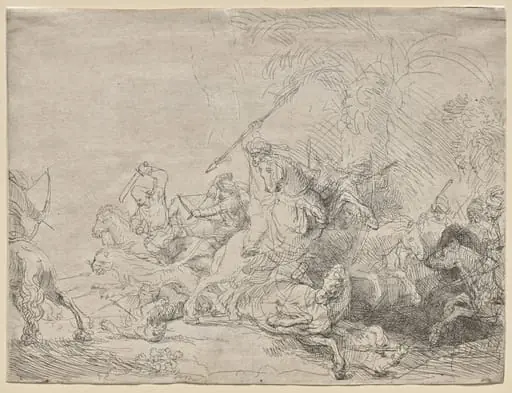 The Large Lion Hunt
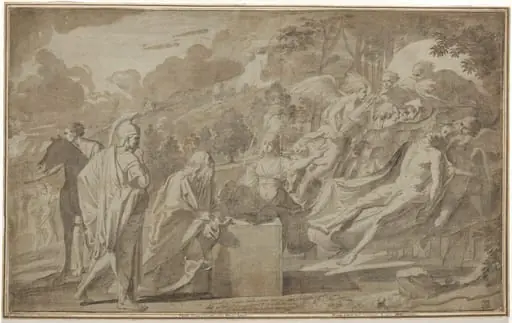 The Prophecy of Basilides
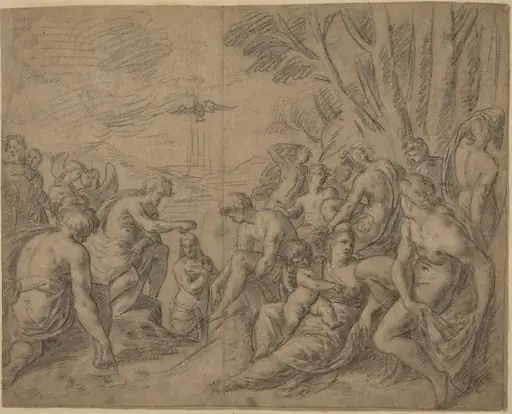 The Baptism of Christ
![The Adoration of the Magi [recto], by Donato Creti](https://artifactworldgallery.com/img/donato-creti--the-adoration-of-the-magi-recto--2cfd5d76b55e821e-w320.webp) The Adoration of the Magi [recto]
The Adoration of the Magi [recto]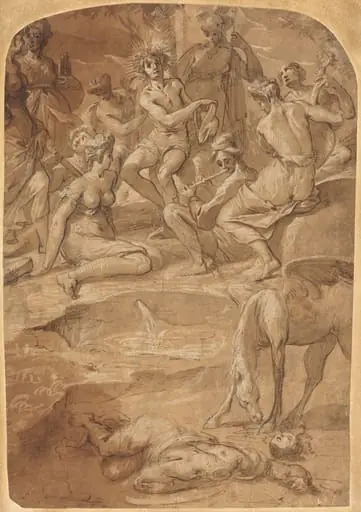 Apollo and the Muses on Mount Parnassus
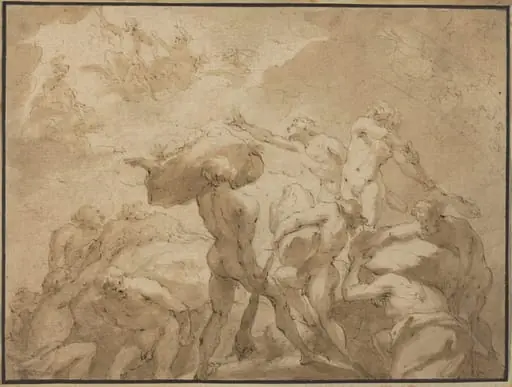 Battle of the Gods and Giants from Mount Olympus and Mount Othrys
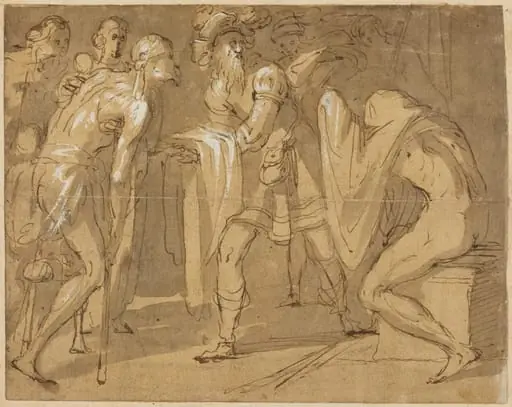 Saint Homobono