Artwork
The Prophecy of Basilides
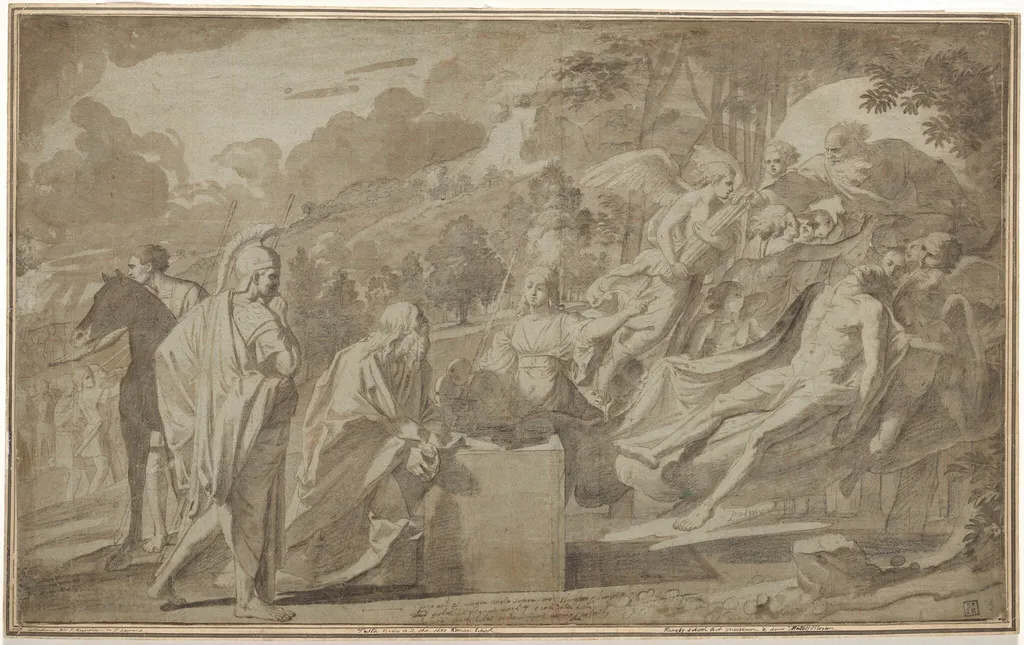
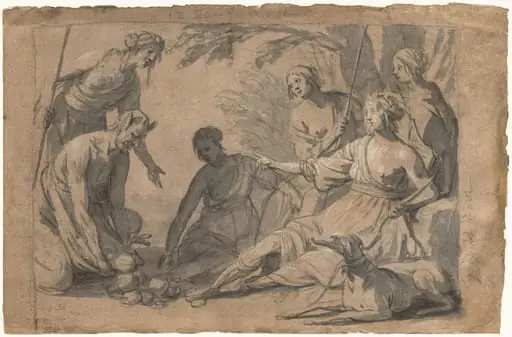
The Prophecy of Basilides is a chalk drawing by the Baroque artist Pietro Testa. It dates from 1648 and is held in the collection of the National Gallery of Art.
About this work
Overview
Testa’s use of multiple media reflects his mastery of tonal modeling and his interest in achieving depth through layered mark-making.
Created around 1648 by the Roman draftsman Pietro Testa, this drawing is a complex composition executed in pen and brown ink, layered with black and brown washes over black chalk, with faint traces of red chalk. It spans two joined sheets of greenish-blue laid paper, originally squared in red chalk for transfer. The work was later mounted on an older support, preserving its fragile structure. Testa’s use of multiple media reflects his mastery of tonal modeling and his interest in achieving depth through layered mark-making.
Subject & Meaning
The scene illustrates a mystical prophecy, likely drawn from apocryphal or esoteric Christian traditions associated with Basilides, an early Gnostic teacher. Central to the composition is a woman holding a globe, surrounded by winged and haloed figures, suggesting divine revelation. The chaotic assembly of kneeling, standing, and hovering individuals conveys a moment of spiritual upheaval. The imagery is symbolic rather than narrative, emphasizing transcendence and the collapse of earthly order under divine intervention.
Technique & Style
Testa employed rapid, expressive strokes to build volume and movement, using ink washes to deepen shadows and chalk to define contours and highlights. The layered application of media allowed subtle gradations of tone, enhancing the atmospheric density of the scene. The sketchy rendering of background elements—trees, clouds, distant architecture—contrasts with the more defined central figures, directing focus to the prophetic core. The use of red chalk traces suggests preliminary planning, while the overall execution reveals a spontaneous, almost improvisational approach to composition.
History & Provenance
Testa worked within the intellectual circle of Cassiano dal Pozzo, a patron and collector who championed the study of antiquity and natural philosophy. This drawing likely originated as part of a broader project exploring theological and classical themes. Its survival on its original paper, with traces of the artist’s underdrawing, indicates it was valued as a finished work rather than a preparatory sketch. The mounting on an older support suggests early preservation efforts, though its full provenance before modern collections remains partially undocumented.
Context
In mid-17th-century Rome, artists like Testa engaged with theological debates and classical revivalism, often blending religious symbolism with humanist inquiry. The Baroque era’s emphasis on emotional intensity and dynamic composition aligned with Testa’s dramatic staging of the prophetic moment. While his prints reached wider audiences, this drawing reveals a more personal, experimental side—reflecting the private intellectual pursuits of Rome’s scholarly elite, who sought to reconcile ancient wisdom with contemporary spiritual questions.
Legacy
Testa’s drawings, including this one, are recognized for their technical sophistication and imaginative depth, though he remains less known than his contemporaries. His fusion of meticulous draftsmanship with expressive looseness influenced later generations of draftsmen interested in the intersection of science, mysticism, and art. This work stands as a testament to the quiet, intellectual currents of Roman Baroque culture—where drawing served not only as preparation but as a medium for philosophical exploration.
Artist & collection
Artist
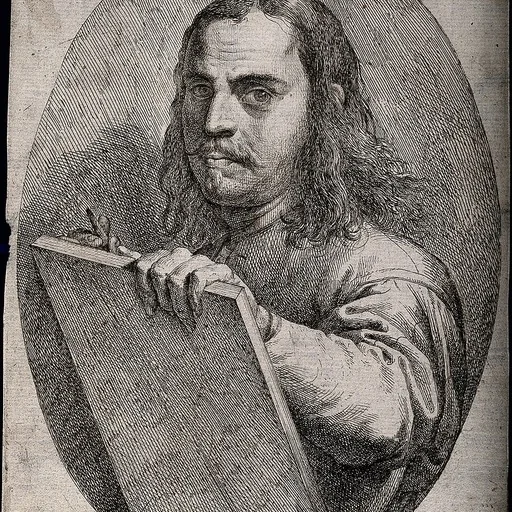
Pietro Testa (1612 – 1 March 1650) was an Italian High Baroque artist active in Rome.

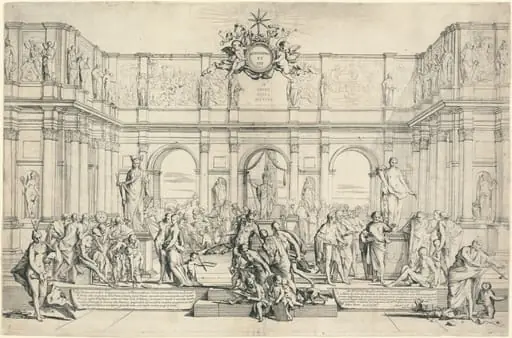
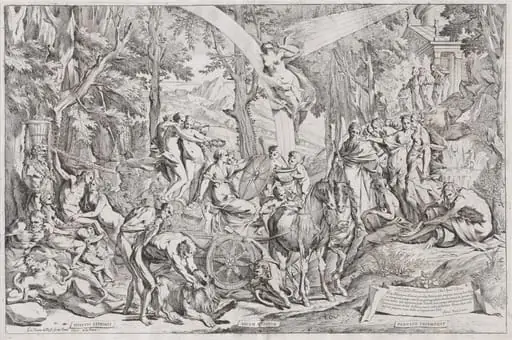
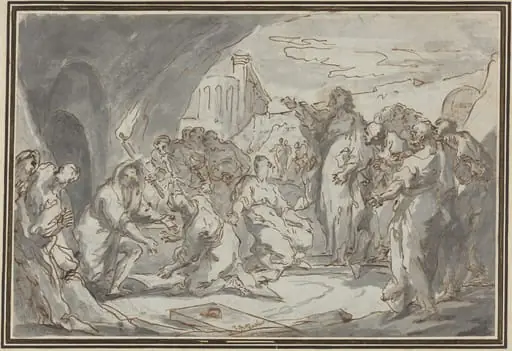 The Raising of Lazarus
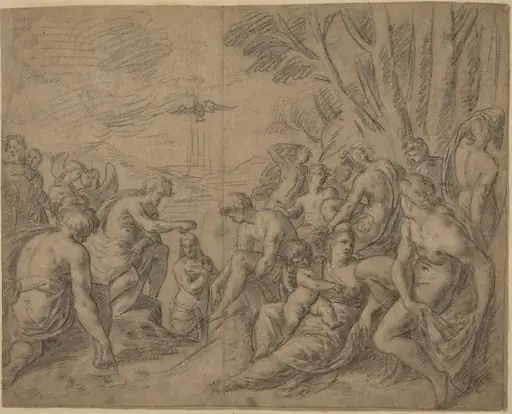 The Baptism of Christ
![Jacob and Rebecca before Isaac [recto], by French 18th Century](https://artifactworldgallery.com/img/french-18th-century--jacob-and-rebecca-before-isaac-recto--5393ee8d0dceb48c-w320.webp) Jacob and Rebecca before Isaac [recto]
Jacob and Rebecca before Isaac [recto]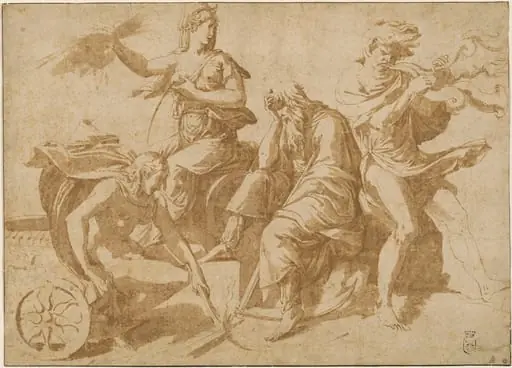 The Four Elements
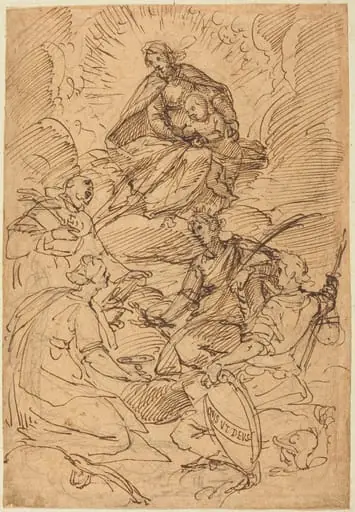 The Madonna and Child in Glory Adored by Saints
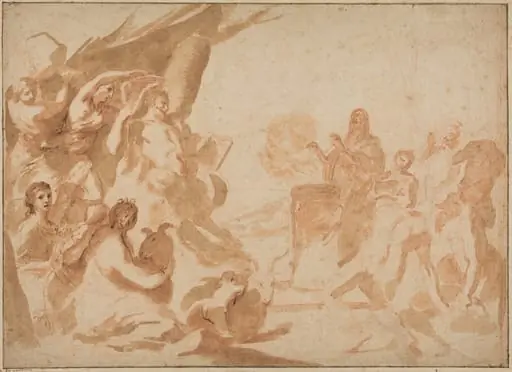 A Sacrifice to Pan
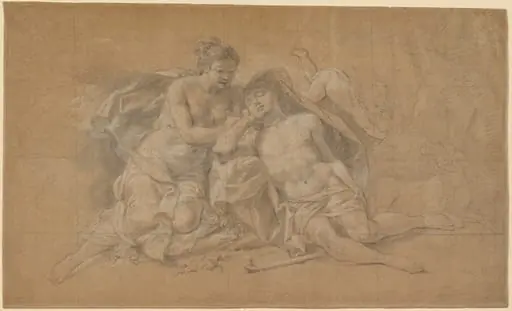 Diana and Endymion
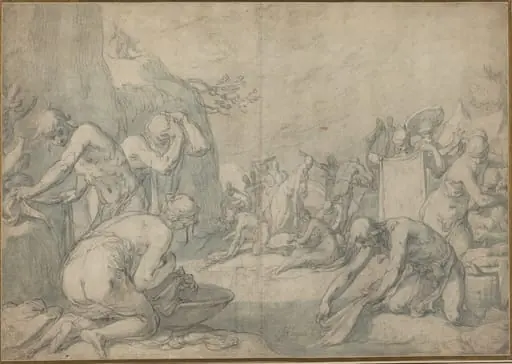 Ritual Washing of the Israelites
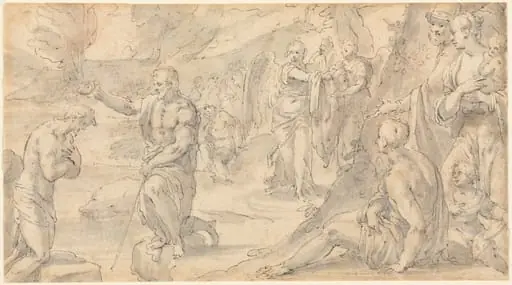 The Baptism of Christ
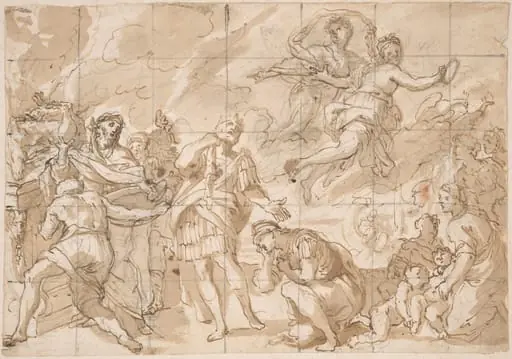 The Sacrifice of Iphigenia
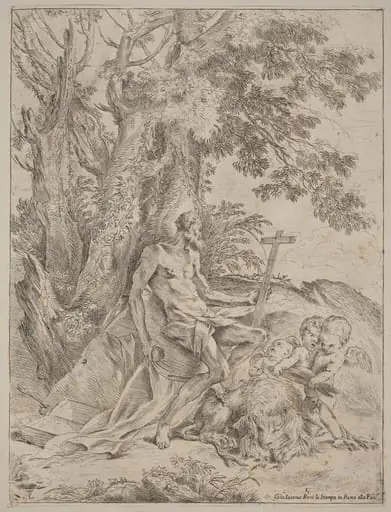 Saint Jerome
 Diana and Four Nymphs Receiving Gifts from a Satyr