Artwork
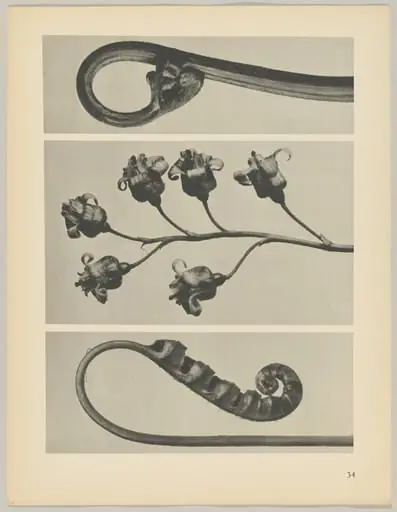
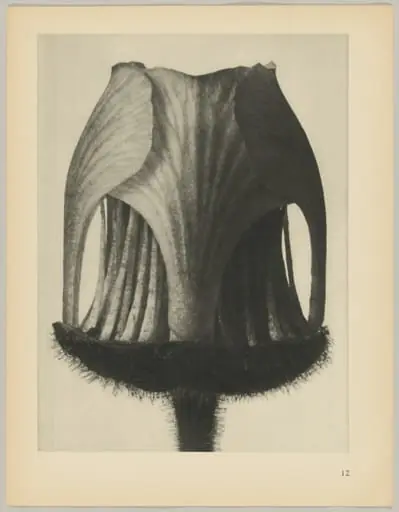
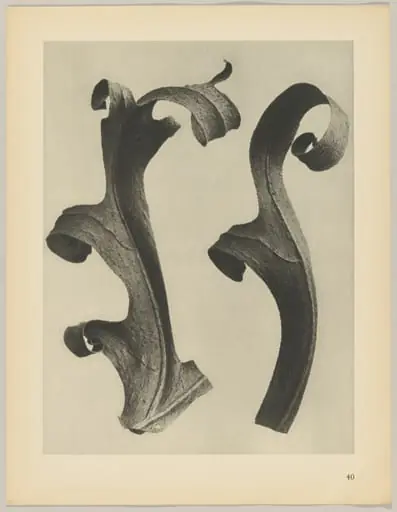
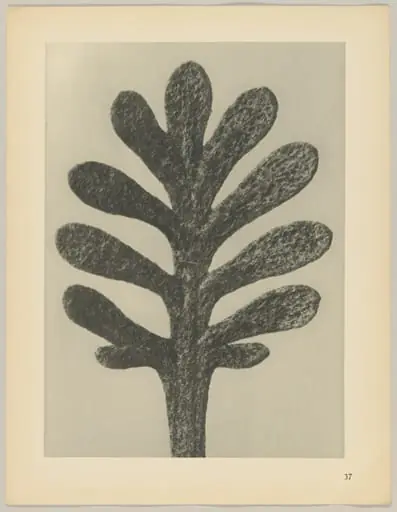
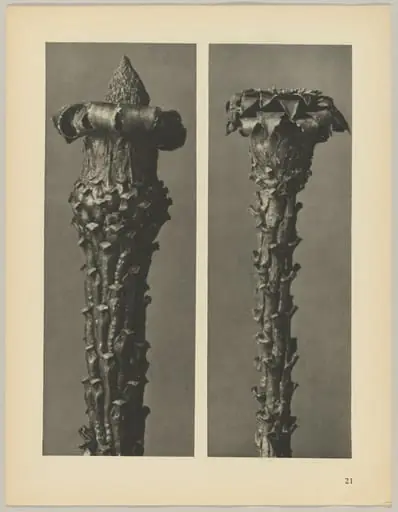
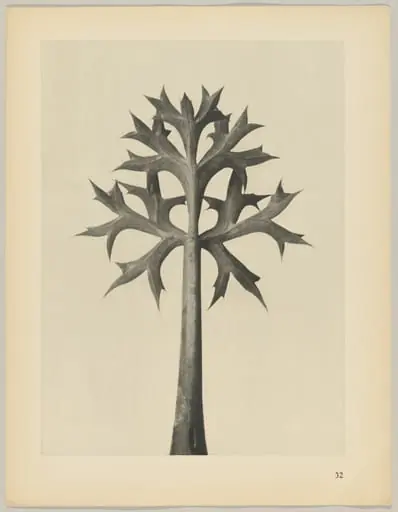
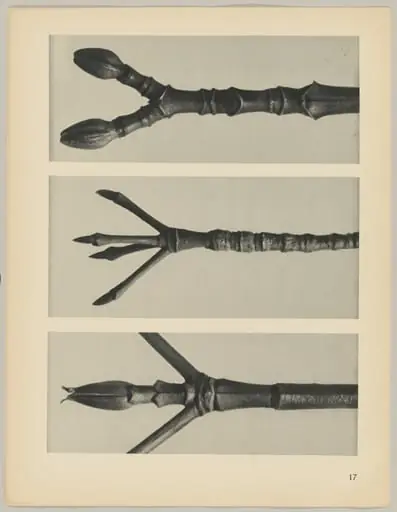
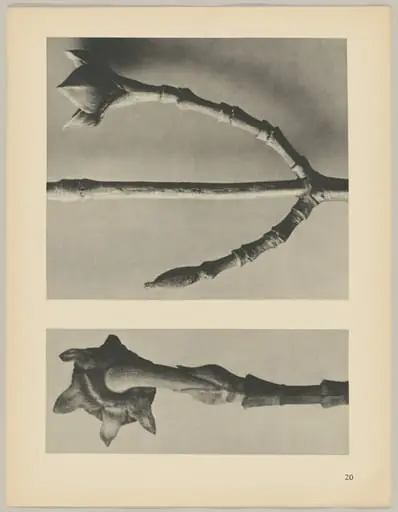
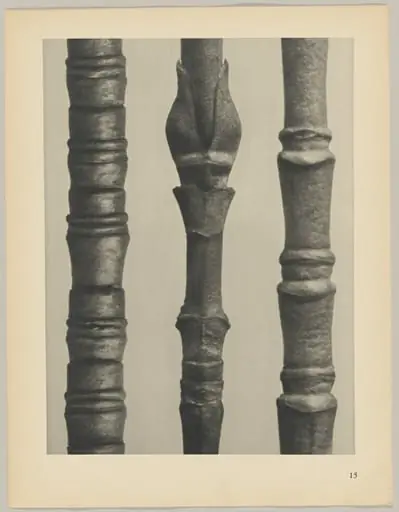
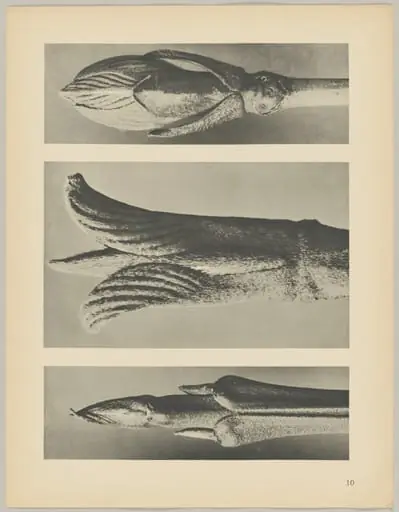
a Cornus Nuttallii; b Cornus Nuttallii; c Acer
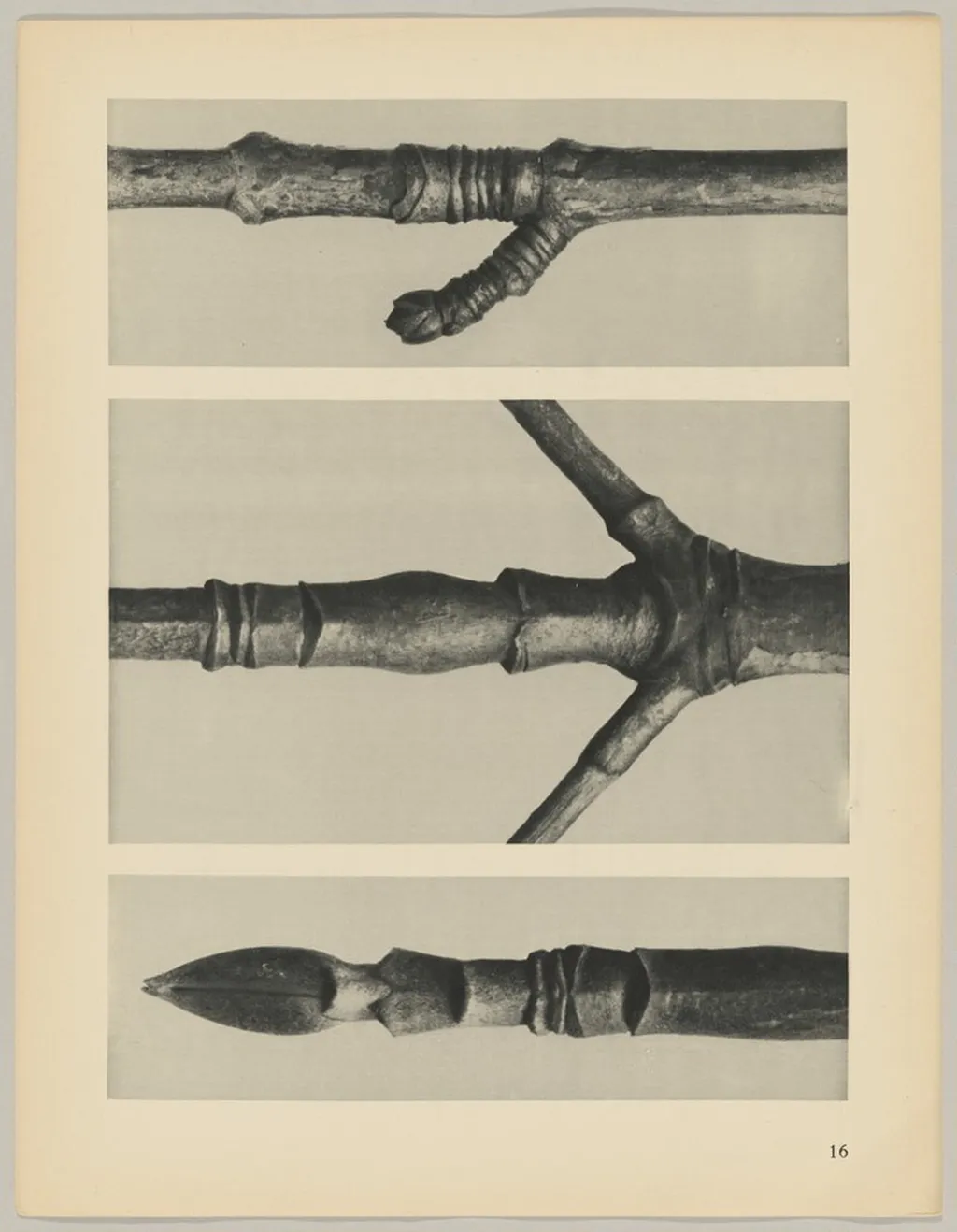
a Cornus Nuttallii; b Cornus Nuttallii; c Acer is a print by Karl Blossfeldt. It dates from 1928 and is held in the collection of the National Gallery of Art.
About this work
Overview
His approach treated plants as architectural subjects, revealing patterns invisible to the casual observer through extreme magnification and precise printing.
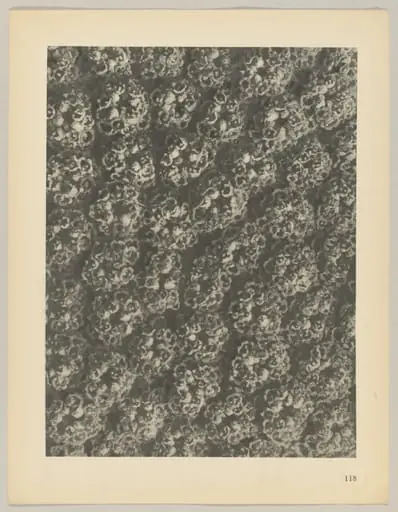
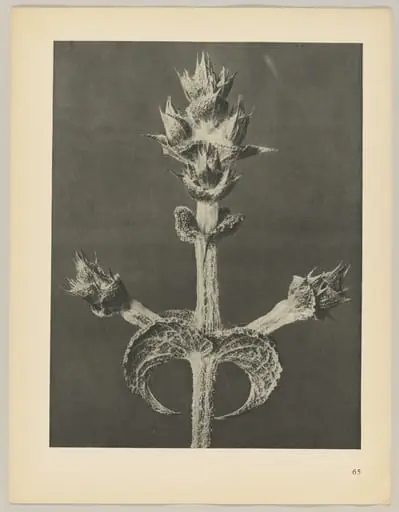
Karl Blossfeldt, a German photographer and sculptor, produced a series of photogravures in 1928 that isolate the structural details of two plant species: Cornus nuttallii and Acer. These three images, later compiled in his 1929 publication *Urformen der Kunst*, reflect his systematic study of botanical forms. His approach treated plants as architectural subjects, revealing patterns invisible to the casual observer through extreme magnification and precise printing.
Subject & Meaning
The images depict specific anatomical features of dogwood and maple: a knotted branch with a lateral shoot, a Y-shaped bifurcation, and a single bud at the tip of a slender stem. Blossfeldt selected these moments not for their floral beauty but for their underlying geometry. He saw in plant growth a natural logic akin to design, suggesting that nature itself was a source of form that could inform artistic and industrial practice.
Technique & Style
Using photogravure, a process that transfers photographic images onto copper plates for intaglio printing, Blossfeldt achieved rich tonal gradations and fine detail. The black-and-white medium heightened contrast, emphasizing texture and silhouette. His lighting was even and diffuse, eliminating shadows to focus attention on form. The result is a sculptural quality, where bark, buds, and stems appear as carved objects rather than organic specimens.
History & Provenance
These three photogravures were created in 1928 as part of Blossfeldt’s broader project to document plant structures for educational use. They were included in his 1929 book *Urformen der Kunst*, which compiled over 120 such images. The work was initially developed for teaching at the Berlin School of Arts and Crafts, where Blossfeldt taught for decades. The prints were not intended for commercial sale but for pedagogical dissemination.
Context
Blossfeldt’s work emerged during a period when modernist movements sought new sources of form in nature and industry. His images aligned with Bauhaus principles that valued functional geometry, though he avoided overt abstraction. Unlike botanical illustrations focused on classification, his photographs emphasized rhythm and repetition in growth patterns, resonating with contemporaries interested in the unity of art and natural law.
Legacy
Blossfeldt’s photogravures influenced later generations of photographers and designers by demonstrating how close observation of nature could reveal universal structures. His images became reference points in discussions of form, abstraction, and the relationship between biology and design. Though rooted in early 20th-century pedagogy, they continue to be studied for their clarity and quiet precision in depicting the hidden architecture of plants.
Artist & collection
Artist
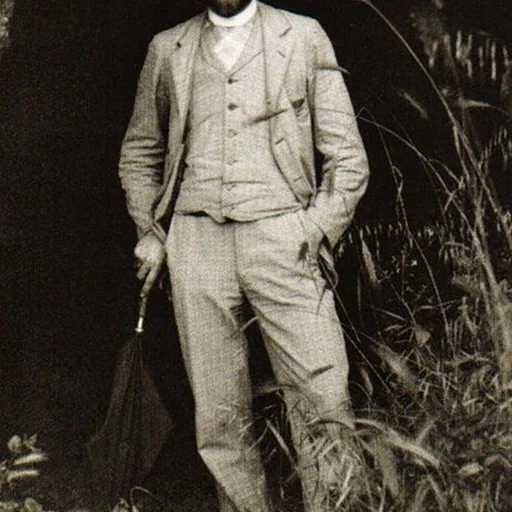
Karl Blossfeldt (13 June 1865 – 9 December 1932) was a German photographer and sculptor.