Artwork
Salvia aethiopis
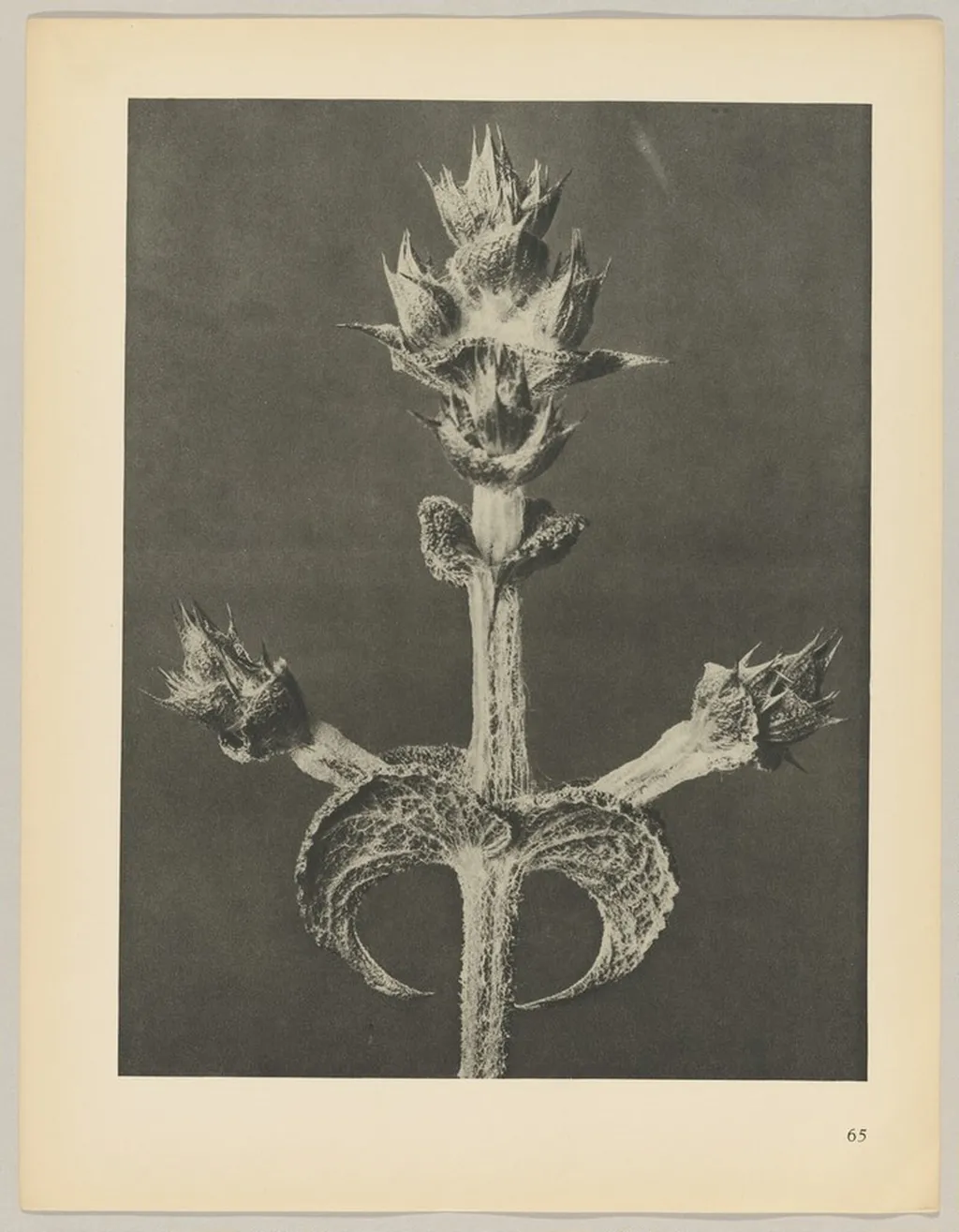
Salvia aethiopis is a print by Karl Blossfeldt. It dates from 1928 and is held in the collection of the National Gallery of Art.
About this work
Overview
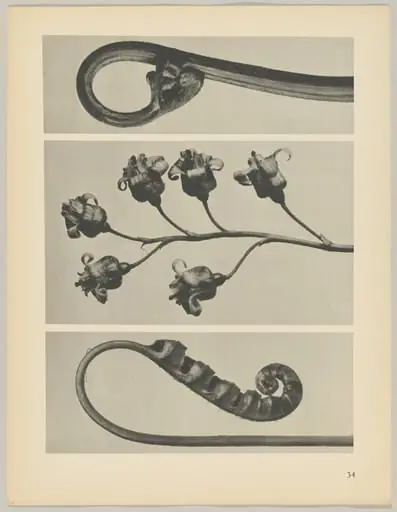
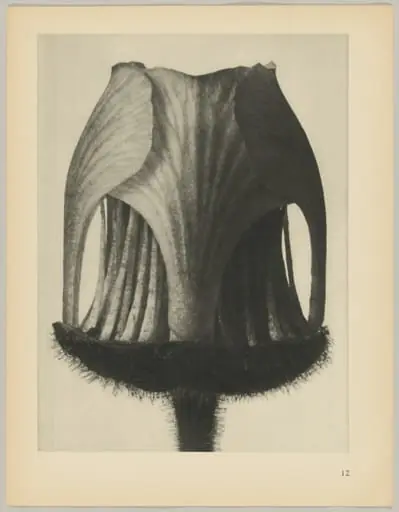
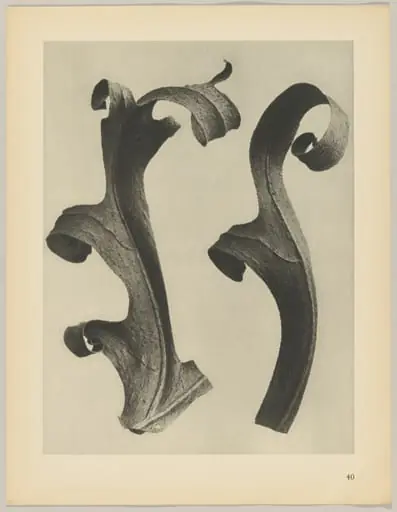
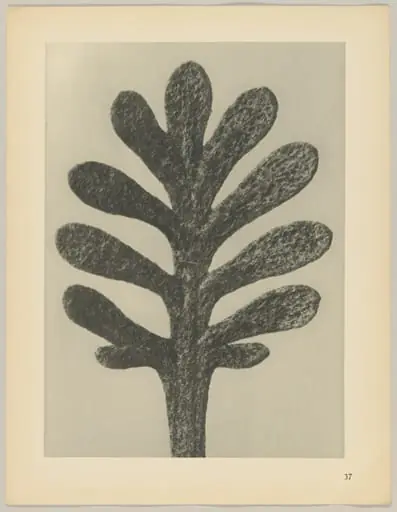
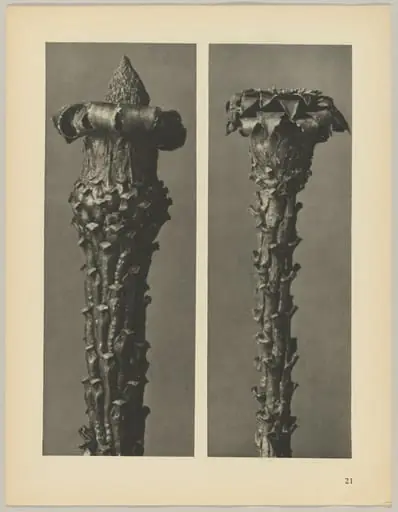
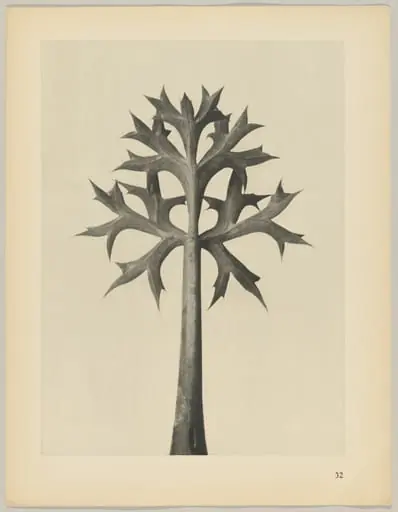
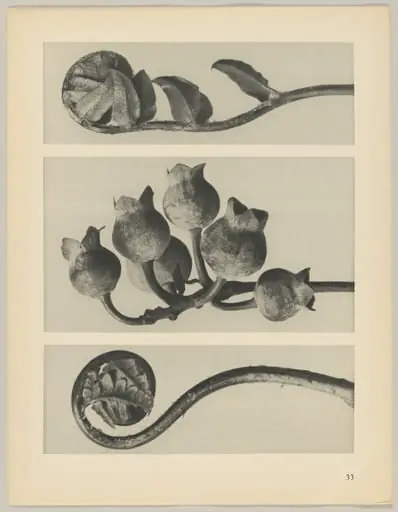
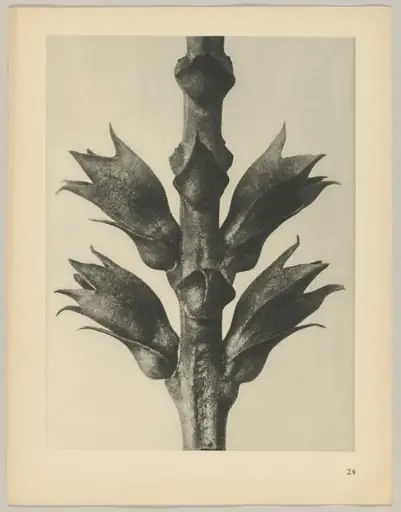
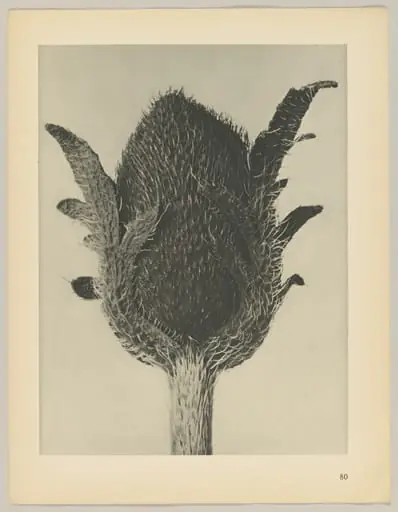
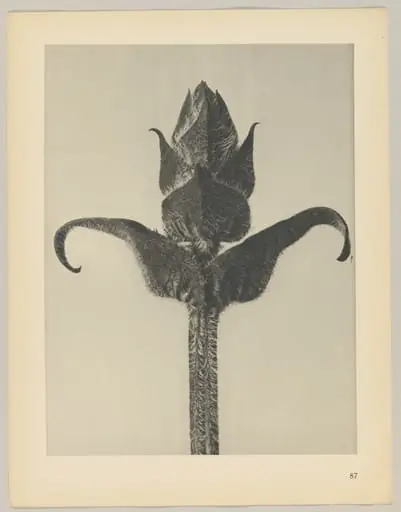
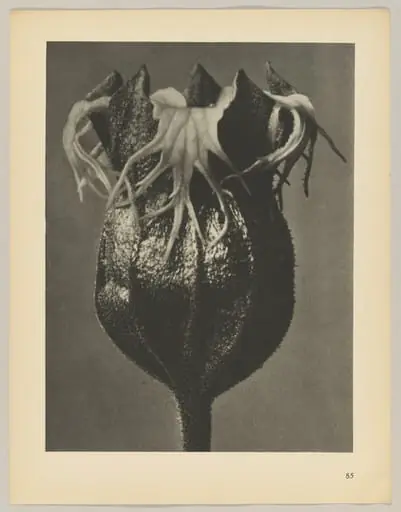
Created in 1928, *Salvia aethiopis* is a photogravure print by German photographer and sculptor Karl Blossfeldt. The image presents a close‑up view of the plant’s spiky foliage and buds, rendered in stark white and gray against a dark background, emphasizing its structural details.
Subject & Meaning
The work isolates a single Salvia aethiopis specimen, highlighting its two broad, curved basal leaves, a tall central stem, and a cluster of pointed buds. By stripping away context, Blossfeldt draws attention to the plant’s geometric forms and growth patterns, reflecting his interest in the underlying order of natural structures.
Technique & Style
Blossfeldt employed the photogravure process, a printing technique that transfers a photographic image onto a copper plate, allowing fine gradations of tone. This method produces crisp contrasts and a quasi‑three‑dimensional quality, making the botanical details appear sharply defined and tactile.
History & Provenance
The print was first issued in 1929 as part of Blossfeldt’s seminal volume *Urformen der Kunst* (The Forms of Art), which compiled his close‑up studies of plants and insects. The series was intended to showcase nature’s design principles to a broader artistic audience.
Context
Blossfeldt’s work emerged during the interwar period, a time when German artists were exploring the relationship between art, science, and industry. His meticulous botanical images aligned with contemporary movements that valued precision, functionalism, and the celebration of natural forms as models for design.
Artist & collection
Artist
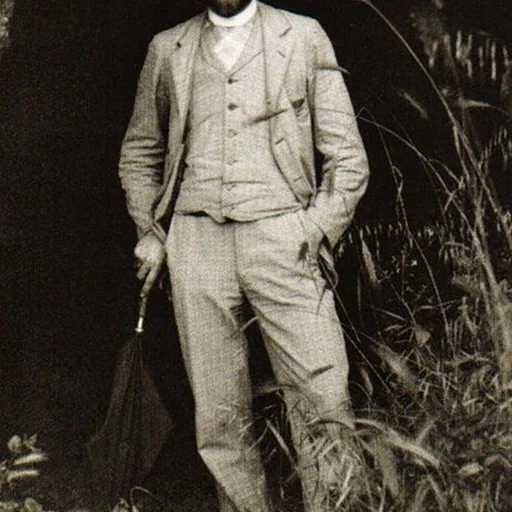
Karl Blossfeldt (13 June 1865 – 9 December 1932) was a German photographer and sculptor.