Artwork
a u. c Aristolochia clematitis; b Hyoscyamus niger
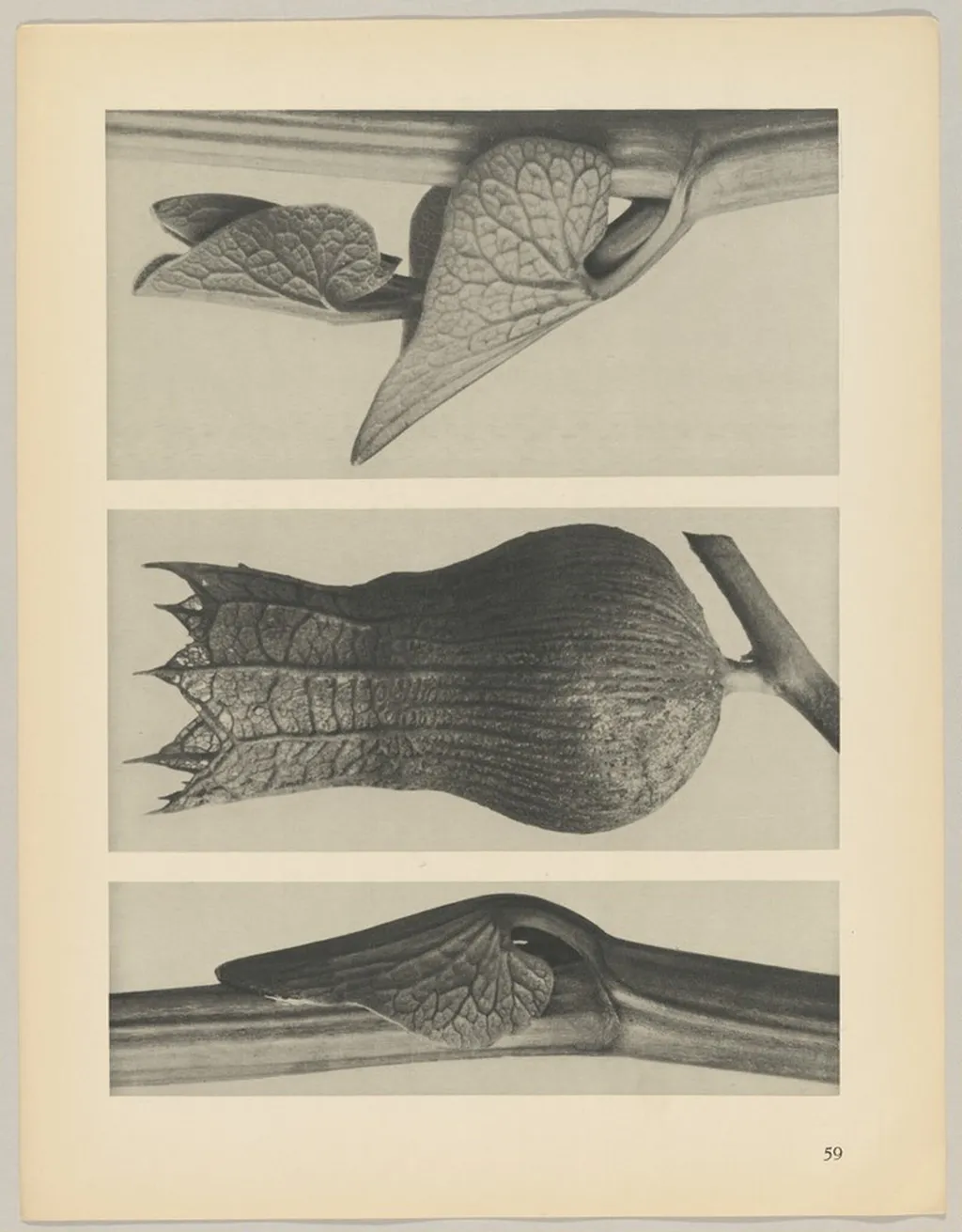
a u. c Aristolochia clematitis; b Hyoscyamus niger is a print by Karl Blossfeldt. It dates from 1928 and is held in the collection of the National Gallery of Art.
About this work
Overview
Created in 1928, this photogravure by Karl Blossfeldt presents two botanical specimens: Aristolochia clematitis and Hyoscyamus niger.
Created in 1928, this photogravure by Karl Blossfeldt presents two botanical specimens: Aristolochia clematitis and Hyoscyamus niger. Rendered in precise black-and-white tones, the image is part of a larger series documenting plant structures with scientific clarity. Blossfeldt, trained as a sculptor and metalworker, used photography to reveal the hidden geometry of flora, transforming ordinary specimens into studies of form and rhythm.
Subject & Meaning
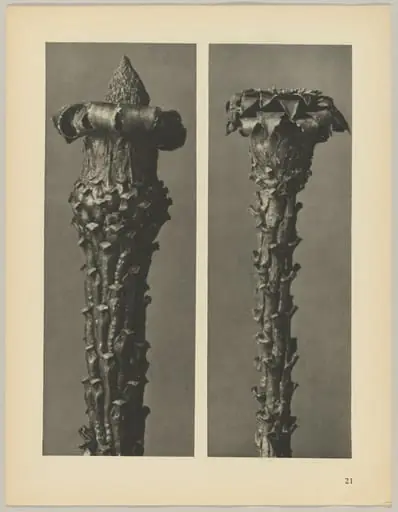
The image displays three distinct views of two plants: a tubular flower with broad calyx leaves, a closed seed capsule, and an opened pod revealing internal anatomy. Rather than idealizing beauty, Blossfeldt highlights the functional architecture of plant parts. His focus on variation and detail suggests an interest in nature’s inherent design principles, aligning with early 20th-century inquiries into organic structure as a model for art and industry.
Technique & Style
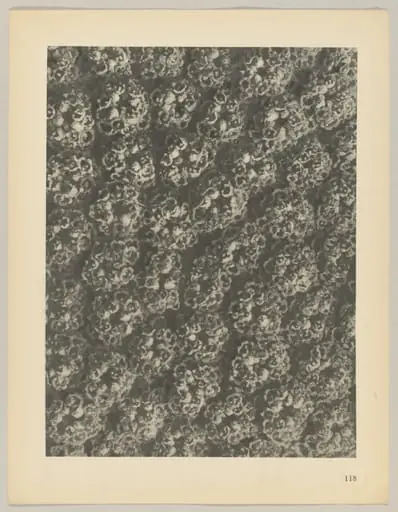
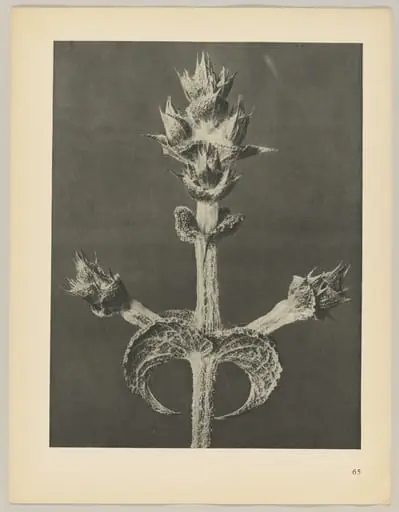
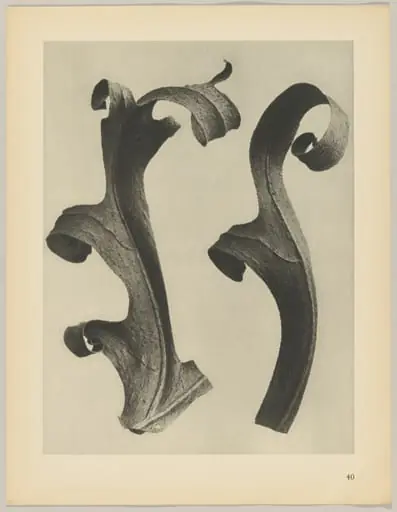
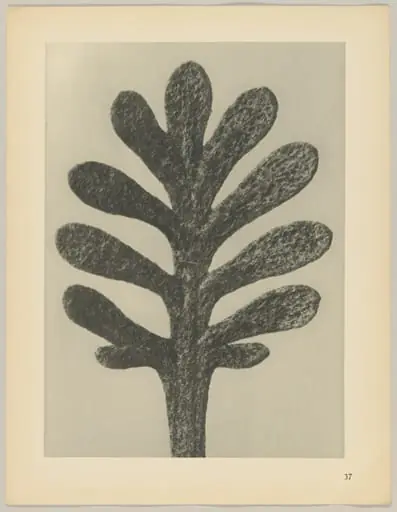
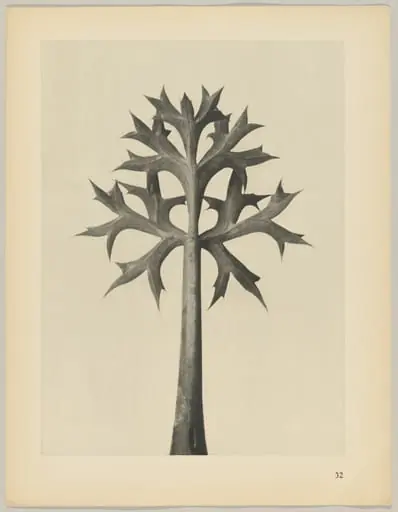
Blossfeldt employed photogravure, a process that transfers photographic images onto copper plates for printing, allowing fine tonal gradations and sharp detail. He used custom-built cameras with extreme magnification to capture plants at 10 to 30 times their natural size. The resulting images eliminate context, isolating forms against plain backgrounds to emphasize texture, symmetry, and line—approaching botanical subjects as abstract sculptures.
History & Provenance
The print was produced for Blossfeldt’s 1929 publication *Urformen der Kunst* (Art Forms in Nature), which compiled over 200 such images. Originally developed as teaching aids for his students at the Berlin School of Art, the photographs gained wider recognition for their formal rigor. The work entered institutional collections following the book’s success, establishing Blossfeldt as a pivotal figure in photographic documentation of natural forms.
Context
In the interwar period, artists and designers sought inspiration in nature’s efficiency and repetition. Blossfeldt’s work resonated with movements like New Objectivity and Bauhaus, which valued precision and functional aesthetics. His images were used in architecture and design pedagogy, not as botanical records but as visual arguments for the structural logic underlying both organic and manufactured forms.
Legacy
Blossfeldt’s photogravures influenced later generations of photographers and designers who explored abstraction in natural forms. His method of isolating and magnifying plant structures became a template for scientific and artistic imaging. Though his work was initially tied to educational goals, it now occupies a space between documentary practice and modernist visual culture, valued for its quiet, systematic revelation of nature’s complexity.
Artist & collection
Artist
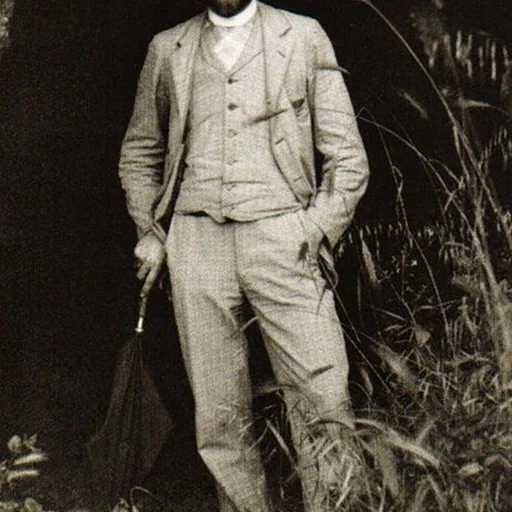
Karl Blossfeldt (13 June 1865 – 9 December 1932) was a German photographer and sculptor.

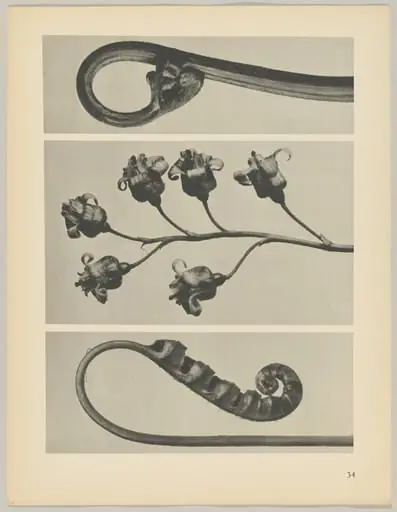
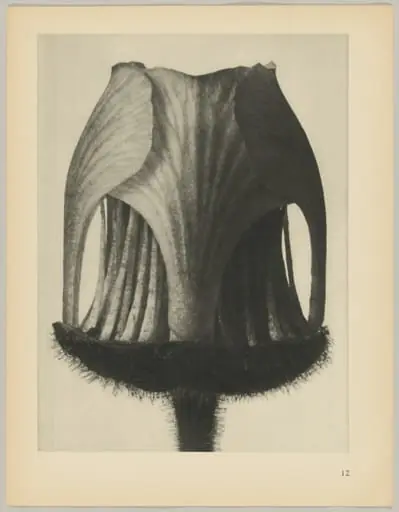
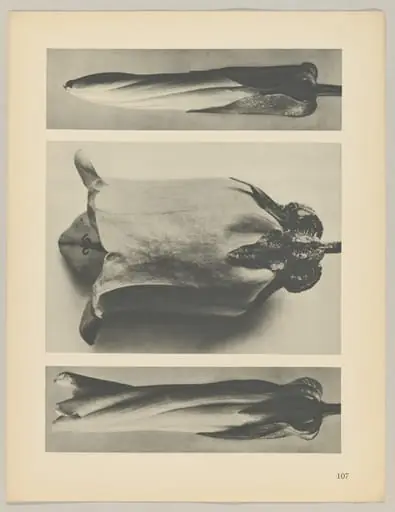 a u. c Convolvulus sepium; b Campanula medium
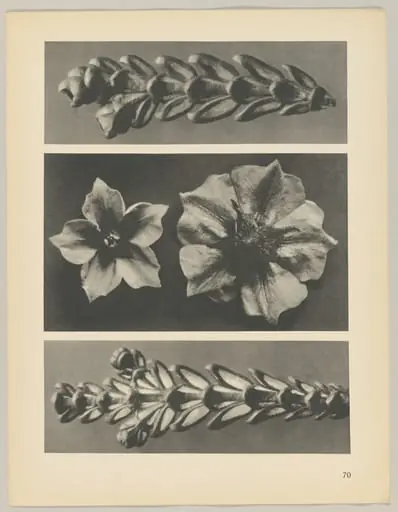 a u. c Thujopsis dolabrata; b Solanum tuberosum
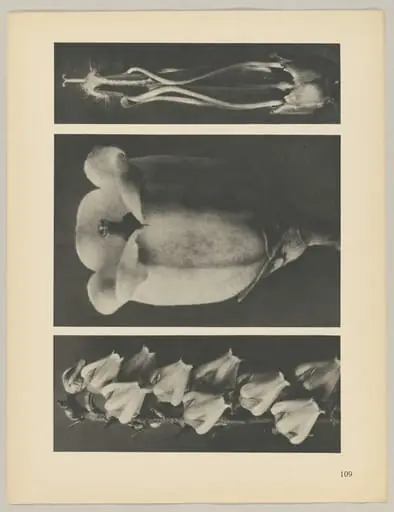 a Andromeda floribunda; b Vaccinium corymbosum; c Acanthus mollis
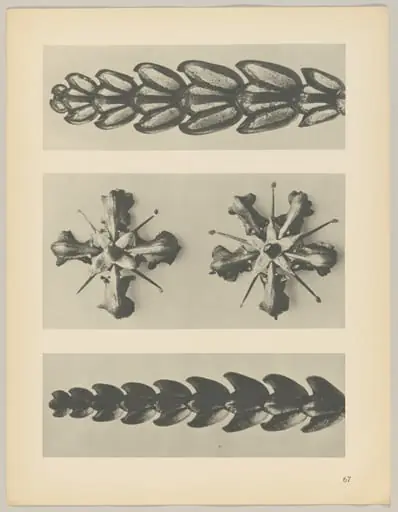 a u. c Thujopsis dolabrata; b Ruta graveolens
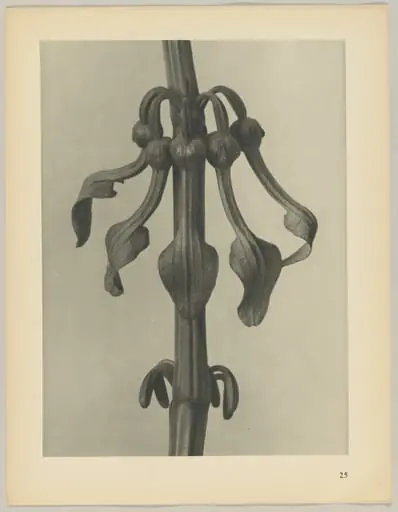 Aristolochia clematitis
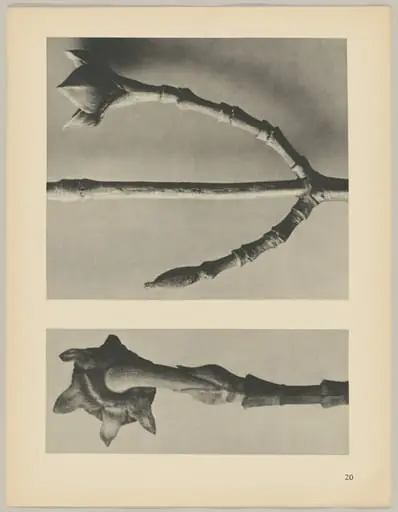 a Cornus Nuttallii; b Cornus officinalis
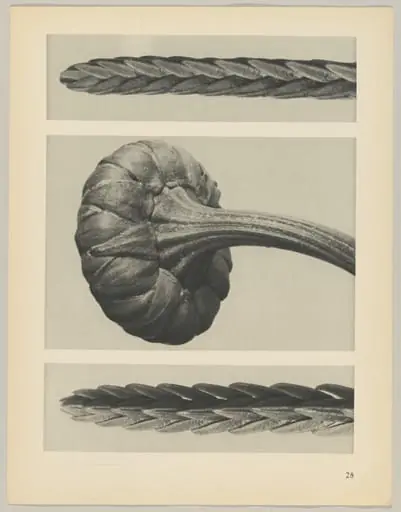 a u. c Cassiope tetragona; b Chrysanthemum Leucanthemum
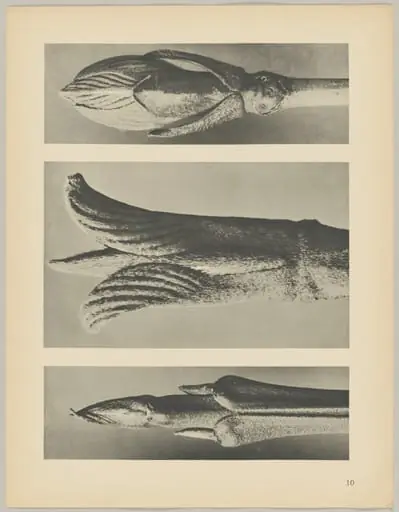 a Cornus brachypoda; b Cornus pubescens; c Viburnum