Artwork
Verbena canadensis
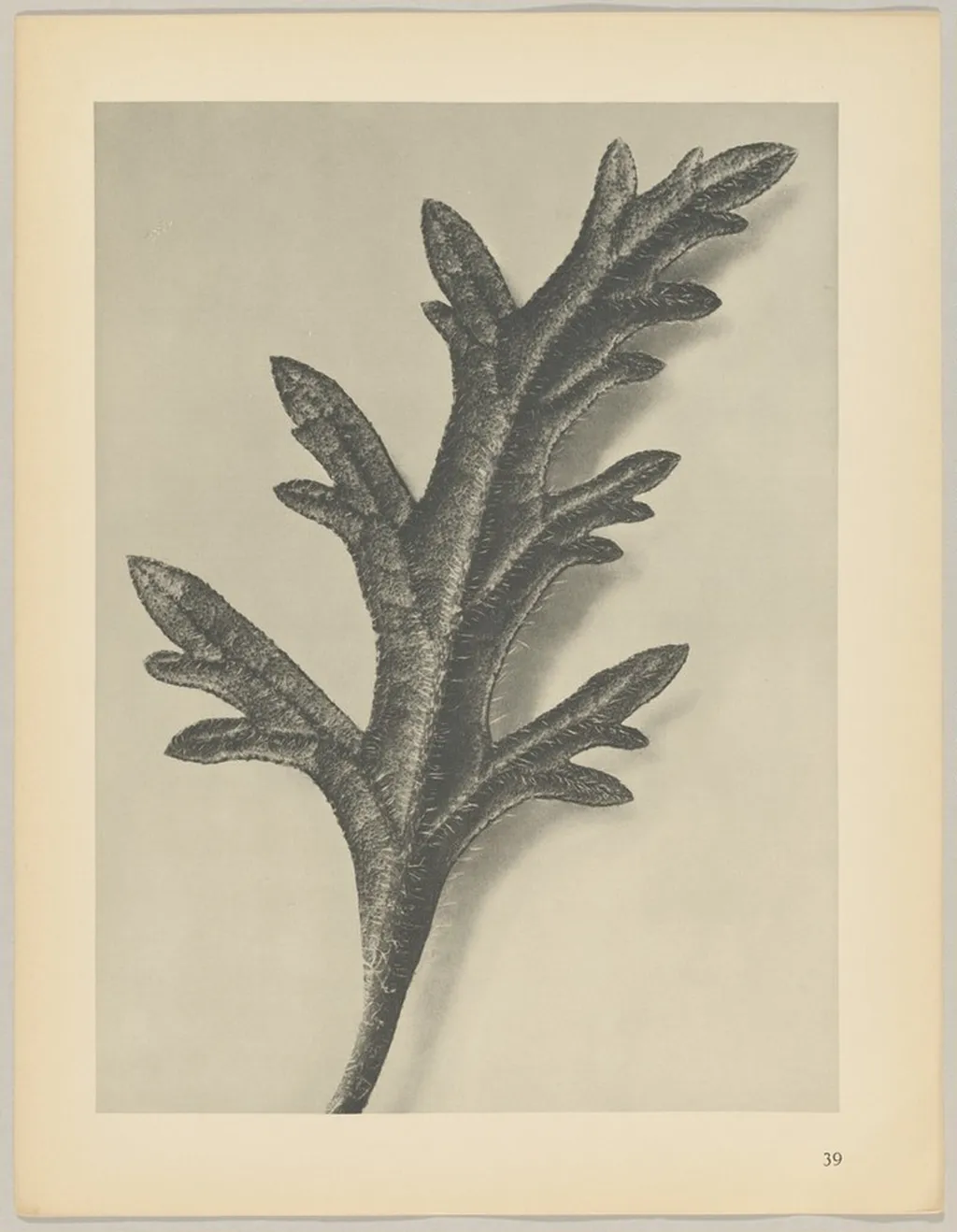
Verbena canadensis is a print by Karl Blossfeldt. It dates from 1928 and is held in the collection of the National Gallery of Art.
About this work
Overview
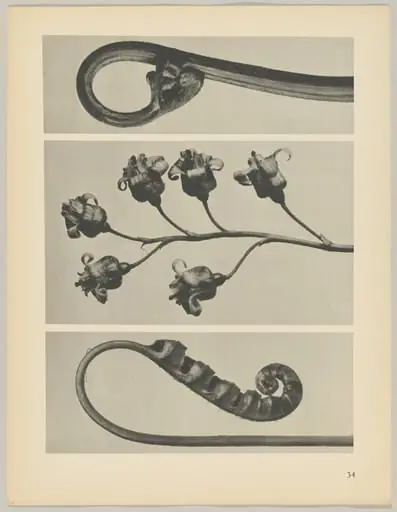
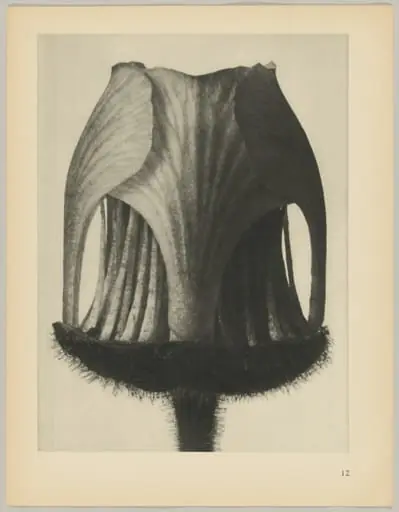
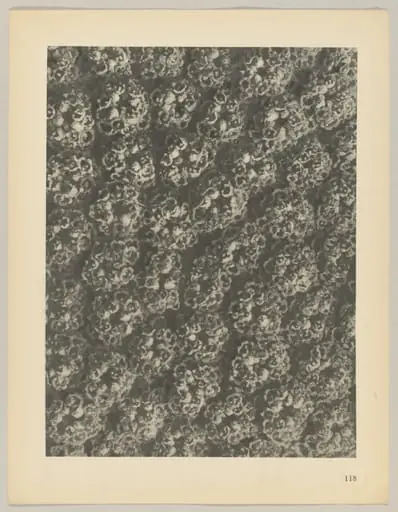
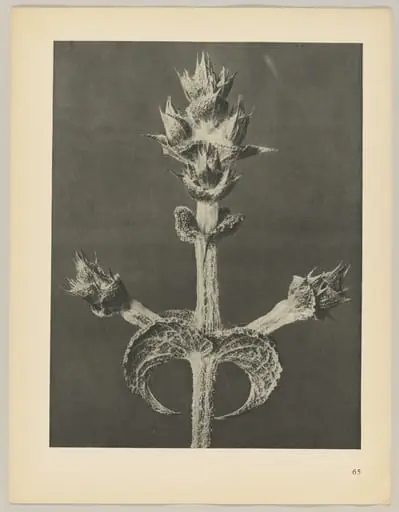
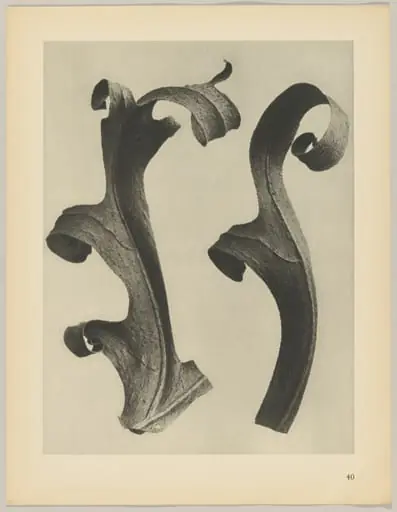
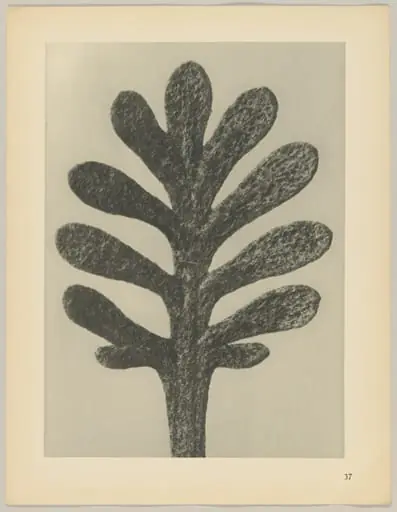
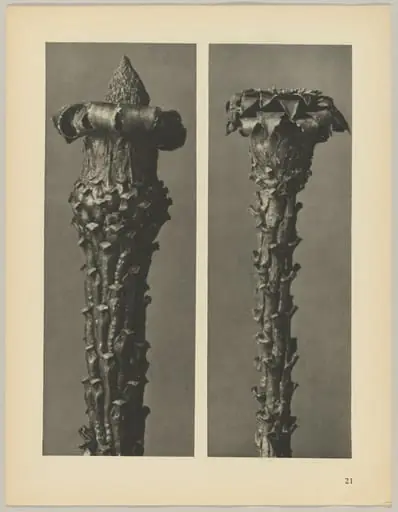
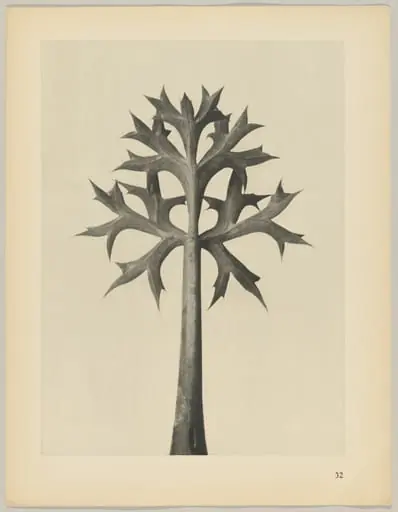
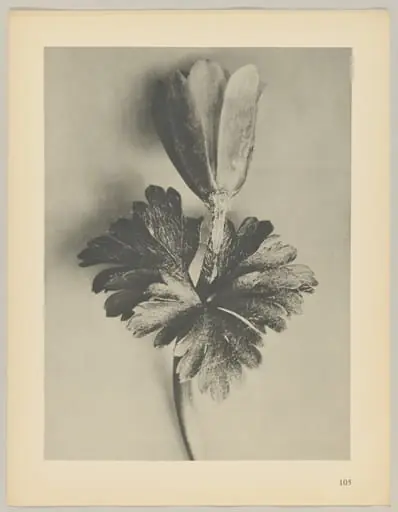
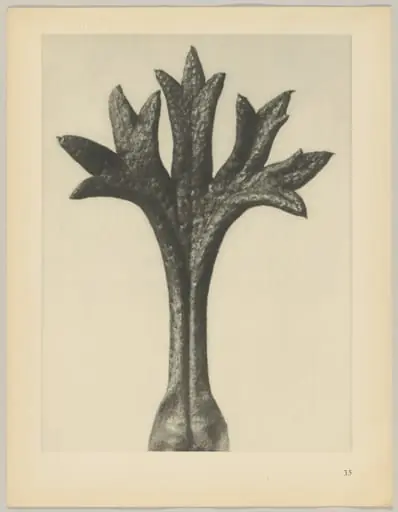
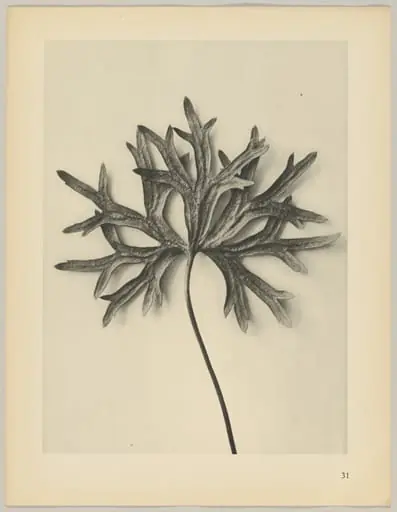
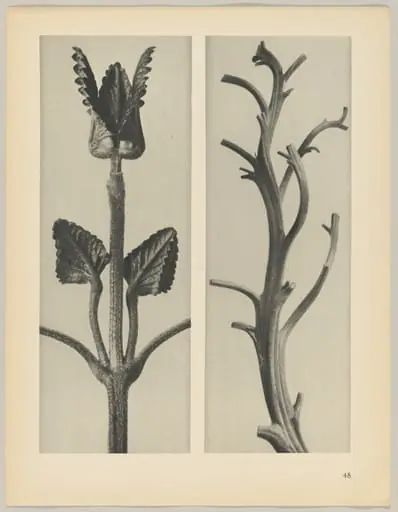
Created in 1928, *Verbena canadensis* is a black‑and‑white photogravure that presents a close‑up view of a single plant branch. The image captures the thin stem, its subdividing offshoots, and jagged, slightly fuzzy leaves rendered with sharp contrast, emphasizing the natural geometry of the specimen.
Subject & Meaning
The work isolates a solitary branch of *Verbena canadensis*, allowing viewers to examine the plant’s structural details and growth patterns. By magnifying the foliage and stem, the image invites contemplation of the inherent design principles found in botanical forms, aligning natural morphology with artistic composition.
Technique & Style
Blossfeldt employed the photogravure process, a intaglio printing method that transfers photographic images onto a copper plate for high‑resolution, tonal depth. This technique yields a sculptural quality, with fine lines and subtle gradations that accentuate texture and form in the monochrome rendering.
History & Provenance
The print was produced by German photographer and sculptor Karl Blossfeldt and first appeared in his 1929 publication *Urformen der Kunst* (The Forms of Art). The series documented his systematic study of plants, reflecting a lifelong interest sparked by his father’s engagement with the natural world.
Context
Blossfeldt’s botanical series emerged during the interwar period, intersecting with contemporary movements that explored the relationship between nature, design, and modernist aesthetics. His work contributed to a broader dialogue about the visual parallels between organic structures and artistic form.
Artist & collection
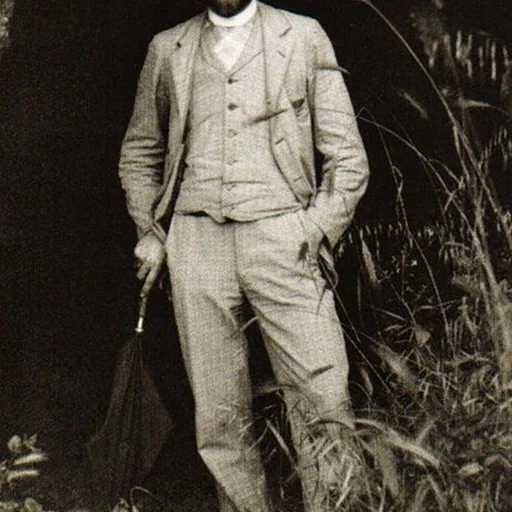
Artist
Karl Blossfeldt (13 June 1865 – 9 December 1932) was a German photographer and sculptor.