Artwork
Running
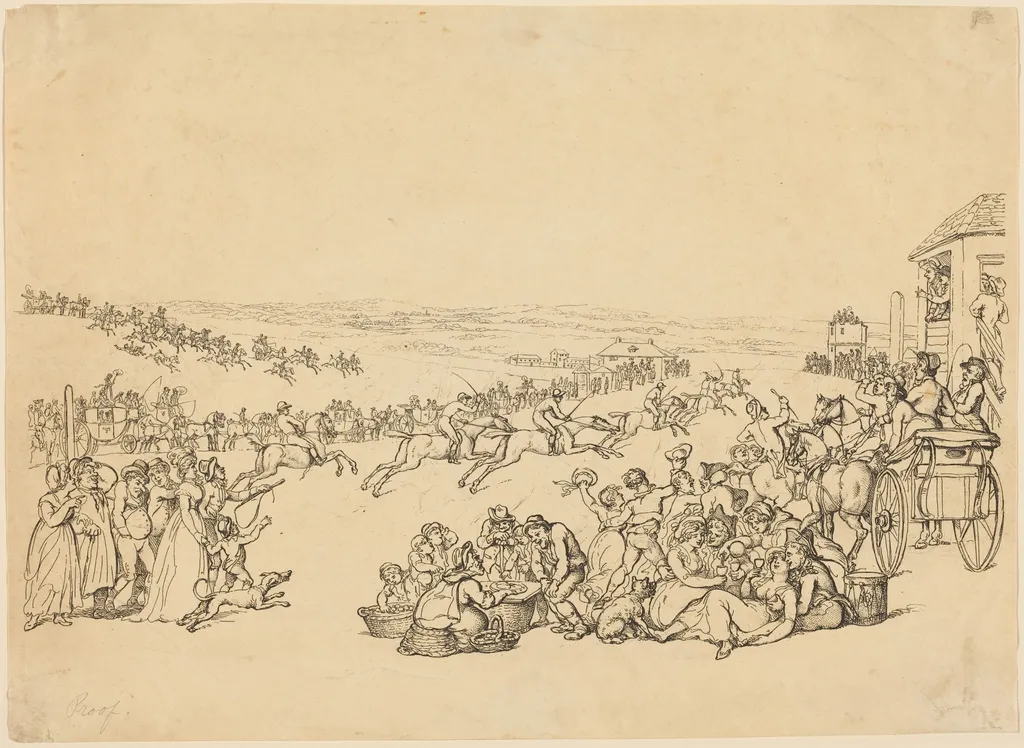
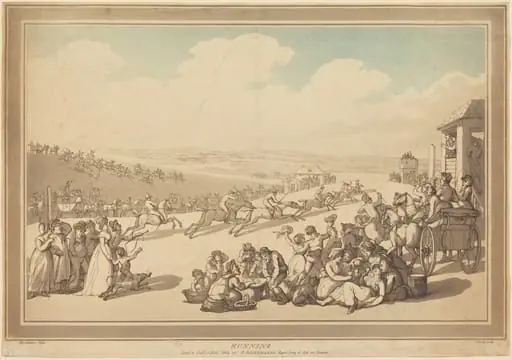
Running is an ink print by the Baroque artist John Bluck. It dates from 1795 and is held in the collection of the National Gallery of Art.
About this work
Overview
John Bluck’s 1795 etching titled Running depicts a solitary figure captured in the act of sprinting. The composition centers on a man whose coat and hair are rendered as if blown by motion, emphasizing the immediacy of the gesture. The work is executed as a print, employing the traditional etching process on a metal plate.
Subject & Meaning
The image focuses on a lone runner, frozen at a moment of swift movement. By isolating the figure and accentuating the flaring coat and hair, Bluck conveys a sense of urgency and physical exertion, inviting viewers to contemplate the fleeting nature of motion and the human impulse toward speed.
Technique & Style
Bluck employed the classic etching method, incising lines into a copper plate with a needle before applying ink and wiping the surface to retain ink only in the incised marks. The resulting print displays rough, scratchy lines and uneven shading, giving the figure a kinetic edge and a texture that underscores the rapidity of the scene.
History & Provenance
Created in the late eighteenth century, Running is among the limited number of prints attributed to Bluck, whose output was modest during the early nineteenth century. The work is part of the collection held by the National Gallery of Art in Washington, where it is displayed alongside the artist’s other surviving pieces.
Context
Etching in the 1790s was a common medium for artists exploring dynamic subjects, as the technique allowed for swift execution and fine line work. Bluck’s choice to portray a moving figure aligns with contemporary interests in capturing everyday activity and the physicality of the human body within the printmaking tradition.
Artist & collection


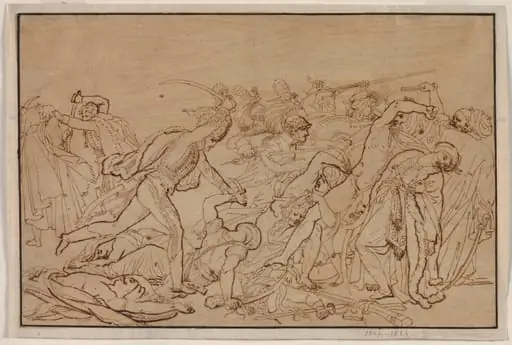 Study for "The Revolt of Cairo"
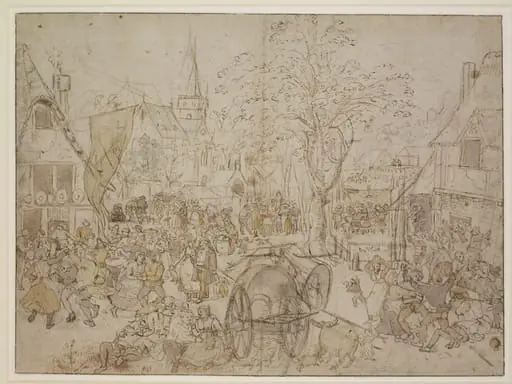 A Village Kermis with a Wedding Feast
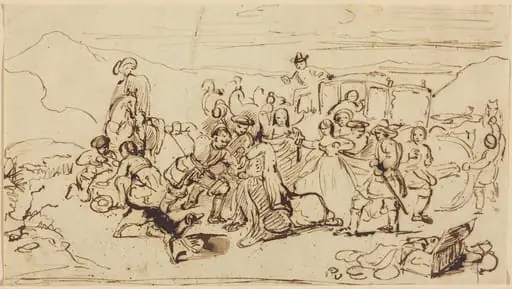 The Murder of Archbishop Sharpe
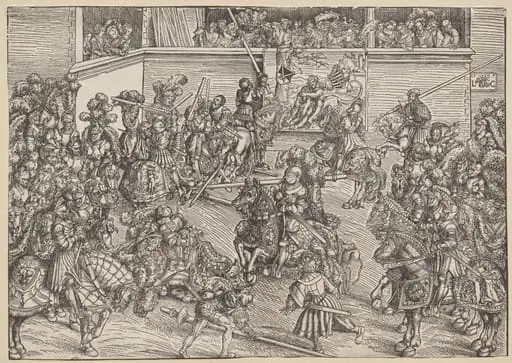 The Tournament with Sampson and the Lion
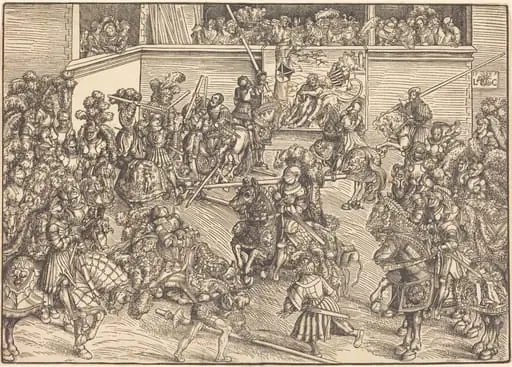 The Second Tournament with the Tapestry of Samson and the Lion
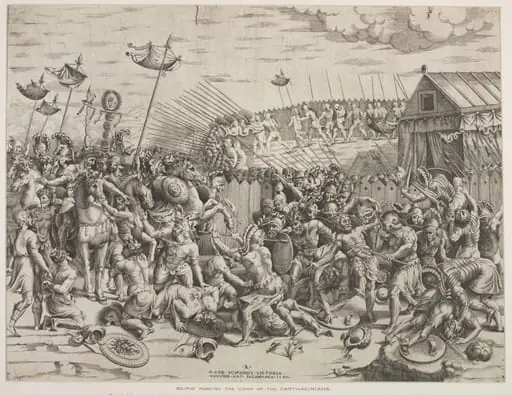 Untitled
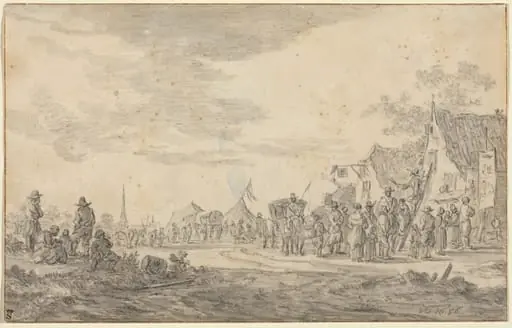 Village Fair
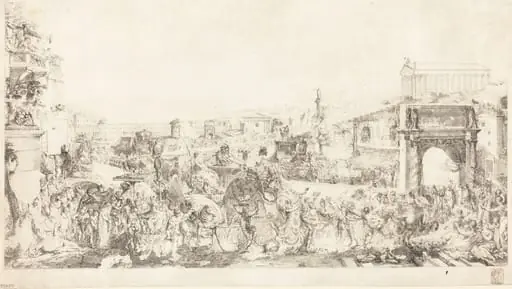 Triomphe de Pompee dans Rome
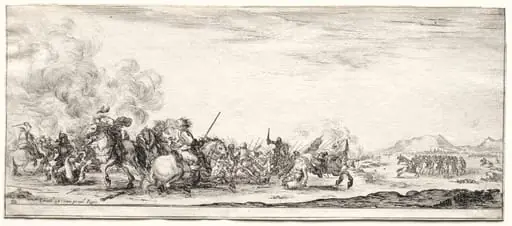 Peace and War: Cavalry Skirmish
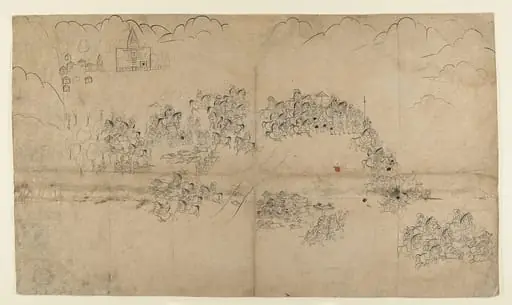 Untitled
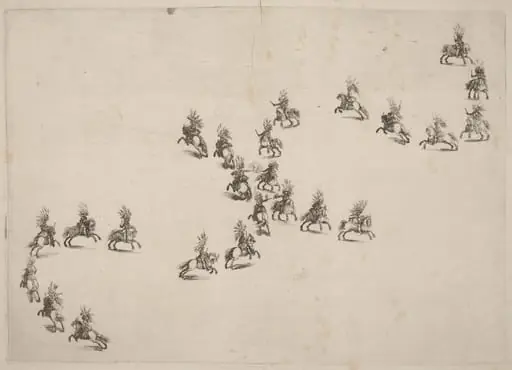 Twenty-Four Cavaliers in Double S Formation
 Running