Artwork
A Village Kermis with a Wedding Feast
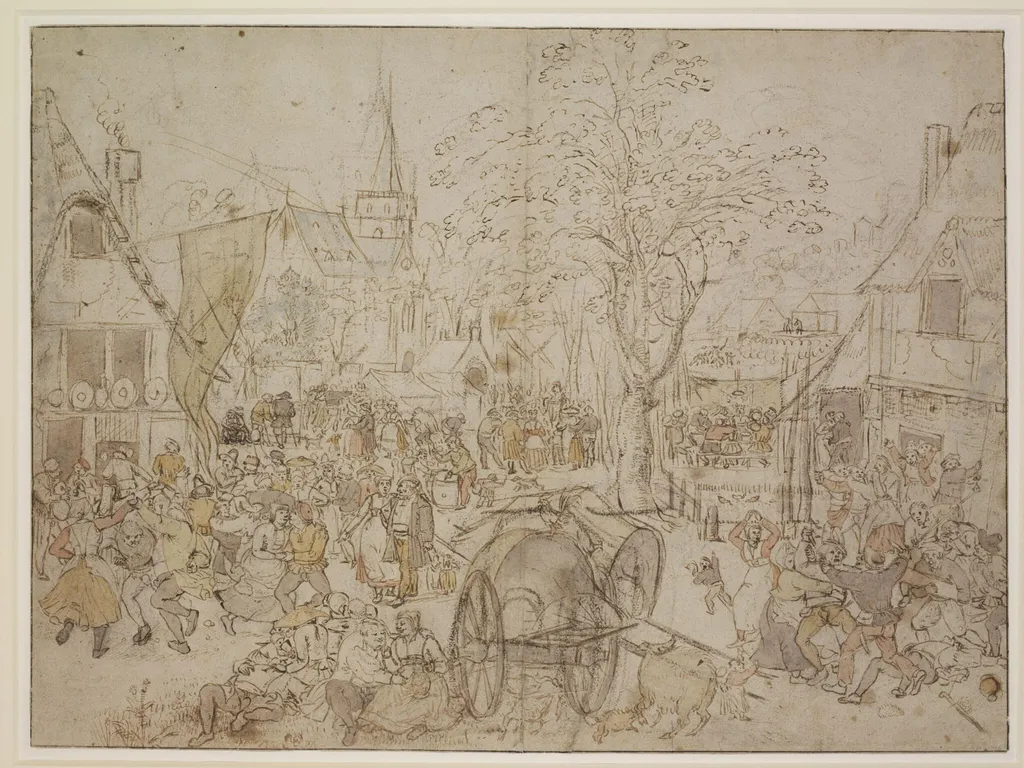
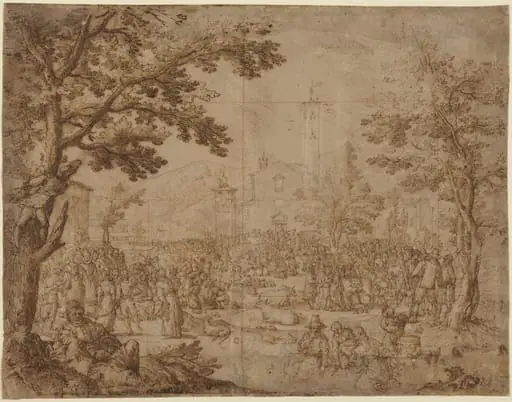
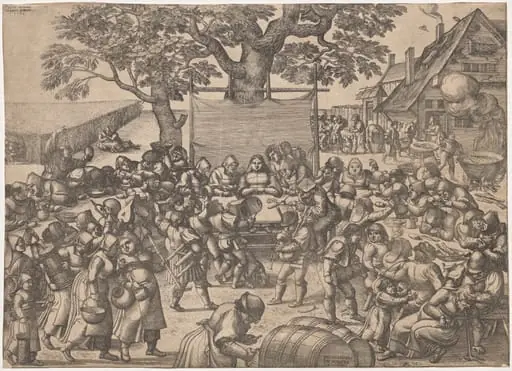
A Village Kermis with a Wedding Feast is a drawing by Pieter the Elder Bruegel. It dates from 1550 and is held in the collection of the Victoria and Albert Museum. This ink and wash drawing by Pieter Bruegel the Elder captures a rural kermis, or village fair, centered on a church and a wedding feast.
About this work
Overview
This ink and wash drawing by Pieter Bruegel the Elder captures a rural kermis, or village fair, centered on a church and a wedding feast.
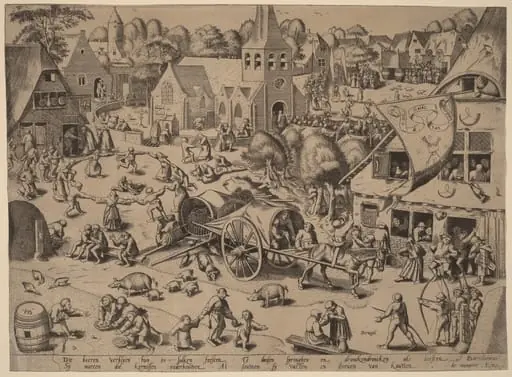
This ink and wash drawing by Pieter Bruegel the Elder captures a rural kermis, or village fair, centered on a church and a wedding feast. The scene unfolds in a crowded open square, with figures engaged in music, dance, and socializing. A tent on the right shelters the bride and groom, while the foreground features a stationary cart and domestic animals, grounding the celebration in everyday rural life.
Subject & Meaning
The drawing portrays a communal celebration tied to a wedding, reflecting the social rituals of 16th-century Flemish villages. The gathering of neighbors, musicians, and revelers underscores the importance of collective events in rural life. The presence of animals and a simple cart suggests the blending of domestic and festive spaces, hinting at the integration of ceremony into ordinary existence.
Technique & Style
Bruegel employs fine ink lines and subtle washes to model forms and suggest depth. Figures are rendered with quick, expressive strokes, capturing movement and gesture without excessive detail. The contrast between the dense clustering of people and the sparse, textured ground creates visual rhythm. The drawing’s economy of means enhances its immediacy and observational realism.
History & Provenance
The drawing entered the museum’s collection in 1869 through the bequest of Rev. Alexander Dyce, a noted collector of early Netherlandish art. Its survival as a preparatory study or independent work reflects its value to later collectors. No earlier ownership records are documented, but its style aligns with Bruegel’s known sketches from the 1560s.
Context
Bruegel’s drawings of peasant life emerged during a period of growing interest in secular, everyday subjects among Northern Renaissance artists. This scene echoes contemporary Flemish traditions of kermis festivals, which combined religious feasts with communal merrymaking. The drawing stands as a record of social customs before the rise of more formalized urban culture.
Legacy
The drawing exemplifies Bruegel’s enduring focus on the rhythms of rural life, influencing later genre painters who sought to depict ordinary people with dignity. Its unidealized portrayal of festivity, without moralizing or caricature, contributed to a more naturalistic tradition in European drawing. It remains a key example of how observation could inform artistic narrative.
Artist & collection
Artist
Pieter Bruegel the Elder turned village life into art. In the mid-1500s he drew “A Village Kermis with a Wedding Feast,” a busy scene of dancing, eating, and flirting that feels like a Renaissance snapshot. He sketched…