Artwork
States of Mind I: The Farewells
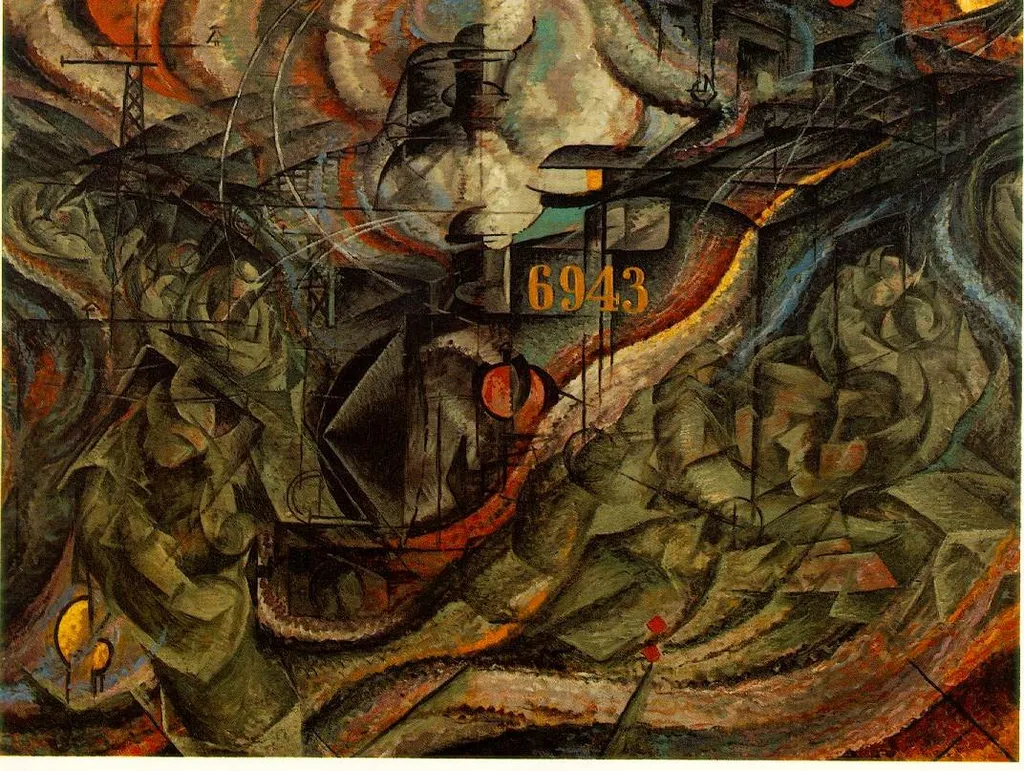
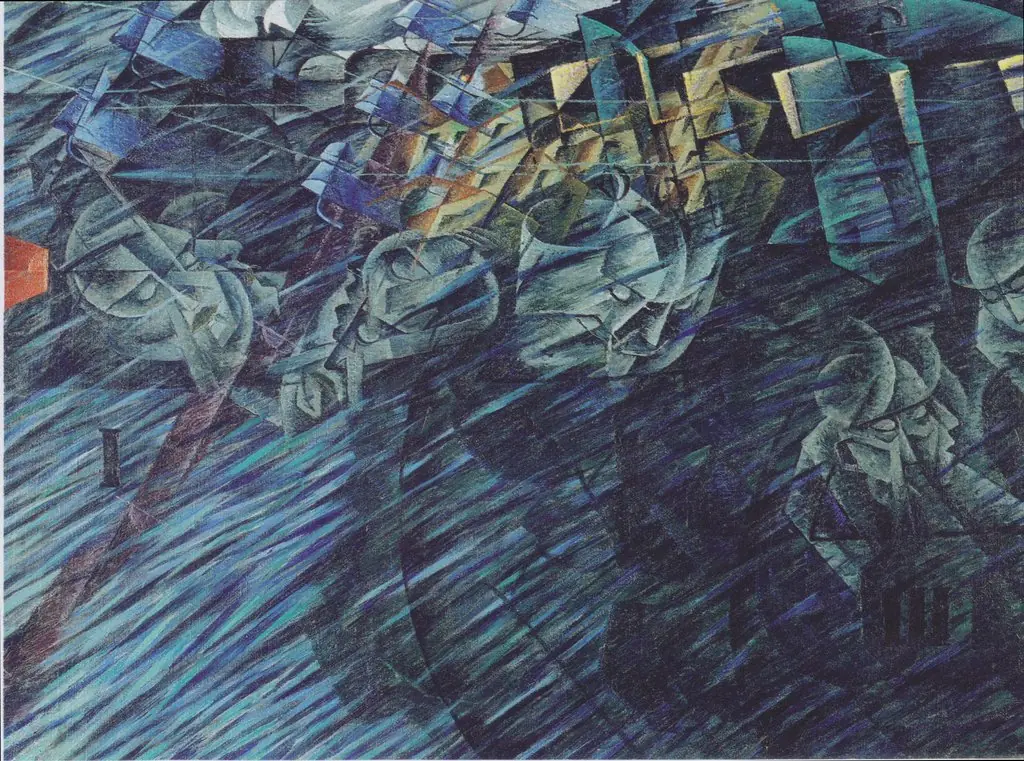
States of Mind I: The Farewells is an oil painting by the Futurist artist Umberto Boccioni. It dates from 1911 and is held in the collection of the Museum of Modern Art.
About this work
Overview
Created in 1911, this oil painting is the first of a trio by Italian Futurist Umberto Boccioni that explore the emotional currents of early twentieth‑century rail travel. The work depicts a bustling railway station where farewells unfold amid a whirl of steam, smoke and motion, while a solitary engine number remains a point of visual calm.
Subject & Meaning
The composition captures the moment of departure, juxtaposing the anxiety of those leaving with the lingering presence of those staying behind. By intertwining figures, vapor and architectural elements into a single vortex, Boccioni seeks to convey the psychological turbulence of modern mobility, emphasizing the fleeting nature of human connections in an industrial age.
Technique & Style
Executed in oil, the painting employs rapid, gestural brushwork that blurs individual forms into abstracted shapes. A muted palette of browns, grays and blues reinforces the atmospheric haze, while a dominant central clock face heightens the sense of temporal urgency. The overall effect aligns with Futurist interests in dynamism, speed and the dissolution of static perspective.
History & Provenance
The three station scenes were initially purchased directly from Boccioni by Futurist founder Filippo Tommaso Marinetti. After Marinetti’s death, his widow sold the works to philanthropist Nelson A. Rockefeller, who donated them to the Museum of Modern Art in 1979, where they remain in the permanent collection.
Artist & collection

Artist
Umberto Boccioni was an influential Italian painter and sculptor. He helped shape the revolutionary aesthetic of the Futurism movement as one of its principal figures. Despite his short life, his approach to the…

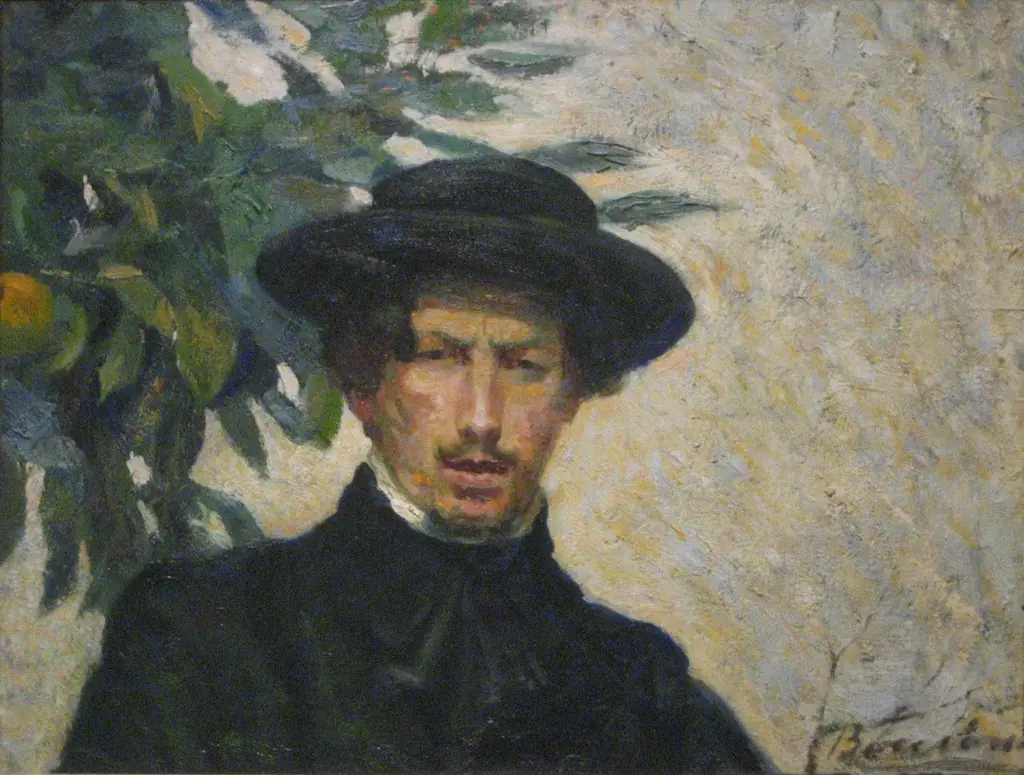
![Mia madre che lavora [My Mother Working], by Umberto Boccioni](https://artifactworldgallery.com/img/umberto-boccioni--mia-madre-che-lavora-my-mother-working--ce84f1205dd9eec1-w320.webp)
![Woman Reading [Donna che legge], by Umberto Boccioni](https://artifactworldgallery.com/img/umberto-boccioni--woman-reading-donna-che-legge--d9496ecdedc4f414-w320.webp)
![Periphery [Periferia], by Umberto Boccioni](https://artifactworldgallery.com/img/umberto-boccioni--periphery-periferia--ea91379039261e85-w320.webp)