Artwork
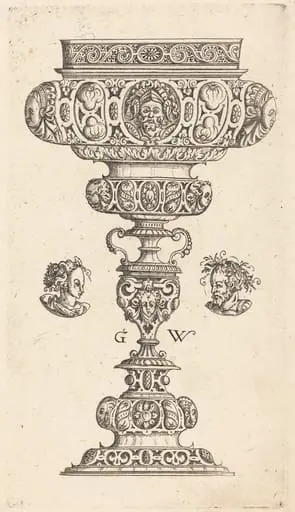
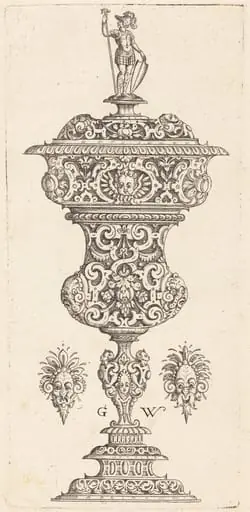
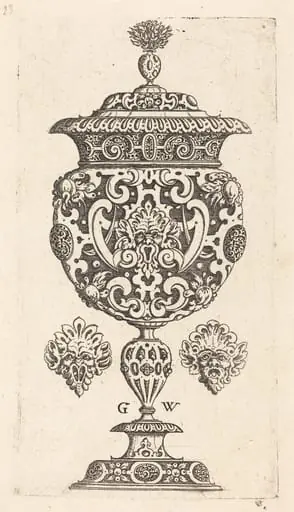
Goblet with two Masques on lid
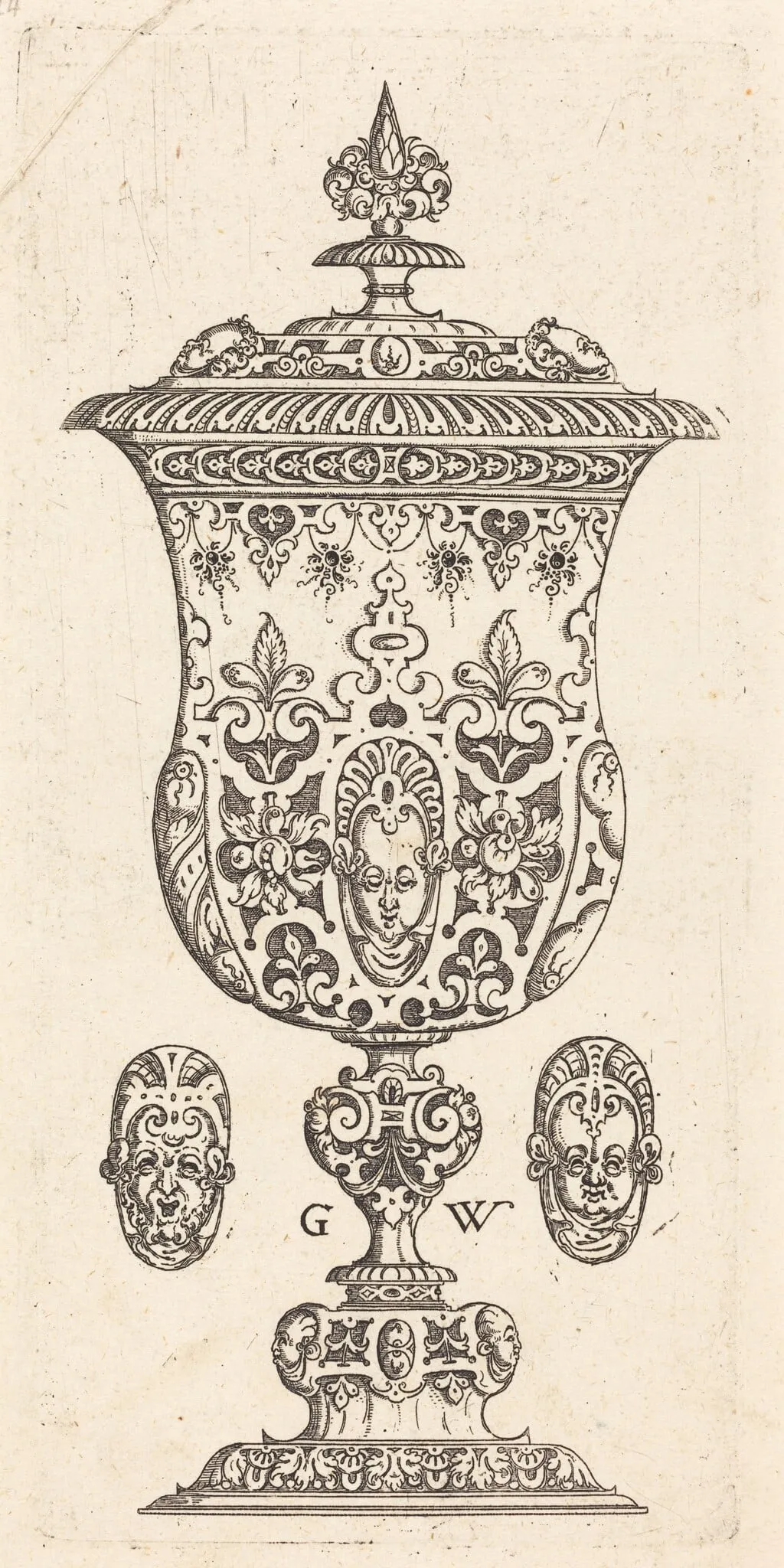
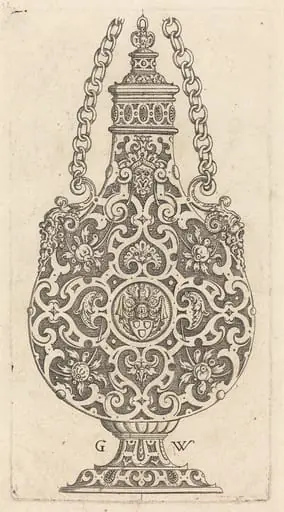
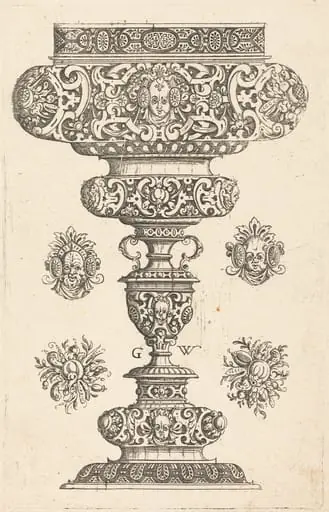
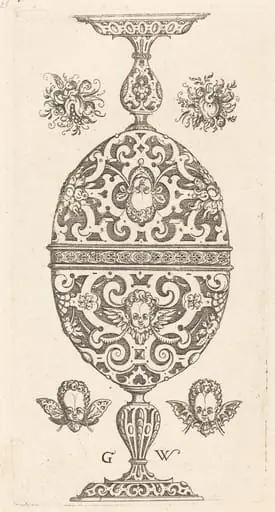
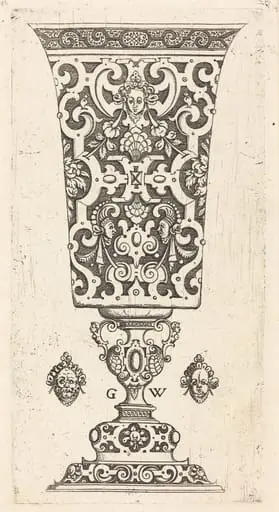
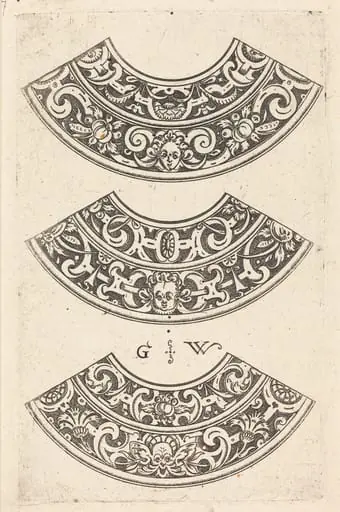
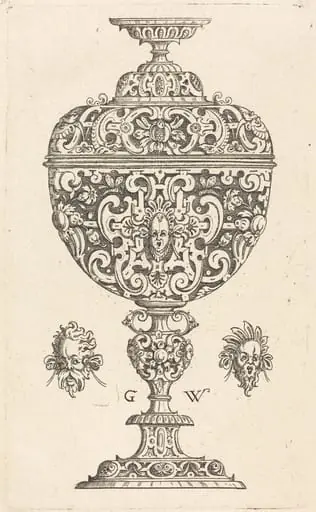
Goblet with two Masques on lid is an ink print by the Renaissance artist Georg Wechter I. It dates from 1579 and is held in the collection of the National Gallery of Art.
About this work
Overview
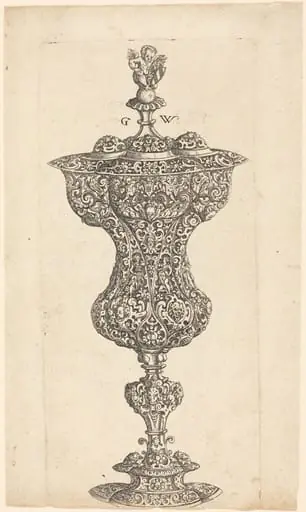
Georg Wechter I’s 1579 engraving presents a ceremonial goblet capped with a lid that bears two stylized masks. The vessel is surrounded by elaborate floral motifs and rests upon an ornamented base, while the lid is topped with a modest finial. The composition balances decorative richness with a clear structural outline, typical of late‑Renaissance print design.
Subject & Meaning
The central focus of the image is the goblet, a symbol of communal drinking and celebration, while the two masks on the lid evoke theatrical or festive personae, suggesting a link between revelry and performance. The surrounding foliage reinforces a sense of abundance and natural beauty, underscoring the object's role in ceremonial contexts.
Technique & Style
Wechter employs fine cross‑hatching to render tonal variation, giving the metal surfaces a sense of sheen and depth. The line work is meticulous, delineating the intricate floral patterns and the delicate features of the masks. This level of detail reflects the precision of Northern Renaissance engraving, where texture is achieved through dense, intersecting lines.
History & Provenance
Created in 1579, the print originates from the workshop of Georg Wechter I, a German goldsmith and engraver active in Augsburg. The work likely served as a design reference for metalworkers or as a decorative illustration for pattern books circulated among artisans of the period.
Context
During the late sixteenth century, German artisans frequently produced engravings that functioned as visual catalogs for ornamental motifs. Wechter’s goblet design aligns with this practice, offering a model for the integration of theatrical elements into everyday objects, a trend that mirrored the broader cultural fascination with pageantry and courtly display.
Legacy
Although not widely reproduced, the engraving exemplifies the transmission of decorative ideas across media in the Renaissance. Its detailed rendering of masks and foliage contributed to the visual vocabulary that later metalworkers and printmakers adapted in ceremonial silverware and festive objects.
Artist & collection