Artwork
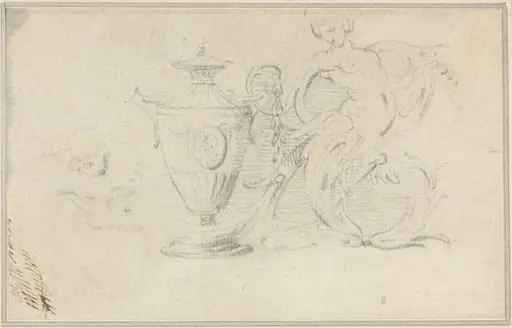
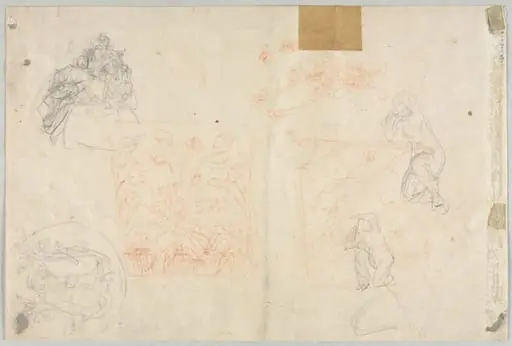
Design for Two Vases and an Ornament (recto); Sketches of Five Arms and a Head (verso)
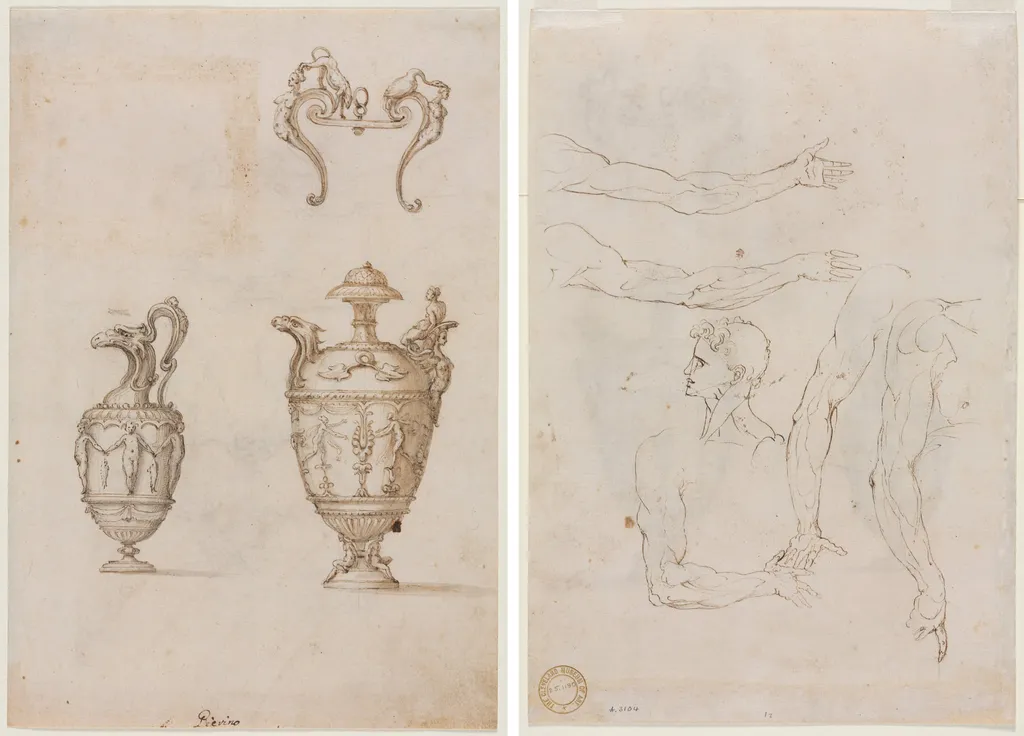
Design for Two Vases and an Ornament (recto); Sketches of Five Arms and a Head (verso) is a drawing by the Renaissance artist Luzio Romano. It dates from 1504 and is held in the collection of the Cleveland Museum of Art.
About this work
Overview
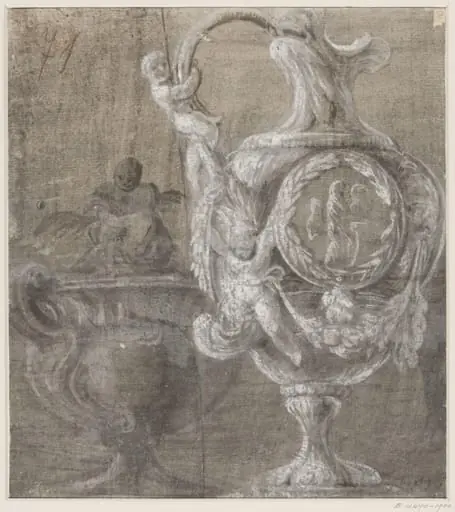
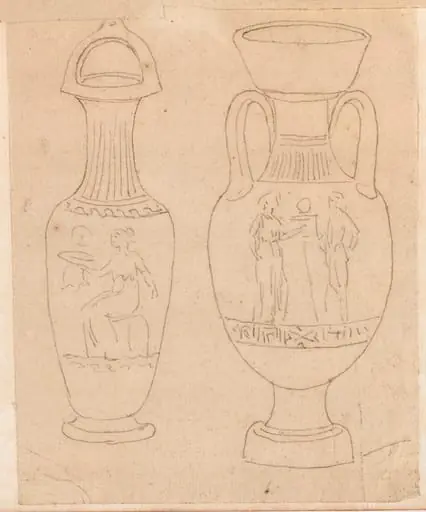
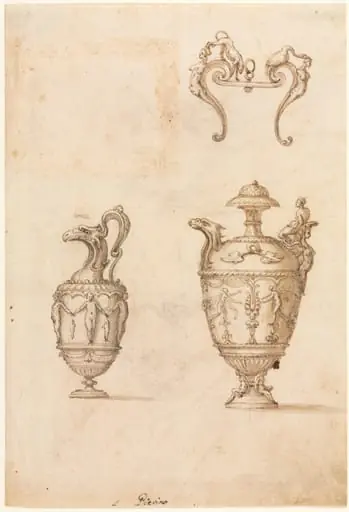
The recto presents two elaborate vase forms, likely intended as models for metalwork or ceramics, while the verso contains rapid sketches of limbs and a head.
This double-sided drawing by Luzio Romano, dated circa 1504, combines decorative design with anatomical study. The recto presents two elaborate vase forms, likely intended as models for metalwork or ceramics, while the verso contains rapid sketches of limbs and a head. The sheet exemplifies the Renaissance practice of integrating ornamental and figurative disciplines within a single working surface, reflecting the artist’s multifaceted role in courtly and artistic circles.
Subject & Meaning
The recto’s vases draw from classical antiquity, featuring scrollwork and sculpted figures reminiscent of Greek and Roman pottery. The central knot may symbolize unity or craftsmanship. On the verso, the fragmented arms and head suggest preparatory study for larger compositions, possibly for frescoes or sculpture. Together, the two sides reveal a designer’s engagement with both idealized form and practical execution, bridging decorative and humanist concerns.
Technique & Style
Romano employed fine, light pen lines to define the vases’ intricate contours and the anatomical studies’ fluid outlines. The recto’s precision contrasts with the verso’s spontaneity, indicating different modes of working—one deliberate and compositional, the other observational and exploratory. The Mannerist tendency toward refined detail and stylized form is evident in the vases’ elongated proportions and ornamental complexity, while the sketches show a focus on gesture over finish.
History & Provenance
The drawing entered the Cleveland Museum of Art’s collection as part of a broader acquisition of Renaissance drawings. Its attribution to Luzio Romano, an artist active in central Italy during the early 16th century, is based on stylistic parallels with his known works. The sheet’s dual-sided nature suggests it was a working document, likely used in a workshop setting rather than as a finished presentation piece.
Context
In early 16th-century Italy, artists often trained across disciplines—painting, sculpture, and decorative arts—reflecting the era’s integration of classical revival and practical craftsmanship. Romano’s sheet mirrors this interdisciplinary approach, aligning with contemporaries like Raphael and Giulio Romano, who similarly studied antiquities and human anatomy to inform their designs. Such drawings were essential tools in transmitting classical aesthetics to artisans and patrons.
Legacy
This drawing preserves a moment in the transmission of classical ideals into Renaissance material culture. Its combination of ornamental and anatomical studies illustrates how artists navigated the boundaries between art and craft. Though Romano’s name is less prominent today, such sheets remain vital evidence of the collaborative, experimental processes underpinning Renaissance artistic production.
Artist & collection
Artist
Luzio Luzi (sometimes Luzzi or Luci), also known as Luzio Luzi da Todi and Luzio Romano (died late 16th century), was an Italian painter, stuccoist, and draftsman of the High Renaissance era favoring the Mannerist style.

 Border Lines (verso)
 Design for Two Vases and an Ornament (recto)
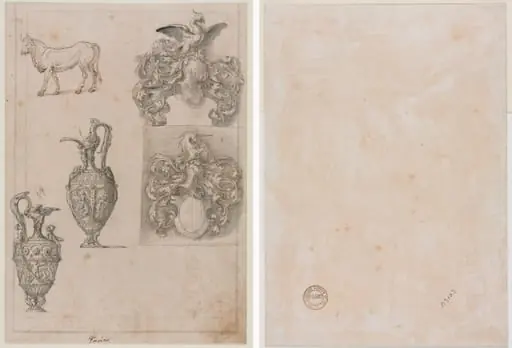 Design for Two Vases, Two Coats of Arms, and a Bull (recto) Several Line Borders (verso)
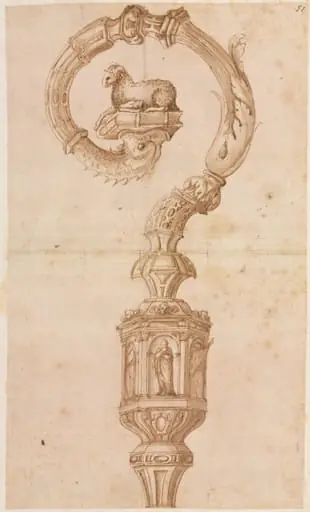 Design for a Crozier
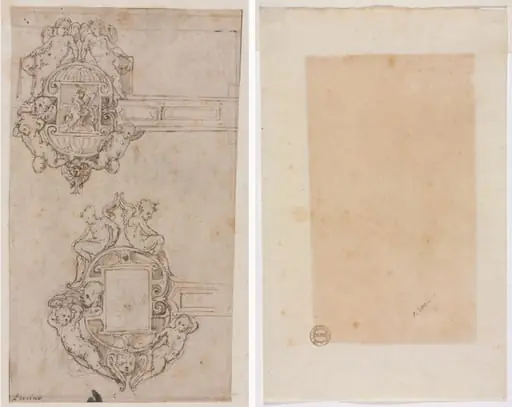 Design for Decorative Hinges (recto) Border Lines (verso)
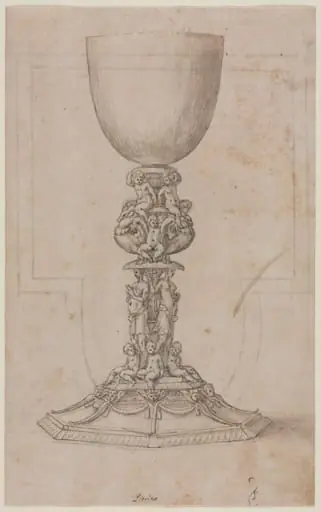 Design for a Chalice (recto)
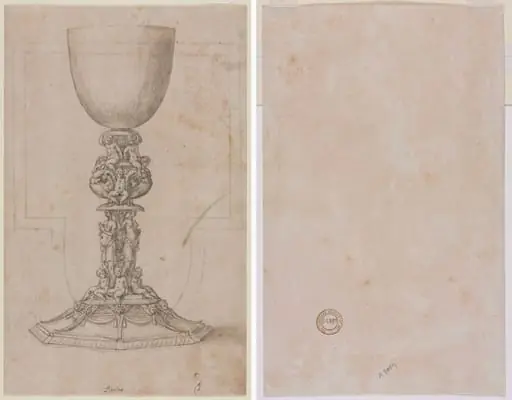 Design for a Chalice (recto) Architectural Plan (verso)
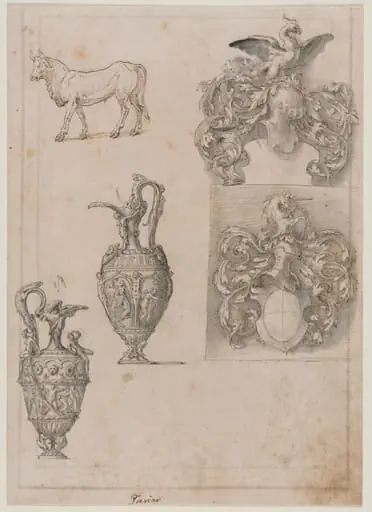 Design for Two Vases, Two Coats of Arms, and a Bull (recto)
![Designs for Vases [verso], by Giuseppe Cades](https://artifactworldgallery.com/img/giuseppe-cades--designs-for-vases-verso--e4733d1cf07d063d-w320.webp)