Artwork
Design for Two Vases and an Ornament (recto)
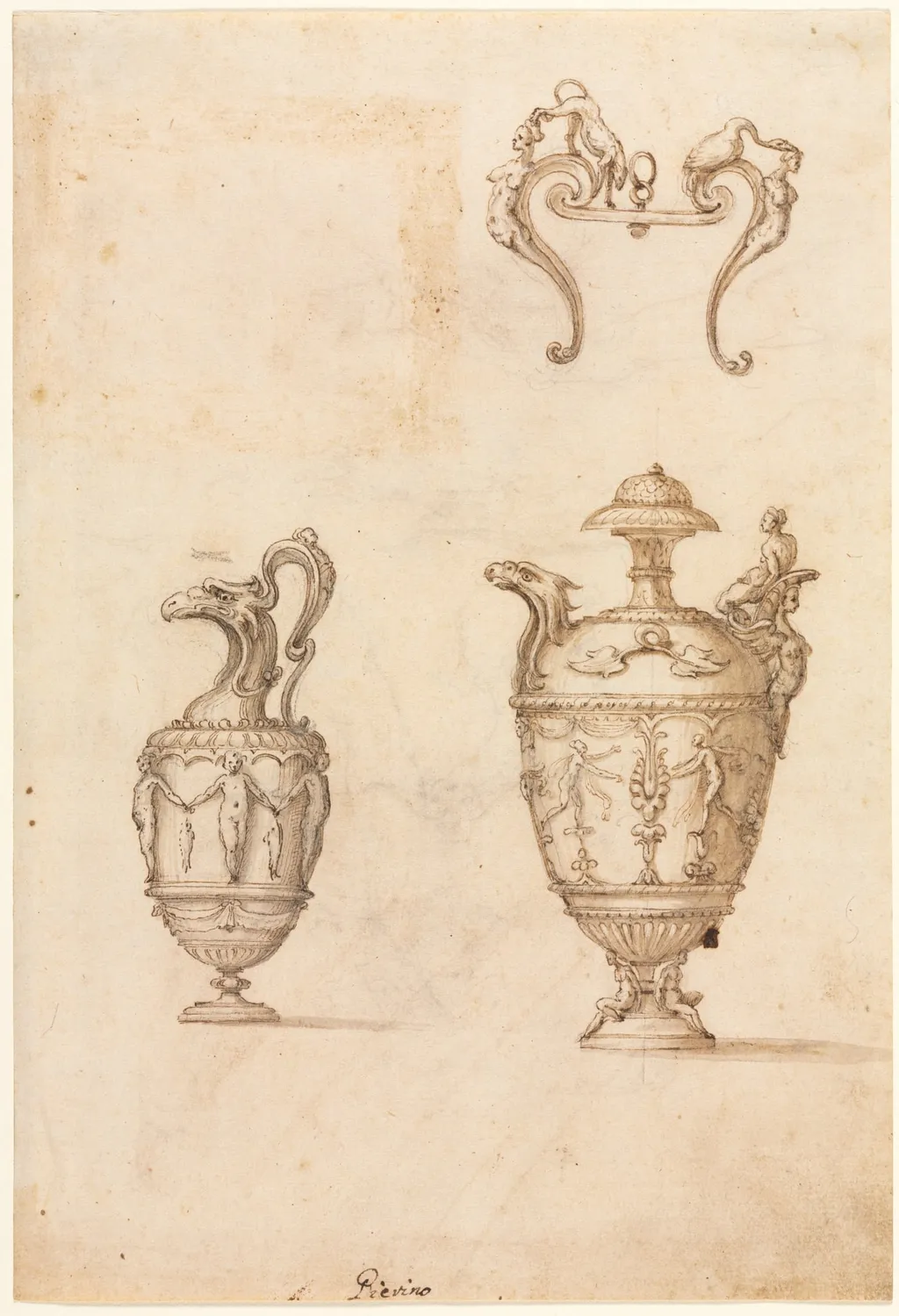
Design for Two Vases and an Ornament (recto) is a drawing by the Renaissance artist Luzio Romano. It dates from 1504 and is held in the collection of the Cleveland Museum of Art.
About this work
Overview
Executed in pen and ink, it presents two vases and a complementary ornamental handle, likely intended as preparatory work for metalwork or ceramic design.
Created around 1504 by the Italian artist Luzio Romano, this drawing belongs to a series of decorative studies produced during the High Renaissance. Executed in pen and ink, it presents two vases and a complementary ornamental handle, likely intended as preparatory work for metalwork or ceramic design. The sketch’s light, fluid lines suggest a working draft rather than a finished presentation, emphasizing form over finish.
Subject & Meaning
The drawing features two elaborately modeled vases, each adorned with miniature figures, scrolling foliage, and classical motifs. One vase terminates in a domed lid, the other in a small statuette, reflecting Renaissance fascination with antiquity and symbolic ornament. The inclusion of human and natural elements within architectural forms signals an interest in harmony between the figurative and the decorative, typical of period design theory.
Technique & Style
Romano employed delicate, rapid pen strokes to suggest volume and texture without heavy shading. The lines are loose yet purposeful, conveying the weight and curvature of the vases through contour and implied mass. The ornamentation is rendered with precision, yet the overall composition retains a sense of spontaneity, characteristic of Mannerist draftsmanship that prioritized expressive line over rigid finish.
History & Provenance
The drawing entered the collection of The Cleveland Museum of Art as part of a broader acquisition of Renaissance decorative studies. Its origins trace to Romano’s workshop in central Italy, where he collaborated on architectural and interior embellishments. Though no direct commission is documented, its stylistic ties to contemporary metalwork and stucco reliefs suggest it was made for a patron or guild involved in luxury object production.
Context
In early 16th-century Italy, artists increasingly turned to ornament as a subject in its own right, moving beyond religious or narrative themes. Romano’s work aligns with a growing market for design manuals and pattern books used by craftsmen. His vases echo forms found in Roman antiquities rediscovered during the period, filtered through contemporary interpretations that favored complexity and refined detail.
Legacy
This drawing exemplifies how Renaissance draftsmen contributed to the dissemination of decorative vocabulary across media. Though Romano’s name is less known than his contemporaries, such studies influenced artisans in metal, ceramics, and architecture. The work survives as a testament to the collaborative, interdisciplinary nature of Renaissance design, where drawing served as both idea and instruction.
Artist & collection
Artist
Luzio Luzi (sometimes Luzzi or Luci), also known as Luzio Luzi da Todi and Luzio Romano (died late 16th century), was an Italian painter, stuccoist, and draftsman of the High Renaissance era favoring the Mannerist style.

 Border Lines (verso)
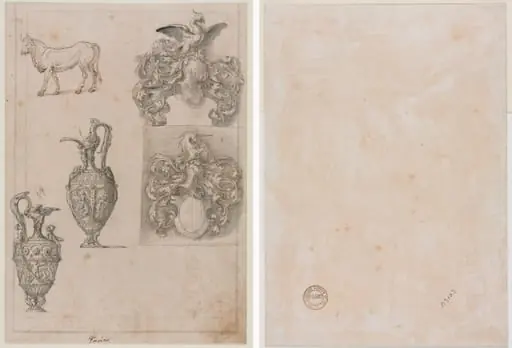 Design for Two Vases, Two Coats of Arms, and a Bull (recto) Several Line Borders (verso)
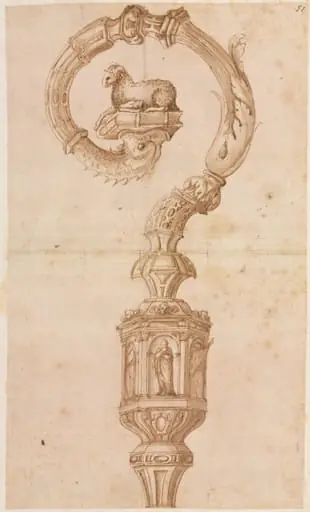 Design for a Crozier
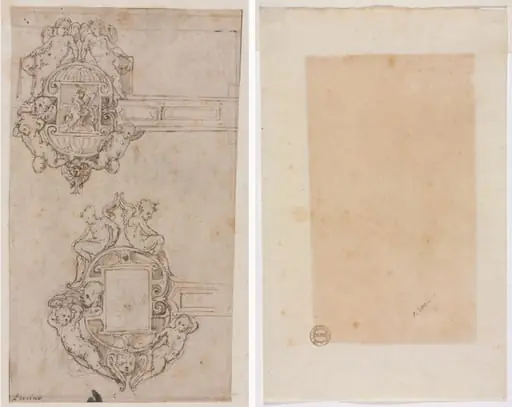 Design for Decorative Hinges (recto) Border Lines (verso)
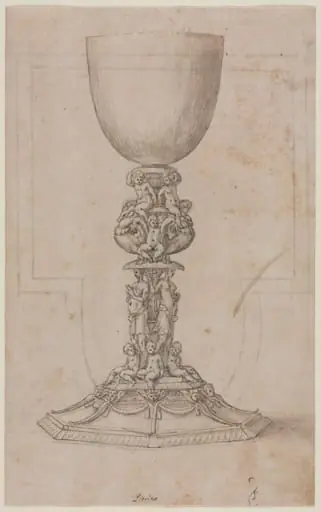 Design for a Chalice (recto)
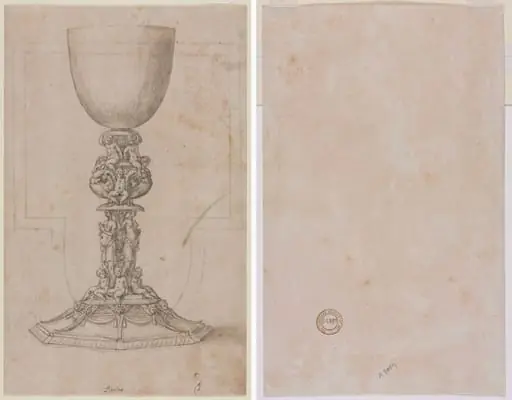 Design for a Chalice (recto) Architectural Plan (verso)
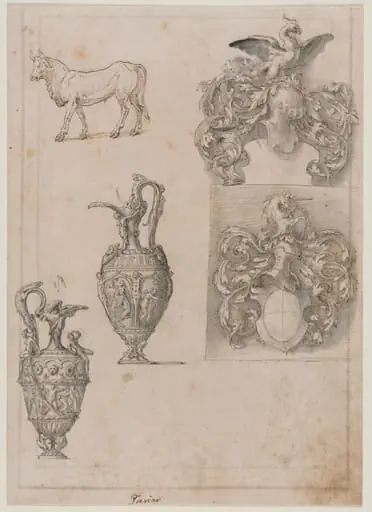 Design for Two Vases, Two Coats of Arms, and a Bull (recto)
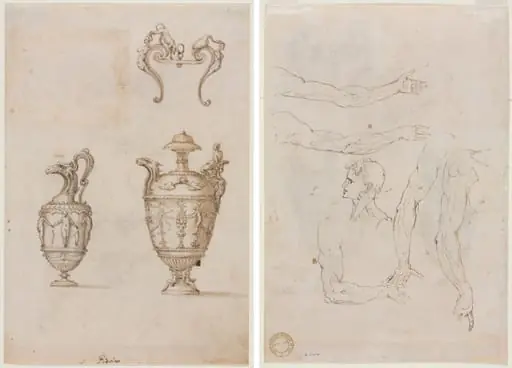 Design for Two Vases and an Ornament (recto); Sketches of Five Arms and a Head (verso)
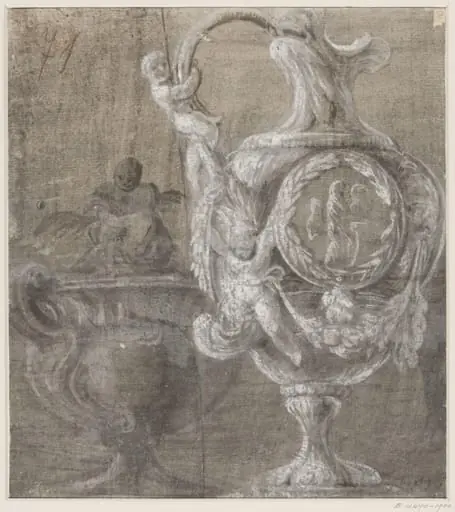
![Designs for Vases [verso], by Giuseppe Cades](https://artifactworldgallery.com/img/giuseppe-cades--designs-for-vases-verso--e4733d1cf07d063d-w320.webp)