Artwork
Marble stem from candelabrum
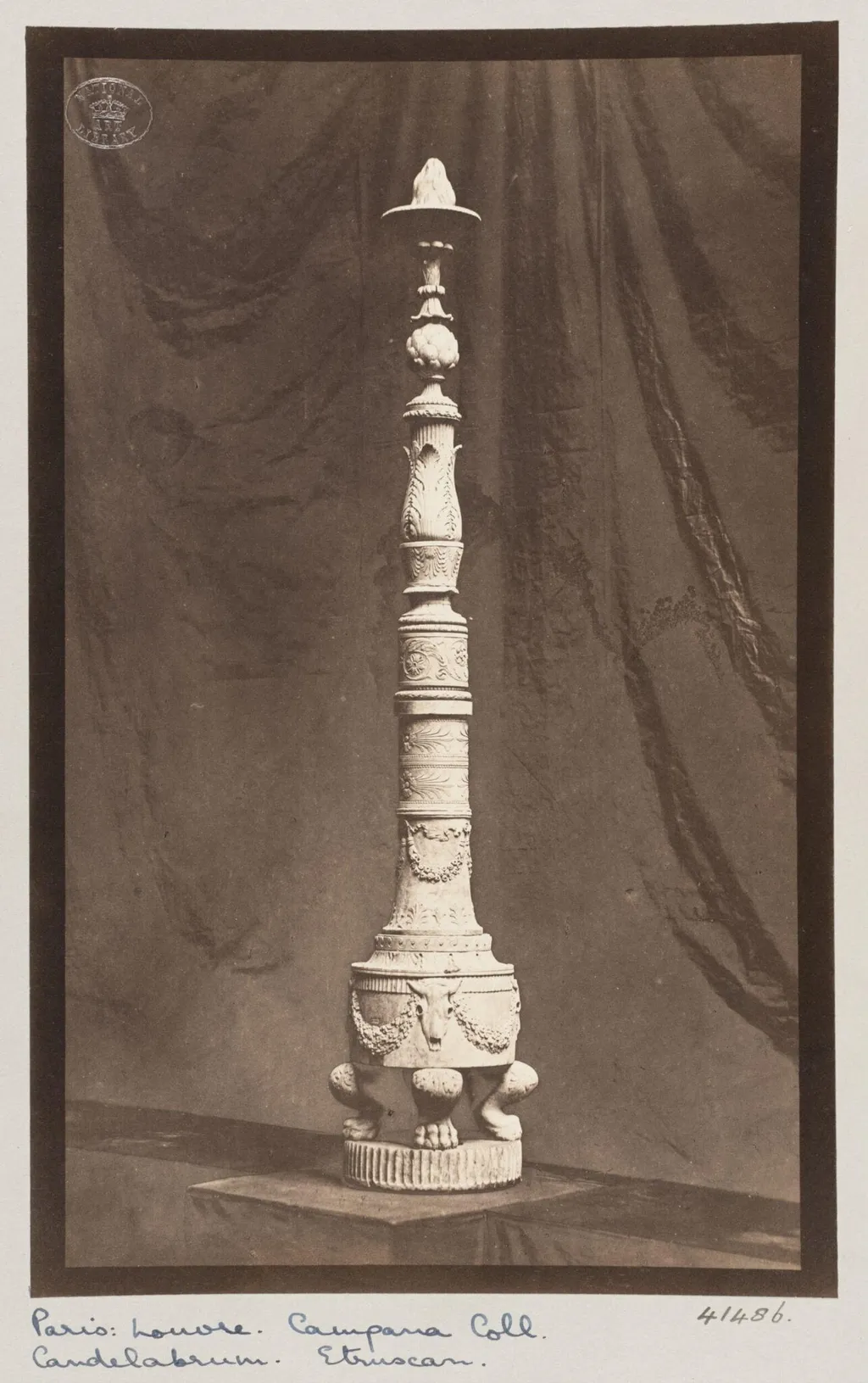
Marble stem from candelabrum is a photographic photography by the Impressionist artist Louise Laffon. It dates from 1864 and is held in the collection of the Victoria and Albert Museum.
About this work
But it’s also part of a big shift: the Victoria and Albert Museum started collecting photos early, in 1852, to help artists and students study real objects.
This photograph shows a marble stem from a candelabrum, made in 1863–64 by Louise Laffon. It’s small, detailed, and looks ordinary—just a carved piece of stone. But it’s also part of a big shift: the Victoria and Albert Museum started collecting photos early, in 1852, to help artists and students study real objects.
Laffon’s work fits into the overlapping worlds of Impressionism and Realism. Even back then, the museum saw photography as a tool, not just art.
Check out the Victoria and Albert Museum.
Overview
This photograph, taken in 1863–64 by Louise Laffon, documents a marble stem from a candelabrum. Created as part of a systematic effort to record antiquities, it belongs to a series of 500 images acquired by the Victoria and Albert Museum in 1864. Unlike artistic photographs, this image served an educational function, aiding study and documentation rather than expressing aesthetic intent.
Subject & Meaning
The subject is a fragment of classical sculpture—a slender, carved marble column segment once part of a ceremonial candelabrum. Its quiet detail reflects the museum’s interest in recording decorative forms for academic reference. The object’s modest appearance underscores photography’s role in preserving everyday archaeological elements often overlooked in favor of grander artifacts.
Technique & Style
Laffon employed the albumen print process, common in mid-19th-century documentary photography. The image is sharply focused, evenly lit, and composed with neutrality, emphasizing texture and form over drama. No embellishment or staging is evident; the approach aligns with scientific recording, prioritizing accuracy over artistic interpretation.
History & Provenance
The photograph was produced as part of Laffon’s project documenting the Campana Collection in Paris, then housed in the Musée Napoléon III. In 1864, the V&A purchased 500 images from this series through Parisian agent E. Cappe. Laffon, one of the earliest female members of Le Société Française de la Photographie, contributed to institutional efforts to build visual reference collections across Europe.
Context
The V&A, established as the South Kensington Museum in 1852, was the first museum to collect photographs as educational tools. Under Henry Cole’s leadership, images like Laffon’s were integrated into the National Art Library to support design students and curators. This practice preceded the acceptance of photography as fine art, positioning it instead as an extension of drawing and engraving for study.
Legacy
Laffon’s work exemplifies the early institutional use of photography in museology. Her contributions, alongside other female photographers at the time, helped establish visual archives as essential to art education. Though her name faded from public view, her photographs remain part of the V&A’s foundational documentation of decorative arts, preserving material culture for future scholarship.
Artist & collection
Artist
Louise Laffon (1828–1885), was a French photographer and painter. She was one of the first female professional photographers in France. She had a studio in Paris between 1859 and 1876.

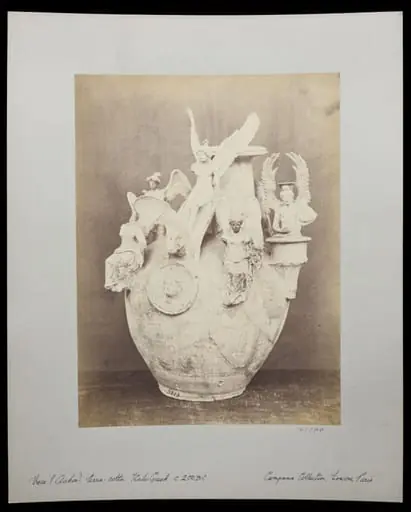 Perfume Burner in terra cotta
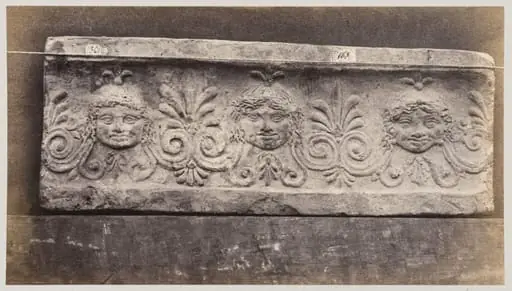 Three masques of gorgons in terra cotta
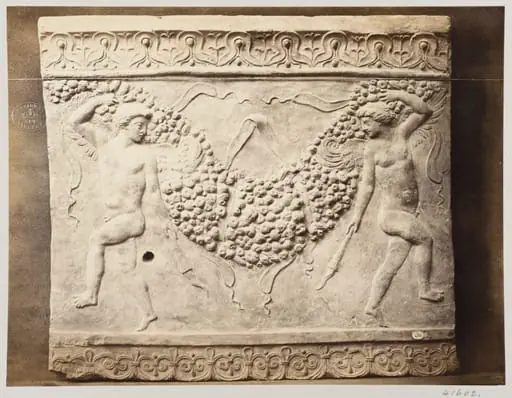 Bas-relief of portion of frieze of dancing figures with torches bearing festoon of fruit in terra cotta
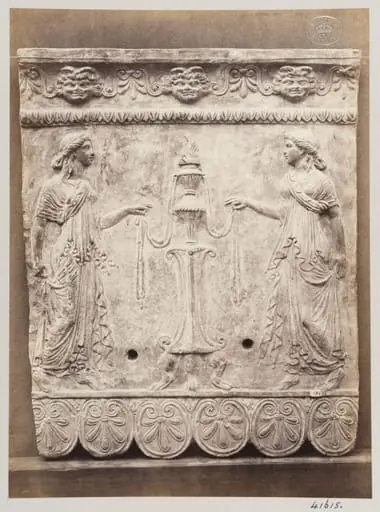 Bas-relief portion of a frieze of two draped females and an altar in terra cotta
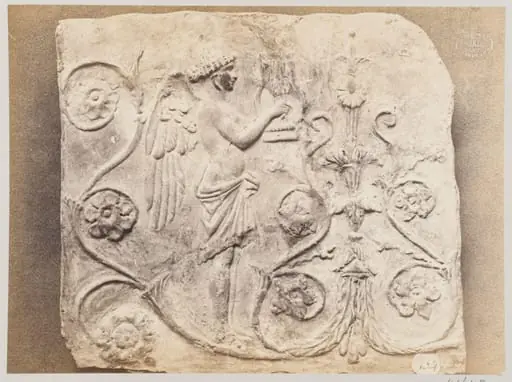 Bas-relief of a geni and a lyre in terra cotta
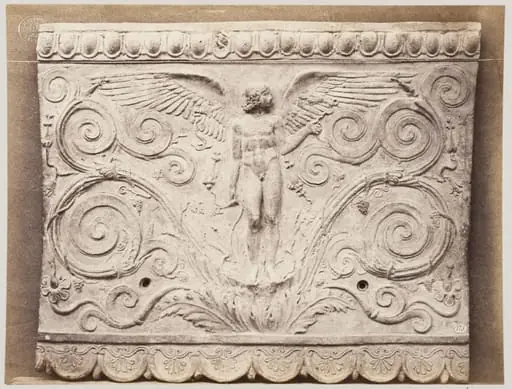 Bas-relief of a portion of frieze of Eros with scrollwork in terra cotta
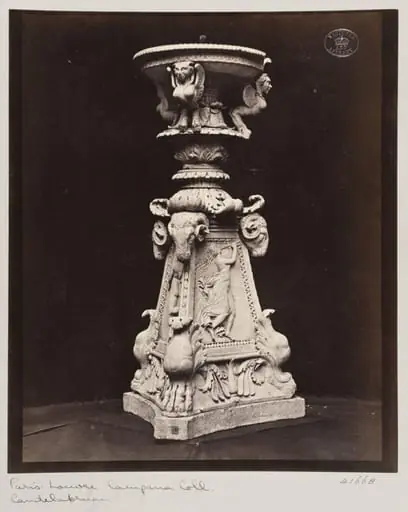 Marble sculptured fountain
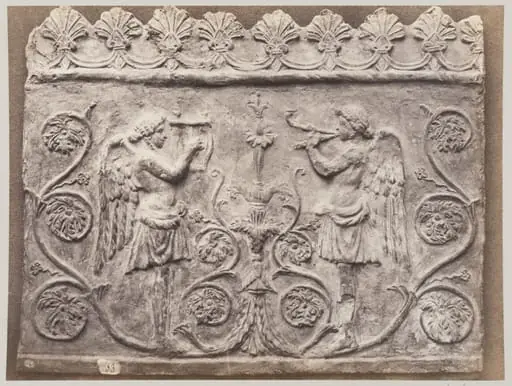 Bas-relief portion of frieze of Genii with double flutes and lyre
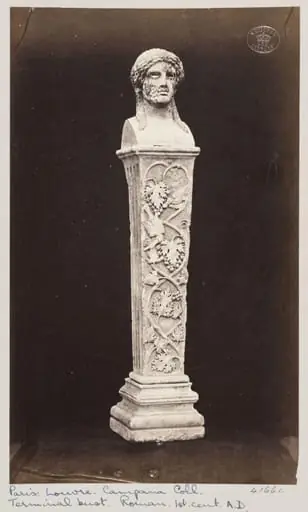 Marble herma with the head of Baccus ornamented with vine leaves and fruit
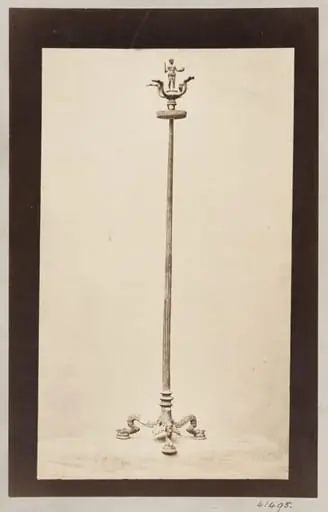 Etruscan Bronze Candlestick
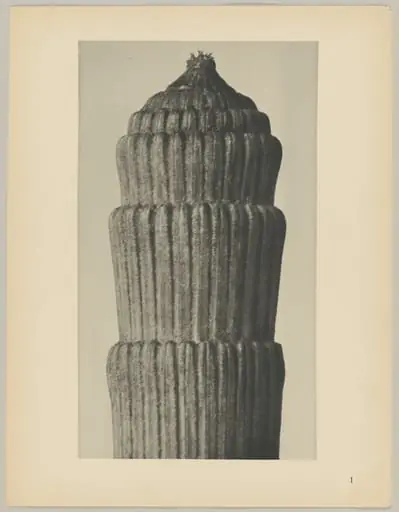 Equisetum hiemale
 Borghese Vase
 Untitled
 Untitled
 Paradigmata Graphics Variorum Artificum
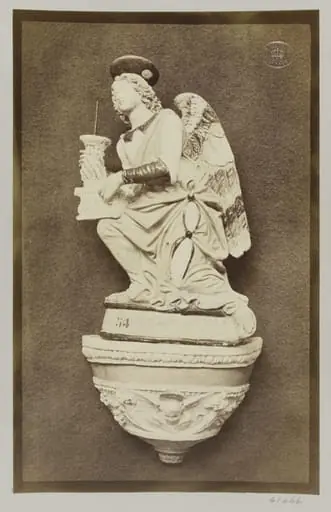 Figure of an Angel holding pricket candlestick by Luca della Robbia Ware
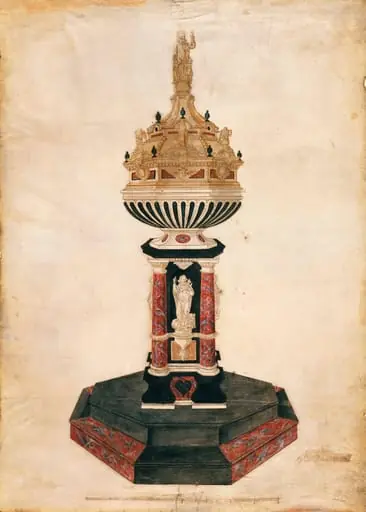 Canterbury Cathedral Font Design
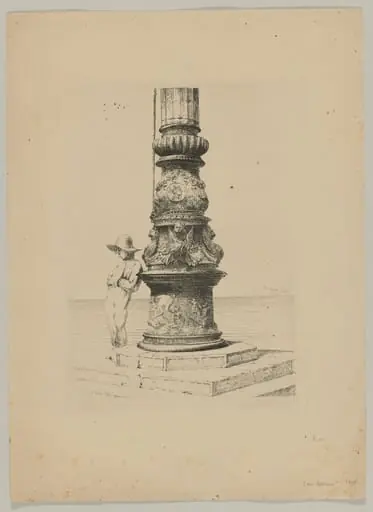 Column in Saint Mark’s Square