Artwork
Cerf a la Reposee
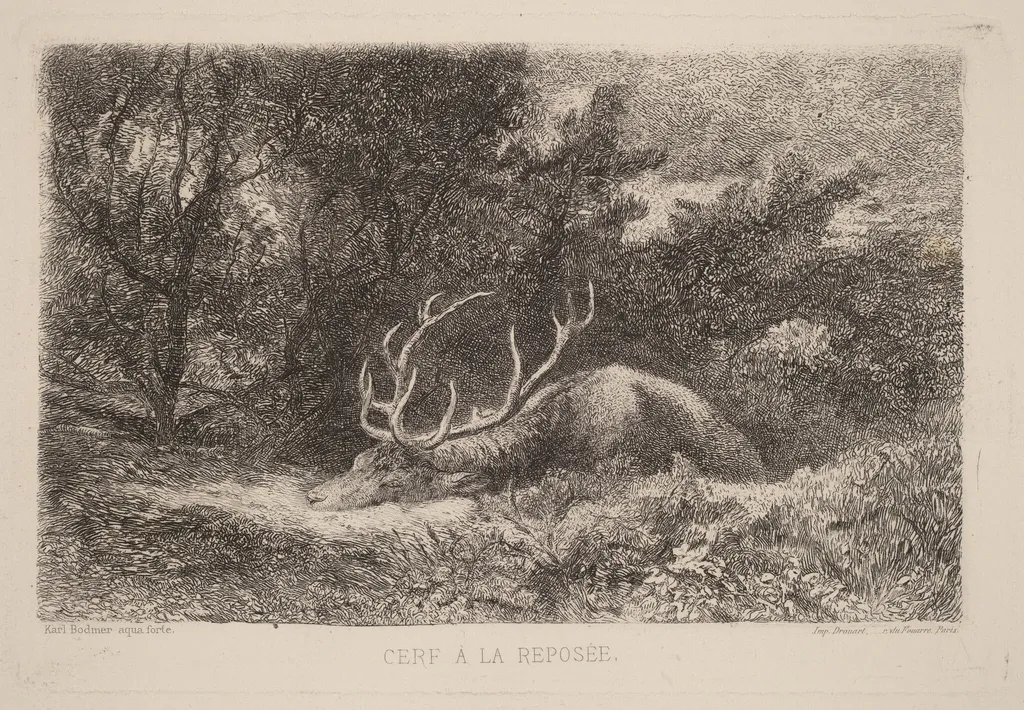
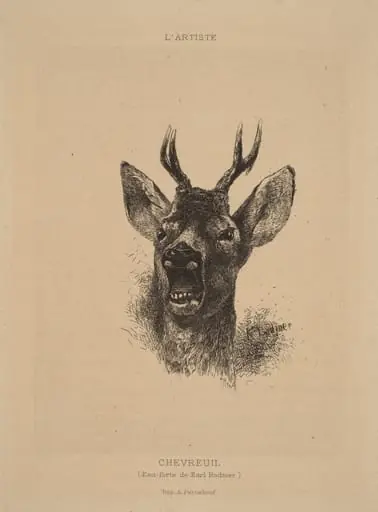
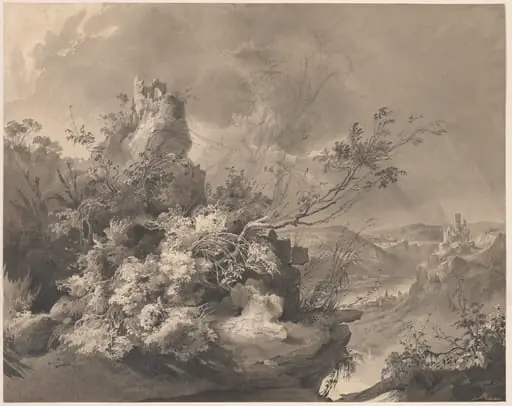
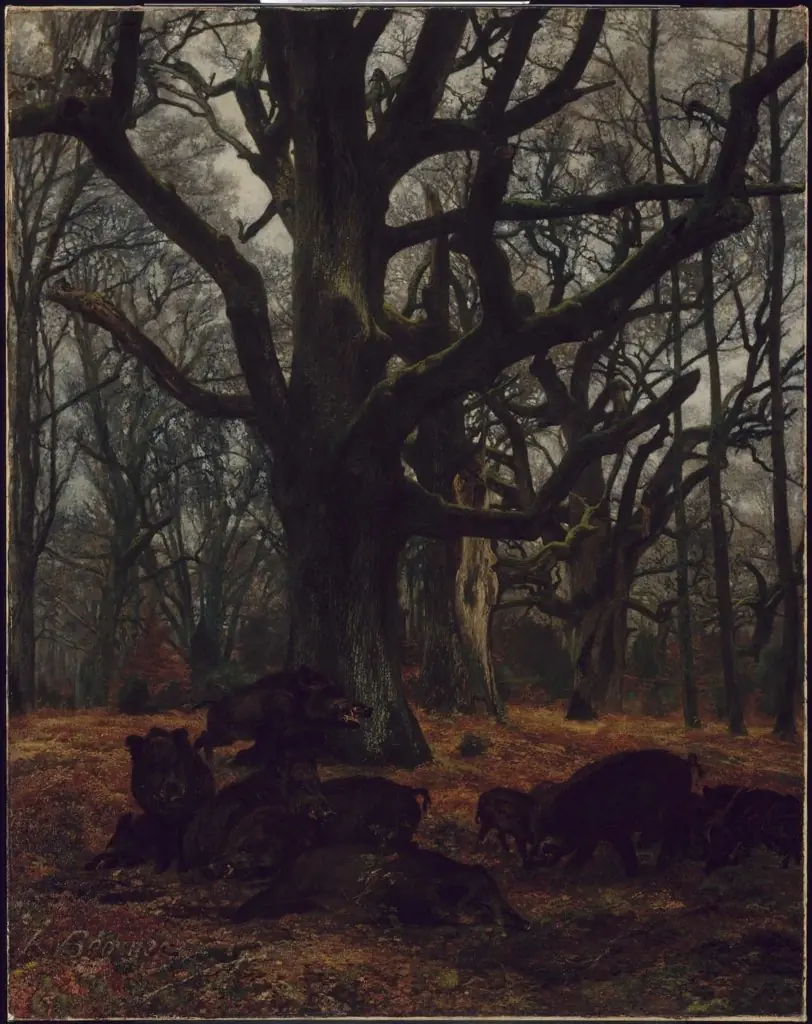
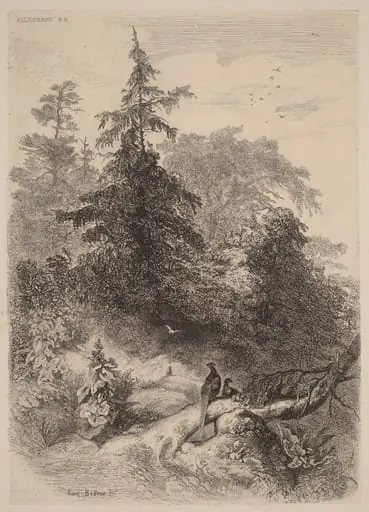
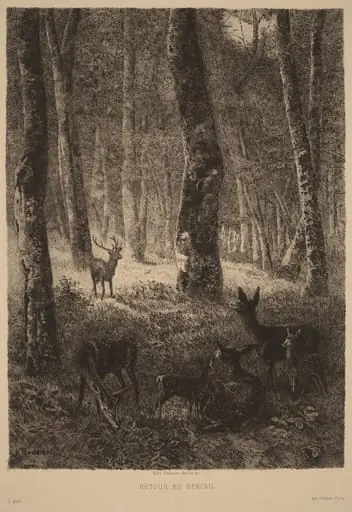
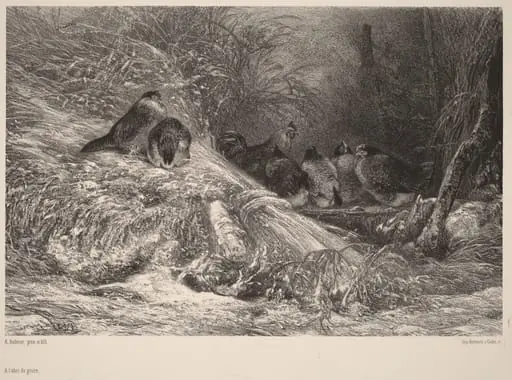
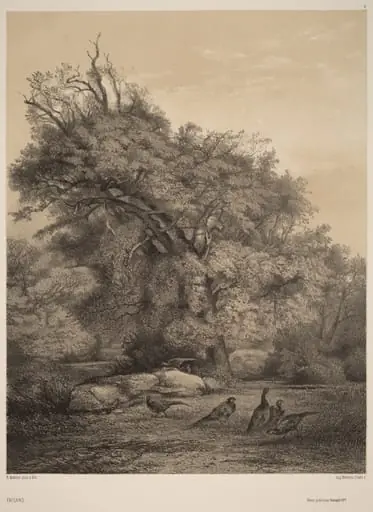
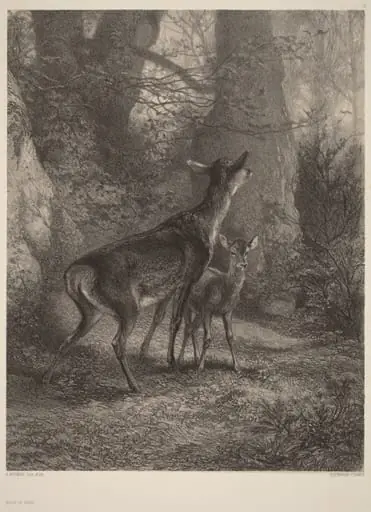
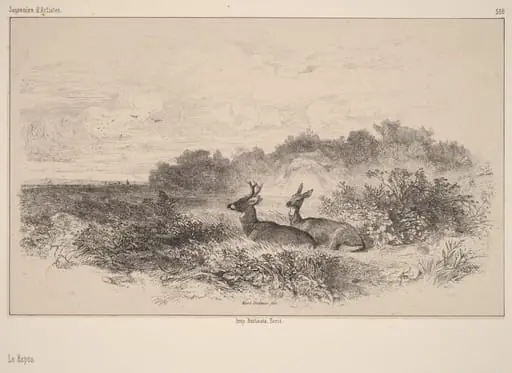
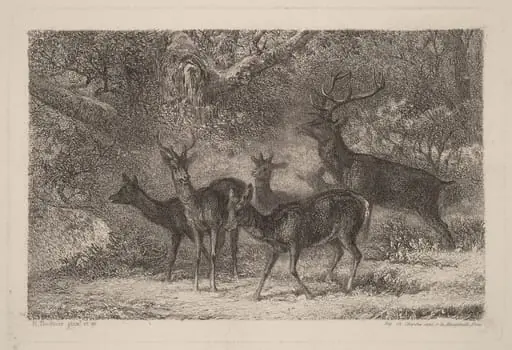
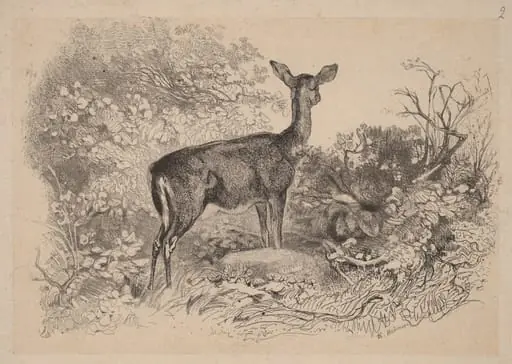
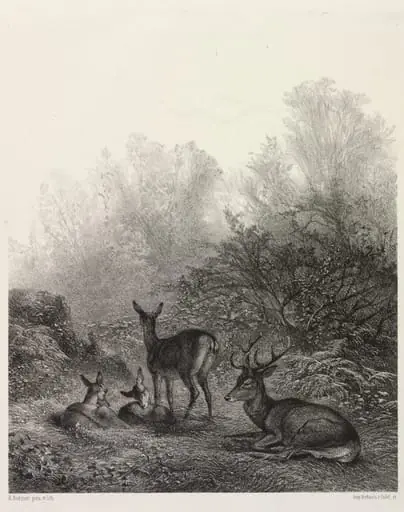
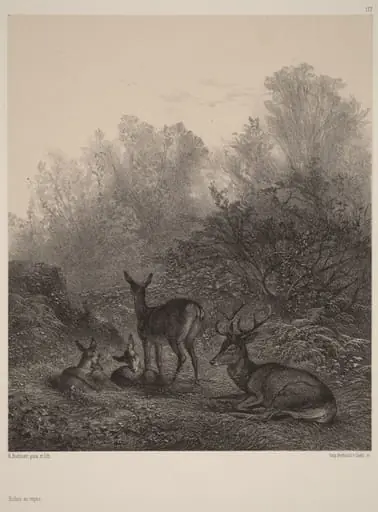
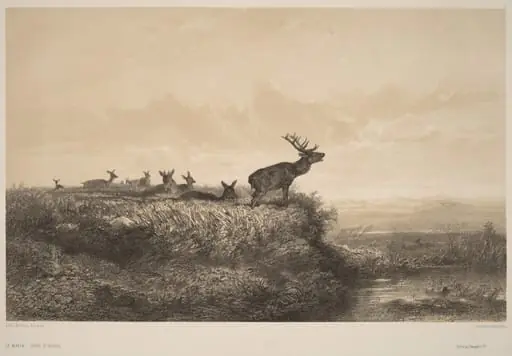
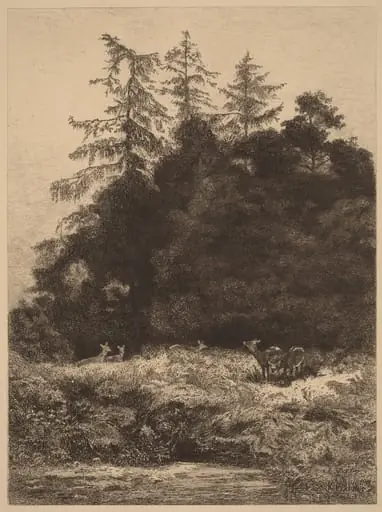
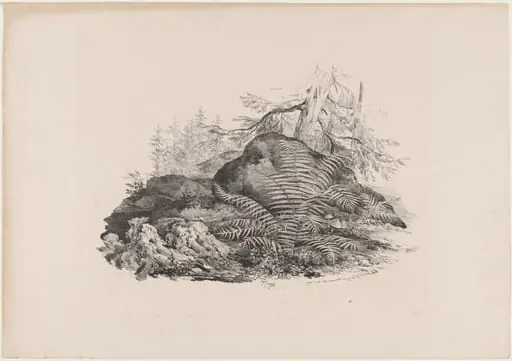
Cerf a la Reposee is an ink print by the Romanticist artist Karl Bodmer. It dates from 1851 and is held in the collection of the National Gallery of Art.
About this work
Overview
This print exemplifies his shift toward detailed, quiet observations of wildlife, executed with precision using the etching technique.
Created in 1851 by Johann Carl Bodmer, known professionally as Karl Bodmer, *Cerf à la Reposée* is an etching that captures a deer at rest within a dense woodland. Bodmer, a Swiss-French artist with a background in topographical illustration, turned to intimate natural scenes in his later years. This print exemplifies his shift toward detailed, quiet observations of wildlife, executed with precision using the etching technique.
Subject & Meaning
The subject is a solitary deer lying still amid thick undergrowth, its form softened by dappled light filtering through overhead branches. The title, meaning 'deer at rest,' suggests a moment of stillness and vulnerability. Rather than portraying the animal as prey or trophy, Bodmer presents it as part of an undisturbed ecosystem, emphasizing tranquility and the quiet rhythm of nature.
Technique & Style
Bodmer employed fine, controlled etching lines to render the texture of foliage, bark, and ground cover with remarkable subtlety. The contrast between light and shadow is achieved through varying line density rather than tone, giving the scene a sculptural depth. The meticulous attention to botanical detail—leaves, grasses, and twigs—reflects a naturalist’s eye, aligning the work with scientific illustration while retaining artistic sensitivity.
History & Provenance
This print emerged during Bodmer’s later career, after his well-documented expeditions in North America. Though he had previously focused on ethnographic and landscape documentation abroad, his post-1840s work returned to European subjects with renewed technical refinement. *Cerf à la Reposée* is among the etchings produced in his Swiss studio, likely intended for private collectors interested in naturalist imagery.
Context
In mid-19th century Europe, there was growing interest in natural history and the depiction of wildlife outside the realm of hunting or domestication. Bodmer’s etching aligns with this trend, paralleling the work of contemporaries who sought to record nature with accuracy and reverence. His background in cartographic and expeditionary art informed this shift toward intimate, observational studies of the natural world.
Legacy
Though less widely known than his North American illustrations, *Cerf à la Reposée* represents a significant strand in Bodmer’s oeuvre: the quiet, technically accomplished study of nature. It contributes to the broader 19th-century movement that elevated printmaking as a medium for scientific and aesthetic observation, influencing later artists who valued detail and restraint over dramatic effect.
Artist & collection
Artist
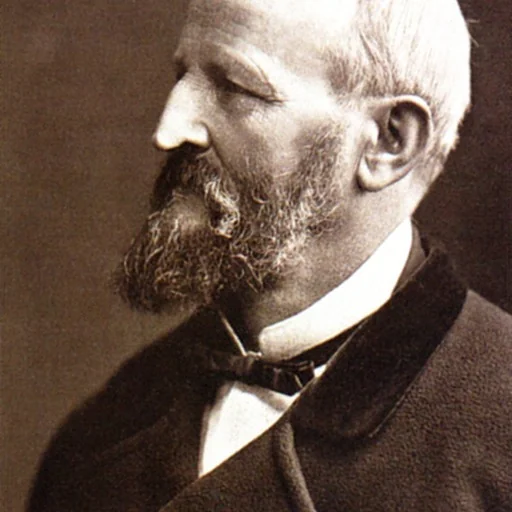
Johann Carl Bodmer (11 February 1809 – 30 October 1893) was a Swiss-French printmaker, etcher, lithographer, zinc engraver, draughtsman, painter, illustrator, and hunter.