Artwork
The Monkeys' Barber Shop
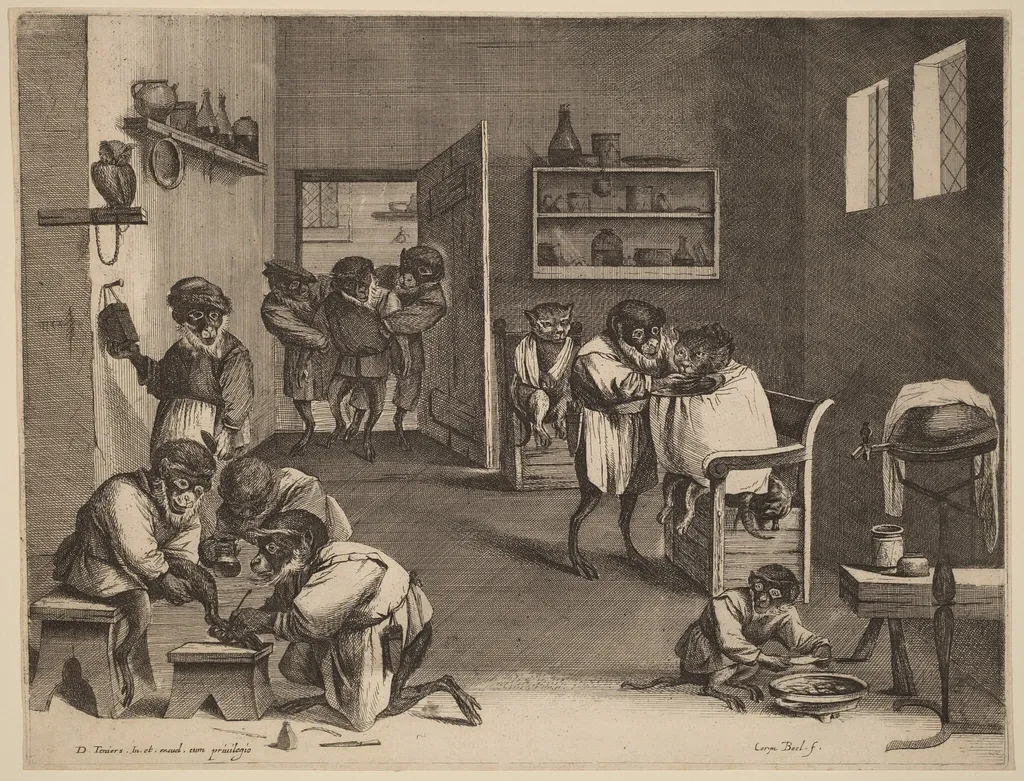
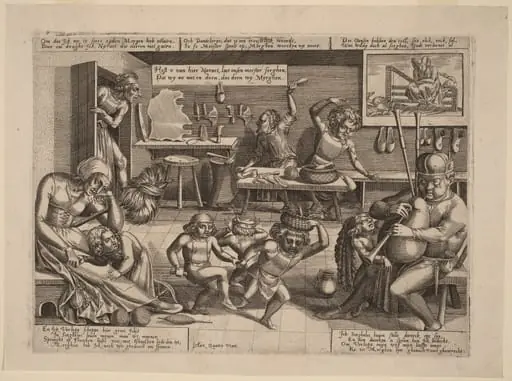
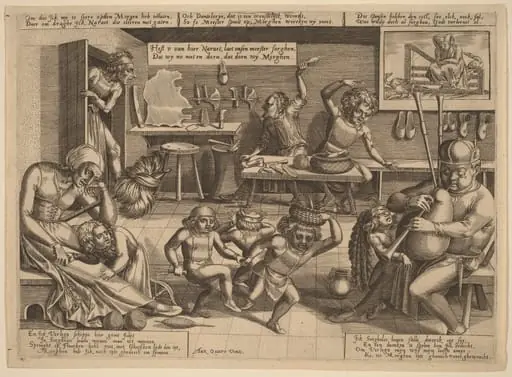
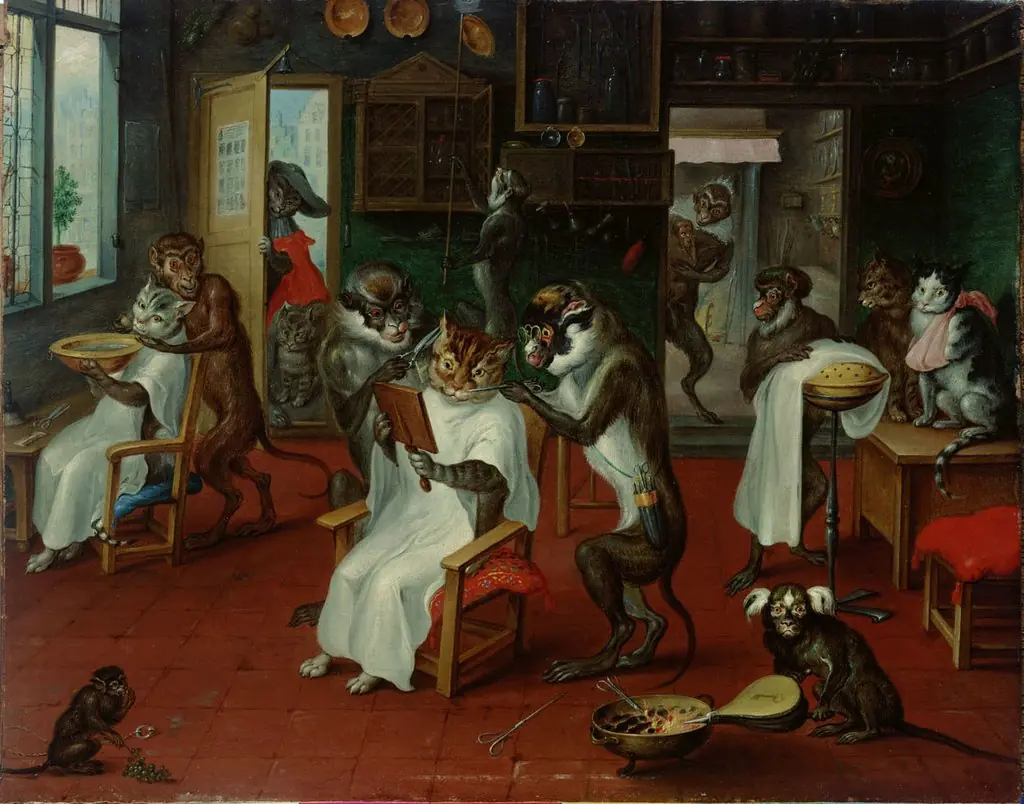
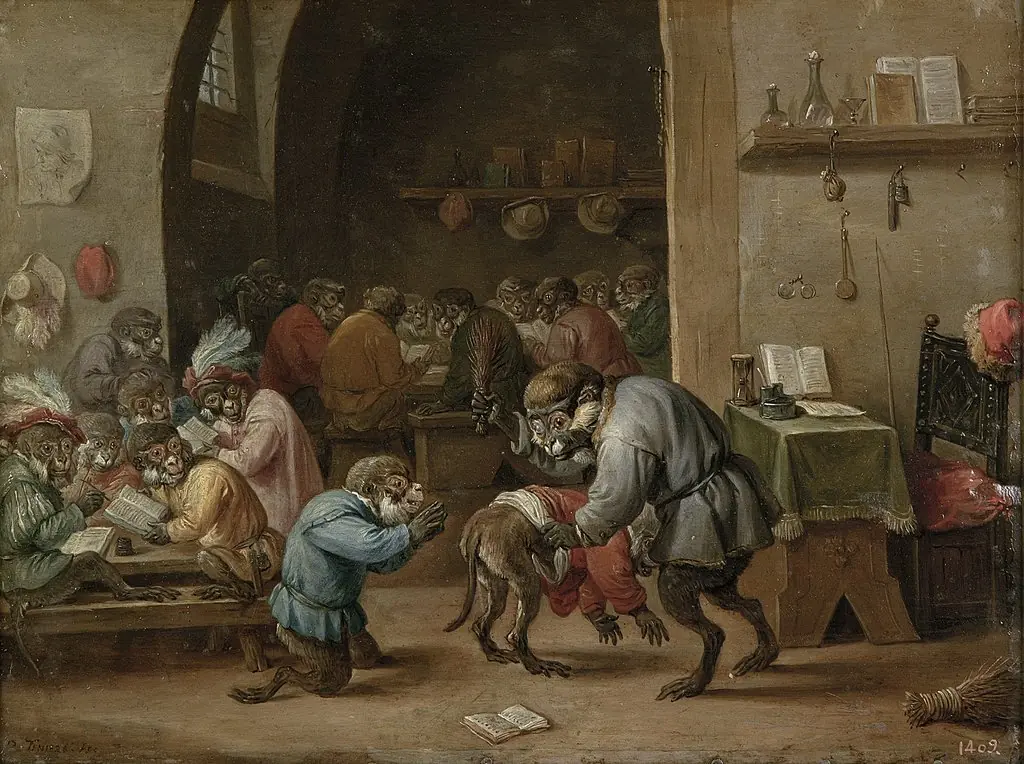
The Monkeys' Barber Shop is an ink print by the Baroque artist Coryn Boel. It dates from 1601 and is held in the collection of the National Gallery of Art.
About this work
Overview
Coryn Boel’s 1601 engraving, titled *The Monkeys’ Barber Shop*, depicts a bustling interior where a group of primates assume the roles of barber and client. The composition is confined to a modestly furnished room, complete with a door and a window that frame the activity. The work is executed on laid paper, characteristic of early‑17th‑century printmaking.
Subject & Meaning
The scene presents monkeys dressed in contemporary attire, engaged in the mundane ritual of hair cutting. By anthropomorphising the animals, Boel creates a satirical tableau that comments on social customs and perhaps the folly of vanity. The juxtaposition of human dress and animal form invites viewers to reflect on the thin line between civility and animality.
Technique & Style
Boel employs fine cross‑hatching to render texture, giving the fur, fabrics, and furnishings a palpable sense of depth. The engraving’s intricate line work captures the pattern of clothing and the subtle play of light across surfaces. Such meticulous detailing exemplifies the Northern European print tradition’s emphasis on precision and narrative clarity.
History & Provenance
Created in the early 1600s, the print reflects the period’s fascination with genre scenes that blend humor and moral observation. While specific ownership records are scarce, the work has circulated among collections of early modern prints, illustrating Boel’s role within the broader network of Flemish engravers active at the turn of the century.
Artist & collection