Artwork
Violin Player Seated in the Inn
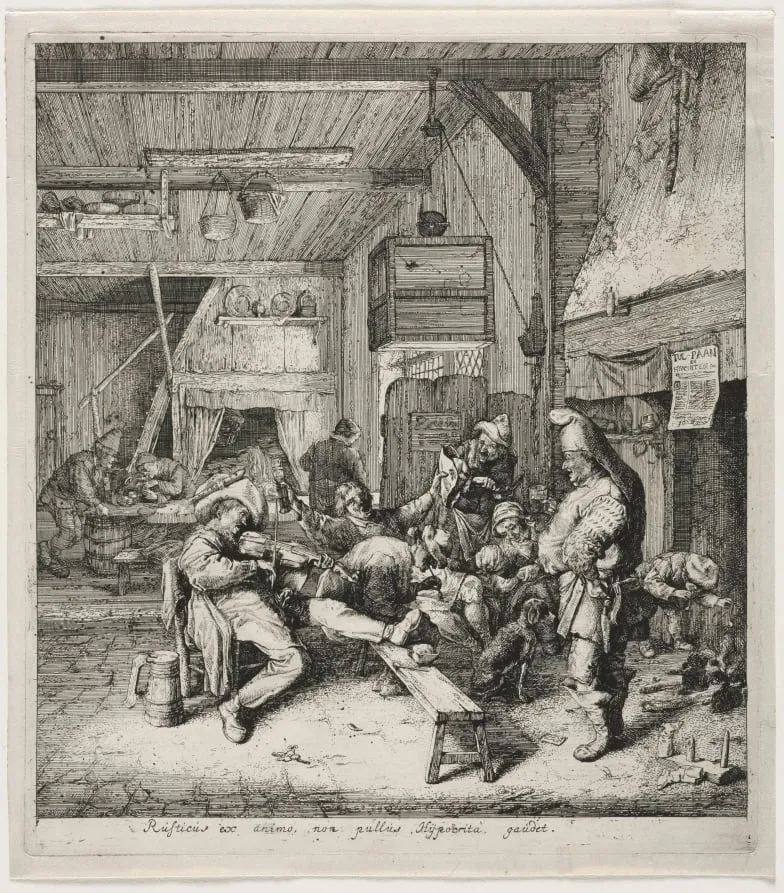
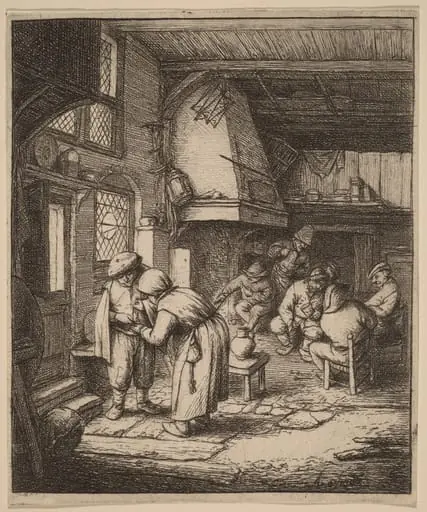
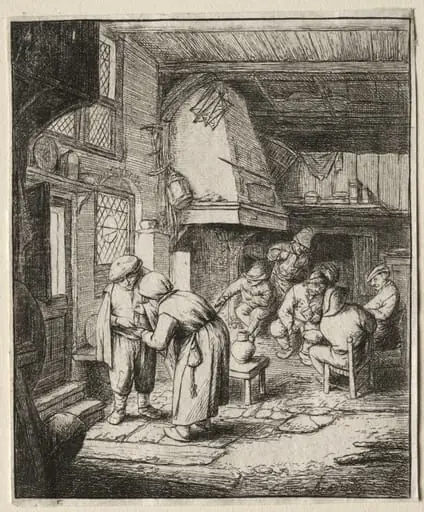
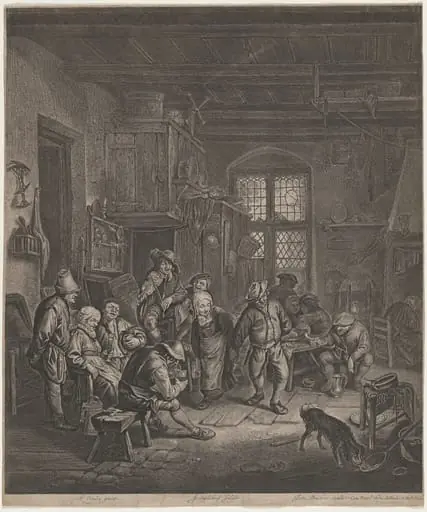
Violin Player Seated in the Inn is a print by the Baroque artist Cornelis Dusart. It dates from 1685 and is held in the collection of the Cleveland Museum of Art. This print depicts a bustling tavern interior where patrons gather around music and drink.
About this work
Overview
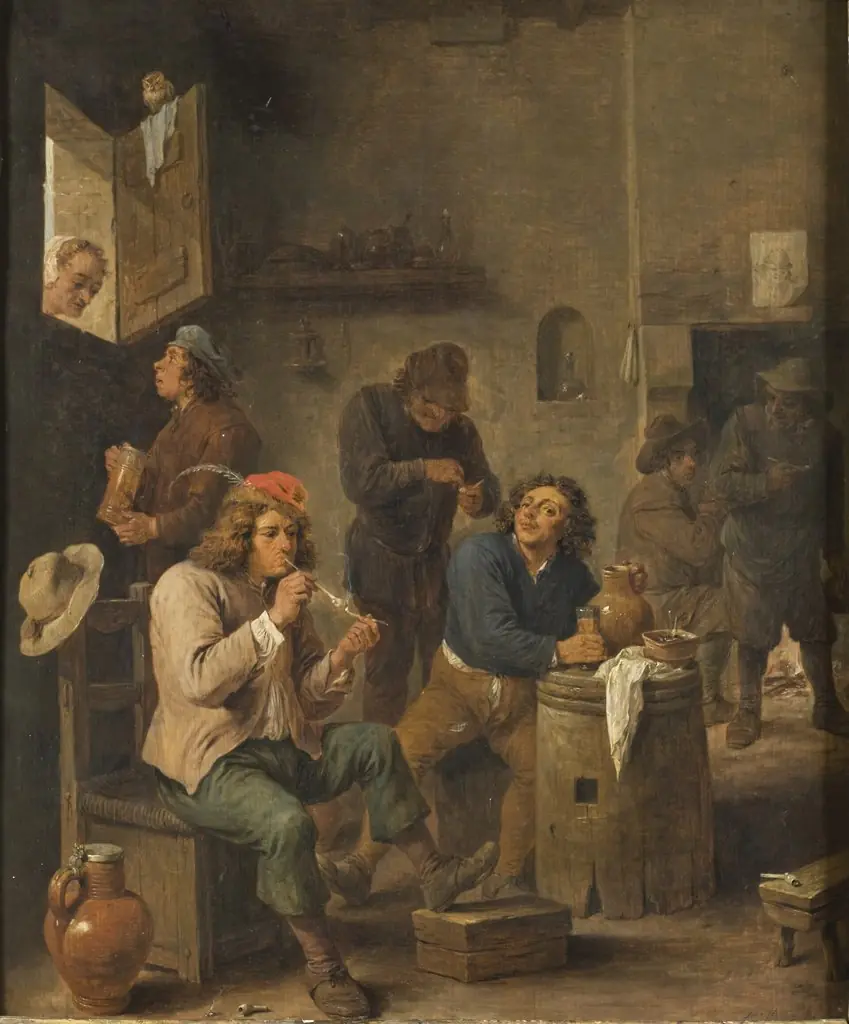
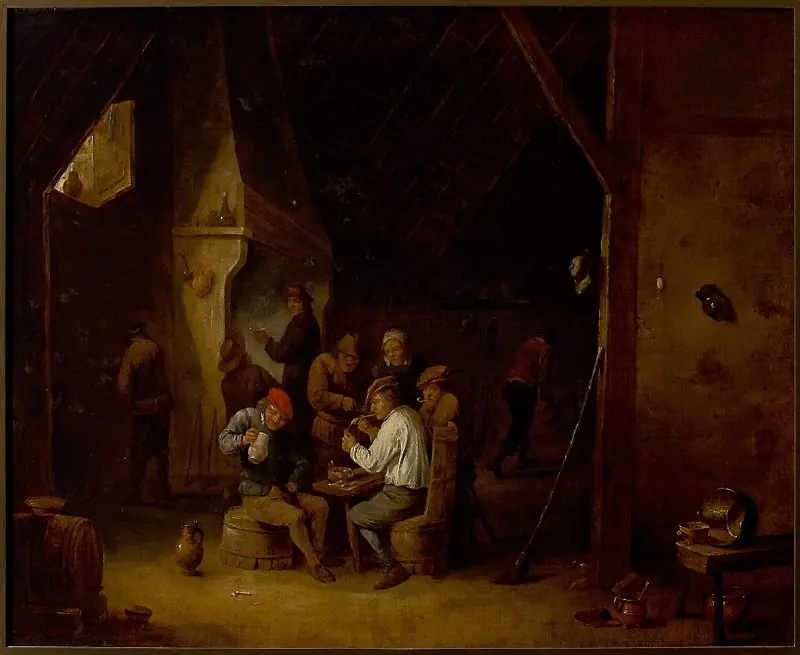
This print depicts a bustling tavern interior where patrons gather around music and drink. A seated man plays violin while others lean in, laughing and raising glasses. A shared pole glass rests on the table, signaling communal drinking. The scene blends everyday revelry with subtle mythological allusion, inviting reflection on behavior under the influence.
Subject & Meaning
The central figure in the green waistcoat, observing with detached amusement, evokes Silenus—the mythic companion of Bacchus known for drunken wisdom.
The central figure in the green waistcoat, observing with detached amusement, evokes Silenus—the mythic companion of Bacchus known for drunken wisdom. His presence transforms the tavern’s chaos into a moral tableau, suggesting that unrestrained indulgence blurs the boundary between myth and reality. Latin inscriptions frame the patrons as rustic fools, implicitly contrasting them with the viewer’s presumed social superiority.
Technique & Style
The composition uses sharp contrasts of light and shadow to direct attention toward the central figures. Detailed rendering of textures—fabric, glass, wood—grounds the scene in realism, while the crowded, diagonal arrangement heightens the sense of motion. Line work is precise, typical of Dutch printmaking traditions that favored narrative clarity over painterly flourish.
History & Provenance
Created in the Netherlands during the early 17th century, the print likely circulated among middle-class collectors interested in moralizing genre scenes. Its survival in multiple impressions suggests commercial success. The inclusion of Latin verse indicates an educated audience capable of decoding classical references embedded in everyday imagery.
Context
Tavern scenes were common in Dutch art of the period, reflecting both popular entertainment and societal anxieties about excess. The blending of mythological allusion with contemporary life mirrored humanist interests in using classical models to interpret modern behavior. Such works functioned as both entertainment and social commentary, appealing to viewers who saw themselves as observers, not participants.
Legacy
This print exemplifies how Dutch artists used genre scenes to explore moral themes without overt preaching. Its fusion of realism and myth influenced later European depictions of leisure and vice. While no longer widely known, it remains a representative example of how visual culture in the Netherlands engaged with classical tradition through the lens of daily life.
Artist & collection
Artist
Cornelis Dusart (April 24, 1660 – October 1, 1704) was a Dutch genre painter, drawer (artists), and printmaker.