Artwork
Scipio Africanus
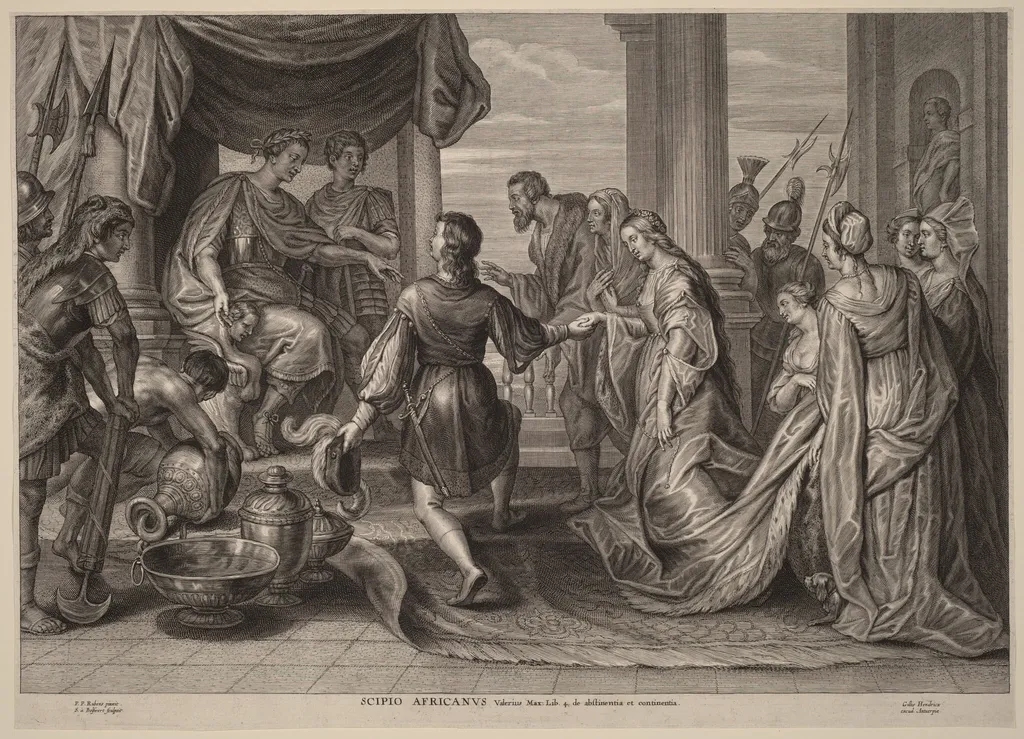
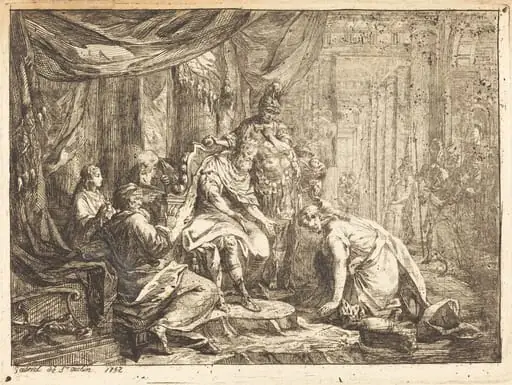
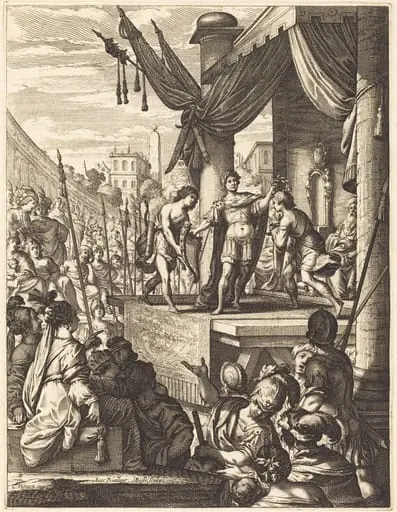
Scipio Africanus is an ink print by the Renaissance artist Schelte Adams Bolswert. It dates from 1622 and is held in the collection of the National Gallery of Art. Schetle Adamsz.
About this work
Overview
It reflects Bolswert’s position within the bustling workshop of Peter Paul Rubens, where he rendered complex, multi‑figure scenes for a broad audience.
Schetle Adamsz. Bolswert, a Frisian engraver active in early‑17th‑century Antwerp, produced the print titled *Scipio Africanus* in 1622. Executed as a copper engraving, the work exemplifies the reproductive print tradition that circulated the compositions of leading painters. It reflects Bolswert’s position within the bustling workshop of Peter Paul Rubens, where he rendered complex, multi‑figure scenes for a broad audience.
Subject & Meaning
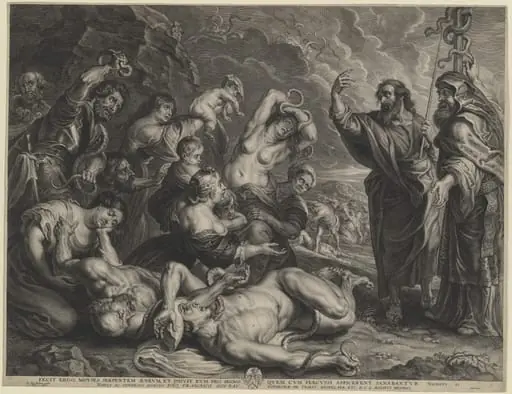
The image presents a densely populated interior where figures in flowing robes occupy various poses: some kneel, others stand, and a central male figure holds a scroll while a woman reaches toward him. Objects such as books, weapons, and a modest table with pots add narrative detail. Though the title references the Roman general Scipio Africanus, the precise episode depicted remains ambiguous, inviting viewers to infer a moral or historical theme.
Technique & Style
Bolswert employed the meticulous line work characteristic of engraving, using fine hatching and cross‑hatching to model volume and suggest depth. The interplay of light and shadow creates a sense of three‑dimensional space within the confined setting, while the delicate rendering of textiles and drapery demonstrates his skill in translating painterly effects into the graphic medium.
History & Provenance
Created during Bolswert’s most productive period, the print was likely issued as part of a series of reproductions after Rubens and Anthony van Dyck, intended for collectors and scholars. Its circulation contributed to the wider dissemination of Baroque compositions across Europe, reinforcing the engraver’s reputation as a leading figure in the print market of the 1620s.
Context
The early 1620s marked a flourishing of collaborative printmaking in Antwerp, where workshops like Rubens’s coordinated painters and engravers to meet the demand for affordable art. Bolswert’s work fits within this network, translating large‑scale oil paintings into portable, reproducible images that could reach patrons beyond the city’s elite.
Legacy
While not as widely known as the paintings it reproduces, *Scipio Africanus* illustrates the pivotal role of engravers in preserving and transmitting Baroque visual culture. Bolswert’s precise technique set a standard for subsequent generations of printmakers, influencing how narrative scenes were rendered in the graphic arts.
Artist & collection
Artist
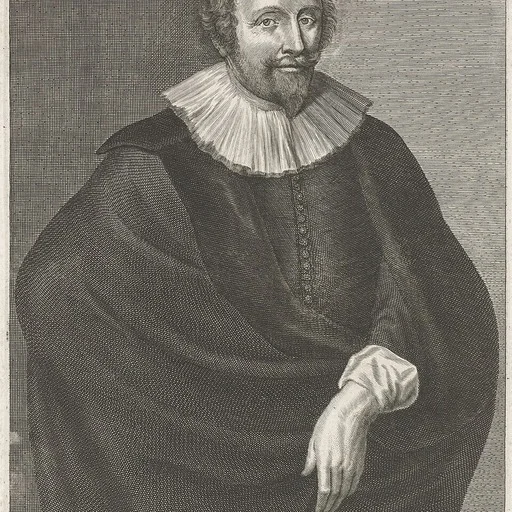
Schelte a Bolswert or Schelte Adamsz. Bolswert (c. 1586 – 1659) was a Frisian engraver who worked most of his career in Antwerp where he was one of the lead engravers in Rubens' workshop. He is known for his…