Artwork
Jan Baptista Barbe
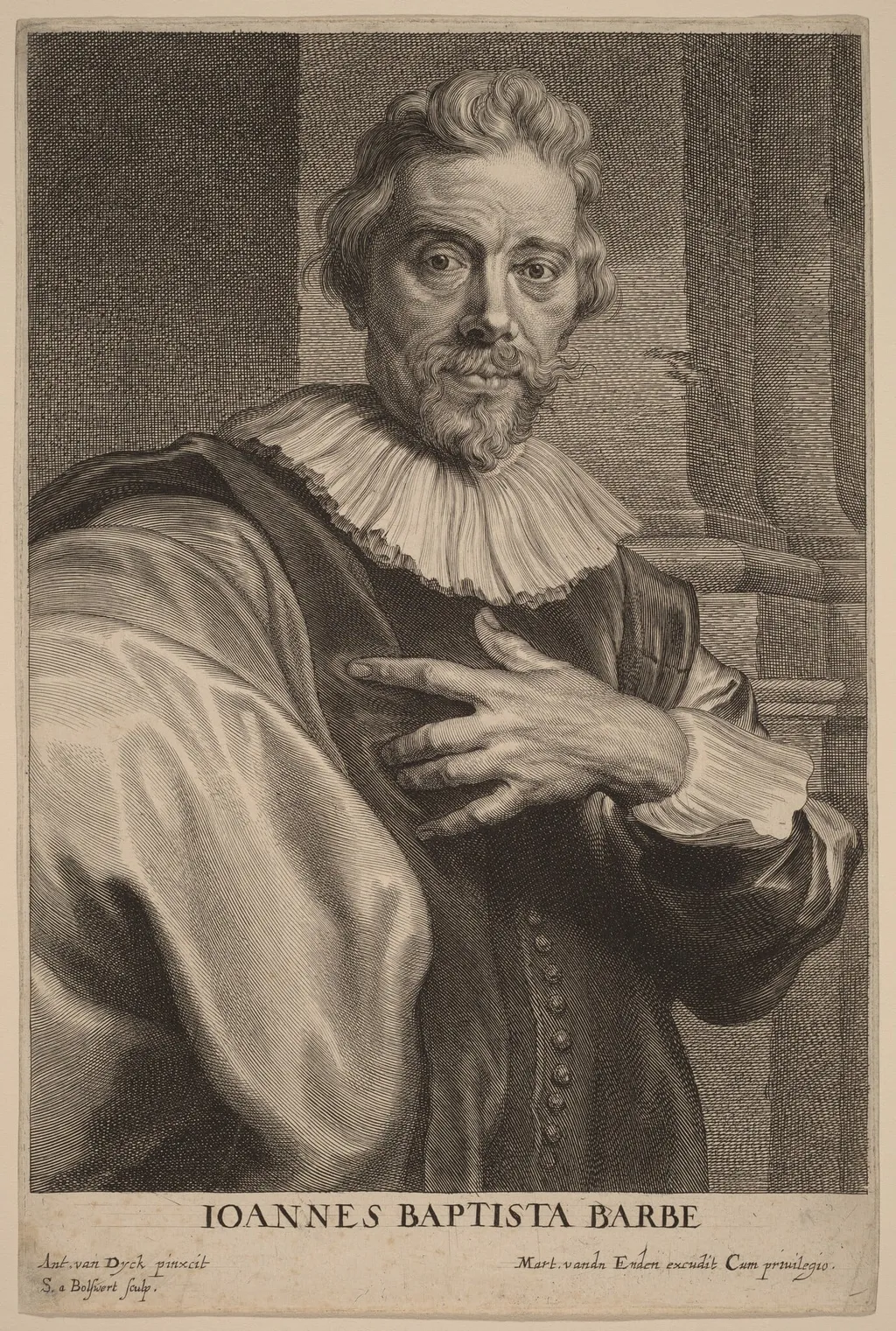
Jan Baptista Barbe is an ink print by the Baroque artist Schelte Adams Bolswert. It dates from 1634 and is held in the collection of the National Gallery of Art. Around 1634 Schelte Adamsz.
About this work
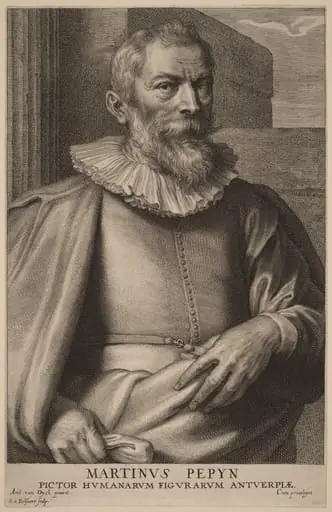
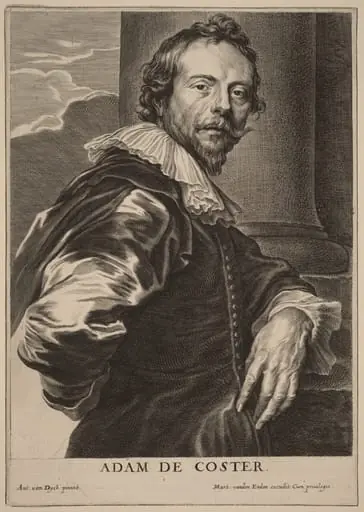
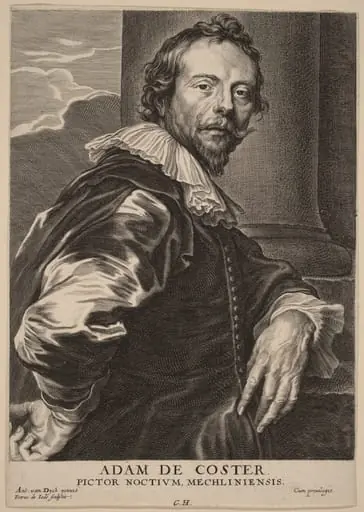
The painting depicts a man with a mustache and wavy hair, dressed in a dark jacket with buttons down the front and a white ruffled collar.
The painting depicts a man with a mustache and wavy hair, dressed in a dark jacket with buttons down the front and a white ruffled collar. His right hand is raised, with his palm facing outward. The background is dark, with a column or wall visible behind him.
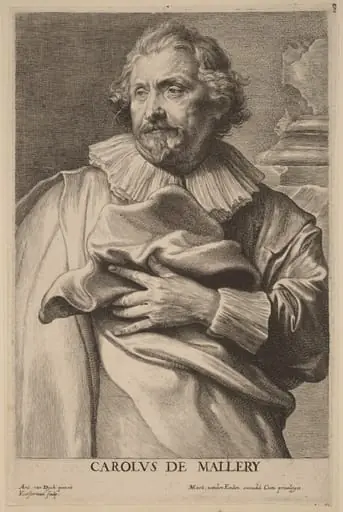
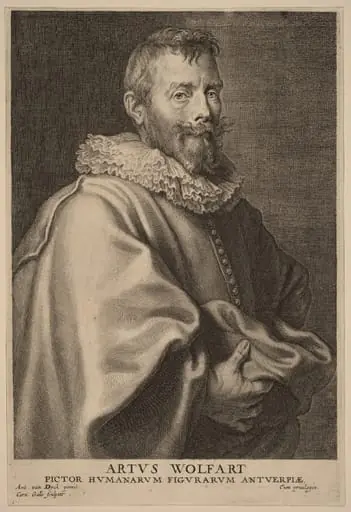
The man's attire and hairstyle suggest a formal or professional setting, possibly from the 17th century. The level of detail in the engraving, including the texture of the man's clothing and the folds of his collar, indicates a high level of skill on the part of the artist.
The use of cross-hatching to create shading and depth in the engraving is a notable feature of the artwork. For more information on this technique, look up "cross-hatching".
Overview
Around 1634 Schelte Adamsz. Bolswert, a Frisian engraver based in Antwerp, produced a portrait print titled Jan Baptista Barbe. The image presents a bearded man in a dark, buttoned coat and a white ruffled collar, his right hand raised with an open palm. The figure stands before a dark backdrop that includes a column or wall, rendered with fine line work.
Subject & Meaning
The sitter, identified only by the name Jan Baptista Barbe, is not otherwise documented in the surviving record. The formal attire and composed pose suggest a person of some standing, possibly a professional or civic figure, typical of 17th‑century portraiture intended to convey status and dignity.
Technique & Style
Bolswert employed dense cross‑hatching to model the folds of the coat, the texture of the ruff, and the facial features, achieving a subtle gradation of tone. The precision of the line work reflects the engraver’s skill in reproducing the painterly qualities of his source, a practice common among reproductive printmakers of the period.
History & Provenance
Active primarily in Peter Paul Rubens’ workshop, Bolswert specialized in translating paintings by Rubens, Van Dyck and other leading artists into prints for a broader audience. This portrait, though not a direct copy of a known painting, fits within his oeuvre of high‑quality portrait engravings circulated among collectors in the Low Countries.
Context
The print belongs to a tradition of 17th‑century portrait engravings that served both documentary and decorative purposes. By rendering a likeness in a reproducible medium, Bolswert contributed to the dissemination of elite visual culture across Europe, aligning with the commercial networks centered in Antwerp.
Artist & collection
Artist
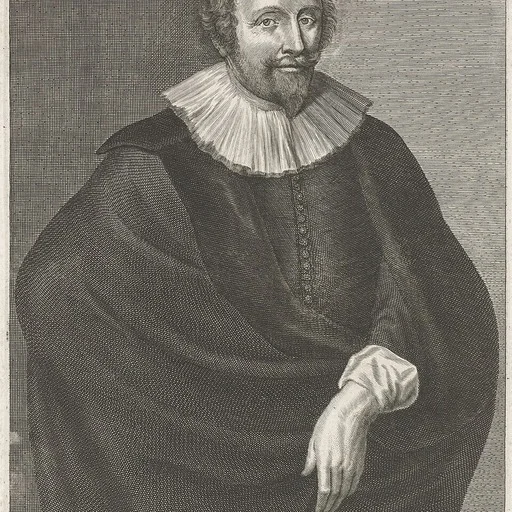
Schelte a Bolswert or Schelte Adamsz. Bolswert (c. 1586 – 1659) was a Frisian engraver who worked most of his career in Antwerp where he was one of the lead engravers in Rubens' workshop. He is known for his…