Artwork
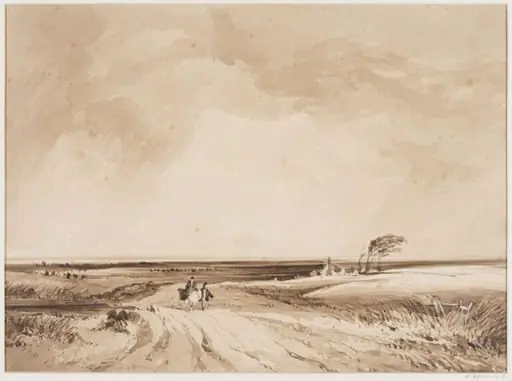
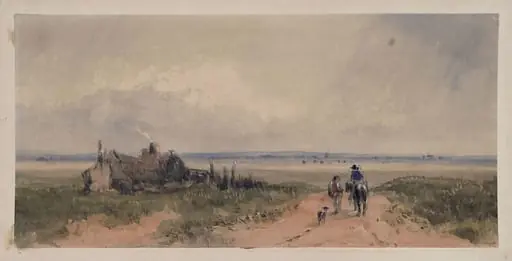
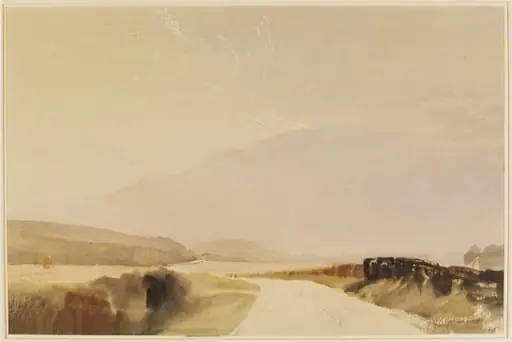
A heath traversed by a winding road
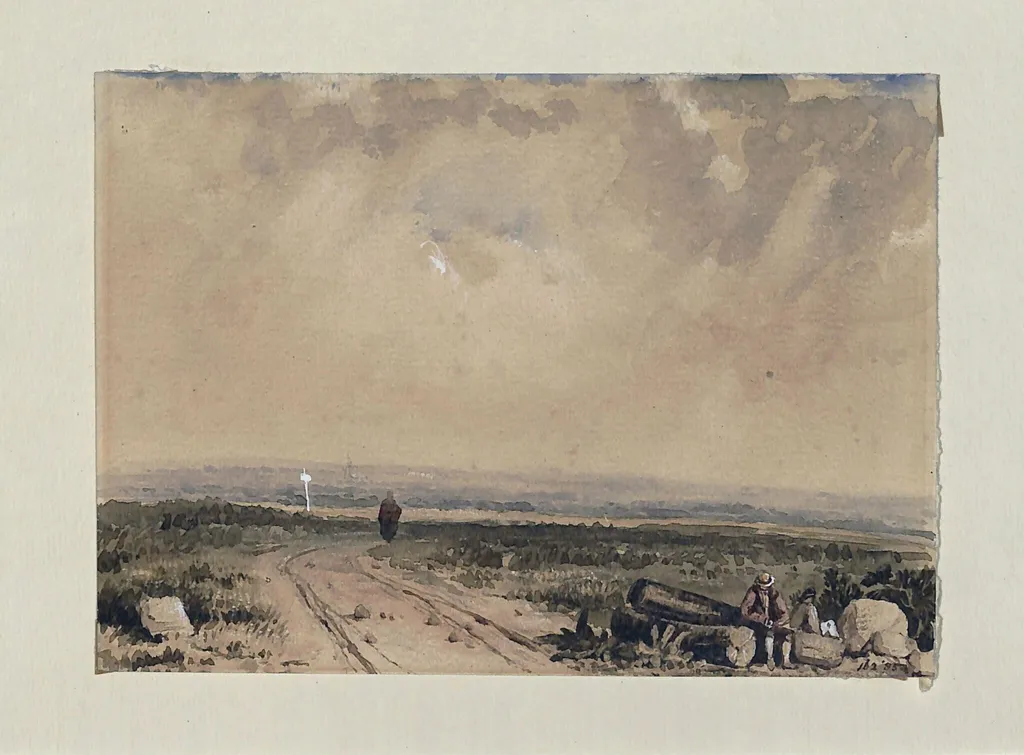
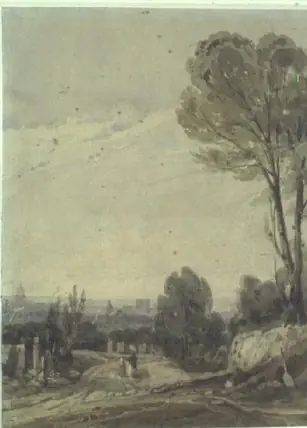
A heath traversed by a winding road is a watercolor work on paper by Richard Parkes Bonington. It is held in the collection of the Victoria and Albert Museum. This watercolour, dated around 1850, captures a tranquil rural landscape in England.
About this work
Overview
The work reflects the artist’s interest in fleeting atmospheric effects and everyday scenes, rendered with a spontaneous, observational approach.
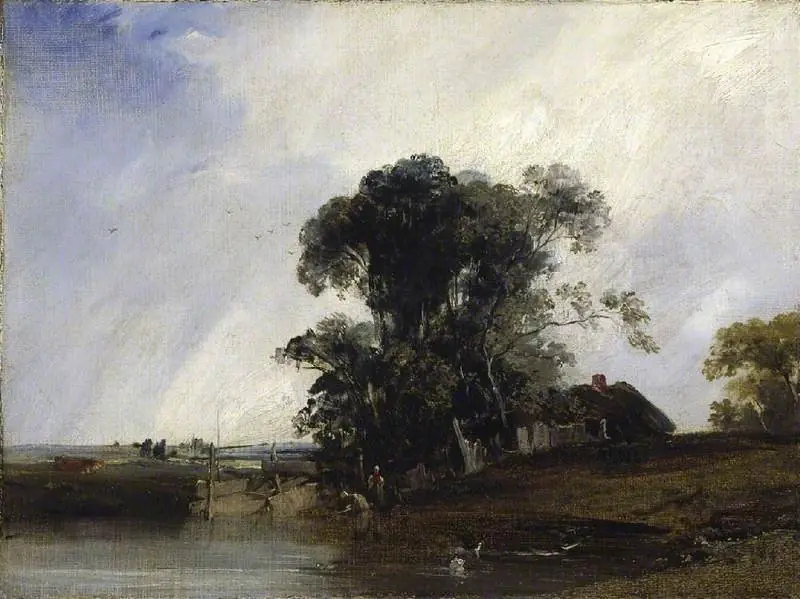
This watercolour, dated around 1850, captures a tranquil rural landscape in England. Richard Parkes Bonington depicts a narrow, meandering path winding through barren, rocky terrain under a pale, open sky. The composition is uncluttered, emphasizing solitude and quiet movement. The work reflects the artist’s interest in fleeting atmospheric effects and everyday scenes, rendered with a spontaneous, observational approach.
Subject & Meaning
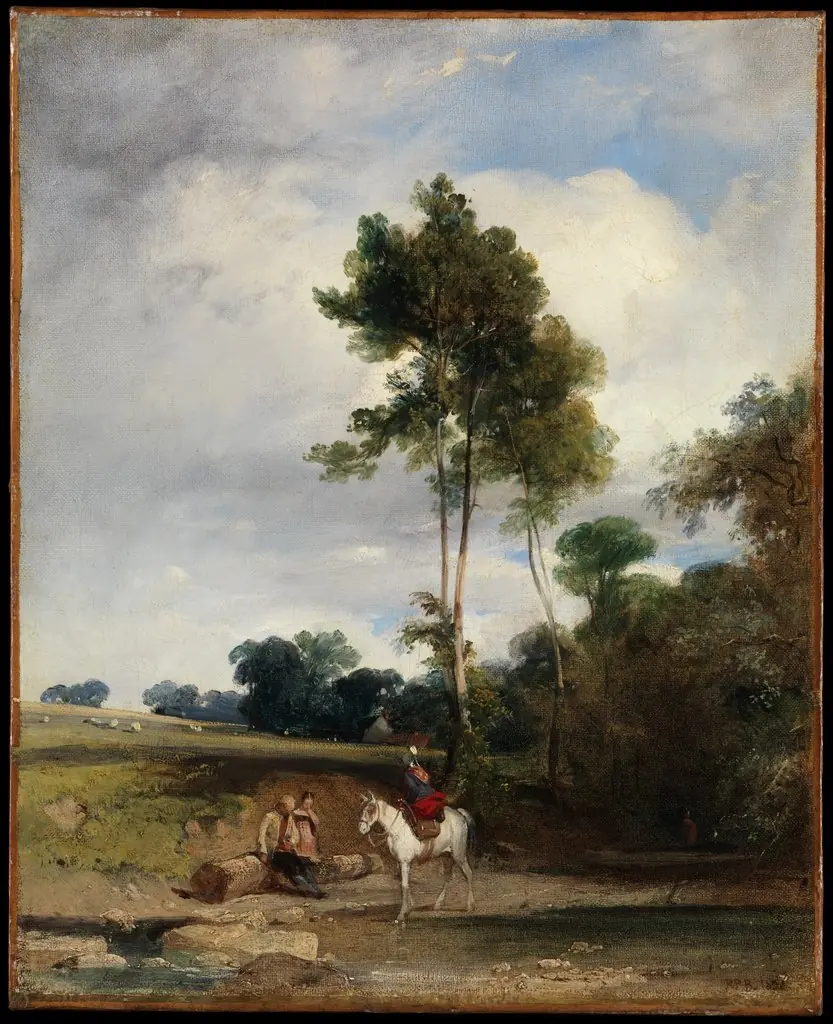
The scene portrays three figures in a desolate heath: two seated on a stone, one walking along the road. Their small scale underscores the vastness of the landscape, suggesting themes of transience and human solitude. There is no narrative climax—only the quiet rhythm of travel and rest. The absence of buildings or signs of industry reinforces a sense of untouched nature, inviting contemplation rather than storytelling.
Technique & Style
Bonington employs loose, fluid brushwork and diluted washes to suggest form without definition. Colors are muted—earthen browns, soft greens, and a hazy blue horizon—blended wet-on-wet to create atmospheric depth. Edges are blurred, lines absent; texture emerges through subtle gradations. The technique resembles a rapid field sketch, prioritizing light and mood over detail, characteristic of his mature watercolour style.
History & Provenance
Created near the end of Bonington’s life, this work belongs to a series of landscapes he produced during his final years, often inspired by walks in the English countryside. It likely originated as a personal study rather than a commissioned piece. The watercolour remained in private hands after his death in 1828, later entering institutional collections through family bequests or dealer acquisitions.
Context
In the 1840s and 1850s, British artists increasingly turned to landscape as a subject worthy of serious attention, moving away from grand historical themes. Bonington’s work aligned with this shift, influenced by French Romanticism and the growing appreciation for plein air observation. His watercolours contributed to the medium’s rising status, bridging the gap between sketch and finished work.
Legacy
Bonington’s approach to watercolour—emphasizing immediacy, tonal harmony, and atmospheric nuance—helped redefine the medium in 19th-century Britain. This piece exemplifies his influence on later artists like Turner and the Pre-Raphaelites, who valued emotional resonance over polished finish. Though not widely exhibited in his lifetime, his works became touchstones for those seeking authenticity in landscape representation.
Own this work as a print
Artist & collection
Artist
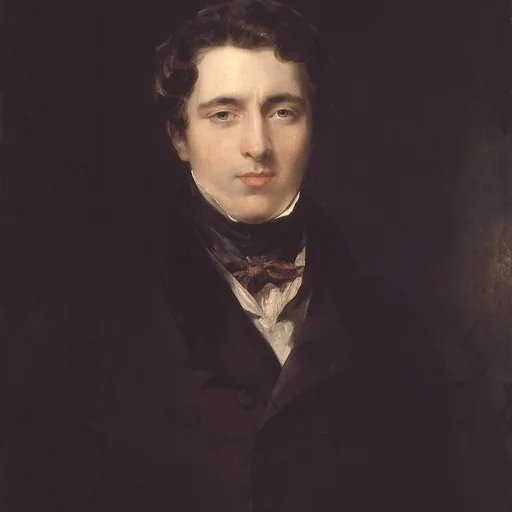
Richard Parkes Bonington (25 October 1802 – 23 September 1828) was an English Romantic landscape painter.