Artwork
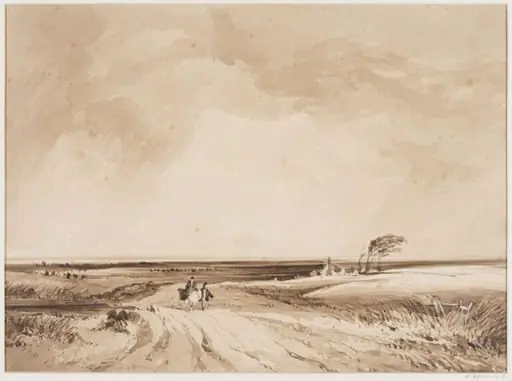
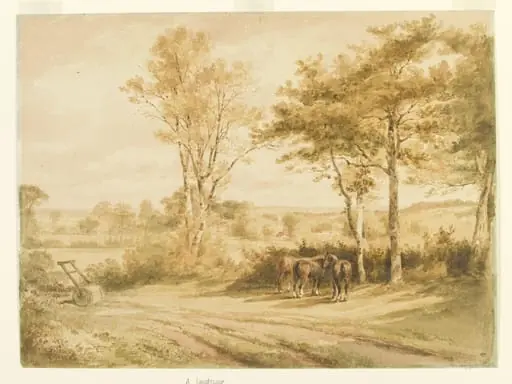
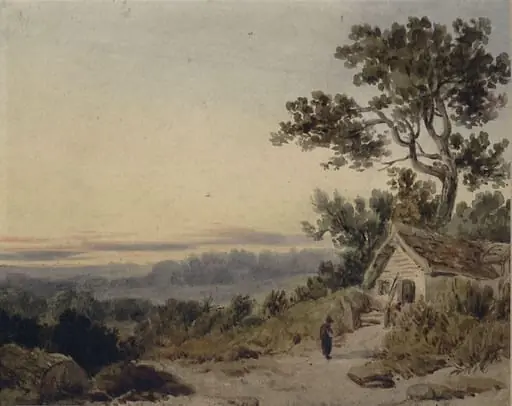
Landscape with cottage, and figures on a sandy road
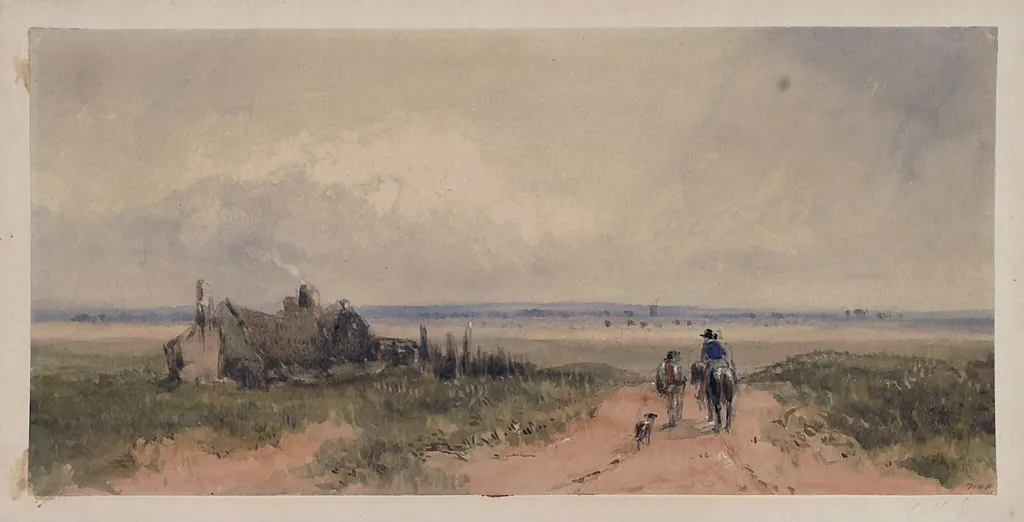
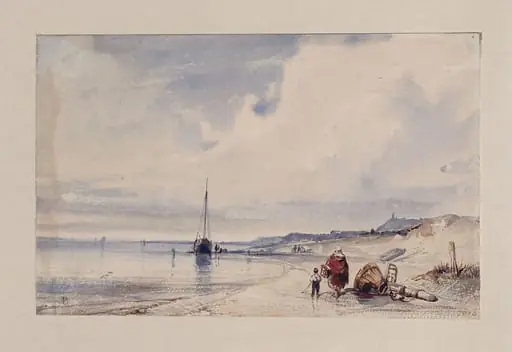
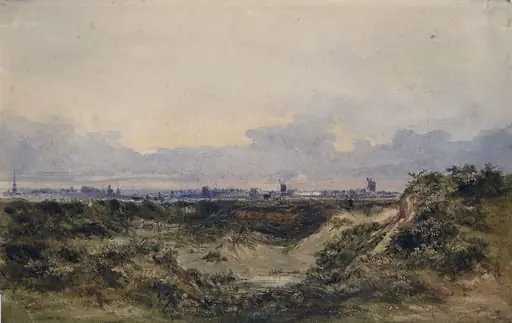
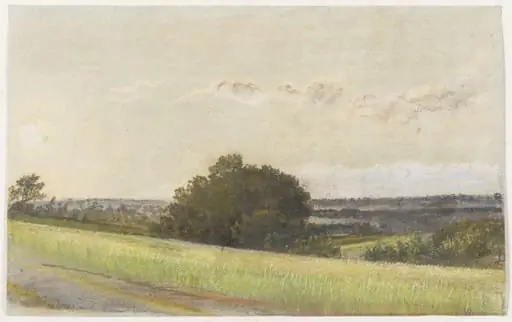
Landscape with cottage, and figures on a sandy road is a watercolor work on paper by Charles Harvey Weigall. It dates from 1850 and is held in the collection of the Victoria and Albert Museum.
About this work
Overview
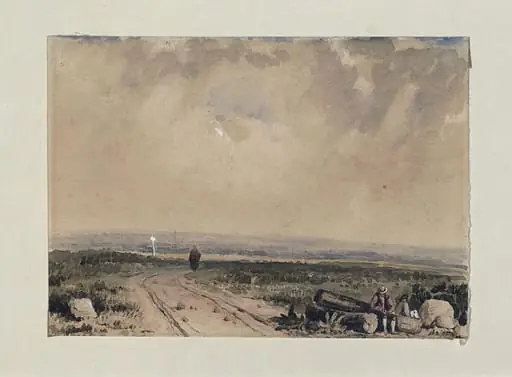
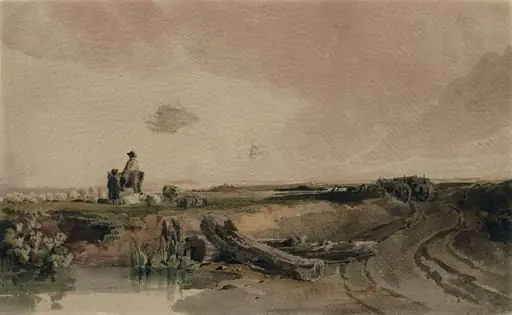
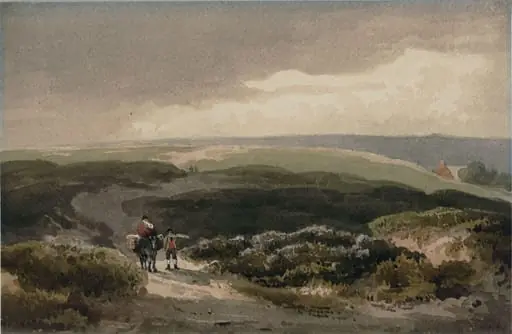
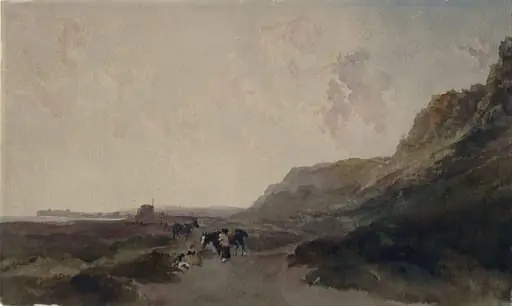
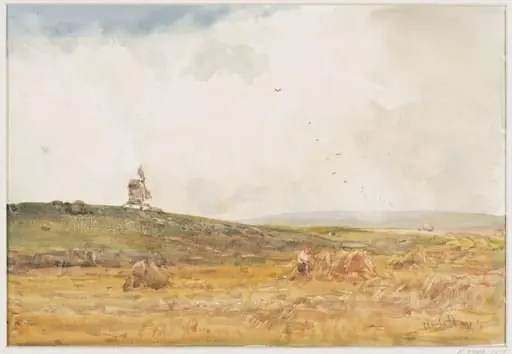
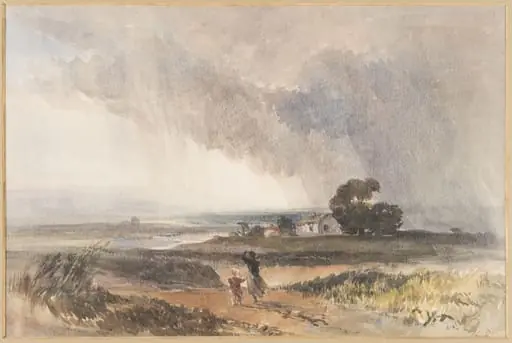
Created around 1850, this watercolor by Charles Harvey Weigall depicts a tranquil rural scene. The work is part of the Victoria and Albert Museum’s collection and exemplifies mid-19th-century British landscape watercolor practice. Its delicate tonality and restrained palette reflect the medium’s capacity for subtle atmospheric effect, characteristic of the period’s artistic sensibilities.
Subject & Meaning
A quiet path winds through open fields toward a weathered stone cottage with a tall chimney. Three figures—two riders and a pedestrian accompanied by a small dog—move slowly through the landscape. The absence of dramatic action or narrative suggests a contemplative mood, emphasizing stillness and the quiet rhythm of rural life rather than storytelling or symbolism.
Technique & Style
Weigall employed loose, fluid brushwork to suggest form without rigid definition. The watercolor medium allowed for soft transitions between hues, particularly in the pale sky and distant fields. Delicate washes create a sense of air and light, while minimal detail in the figures and architecture reinforces the scene’s gentle, ephemeral quality.
History & Provenance
The work entered the Victoria and Albert Museum’s collection as part of its broader effort to document British watercolor traditions. While specific ownership prior to acquisition is undocumented, its inclusion reflects institutional interest in lesser-known 19th-century watercolorists who contributed to the genre’s development outside the mainstream.
Context
In the 1850s, watercolor was widely practiced by amateur and professional artists alike, valued for its portability and suitability for recording the English countryside. Weigall’s work aligns with a broader trend of intimate, observational landscapes that favored mood over grandeur, contrasting with the more dramatic visions of contemporary oil painters.
Legacy
Though not widely known today, Weigall’s watercolors contribute to an understanding of the diversity within Victorian landscape art. His focus on modest, everyday scenes helped sustain the tradition of watercolor as a vehicle for quiet observation, influencing later generations who valued subtlety over spectacle.
Artist & collection
Artist
Charles Harvey Weigall painted quiet country scenes in watercolor during the mid-1800s, when artists were trading grand history paintings for everyday life in soft washes of color.