Artwork
Solway Firth
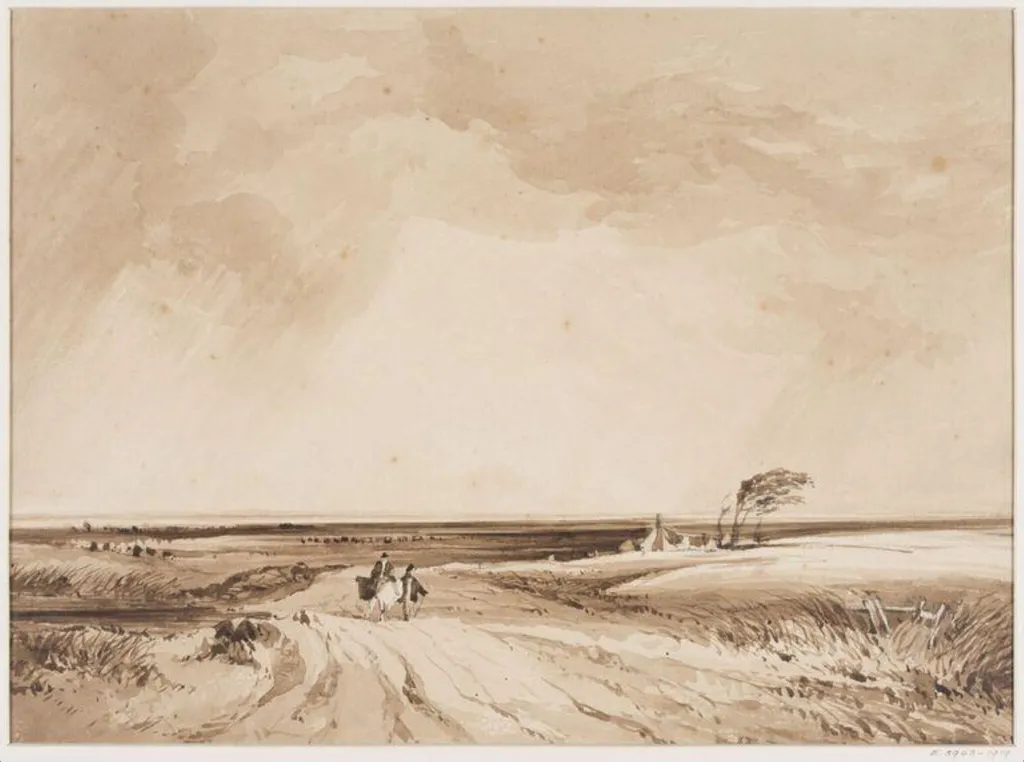
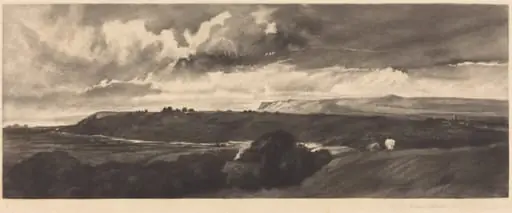
Solway Firth is a drawing by the Romanticist artist Anthony Vandyke Copley Fielding. It dates from 1787 and is held in the collection of the Victoria and Albert Museum.
About this work
Overview
The work is a sepia-toned drawing dated 1787 that records a stretch of the Solway Firth, the tidal inlet that separates England from Scotland. The composition opens onto an expansive, flat beach where gentle waves meet a broad strip of sand, extending toward a distant horizon under a muted sky.
Subject & Meaning
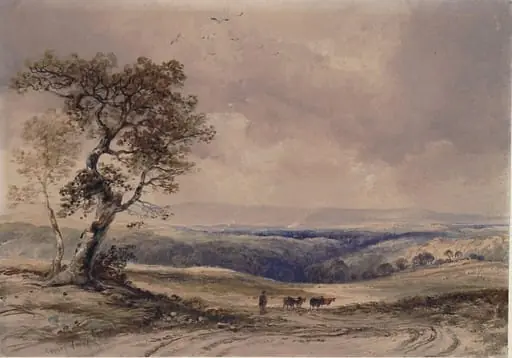
In the foreground, two figures—one on horseback—are shown advancing toward a narrow path that leads to a small pond, while a herd of cattle grazes farther back. A solitary tree, bent by the wind, stands on the far side, emphasizing the openness of the coastal landscape and the interaction between human activity and the natural environment.
Technique & Style
The artist employs rapid, sketchy strokes to convey the movement of wind through the leaning tree and the rippling water. Soft, hazy shading creates a tranquil atmosphere, while cross‑hatching builds surface texture on the sand and foliage, demonstrating a deft use of line to suggest form without heavy modeling.
History & Provenance
Created in 1787, the drawing belongs to a period when British topographical sketches were popular among travelers and antiquarians documenting the nation’s borders. Its sepia palette reflects the paper and ink conventions of the late eighteenth century, and the piece has remained in private collections before entering a museum archive in the early twentieth century.
Own this work as a print
Artist & collection
Artist
Anthony Vandyke Copley Fielding
Anthony Vandyke Copley Fielding painted British landscapes in watercolour during the early 1800s.

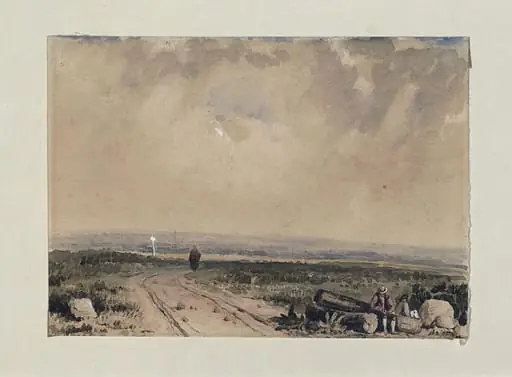 A heath traversed by a winding road
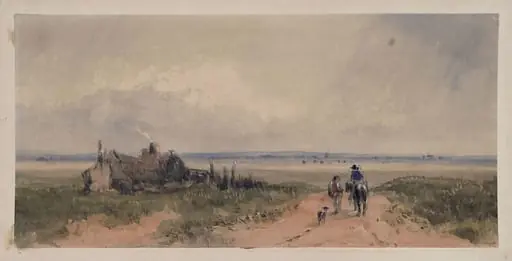 Landscape with cottage, and figures on a sandy road
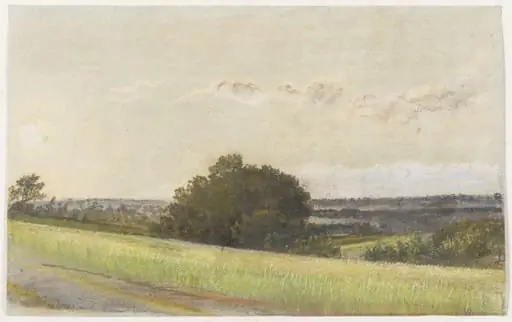 Landscape with evening effect, Abinger, Surrey
 Landscape
 Noon
Noon Untitled
 Windy Morning - Schleissheim
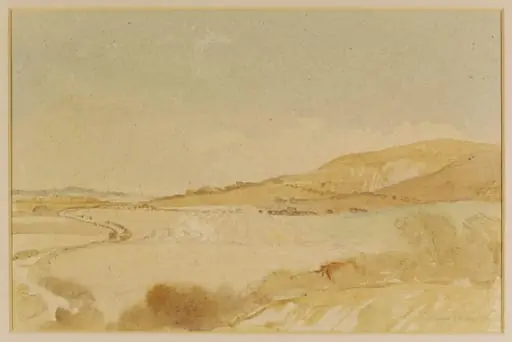 The Southdown, Underhill Road; Clayton to Westmeston
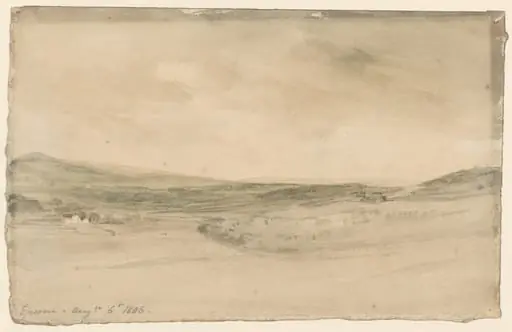 Epsom Heath
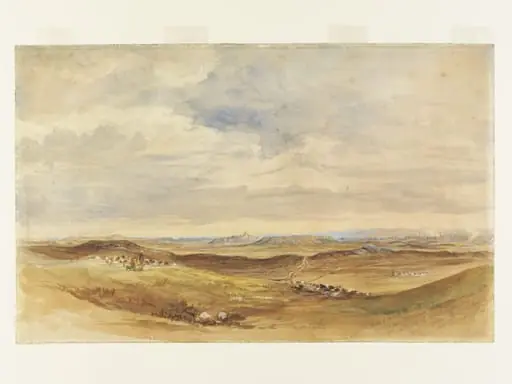 Nineveh from the North-East
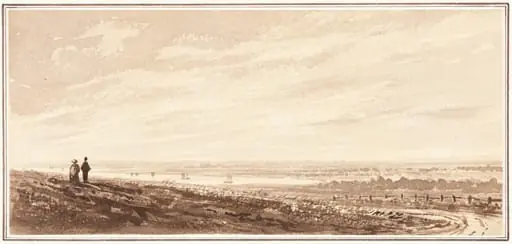 A Couple Admiring a View of the River Ouse(?), Lincolnshire
 A Yorkshire Road