Artwork
Tour du gros-horloge, Evreux
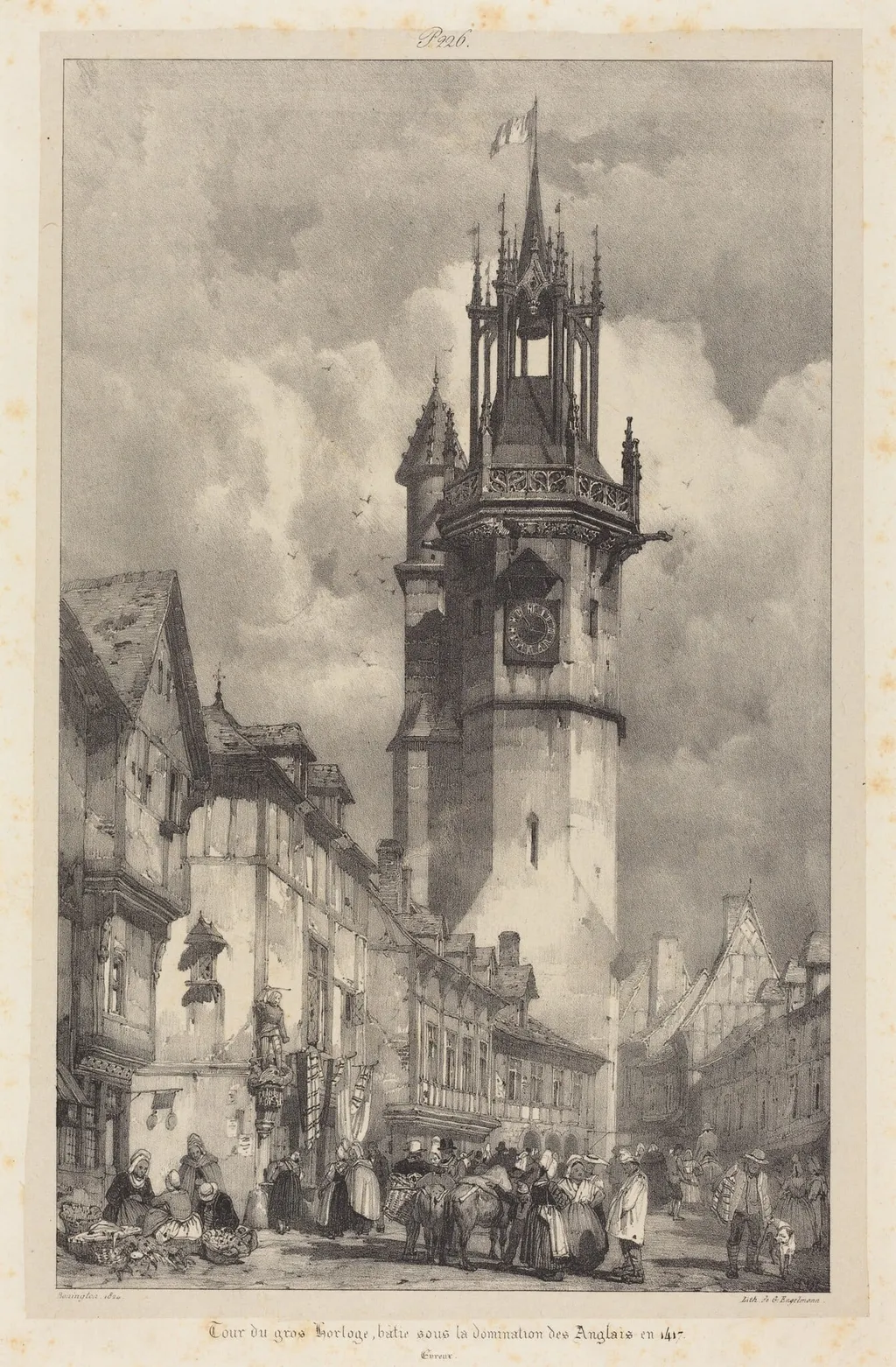
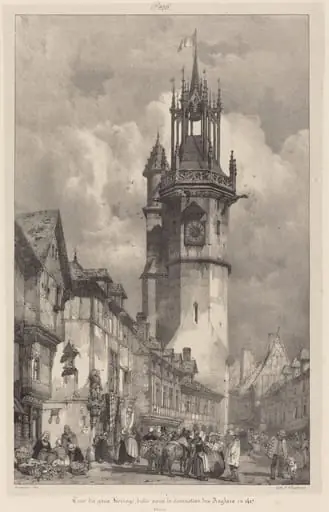
Tour du gros-horloge, Evreux is an ink print by the Romanticist artist Richard Parkes Bonington. It dates from 1824 and is held in the collection of the National Gallery of Art.
About this work
Overview
Executed during a short but prolific career, the print reflects Bonington’s position between British and French artistic traditions.
Created in 1824, this lithograph by Richard Parkes Bonington captures the Tour du gros-horloge in Évreux, France. Executed during a short but prolific career, the print reflects Bonington’s position between British and French artistic traditions. As a printmaker, he embraced lithography’s immediacy to record urban scenes with a sense of quiet observation, avoiding grandiosity in favor of everyday atmosphere.
Subject & Meaning
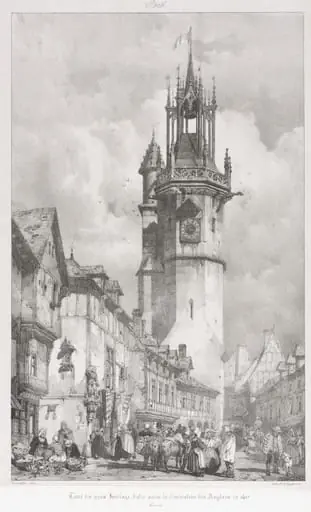
The scene centers on the medieval clock tower, framed by modest buildings and a bustling street. Figures in period dress move casually—conversing, walking, or pausing—while a horse-drawn carriage passes. A distant ship’s mast suggests the town’s connection to river trade. The composition conveys no narrative, but rather a fleeting moment of ordinary life, emphasizing the quiet rhythm of a provincial French town.
Technique & Style
Bonington employed lithography to achieve a spontaneous, sketch-like quality. Lines are fluid and suggestive, not meticulously detailed; forms emerge through tonal contrasts rather than precise contours. Light is rendered diffusely, with soft gradations in the sky and shadows, enhancing the sense of atmosphere. The technique allowed him to translate the immediacy of a plein air sketch into a reproducible print.
History & Provenance
Produced in 1824, the print belongs to Bonington’s French period, when he traveled extensively and documented regional architecture. Though he died at 25, his prints circulated widely in both Britain and France. This work likely entered collections through his connections with French printmakers and British patrons interested in continental landscapes, preserving his reputation beyond his lifetime.
Context
In the early 1820s, lithography was emerging as a medium for artistic expression, not just illustration. Bonington’s work aligned with Romanticism’s interest in local character and transient light, contrasting with academic history painting. His focus on modest urban scenes reflected a broader shift toward everyday subjects, influencing later generations of landscape artists in both countries.
Legacy
Bonington’s lithographs, including this one, demonstrated how printmaking could convey emotional nuance and atmospheric effect. His synthesis of English precision and French tonal sensitivity helped redefine landscape printmaking. Though his career was brief, his approach to light and composition became a touchstone for artists seeking to capture the subtleties of real-world environments.
Artist & collection
Artist
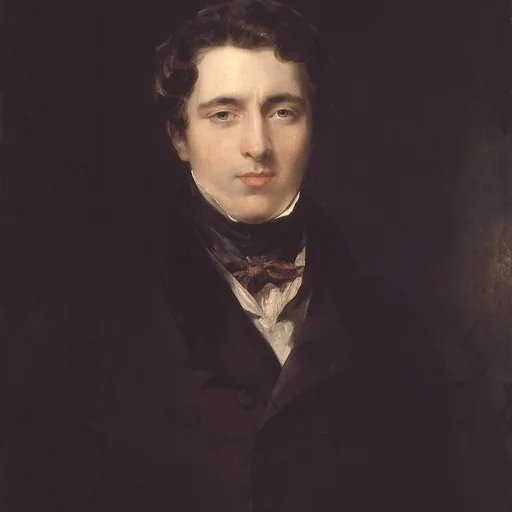
Richard Parkes Bonington (25 October 1802 – 23 September 1828) was an English Romantic landscape painter.

 Tour du gros-horloge, Evreux
 Voyages Pittoresques et Romantique dans l'Ancienne France, Normandie: Tour du Gros-Horlage, Évreux
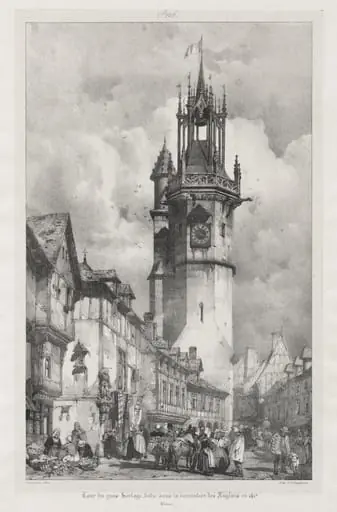 Voyages pittoresques et romantiques dans l'ancienne France, Normandie: Tour du Gros-Horloge, Evreux
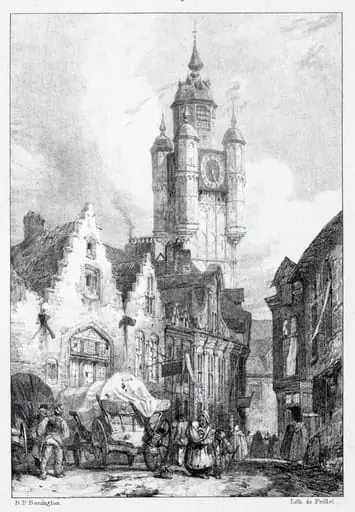 Bergues: La Tour du marché
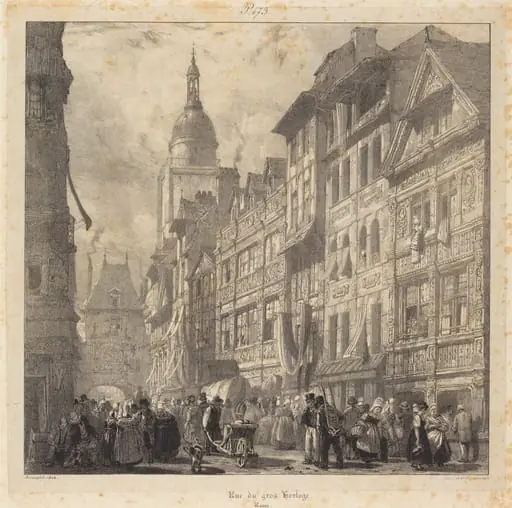 Rue du gros-horloge, Rouen
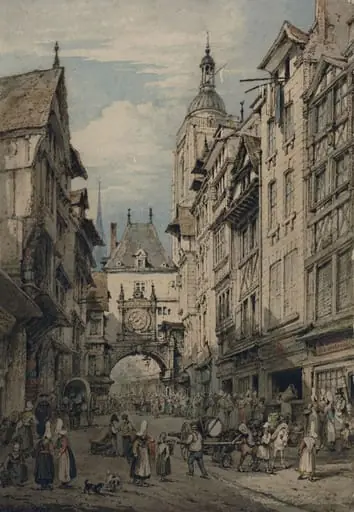 Rue de la Grosse Horloge
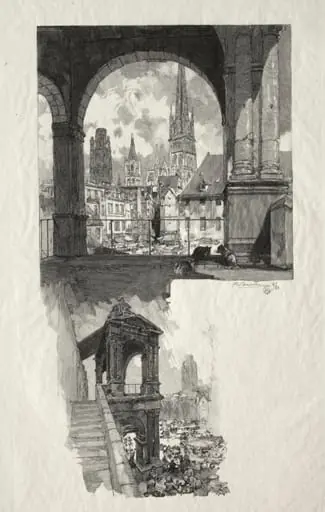 Place de la Haute Vieille Tour; Edicule de la Fierte
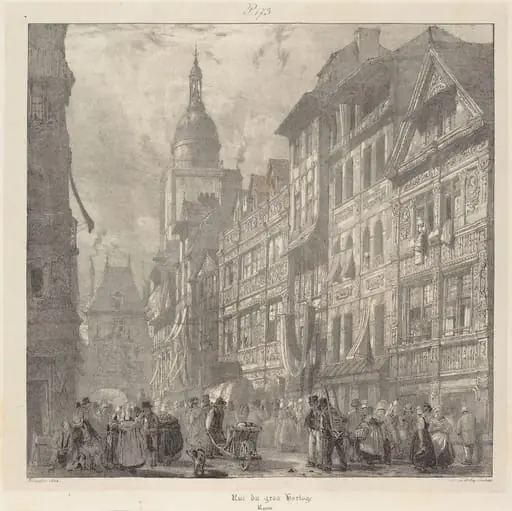 Rue du gros-horloge, Rouen