Artwork
Voyages Pittoresques et Romantique dans l'Ancienne France, Normandie: Tour du Gros-Horlage, Évreux
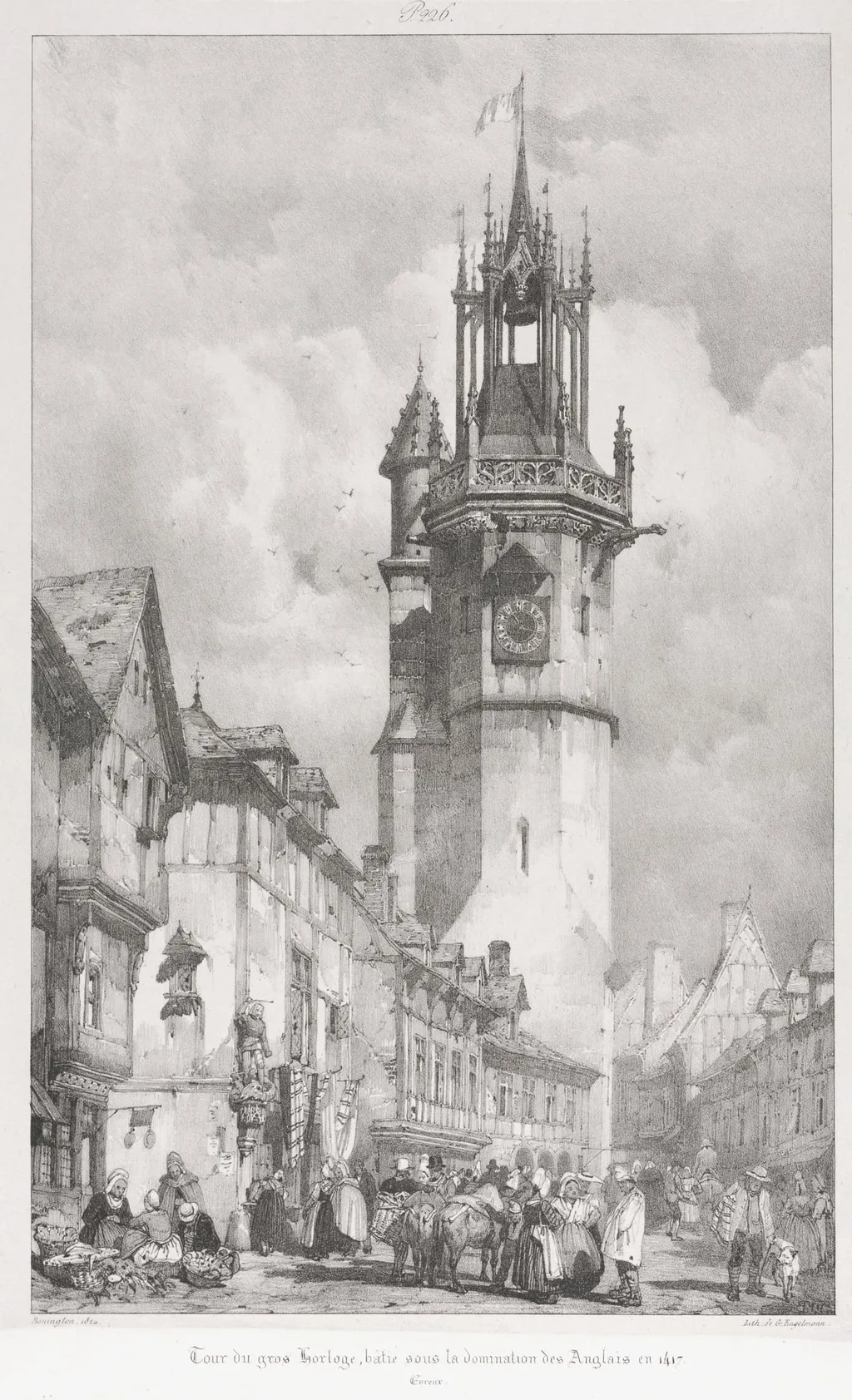
Voyages Pittoresques et Romantique dans l'Ancienne France, Normandie: Tour du Gros-Horlage, Évreux is a print by the Romanticist artist Godefroy Engelmann. It dates from 1824 and is held in the collection of the Cleveland Museum of Art.
About this work
Below it, people in old-fashioned clothes stand around, some near a small market with baskets and goods.
This drawing shows a tall clock tower rising over a quiet street. The tower has a pointed roof, a clock face, and a flag on top. Below it, people in old-fashioned clothes stand around, some near a small market with baskets and goods. The buildings are narrow and have steep roofs, with shutters on the windows.
The artist focused on everyday life in a small town, but the tower feels important. The date at the top reads 1826, though the scene looks older.
Look up Romanticism to see how artists used emotion and history in their work.
Overview
Voyages Pittoresques et Romantique dans l'Ancienne France, Normandie: Tour du Gros-Horlage, Évreux is an 1824 print by Godefroy Engelmann, currently in the collection of The Cleveland Museum of Art. The work depicts a scene in Évreux, Normandy, focusing on the prominent Tour du Gros-Horlage clock tower amidst a quiet, traditional town setting.
Subject & Meaning
The print highlights the Tour du Gros-Horlage, a tall, pointed-roofed clock tower with a flag, set against the backdrop of everyday life in a small Norman town. While the scene emphasizes the tower's importance, it also captures the mundane activities of locals, juxtaposing architectural heritage with ordinary life.
Technique & Style
Engelmann's technique in this print reflects Romantic-era sensibilities, emphasizing emotional resonance through the depiction of historical architecture and quotidian life. The attention to detail in textures, from the tower's stonework to the thatched or steeply roofed surrounding buildings, adds depth.
History & Provenance
Created in 1824, the print bears a date of 1826 at the top, suggesting a potential discrepancy in its production or publication timeline. It is now part of The Cleveland Museum of Art's collection.
Context
This work aligns with the Romantic movement's emphasis on emotion, history, and the beauty of everyday life. By focusing on a lesser-known Norman town, Engelmann contributes to a broader Romantic interest in regional and historical subjects.
Artist & collection

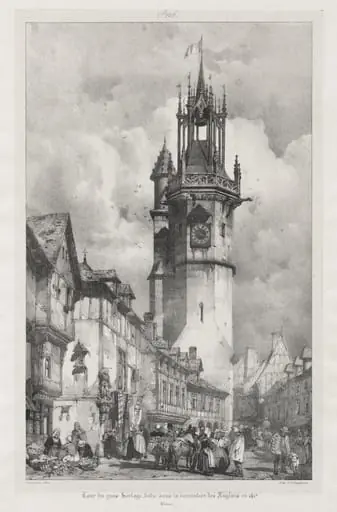 Voyages pittoresques et romantiques dans l'ancienne France, Normandie: Tour du Gros-Horloge, Evreux
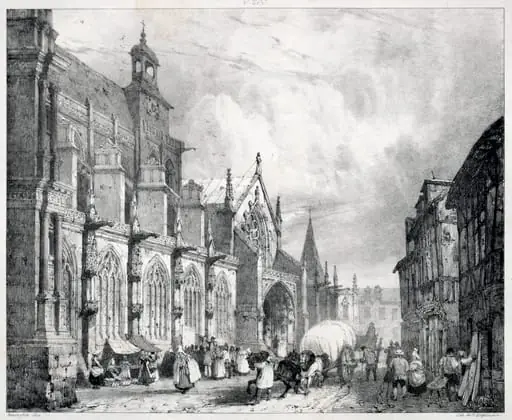 Voyages pittoresques et romantiques dans l'ancienne France, Normandie: Église de Saint Gervais et Saint Protais à Gisors
 Tour du gros-horloge, Evreux
 Tour du gros-horloge, Evreux
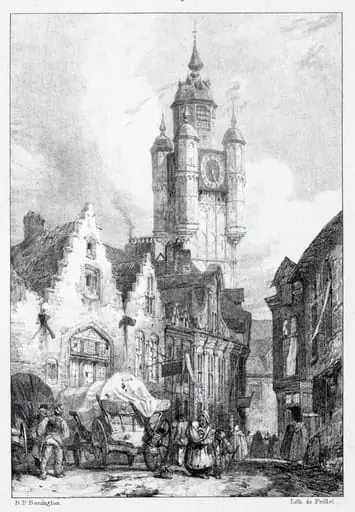 Bergues: La Tour du marché
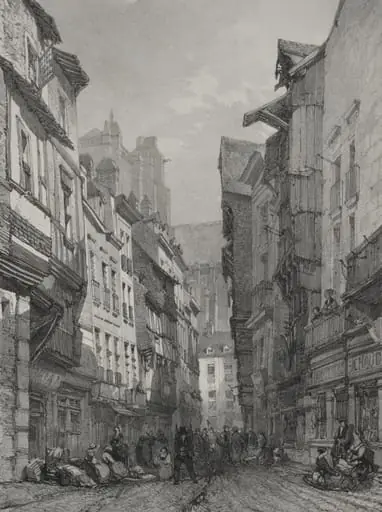 Voyages pittoresques et romantiques dans l'ancienne France. Bretagne: Grande rue vieille à Nantes
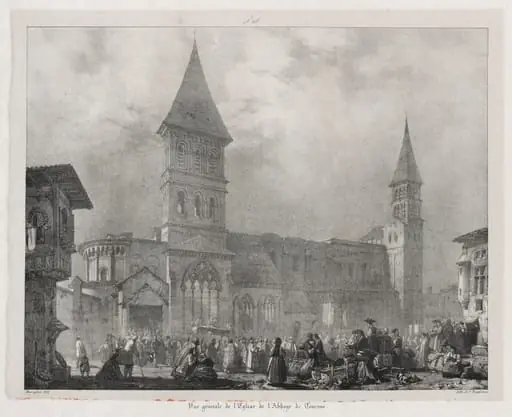 Voyages pittoresques et romantiques dans l'ancienne France, Franche-Comté: Église de l'abbaye de Tournus
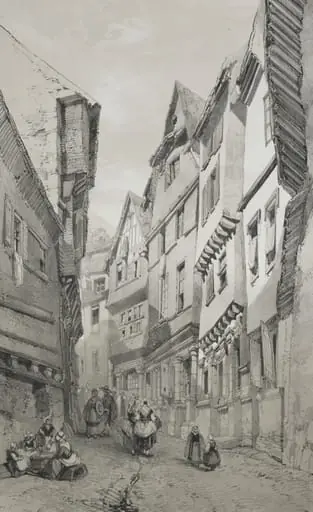 Voyages pittoresques et romantiques dans l'ancienne France. Bretagne: Morlaix
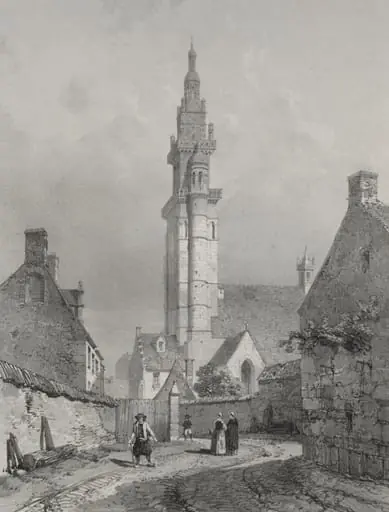 Voyages pittoresques et romantiques dans l'ancienne France. Bretagne: Eglise de Roscoff
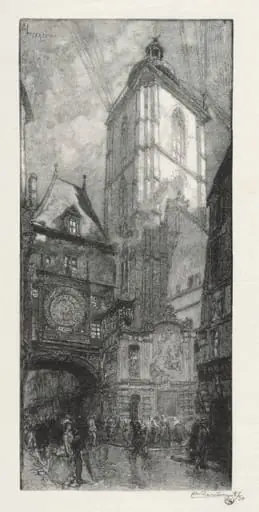 Rouen Illustré: La Gros Horloge