Artwork
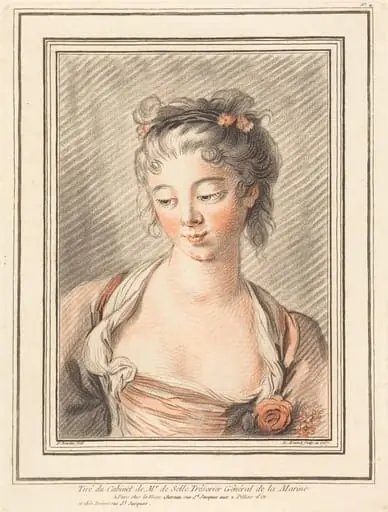
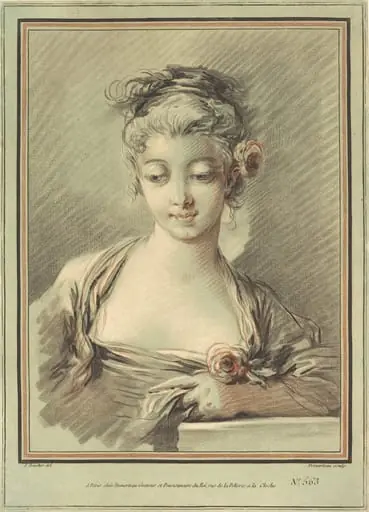
Bust of a Young Woman Looking Down
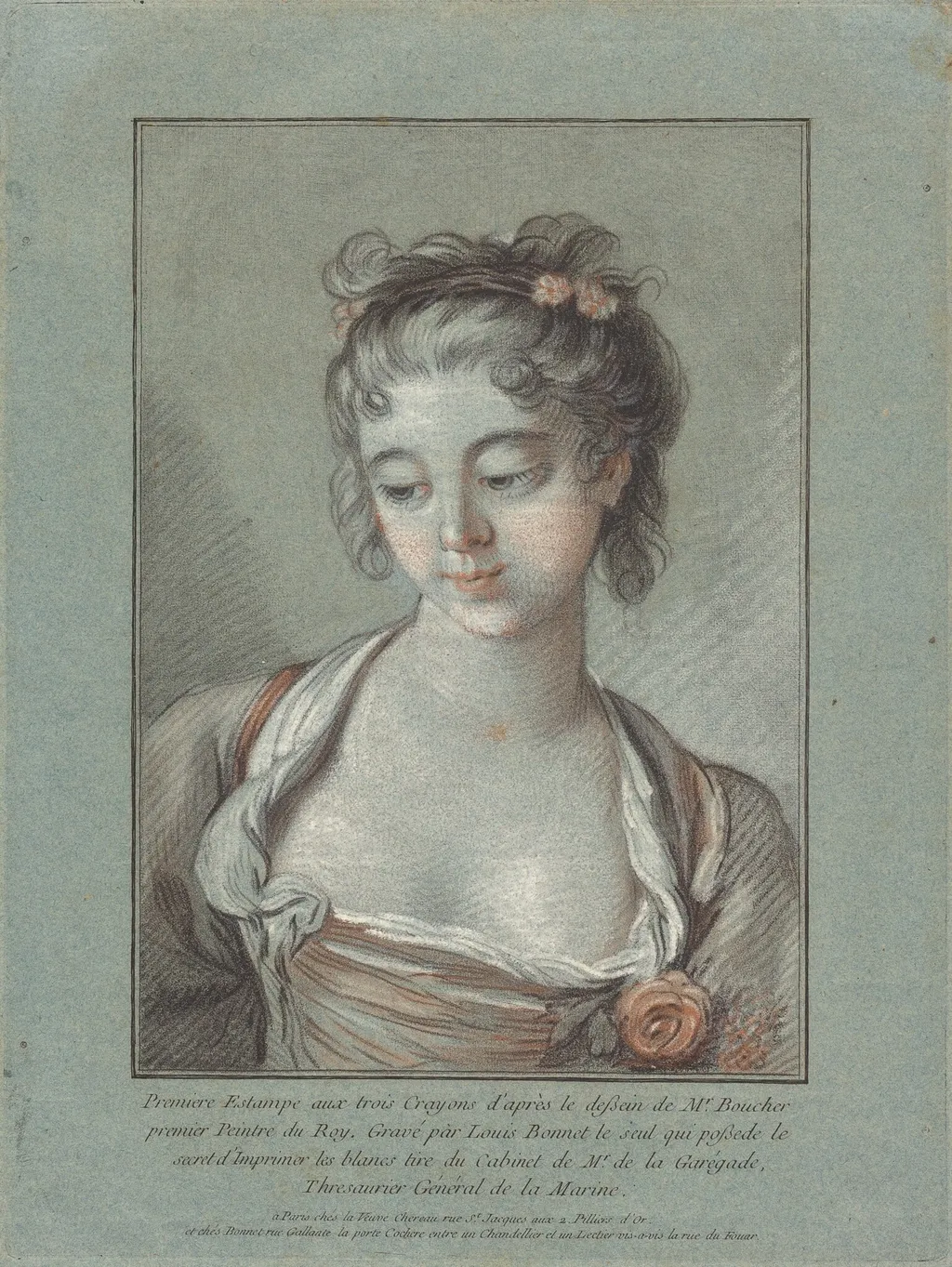
Bust of a Young Woman Looking Down is a chalk print by the Romanticist artist Louis-Marin Bonnet. It dates from 1766 and is held in the collection of the National Gallery of Art.
About this work
Overview
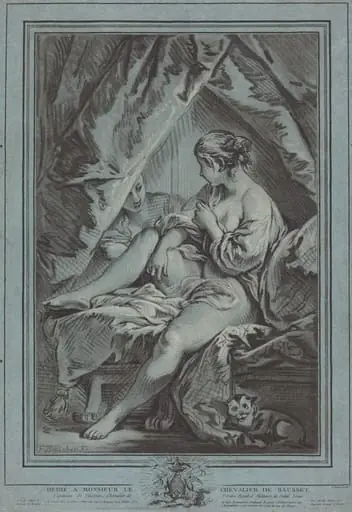
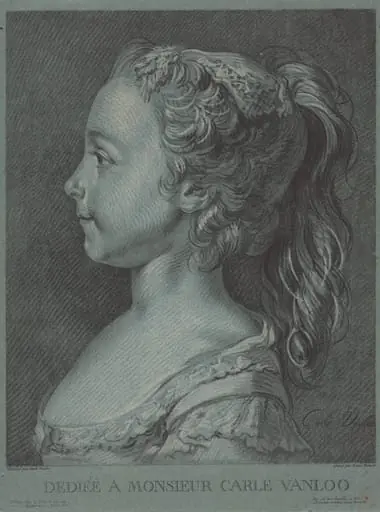
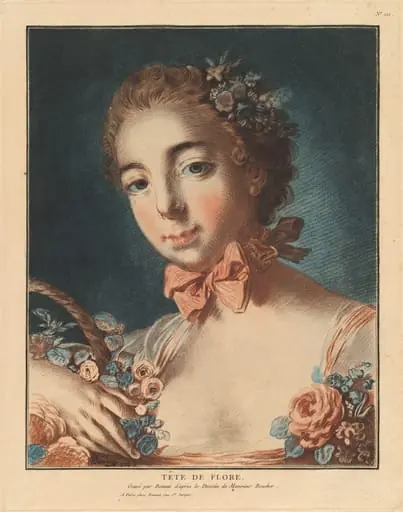
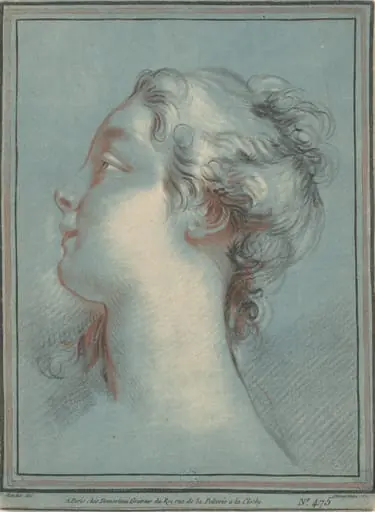
Created in 1766 by Louis-Marin Bonnet, this print depicts a young woman’s bust in soft chalk tones on blue paper. Rendered in black, red, and white, the work combines drawing and printmaking techniques to achieve a delicate, lifelike portrait. The blue ground enhances the subtlety of the pigments, a method favored in mid-18th-century portraiture for its quiet elegance and tonal harmony.
Subject & Meaning
The subject is a young woman with her gaze lowered, conveying introspection rather than direct engagement. Her hair is neatly bound with a ribbon, and a single rose rests on her shoulder—a symbol of fleeting beauty or quiet virtue. The absence of elaborate adornment and the calm demeanor suggest an idealized, modest femininity common in private portrait commissions of the period.
Technique & Style
Bonnet employed chalk in three colors—black for definition, white for highlights, and red for warmth—on a blue paper support to build subtle gradations of tone.
Bonnet employed chalk in three colors—black for definition, white for highlights, and red for warmth—on a blue paper support to build subtle gradations of tone. The technique mimics the softness of pastel drawing while leveraging printmaking’s reproducibility. The restrained palette and blended edges reflect a preference for naturalism over theatricality, aligning with emerging tastes in intimate portraiture.
History & Provenance
Produced in 1766, the print belongs to a series of chalk portraits Bonnet made during a period when colored chalk drawings gained popularity among French collectors. Though not widely exhibited publicly, such works circulated in private collections and were valued for their refined execution. Its survival in good condition suggests careful preservation by early owners.
Context
In mid-18th-century France, portrait prints in chalk on colored paper emerged as affordable alternatives to oil paintings, particularly for domestic settings. Artists like Bonnet capitalized on this trend, blending drawing techniques with print media. The use of blue paper and restrained color reflected broader aesthetic shifts toward delicacy and emotional restraint in portraiture.
Legacy
Bonnet’s work contributed to the legitimization of chalk drawings as a serious medium for portraiture, influencing later artists who explored similar techniques. While not widely known today, his prints remain important examples of how 18th-century printmakers expanded the boundaries of portraiture through material innovation and subtle expression.
Artist & collection