Artwork
Tête de Flore
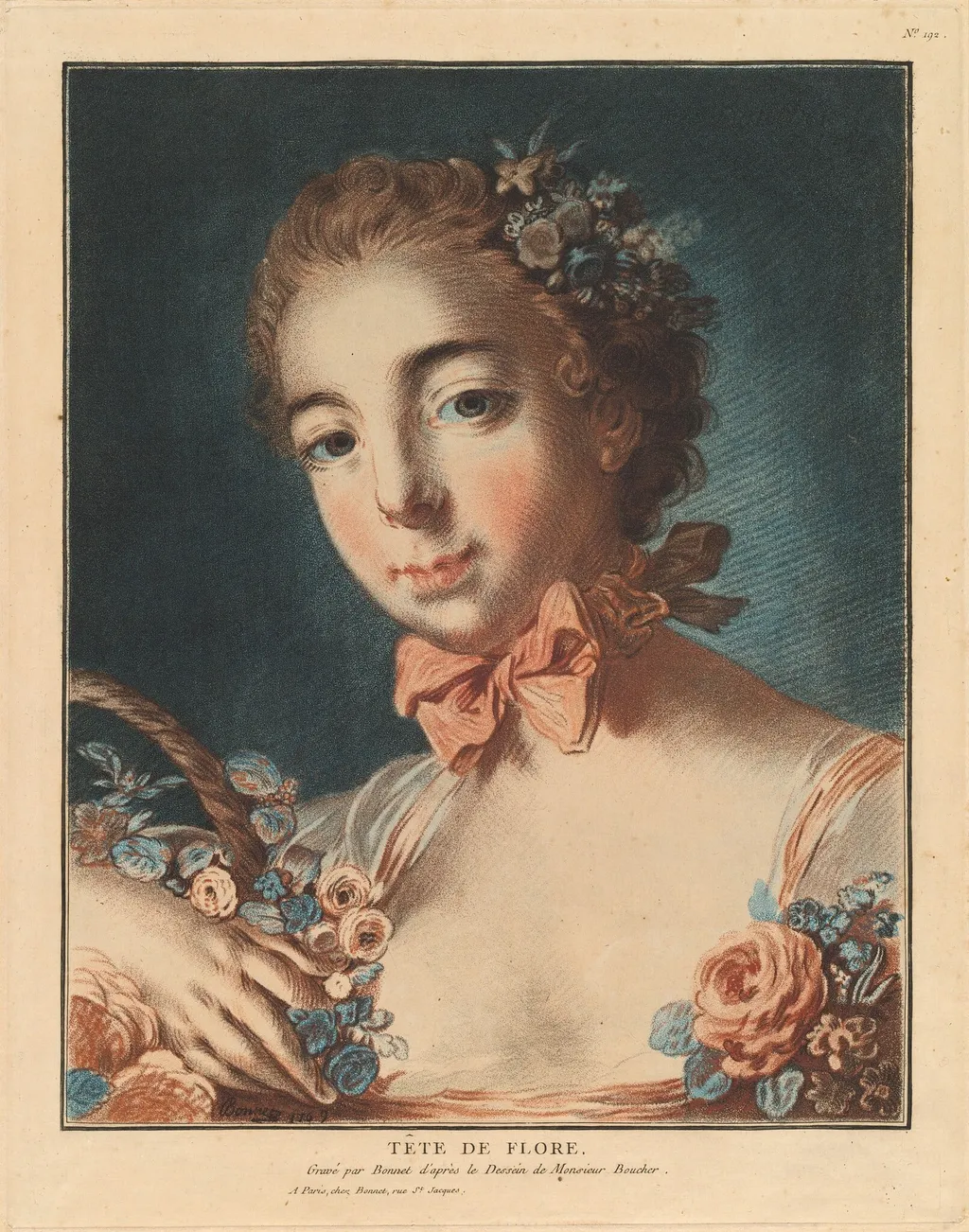
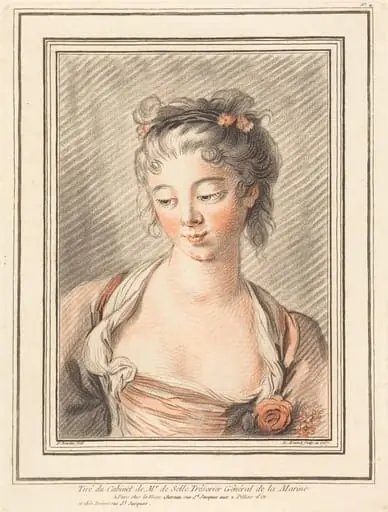
Tête de Flore is a chalk print by the Romanticist artist Louis-Marin Bonnet. It dates from 1769 and is held in the collection of the National Gallery of Art.
About this work
Overview
The technique mimics the softness of pastel drawings, emphasizing texture and subtle color transitions rather than sharp outlines.
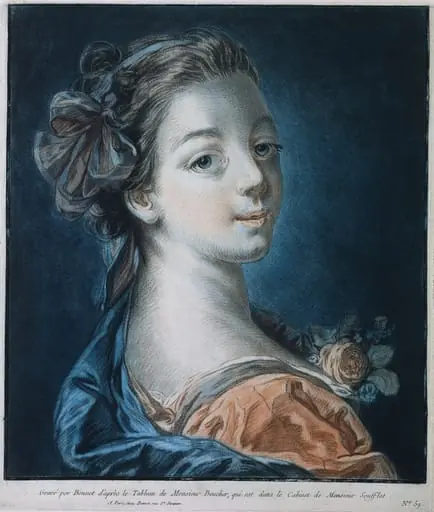
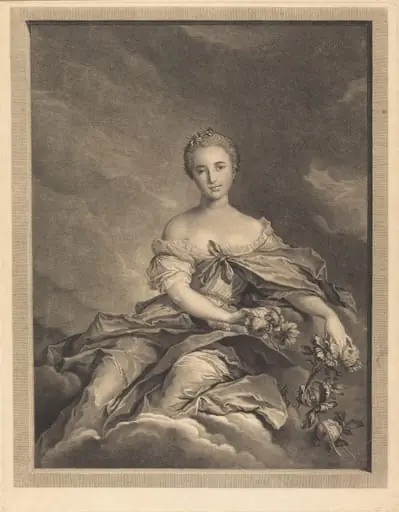
Tête de Flore is a 1769 print by Louis-Marin Bonnet, executed in chalk manner using blue, black, and red pigments. It depicts a female figure from the shoulders up, rendered with delicate tonal gradations. The technique mimics the softness of pastel drawings, emphasizing texture and subtle color transitions rather than sharp outlines. The work belongs to a tradition of reproductive prints that translated painterly effects into printed form.
Subject & Meaning
The figure is identified as Flore, the Roman goddess of flowers and spring, symbolizing renewal and natural beauty. Her hair and neckline are adorned with floral elements, reinforcing her mythological association. Her gaze, turned gently to the left, suggests contemplation rather than direct engagement. The pink ribbon around her neck adds a refined, intimate detail, aligning the image with 18th-century ideals of feminine grace and classical allusion.
Technique & Style
Bonnet employed the chalk manner, a printmaking technique that replicates the appearance of chalk drawings through stippling and hatching. The use of blue, black, and red inks creates a muted, harmonious palette, enhancing the softness of the skin and the delicacy of the floral decorations. The dark blue-green background isolates the figure, focusing attention on her form and the nuanced rendering of light across her features.
History & Provenance
Created in 1769, Tête de Flore was part of a series of prints Bonnet produced after designs by contemporary painters, often intended for private collectors. These prints were valued for their ability to disseminate fashionable imagery in an era before widespread photographic reproduction. The work reflects Bonnet’s role in the print trade, bridging fine art and decorative culture in pre-Revolutionary France.
Context
The print emerged during a period when mythological and allegorical female figures were popular in French decorative arts. Flore’s depiction aligns with Rococo sensibilities—elegant, intimate, and rooted in classical mythology—but avoids overt theatricality. Unlike later Romantic works, it favors restraint and subtlety, reflecting the refined tastes of the French aristocracy before the upheavals of the late 18th century.
Legacy
Tête de Flore exemplifies the technical sophistication of 18th-century reproductive printmaking. While not widely exhibited today, it remains a representative example of how classical themes were adapted for domestic consumption. Bonnet’s approach influenced later printmakers seeking to translate painterly effects into printed media, preserving the aesthetic values of his time in accessible form.
Artist & collection