Artwork
Head of a Young Woman Facing Left
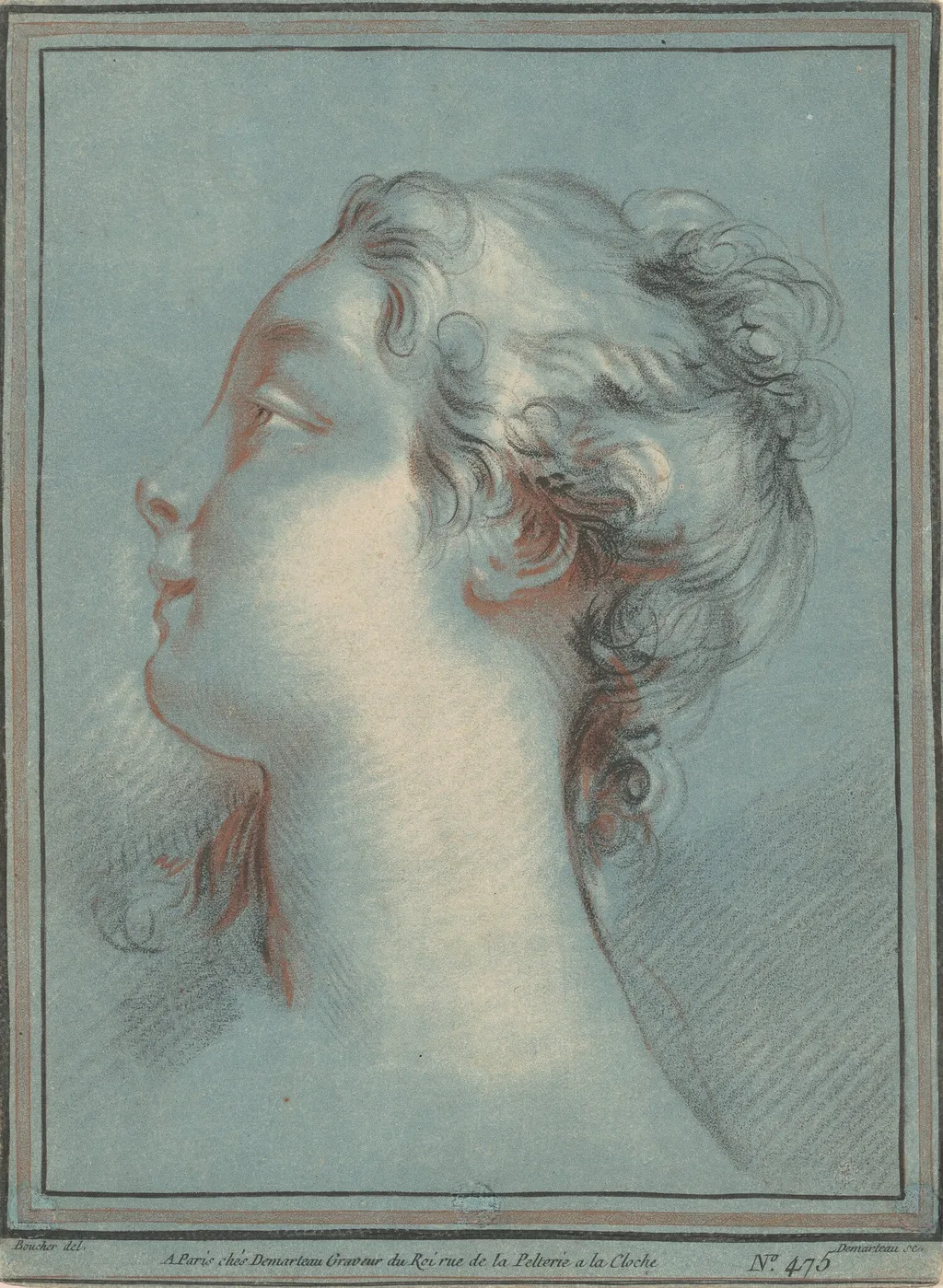
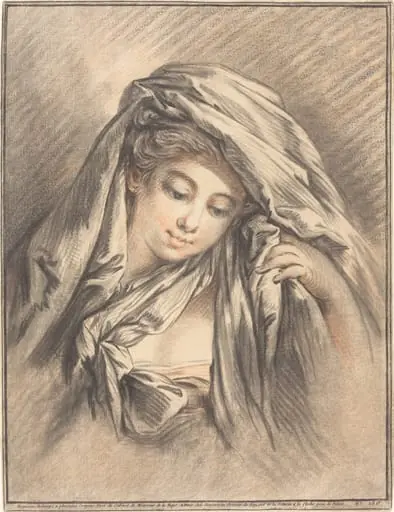
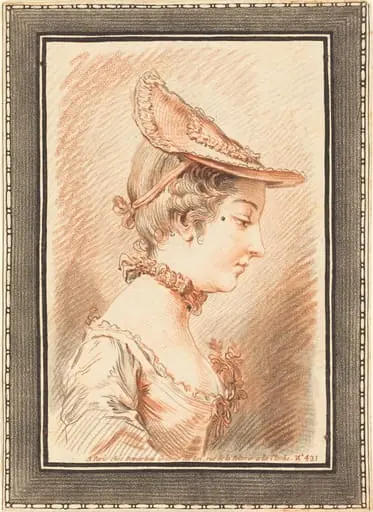
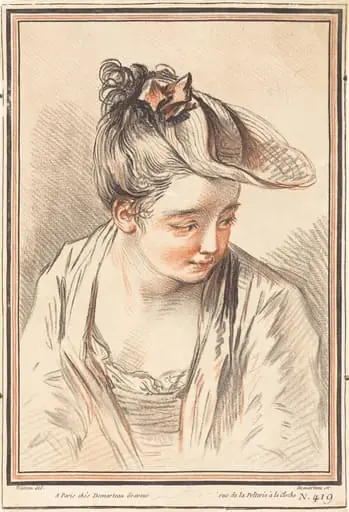
Head of a Young Woman Facing Left is a chalk print by the Romanticist artist Gilles Demarteau the Elder. It dates from 1774 and is held in the collection of the National Gallery of Art.
About this work
Overview
The medium’s softness and layered application evoke a fleeting, intimate portrait, emphasizing atmosphere over precise anatomical detail.
Created around 1774 by Gilles Demarteau the Elder, this print depicts a young woman’s head and shoulders in chalk on laid paper. Rendered in black, red, and blue, the work combines delicate line work with subtle tonal shifts. The medium’s softness and layered application evoke a fleeting, intimate portrait, emphasizing atmosphere over precise anatomical detail. The pale blue background enhances the figure’s quiet presence.
Subject & Meaning
The subject is a young woman turned slightly left, her gaze directed away from the viewer. Her loose hair cascades over her shoulders, and her expression is serene, unguarded. There is no narrative context or symbolic attribute; the focus lies in the quiet dignity of the moment. The work captures a private, contemplative state, inviting reflection rather than storytelling.
Technique & Style
Demarteau employed colored chalks—black, red, and blue—on textured laid paper to achieve a sketchlike quality. Light, fluid strokes define contours, while layered shading in red and black adds subtle volume. The pale blue wash behind the figure softens the edge between form and space. The technique avoids sharp definition, favoring a hazy, atmospheric effect that suggests mood over realism.
History & Provenance
The print originates from Demarteau’s series of portrait studies made during the mid-to-late 18th century, likely intended as artistic references or decorative works. It was produced in Paris, where Demarteau was known for his reproductive engravings and chalk drawings. The work’s survival in private and institutional collections reflects its appeal as a refined example of French graphic art from the period.
Context
In the decades before the French Revolution, there was growing interest in intimate, emotionally resonant portraiture outside formal commissions. Demarteau’s work aligns with this trend, drawing from Rococo sensibilities while anticipating the more personal approaches of early Romanticism. His use of chalk, a medium associated with preparatory drawings, elevated informal studies to independent artworks.
Legacy
Demarteau’s chalk prints influenced later artists exploring tonal subtlety and expressive line. Though not widely celebrated in his time, his focus on ephemeral expression and restrained color contributed to the evolving appreciation of graphic arts as a medium for emotional nuance. This work remains a quiet example of 18th-century French draftsmanship’s sensitivity to light and mood.
Artist & collection