Artwork
Constantinople from the Asian shore
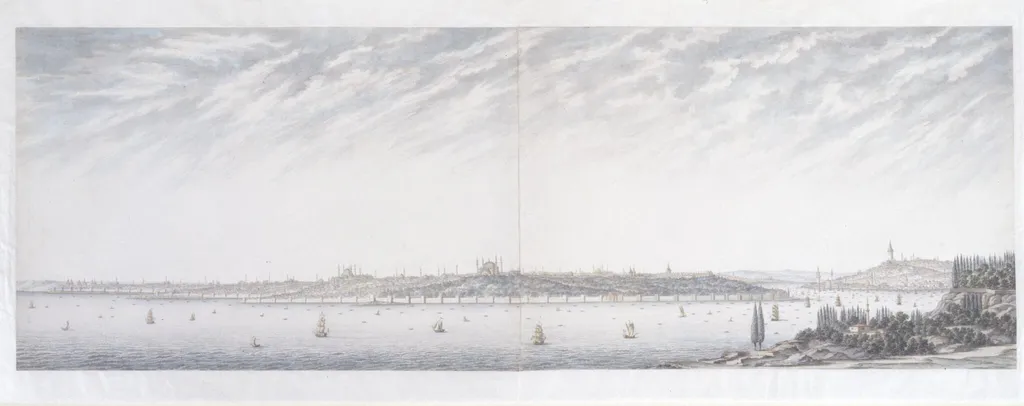
Constantinople from the Asian shore is a watercolor work on paper by the Rococo painting artist Giovanni Battista Borra. It dates from 1751 and is held in the collection of the Victoria and Albert Museum.
About this work
Overview
Created in 1751, this watercolour by Giovanni Battista Borra captures a broad vista of Constantinople as viewed from the Asian coast near Üsküdar.
Created in 1751, this watercolour by Giovanni Battista Borra captures a broad vista of Constantinople as viewed from the Asian coast near Üsküdar. Executed during the artist’s brief stay in the region, the work translates on-site sketches into a detailed, atmospheric panorama. It extends from Yediküle in the west to Saray Burnu in the east, framing the city’s skyline across the Sea of Marmara with careful attention to spatial depth and architectural arrangement.
Subject & Meaning
The scene presents Constantinople as a functioning imperial city, its skyline defined by mosques, towers, and fortifications. The presence of vessels—anchored and underway—suggests active maritime trade and transport. The composition avoids idealization, instead documenting the urban fabric as it appeared in the mid-18th century, reflecting the city’s layered identity as a crossroads of cultures and commerce under Ottoman rule.
Technique & Style
Borra employed light, transparent washes to convey atmospheric perspective, softening distant forms and enhancing the sense of scale. Fine brushwork delineates individual buildings and sails, while the hazy horizon and delicate cloud formations suggest a quiet, luminous day. The watercolour medium allowed for rapid recording of light and topography, aligning with the artist’s practice of observational sketching during travel.
History & Provenance
The drawing originated from sketches made between 16 June and 10 July 1750, during Borra’s tour of the city’s perimeter. It was later acquired by British collector W.T. Spencer in December 1966. Its journey from a personal record to a museum-held artifact reflects the 19th- and 20th-century interest in topographical works documenting the Ottoman capital.
Context
In the mid-18th century, European artists and travelers increasingly documented Ottoman cities as part of broader antiquarian and scientific curiosity. Borra’s work aligns with this trend, offering a precise, non-romanticized record of Constantinople’s urban form at a time of gradual transformation. His focus on topography, rather than ceremonial spectacle, distinguishes it from more theatrical depictions of the era.
Legacy
The watercolour remains a valuable record of Constantinople’s 18th-century skyline, preserving architectural details now altered or lost. As part of the V&A’s collection, it contributes to scholarly understanding of how Western artists interpreted Eastern urban landscapes. Its modest scale and observational rigor continue to inform studies of travel drawing and cross-cultural visual documentation.
Artist & collection
Artist
Giovanni Battista Borra spent years sketching ruins and rivers on the road, notebook always in hand.

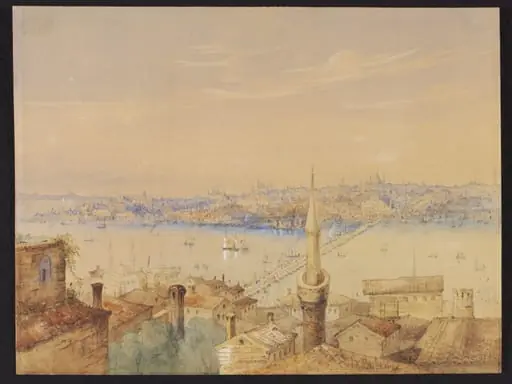 View of Constantinople from Pera across the Golden Horn
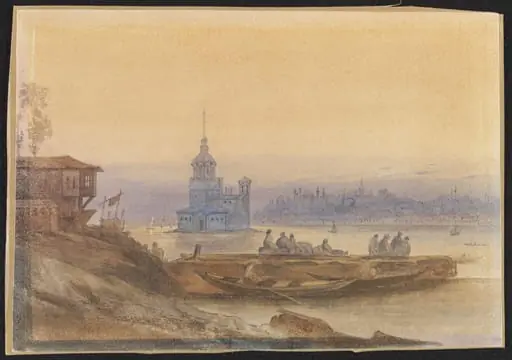 Leander's Tower at Constantinople
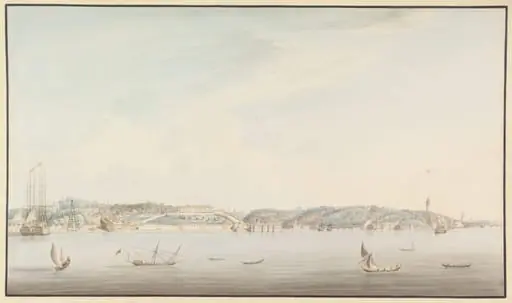 Kasim Pasa, the former Ottoman Naval Arsenal, from the Golden Horn
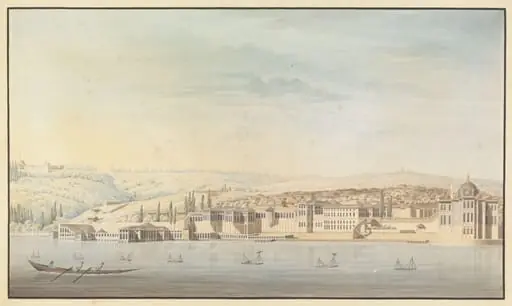 Former Dolmabahçe Palace and Mosque
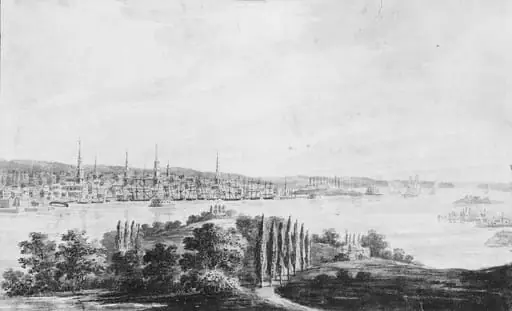 New York City and Harbor from Weehawken
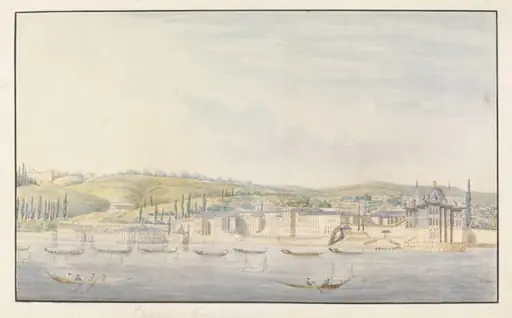 Former Dolmabahçe Palace and Mosque
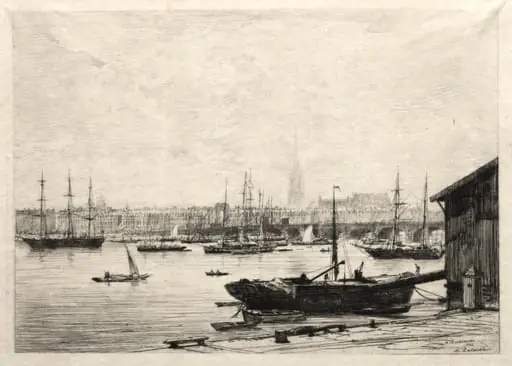 Bordeaux
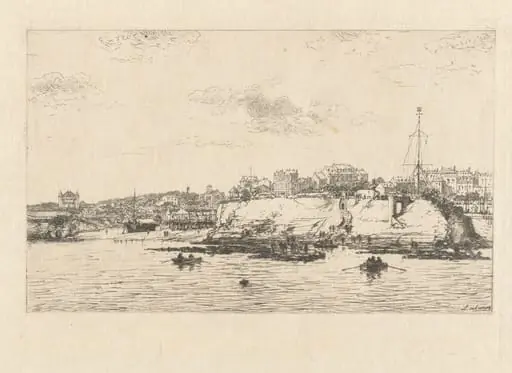 Port de la Plataine à Royan
 Untitled