Artwork
Leander's Tower at Constantinople
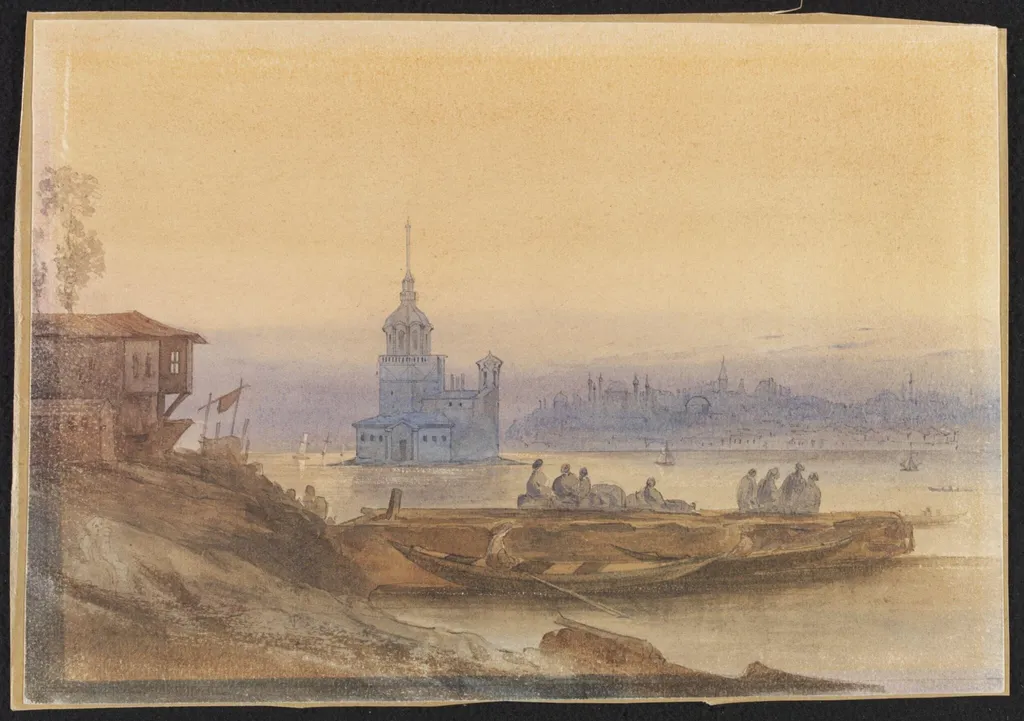
Leander's Tower at Constantinople is a watercolor work on paper by the Impressionist artist Aloysius Rosarius Amadeus Raymondus Andreas Preziosi. It dates from 1862 and is held in the collection of the Victoria and Albert Museum. This watercolor portrays the Leander’s Tower on a small island off the coast of Constantinople, rendered in delicate, translucent washes.
About this work
Overview
This watercolor portrays the Leander’s Tower on a small island off the coast of Constantinople, rendered in delicate, translucent washes.
This watercolor portrays the Leander’s Tower on a small island off the coast of Constantinople, rendered in delicate, translucent washes. The scene captures a tranquil waterfront with a modest boat near rocky shores and a few figures resting on the stones. A wooden structure clings to the hillside behind, while the tower rises as the central motif, isolated in the water. The soft, muted palette and hazy atmosphere reflect a quiet, contemplative mood typical of 19th-century European views of the city.
Subject & Meaning
The Leander’s Tower, historically linked to the myth of Hero and Leander, served as a symbolic landmark in Constantinople’s skyline. Its depiction here emphasizes solitude and distance, reinforcing its role as a silent witness to the city’s layered past. The absence of bustling activity and the subdued tones suggest a meditative engagement with place rather than a documentary record, aligning with romanticized European perceptions of the Ottoman capital.
Technique & Style
The artist employed light, layered watercolor washes to achieve a hazy, atmospheric effect, allowing distant buildings to dissolve into the sky. Fine brushwork defines the tower’s spire and the shoreline’s texture, while the water’s stillness is suggested through minimal detail and pale tonal shifts. The technique echoes the aesthetic of topographical watercolors popular among amateur and professional artists alike, prioritizing mood over precision.
History & Provenance
The work likely stems from a tradition of reproductions inspired by the paintings of A. Preziosi, whose orientalist cityscapes were widely circulated in the 19th century. Variations in execution suggest it may be a studio copy or an imitation by a follower, possibly an amateur artist adapting his style. Such reproductions were common as demand grew for images of Constantinople among European collectors and travelers.
Context
In the 19th century, European artists and tourists increasingly turned to Constantinople as a subject of fascination, drawn to its blend of Byzantine and Ottoman architecture. Watercolors like this one catered to a market seeking picturesque, non-threatening views of the East. These works often softened cultural complexity into serene landscapes, reflecting broader imperial and aesthetic interests rather than ethnographic accuracy.
Legacy
This watercolor contributes to a broader archive of 19th-century visual records of Constantinople, preserving a moment when the city was viewed through a lens of romanticized stillness. While not the work of a major artist, its existence highlights the widespread circulation of orientalist imagery and the role of reproduction in shaping European perceptions of the Ottoman world.
Artist & collection
Artist
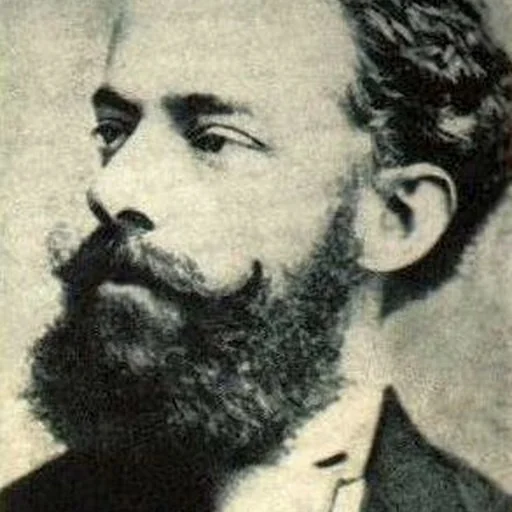
Aloysius Rosarius Amadeus Raymondus Andreas Preziosi
Amedeo Preziosi (2 December 1816 – 27 September 1882) was a Maltese painter and traveler known for his watercolours and prints of Constantinople, the Balkans, Ottoman Empire, and Romania.

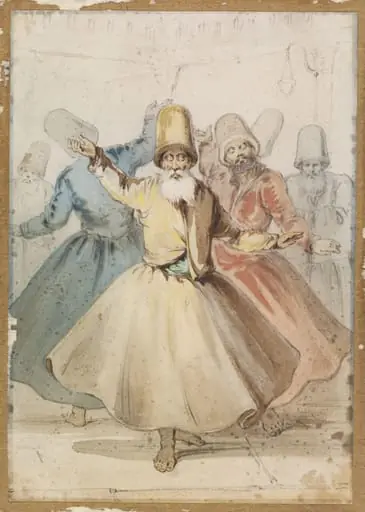
![Portrait of Trehem[?]Walid 'Abdullah, an Arab from Iraq, by Aloysius Rosarius Amadeus Raymondus Andreas Preziosi](https://artifactworldgallery.com/img/aloysius-rosarius-amadeus-raymondus-andreas-preziosi--portrait-of-trehem-walid-abdullah-an-arab-from-iraq--2476a3692d0929a5-w320.webp)
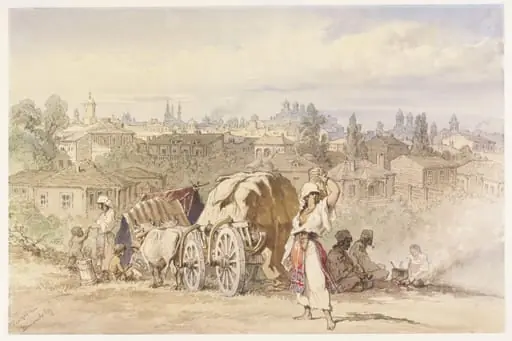
![A Seller of Milk-puddings [Mahallebi], by Aloysius Rosarius Amadeus Raymondus Andreas Preziosi](https://artifactworldgallery.com/img/aloysius-rosarius-amadeus-raymondus-andreas-preziosi--a-seller-of-milk-puddings-mahallebi--3da9fd2db017402d-w320.webp)
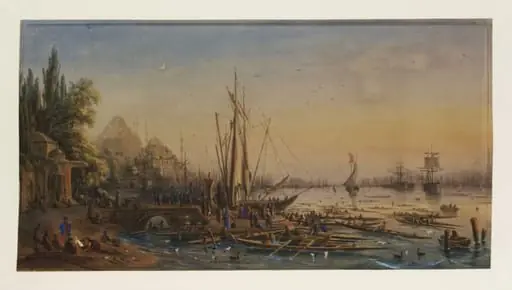 Harbour of Constantinople
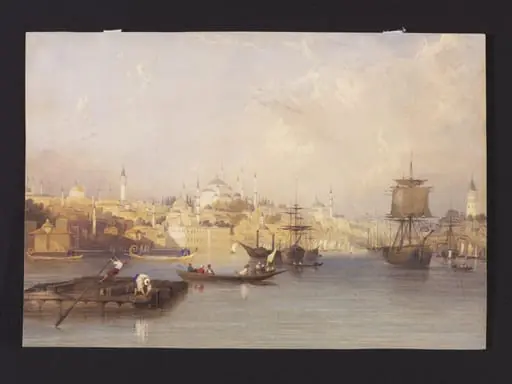 Constantinople. From the Entrance to the Golden Horn
![Looking towards Leanders Tower and the Sultans New Palace [Dolmabahçe] From Scutari, by Michael Anthony Shrapnel Biddulph](https://artifactworldgallery.com/img/michael-anthony-shrapnel-biddulph--looking-towards-leanders-tower-and-the-sultans-new-palace-do--77513ba4e146ed32-w320.webp) Looking towards Leanders Tower and the Sultans New Palace [Dolmabahçe] From Scutari
Looking towards Leanders Tower and the Sultans New Palace [Dolmabahçe] From Scutari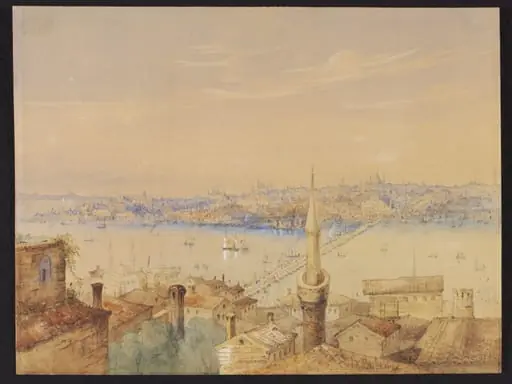 View of Constantinople from Pera across the Golden Horn
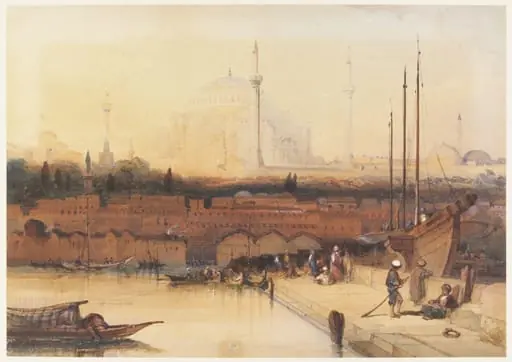 St. Sophia, Constantinople
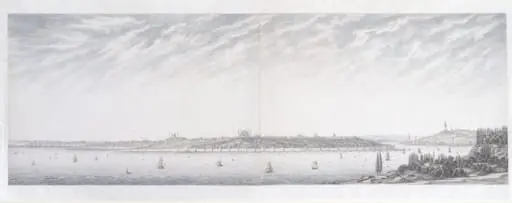 Constantinople from the Asian shore
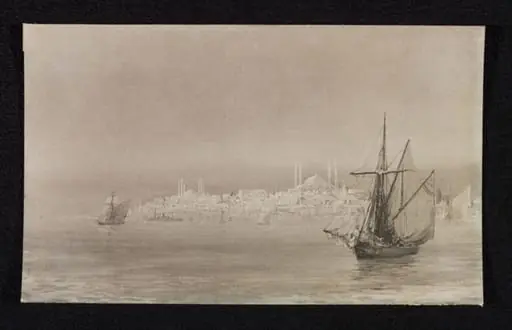 Entrance to the Golden Horn, Constantinople
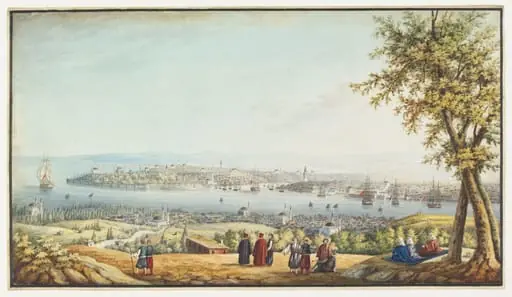 Constantinople and the Bosphorus from above Scutari
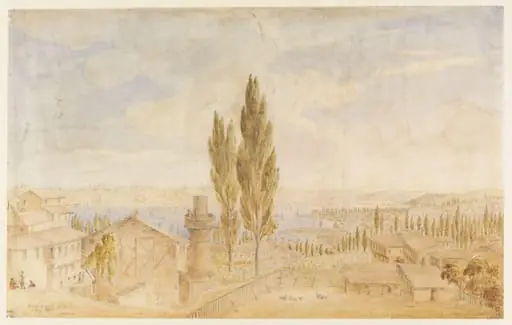 Constantinople From Pera