Artwork
The Farnese Hercules
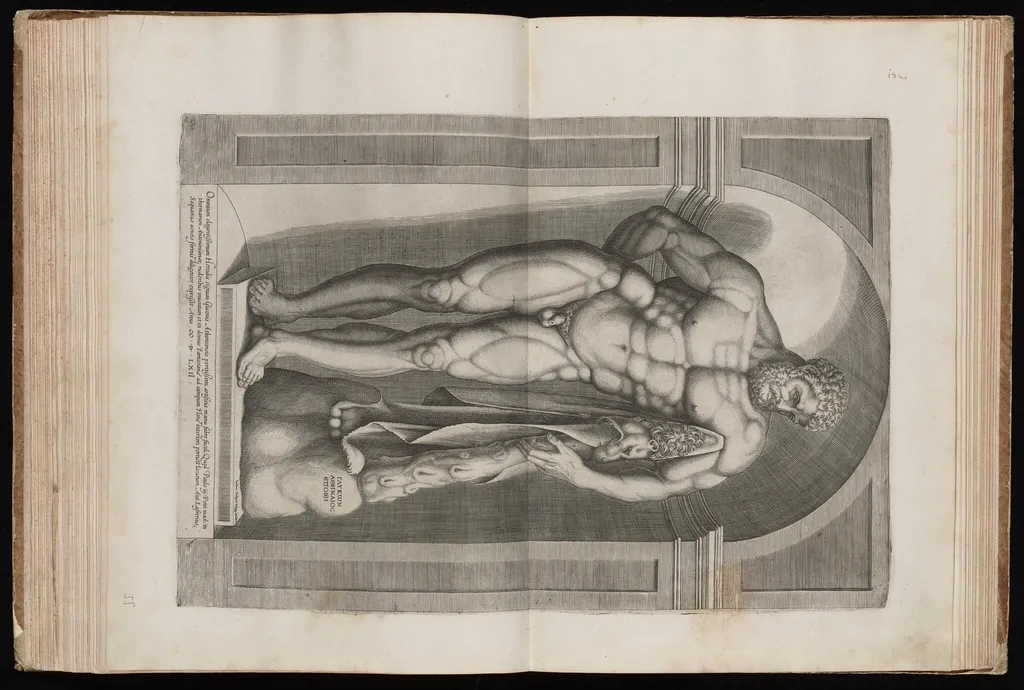
The Farnese Hercules is an ink print by the Renaissance artist Jacob Bos. It dates from 1562 and is held in the collection of the National Gallery of Art.
About this work
Overview
Bos translated the three-dimensional sculpture into a detailed black-and-white print using fine incised lines.
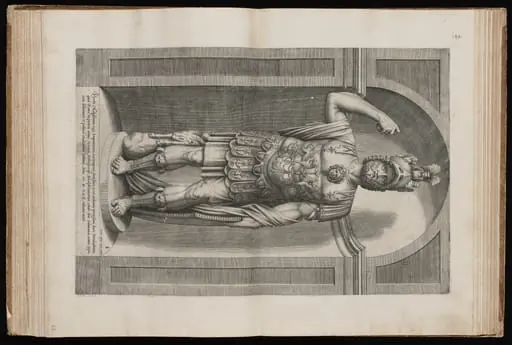
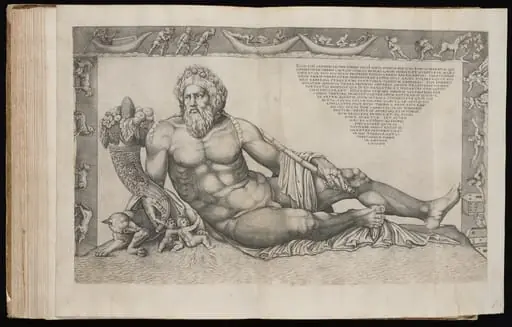
This 1562 engraving by Jacob Bos depicts the Farnese Hercules, a Roman marble statue then famous in Rome. Bos translated the three-dimensional sculpture into a detailed black-and-white print using fine incised lines. The composition captures the statue’s iconic reclining pose, emphasizing muscular tension and spatial depth through meticulous shading and contouring typical of Renaissance printmaking techniques.
Subject & Meaning
The figure represents Hercules in repose after completing his labors, specifically after slaying the Nemean Lion. His body, draped in the lion’s pelt, and the club resting nearby signal his strength and triumph. The upward gaze suggests contemplation, aligning with humanist ideals of the era that linked physical prowess with moral and intellectual achievement.
Technique & Style
Bos employed the engraving method, incising lines into a copper plate to transfer ink onto paper. Fine, controlled strokes model the musculature and define shadows, creating a convincing sense of volume. The background’s geometric patterns contrast with the organic form of the figure, enhancing its sculptural presence and reflecting the period’s interest in order and proportion.
History & Provenance
The engraving was made during a period of heightened interest in classical antiquities, following the rediscovery of the Farnese Hercules in Rome in the early 16th century. Bos’s print circulated among collectors and artists, serving as a reference for those unable to view the original statue. It reflects the role of prints in disseminating classical imagery across Europe.
Context
In mid-16th century Italy and the Low Countries, engraving was a key medium for reproducing classical sculptures. Artists like Bos worked within a network of humanist scholars and printmakers who sought to preserve and propagate ancient art. This engraving exemplifies how Renaissance culture valued the transmission of classical forms through mechanical reproduction.
Legacy
Bos’s engraving contributed to the enduring visual presence of the Farnese Hercules in European art. It became a reference for later artists and printmakers, helping to standardize the statue’s iconography. Though the original marble remains in Naples, this print ensured its influence extended far beyond the confines of a single collection.
Artist & collection