Artwork
The Farnese Apollo, called 'Hermaphroditus'
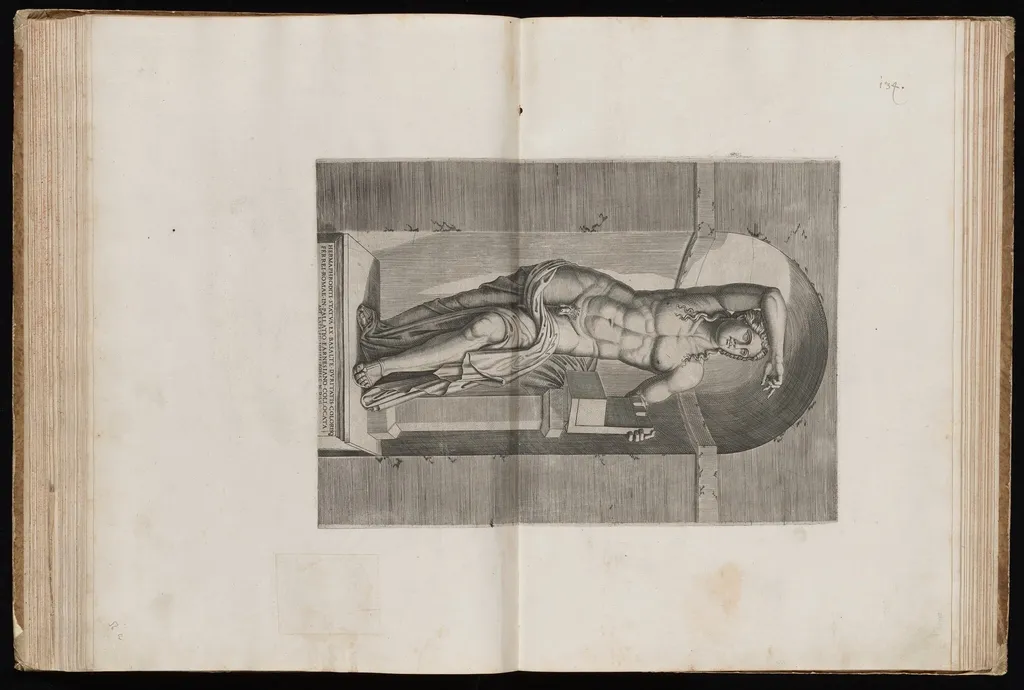
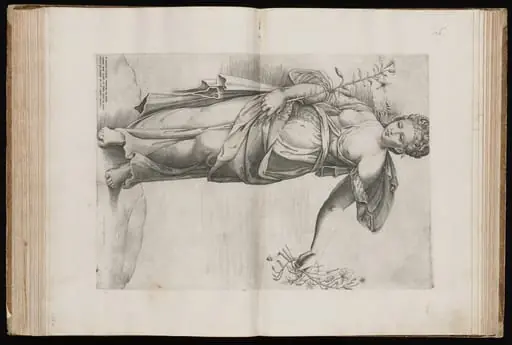
The Farnese Apollo, called 'Hermaphroditus' is an ink print by the Renaissance artist Italian 16th Century. It dates from 1552 and is held in the collection of the National Gallery of Art. The work known as the Farnese Apollo, also referred to as ‘Hermaphroditus,’ is a 16th‑century Italian print.
About this work
The painting shows a figure with both male and female characteristics.
It's an old sculpture from the 16th century.
The artist highlighted the dual nature of the subject through its anatomical details, which is interesting because it was rare to depict such a mix of traits back then.
You can learn more about this style by looking at the work of artist: Italian 16th Century.
Overview
The work known as the Farnese Apollo, also referred to as ‘Hermaphroditus,’ is a 16th‑century Italian print. Executed in 1552, the engraving reproduces a sculptural figure that combines masculine and feminine anatomical features, presenting a rare visual exploration of gender duality for its time.
Subject & Meaning
The image portrays a single figure that simultaneously displays traits traditionally assigned to both men and women. This deliberate ambiguity reflects an interest in the mythic concept of Hermaphroditus, emphasizing the coexistence of opposing qualities within a single body.
Technique & Style
Created as an engraving, the work relies on fine line work to render the anatomy with precision. The artist’s handling of chiaroscuro through hatching conveys volume and texture, allowing the viewer to discern the subtle interplay of muscular and softer forms that define the dual nature of the subject.
History & Provenance
The print is linked to the Italian publisher Antonio Lafrère, who was active in Rome during the mid‑1500s. Its title derives from the Farnese collection, a prominent Renaissance assemblage of classical sculptures, suggesting the engraving was intended to disseminate the image of that particular statue beyond its original setting.
Context
During the mid‑16th century, depictions of gender‑blending figures were uncommon in Italian art, making this piece notable within the broader Renaissance fascination with antiquity and myth. The choice to reproduce a sculpture of Hermaphroditus aligns with contemporary humanist interests in classical literature and the study of anatomical form.
Artist & collection

Artist
A 16th-century Italian sculptor left us small bronze works in dark brown and gold.


![Fragments from Ancient Cameos in the Grimani Collection [Plate I], by Enea Vico](https://artifactworldgallery.com/img/enea-vico--fragments-from-ancient-cameos-in-the-grimani-collection-plat--1f564c058ab46ade-w320.webp)