Artwork
The Statue of Oceanus
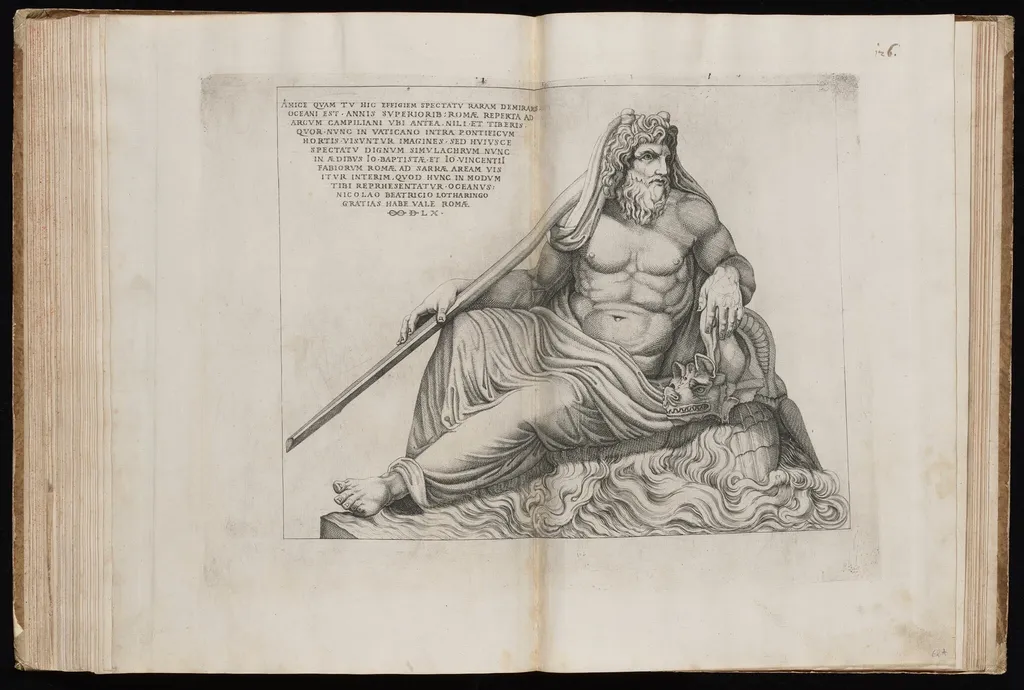
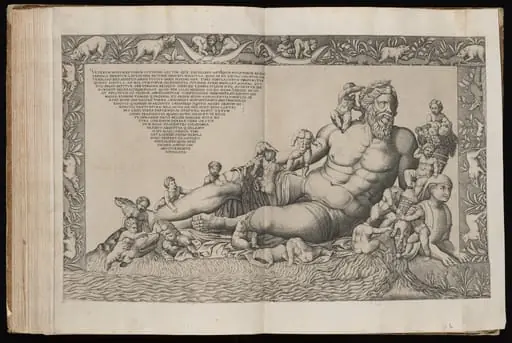
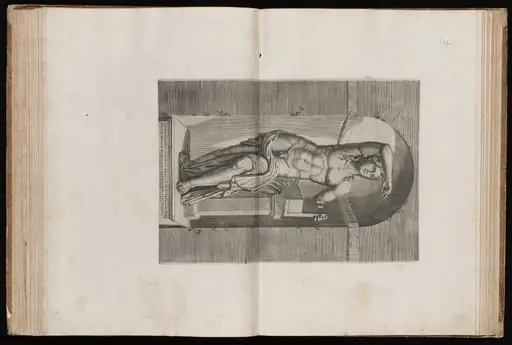
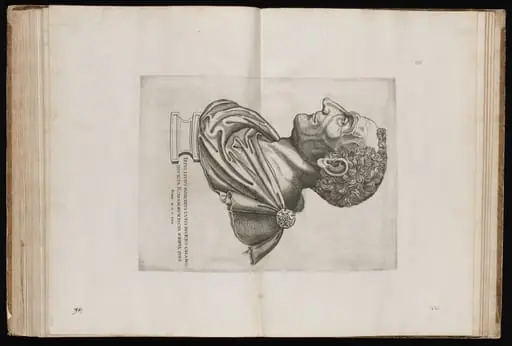
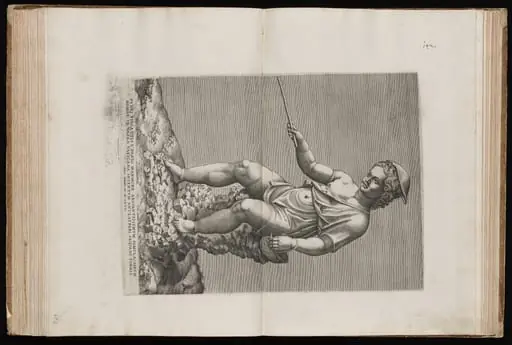
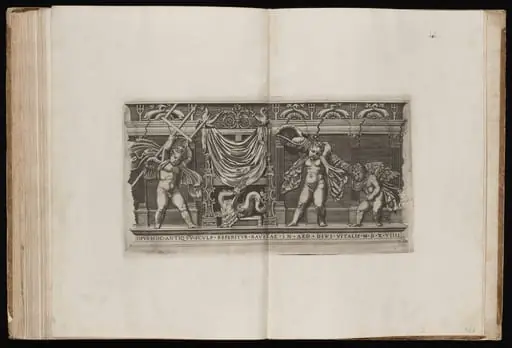
The Statue of Oceanus is an ink print by the Renaissance artist Nicolas Beatrizet. It dates from 1560 and is held in the collection of the National Gallery of Art.
About this work
Overview
Created in 1560 by Nicolas Beatrizet, this engraving depicts a seated male figure identified as Oceanus, a primordial sea deity from classical mythology.
Created in 1560 by Nicolas Beatrizet, this engraving depicts a seated male figure identified as Oceanus, a primordial sea deity from classical mythology. Rendered in monochrome ink on paper, the work is a detailed etching that emphasizes the figure’s physical presence through fine, controlled lines. The composition isolates the figure against a blank background, directing attention to his form and attributes without contextual distractions.
Subject & Meaning
The figure represents Oceanus, the Titan god of the world-ocean in Greek myth, often depicted as a source of all waters. He is shown with a muscular torso, long flowing beard, and wavy hair, holding a trident—a symbol of dominion over the sea. Surrounding waves suggest his elemental domain, while his relaxed posture conveys both authority and timeless calm. Latin inscriptions reinforce his identity, anchoring the image in classical literary tradition.
Technique & Style
Beatrizet employed precise etching techniques to render texture and volume with fine, deliberate lines. The musculature, beard, and water currents are defined through cross-hatching and delicate contouring, demonstrating mastery of the medium. The absence of shading or background elements focuses the viewer’s eye on the figure’s form, reflecting Renaissance ideals of clarity and anatomical precision in reproductive prints.
History & Provenance
The engraving was produced in Rome during the mid-16th century, a period when classical antiquity was widely studied and reproduced. Beatrizet, a French artist active in Italy, specialized in translating sculptural works into prints for scholarly and aristocratic audiences. This piece likely served as a study or decorative object, circulating among collectors interested in mythological iconography and ancient art.
Context
In the 16th century, engravings of mythological figures were common tools for disseminating classical knowledge across Europe. Artists like Beatrizet often worked from ancient statues or contemporary interpretations, adapting them for print. This engraving reflects the era’s revival of pagan themes within Christian Europe, where mythological subjects were valued for their aesthetic and intellectual resonance rather than religious meaning.
Legacy
Beatrizet’s engraving contributed to the broader circulation of classical imagery in early modern Europe. While not widely known today, it exemplifies the role of printmaking in preserving and transmitting ancient iconography. Its technical refinement and adherence to classical models influenced later reproductive prints and remain a reference for studies of Renaissance engagement with antiquity.
Artist & collection


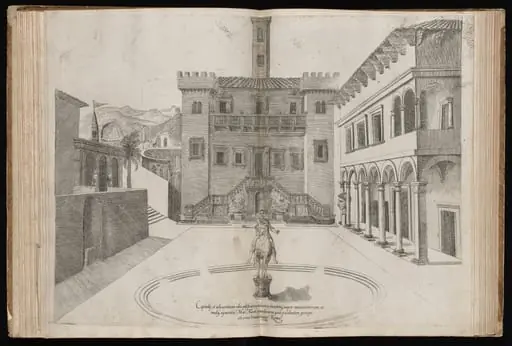
![Castello S. Angelo di Roma [Castel Sant'Angelo in Rome], by Nicolas Beatrizet](https://artifactworldgallery.com/img/nicolas-beatrizet--castello-s-angelo-di-roma-castel-sant-angelo-in-rome--6c77d3bfe127c436-w320.webp)
![Pantheum Romanum [The Roman Pantheon], by Nicolas Beatrizet](https://artifactworldgallery.com/img/nicolas-beatrizet--pantheum-romanum-the-roman-pantheon--8069db7dd8e6f190-w320.webp)