Artwork
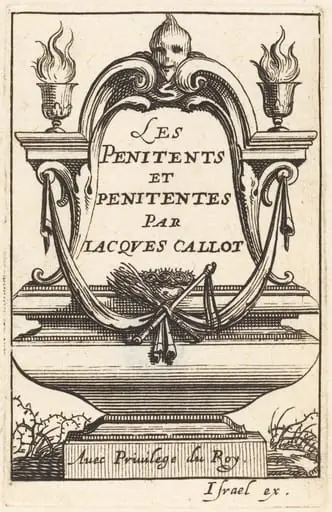
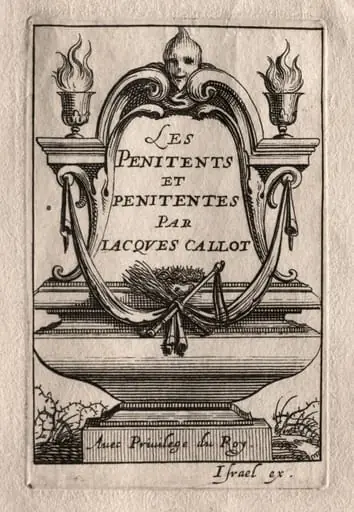
Frontispiece for Callot's "The Penitents"
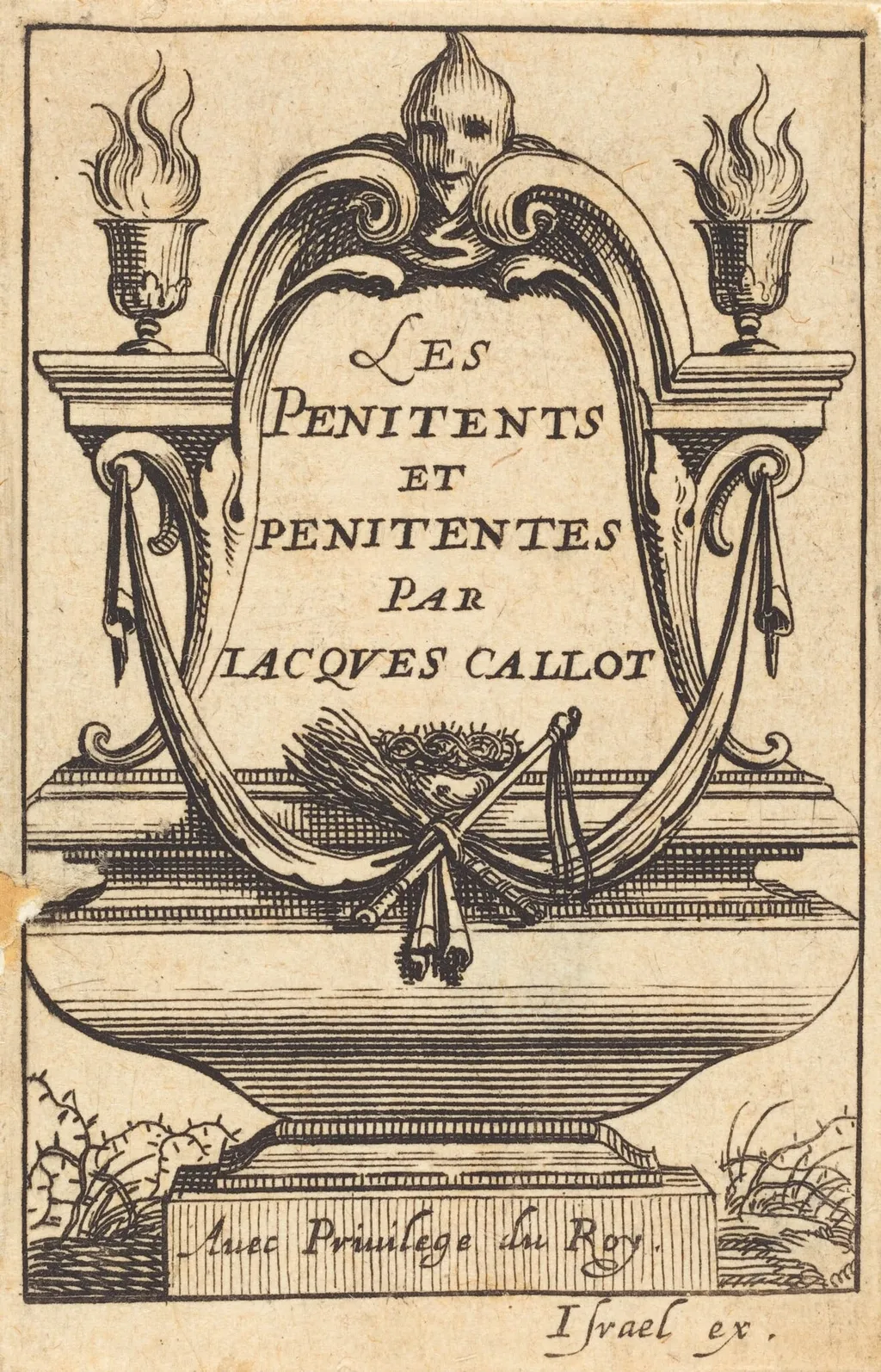
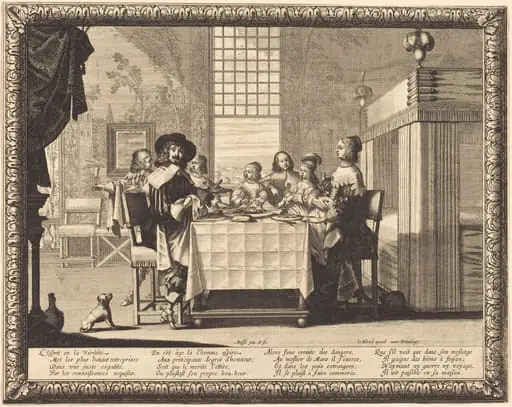
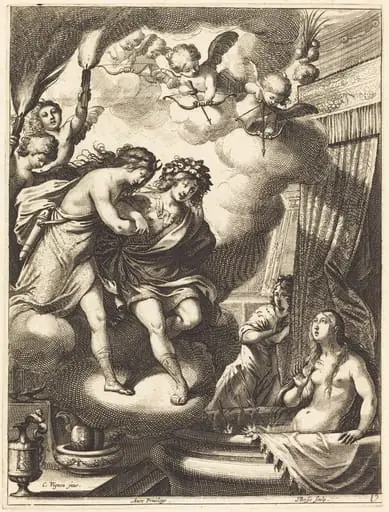
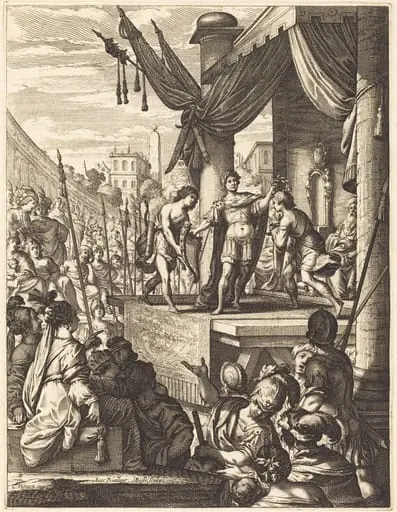
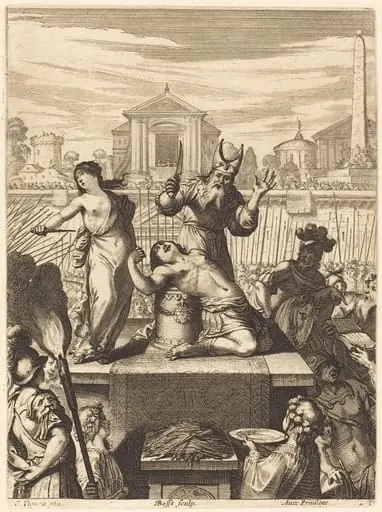
Frontispiece for Callot's "The Penitents" is an ink print by the Baroque artist Abraham Bosse. It dates from 1632 and is held in the collection of the National Gallery of Art.
About this work
Overview
Executed on laid paper, it functions as the title page for a collection of images depicting figures engaged in religious penance.
The frontispiece for Jacques Callot’s series 'The Penitents' was produced around 1632 by Abraham Bosse, a French printmaker known for his precision in etching and engraving. Executed on laid paper, it functions as the title page for a collection of images depicting figures engaged in religious penance. The composition combines typographic elements with a small narrative scene, establishing a somber tone for the volume.
Subject & Meaning
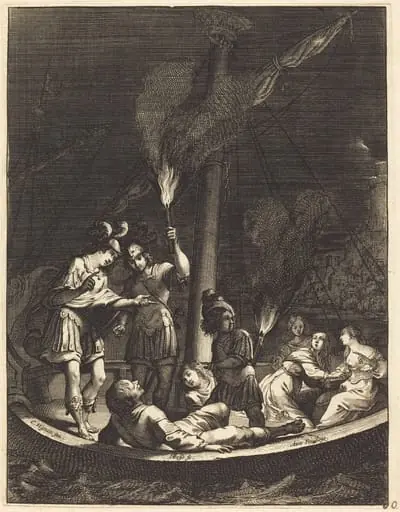
The title 'Les Penitents et Penitentes' anchors the work in themes of repentance and spiritual reflection. Below the text, a shipwreck scene suggests human vulnerability and survival amid calamity—common metaphors in Baroque religious imagery. The torches flanking the title evoke illumination in darkness, reinforcing the idea of moral reckoning. The image does not depict the penitents themselves but prepares the viewer for their presence through symbolic suggestion.
Technique & Style
Bosse employed fine-line etching and engraving to achieve sharp contrasts and intricate detail, typical of his refined printmaking style. The text is cleanly rendered, while the shipwreck is rendered with economical yet expressive strokes, conveying movement and chaos within a confined space. The use of laid paper enhances the texture, grounding the image in the material culture of early 17th-century print production.
History & Provenance
Created as part of a published series by Jacques Callot, this frontispiece was likely printed in small editions for collectors and religious patrons. Abraham Bosse, a contemporary and collaborator of Callot, was frequently commissioned for title pages due to his technical mastery. The print’s survival in institutional collections suggests it was valued early on as both a functional and artistic element of the volume.
Context
In early 1630s France, religious imagery remained central to print culture, especially following the Counter-Reformation’s emphasis on penitence. Bosse’s work aligns with broader European trends in using print to disseminate moral narratives. The shipwreck motif, though uncommon in title pages, reflects Baroque preoccupations with fate, divine judgment, and human frailty, resonating with audiences familiar with sermons and devotional literature.
Legacy
Bosse’s frontispiece exemplifies the collaborative nature of print publishing in the 17th century, where illustrators and engravers supported authors’ visions without overshadowing them. Its restrained symbolism and technical discipline influenced later title designs in religious and literary publications. Though not widely reproduced today, it remains a quiet testament to the role of print in shaping devotional experience.
Artist & collection

Artist
Abraham Bosse (c. 1604 – 14 February 1676) was a French artist, mainly as a printmaker in etching, but also in watercolour.