Artwork
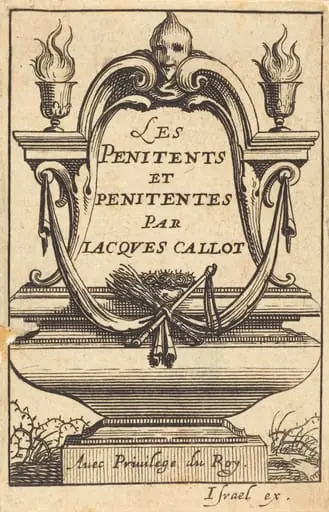
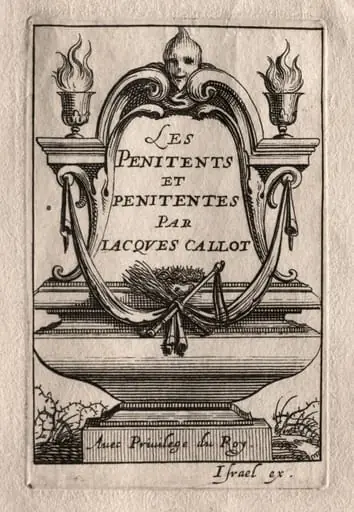
Frontispiece for Callot's "The Penitents"
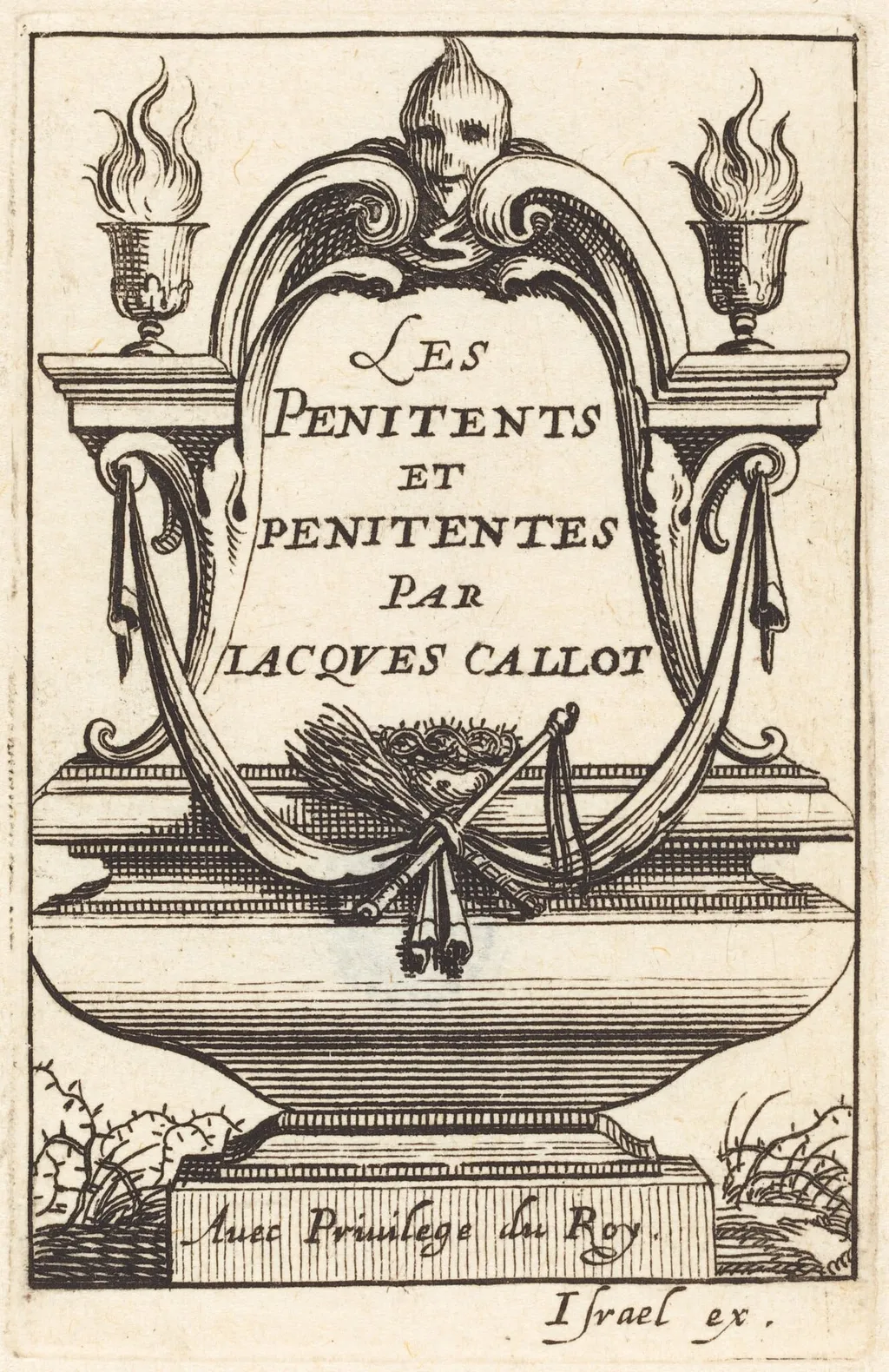
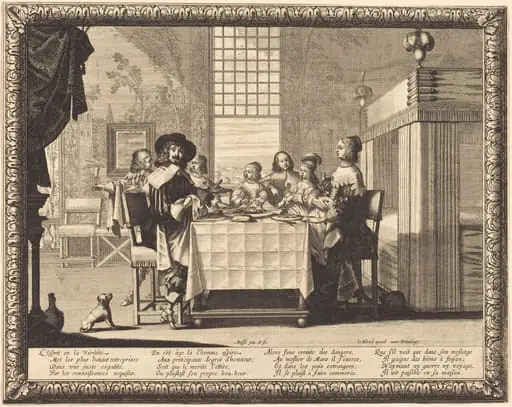
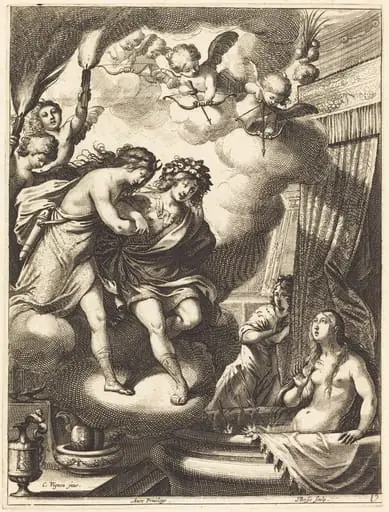
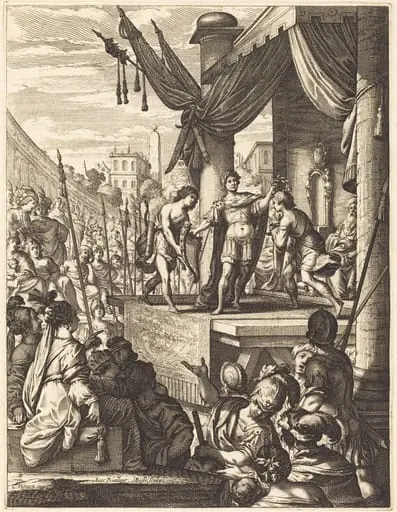
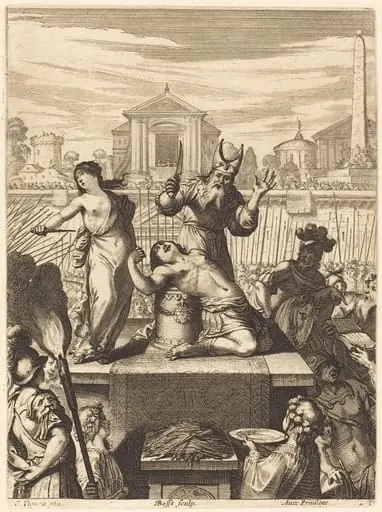
Frontispiece for Callot's "The Penitents" is an ink print by the Baroque artist Abraham Bosse. It dates from 1632 and is held in the collection of the National Gallery of Art.
About this work
Overview
Abraham Bosse produced the title page for Jacques Callot’s series *The Penitents* circa 1632. Executed as a combined etching and engraving on laid paper, the print functions as a frontispiece, introducing the subsequent images of penitential figures.
Subject & Meaning
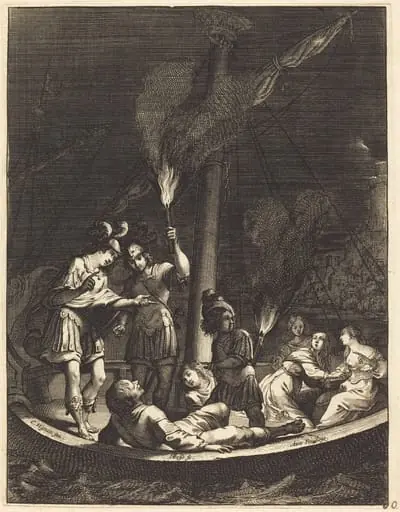
The composition presents a procession of hooded penitents, framed by symbolic elements: a crown flanked by flames occupies the upper register, while a capsized ship with a lone figure clinging to its wreckage appears below. The crown and fire evoke notions of authority and divine judgment, whereas the sinking vessel may allude to human struggle or punishment.
Technique & Style
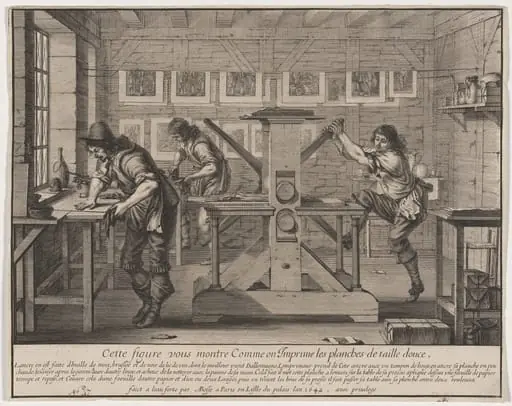
Bosse employed both etching—where acid bites lines into a copper plate—and engraving, which involves directly incising the metal with a burin. The resulting black‑and‑white image displays fine line work and a decorative frame, characteristic of early‑17th‑century French printmaking on laid paper, a textured support that accentuates the tonal contrasts.
History & Provenance
Created as the introductory leaf for Callot’s *Les Pénitents*, the frontispiece bears the series title and Callot’s name, linking Bosse’s hand to Callot’s narrative project. The print circulated among collectors of the period and is documented in several early modern inventories, confirming its role as a printed title page rather than an independent artwork.
Context
During the 1630s, French artists increasingly explored religious and moral subjects through series prints. Callot’s *The Penitents* reflects Counter‑Reformation concerns, while Bosse’s involvement illustrates collaborative practices among printmakers, with Bosse contributing his expertise in plate preparation and decorative framing.
Legacy
The frontispiece remains a reference point for scholars studying the interplay of text and image in early modern print series. Its combined etching‑engraving technique exemplifies the technical innovations that allowed detailed, narrative-driven prints to reach a wider audience in 17th‑century France.
Artist & collection

Artist
Abraham Bosse (c. 1604 – 14 February 1676) was a French artist, mainly as a printmaker in etching, but also in watercolour.