Artwork
Gentry Visiting a Prison
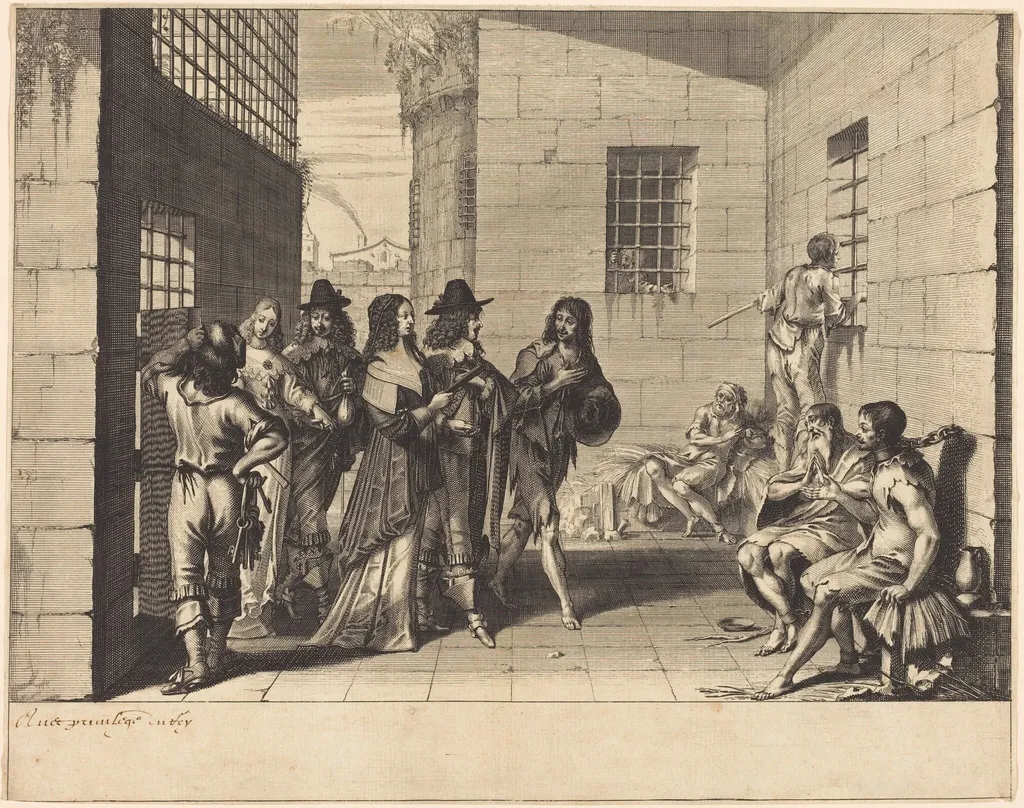
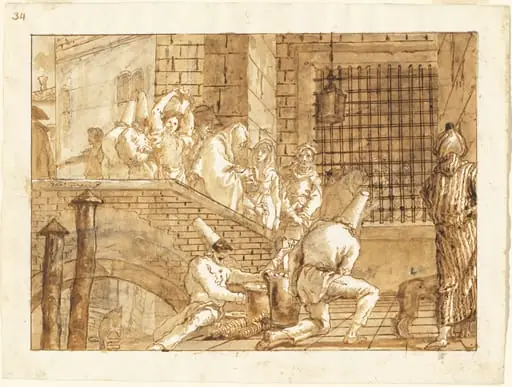
Gentry Visiting a Prison is an ink print by the Baroque artist Abraham Bosse. It dates from 1639 and is held in the collection of the National Gallery of Art.
About this work
Overview
Created in 1639 by French printmaker Abraham Bosse, *Gentry Visiting a Prison* is an engraved plate combined with etching. The work presents a compact interior scene where elegantly dressed visitors stand amid a dimly lit cell block, observing inmates who lean against bars or sit on the floor. The composition captures a moment of social encounter within a confined architectural space.
Subject & Meaning
The image juxtaposes aristocratic figures—identified by their elaborate hats, coats, and a woman in a long dress—with incarcerated men, underscoring the stark contrast between privilege and punishment. A gentleman holding a book and a female companion suggest a formal, perhaps charitable, visit, while the prisoners’ passive postures highlight the power imbalance inherent in 17th‑century society.
Technique & Style
Bosse employed a hybrid of engraving and etching, using fine, cross‑hatched lines to render subtle shifts of light and shadow across the cramped interior. The etched areas allow for softer tonal gradations, especially in the background where a distant town and a worker on a ladder appear faintly, creating depth and atmospheric contrast.
History & Provenance
The print emerged during a period when French artists increasingly used graphic media to document everyday life and social hierarchies. Though specific ownership records are scarce, the work has been catalogued among Bosse’s extensive output of socially observant prints, reflecting his engagement with contemporary moral and civic themes.
Artist & collection

Artist
Abraham Bosse (c. 1604 – 14 February 1676) was a French artist, mainly as a printmaker in etching, but also in watercolour.

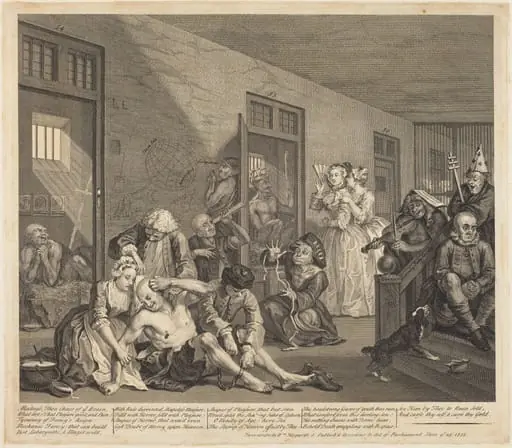 A Rake's Progress: pl.8
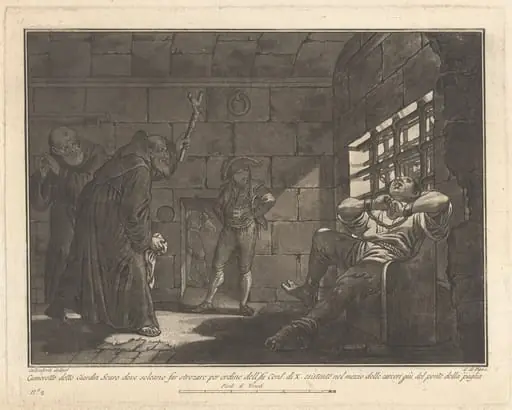 The "Giardin Scuro," for Executions by Strangling
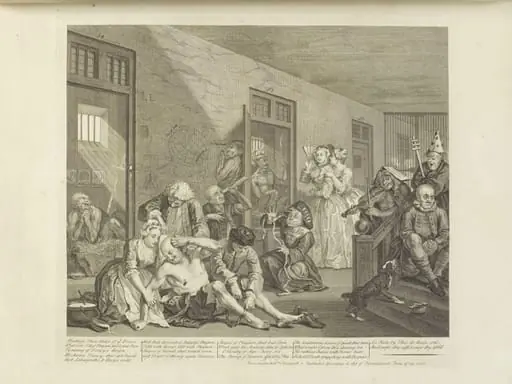 The Rake's Progress
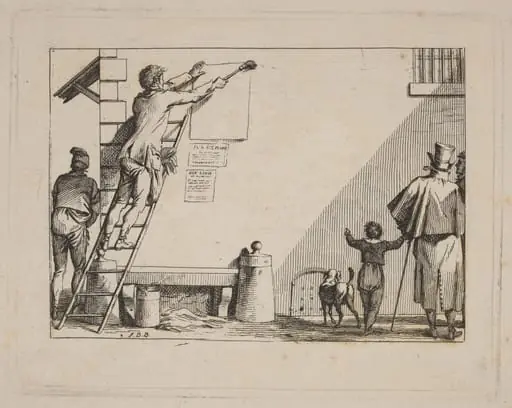 Colleur (Billposter)
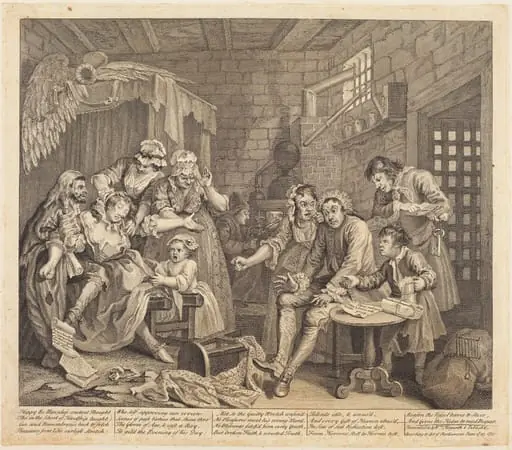 A Rake's Progress: pl.7
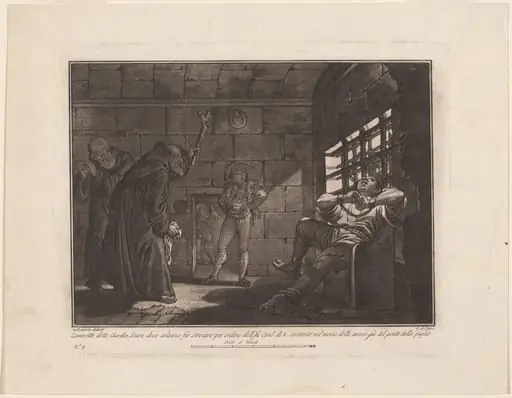 The "Giardin Scuro," for Executions by Strangling
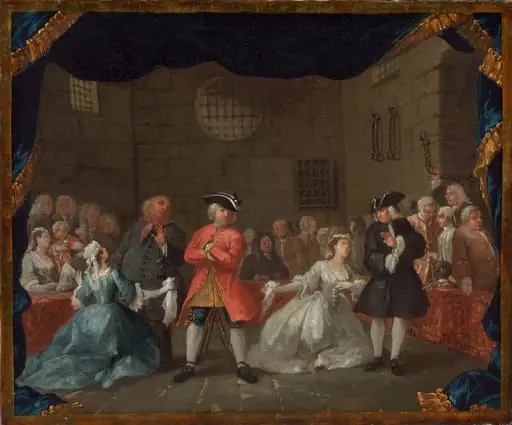 A Scene from The Beggar's Opera
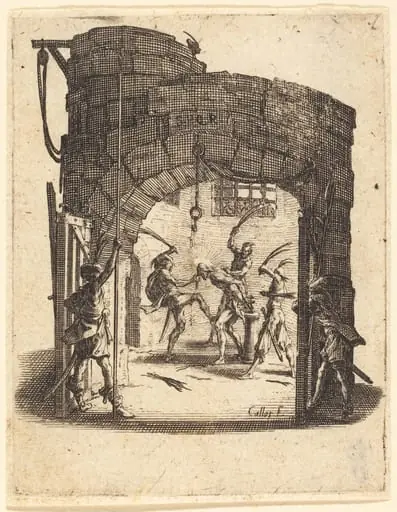 The Flagellation
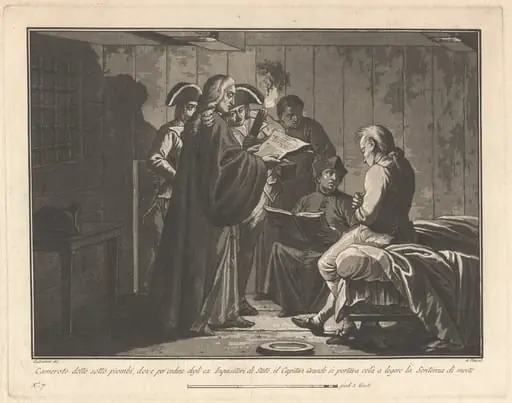 The "Sotto Piombi," Where Death Sentences Were Read
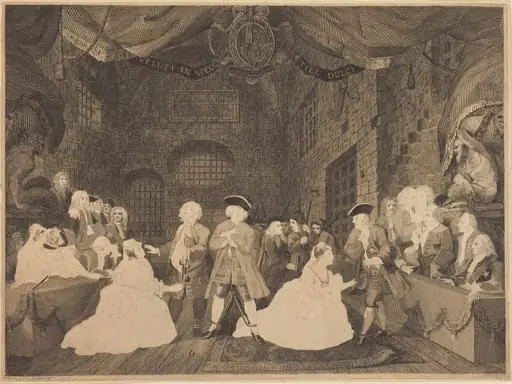 Beggar's Opera, Act III
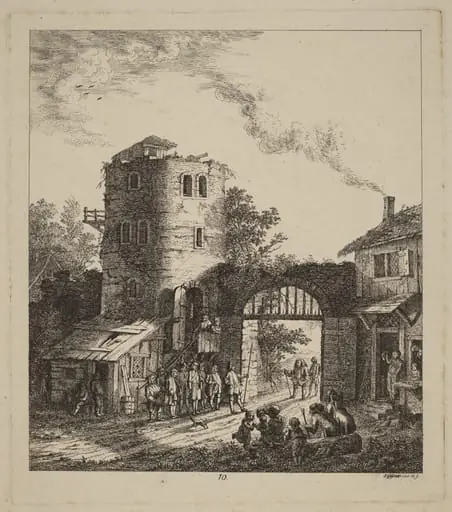 Villagers at a City Gate Greeting a Dignitary
 The Prison Visit