Artwork
The "Giardin Scuro," for Executions by Strangling
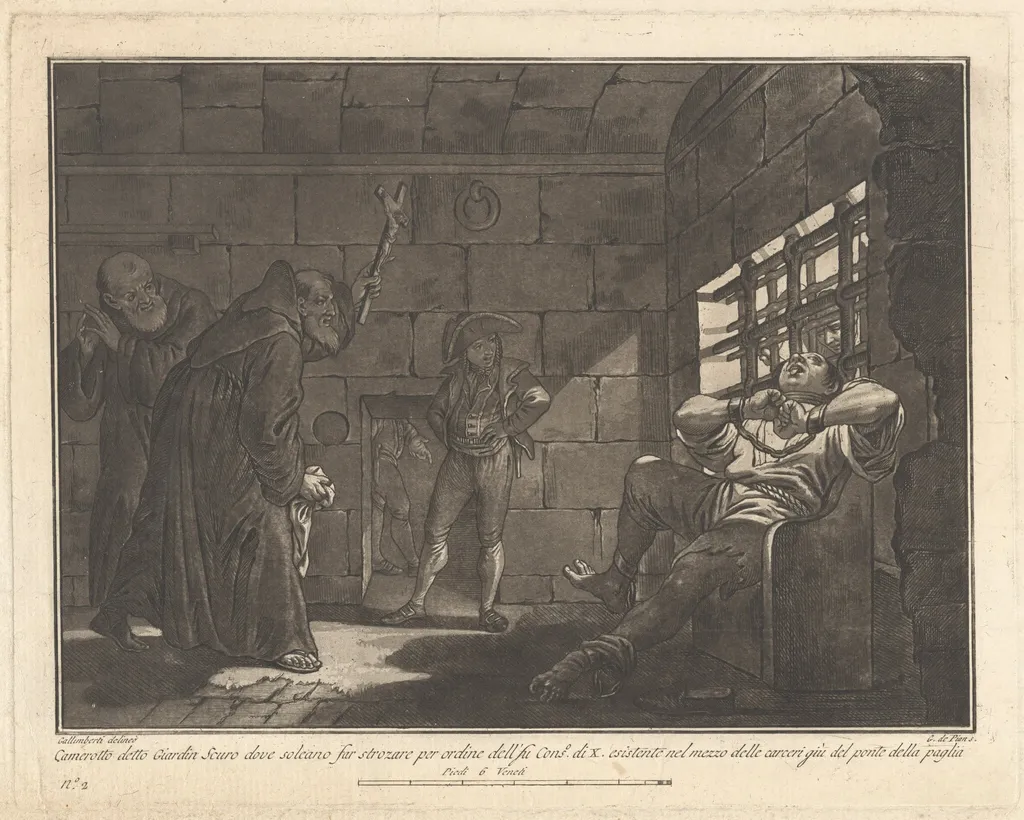
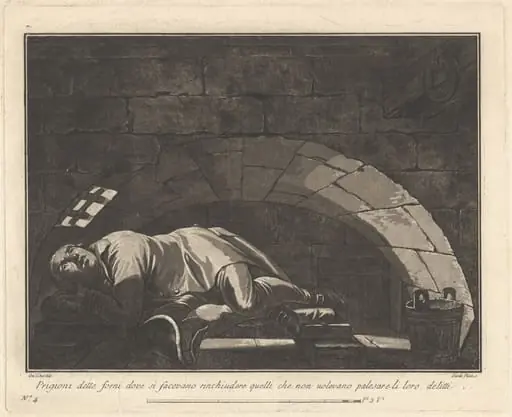
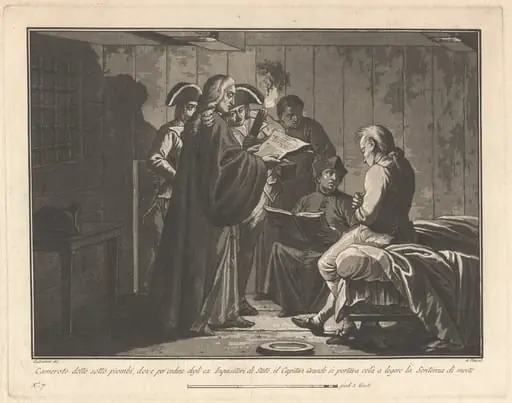
The "Giardin Scuro," for Executions by Strangling is an ink print by the Romanticist artist Giovanni De Pian. It dates from 1797 and is held in the collection of the National Gallery of Art.
About this work
Overview
Created in 1797 by Giovanni De Pian, this print combines etching and aquatint on laid paper to depict a moment of judicial execution.
Created in 1797 by Giovanni De Pian, this print combines etching and aquatint on laid paper to depict a moment of judicial execution. It is part of a series titled 'Giardin Scuro,' which references a historical site associated with capital punishment in Italy. The work resides in the collection of the National Gallery of Art in Washington, D.C., where it serves as a rare visual record of late 18th-century penal practices.
Subject & Meaning
The scene portrays a bound man seated in a chair, his posture suggesting anguish as his head tilts backward and his mouth opens in silence. Behind him, three figures loom—one holding a cord, others observing. The image conveys the quiet brutality of strangulation as a method of execution, avoiding overt violence to emphasize psychological tension and the inevitability of death under state authority.
Technique & Style
De Pian employs aquatint to achieve deep, velvety shadows and subtle gradations of tone, enhancing the somber atmosphere. Etching defines the figures with sharp, controlled lines, contrasting with the soft, smoky background. The limited palette of blacks, grays, and muted browns focuses attention on the central figure, while the dim, stone-walled interior amplifies the sense of confinement and dread.
History & Provenance
The print originates from a series documenting execution sites in the Papal States, likely commissioned to record methods of capital punishment. It entered the National Gallery of Art’s collection through established acquisition channels in the 20th century. Its survival is notable, as such works were often destroyed or suppressed due to their graphic subject matter and political associations.
Context
Produced during a period of legal reform across Europe, the image reflects lingering practices of public punishment even as Enlightenment ideals gained traction. The 'Giardin Scuro' series aligns with broader European interest in documenting penal institutions, serving both as social record and moral commentary, though without overt advocacy for abolition.
Legacy
Though not widely exhibited, the print remains a significant example of late 18th-century Italian graphic art focused on institutional violence. It contributes to scholarly understanding of how punishment was visually represented before photography, offering insight into the intersection of law, power, and visual culture in pre-modern Italy.
Artist & collection


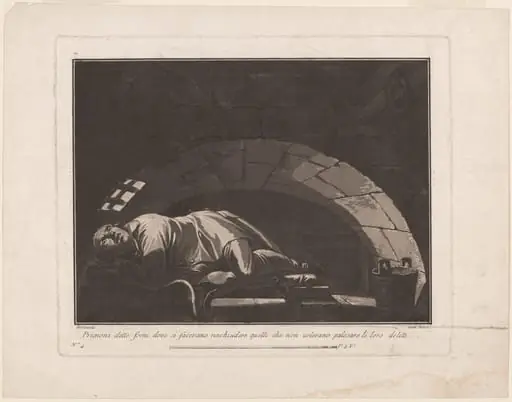 The "Ovens," for Those Who Wouldn't Admit Their Crimes
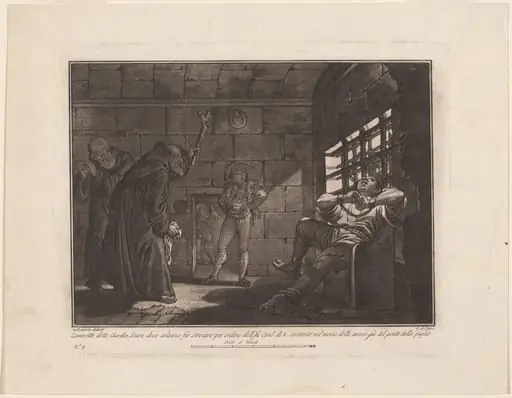 The "Giardin Scuro," for Executions by Strangling
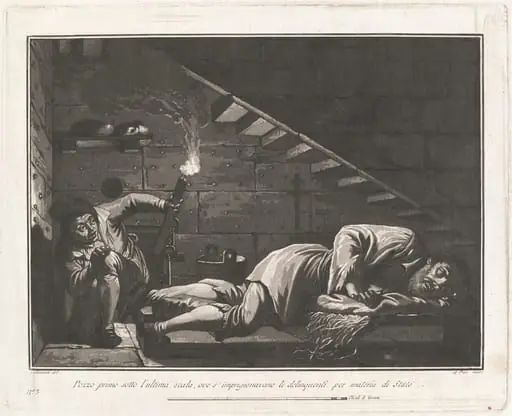 The "Well," for Violators of State Law
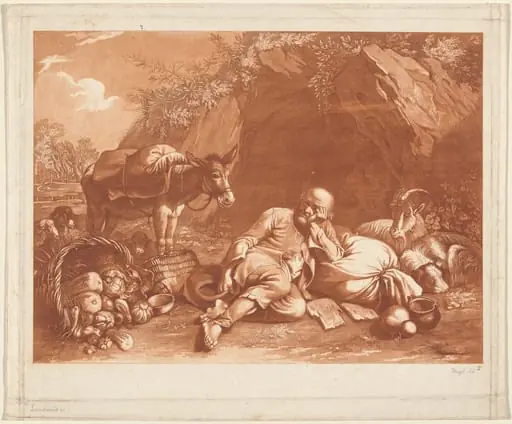 An Old Man Leaning on a Sack
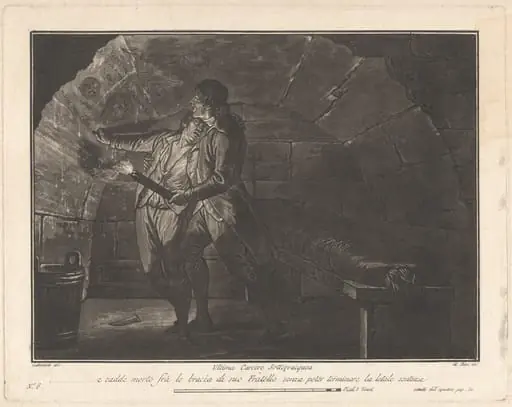 The Last Underground Prison: He Fell Dead into His Brother's Arms
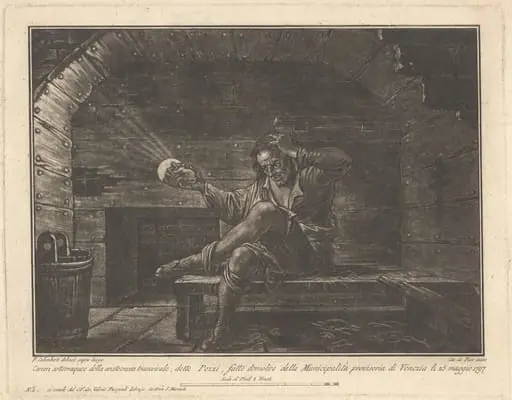 Underground Prisons, Known as "the Wells"
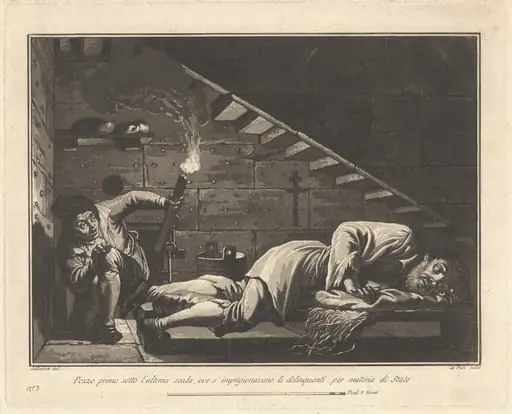 The "Well," for Violators of State Law
 The "Sotto Piombi," Where Death Sentences Were Read