Artwork
The "Sotto Piombi," Where Death Sentences Were Read
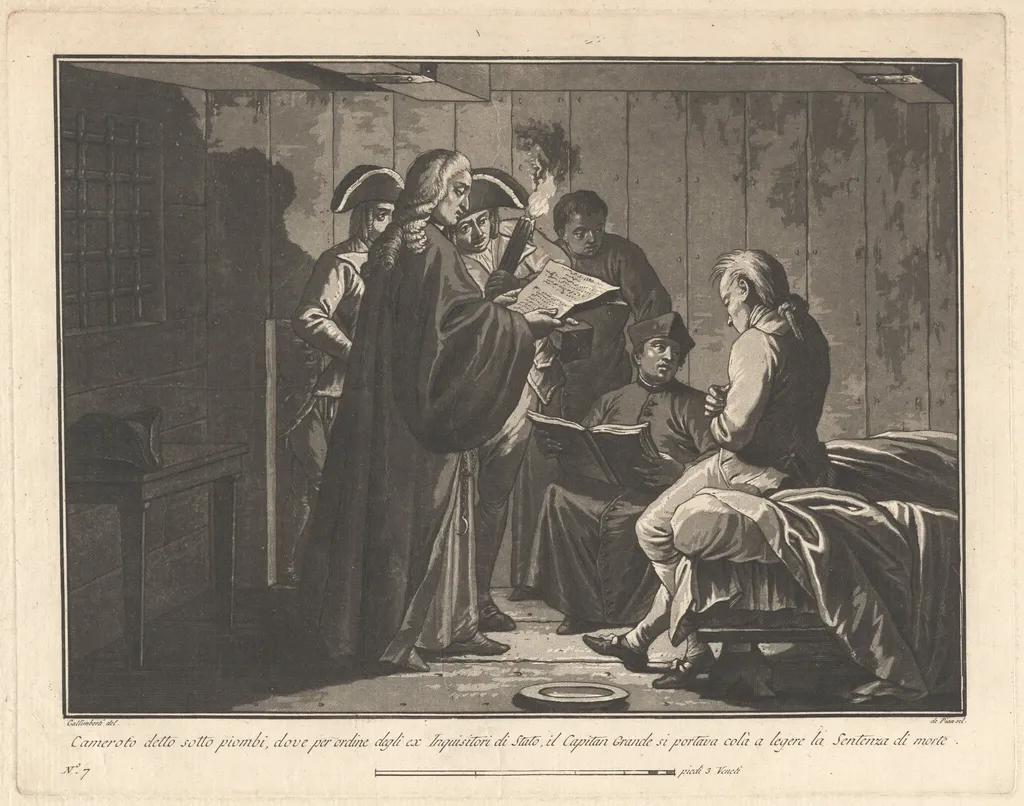
The "Sotto Piombi," Where Death Sentences Were Read is an ink print by the Romanticist artist Giovanni De Pian. It dates from 1797 and is held in the collection of the National Gallery of Art.
About this work
Overview
Created in 1797 by Giovanni De Pian, this print captures a moment within the Venetian prison system where condemned sentences were formally announced.
Created in 1797 by Giovanni De Pian, this print captures a moment within the Venetian prison system where condemned sentences were formally announced. Executed in etching and aquatint on laid paper, the work belongs to the National Gallery of Art in Washington, D.C. It is one of several prints documenting the interior life of Venice’s notorious Piombi prison, known for its oppressive conditions and secretive judicial procedures.
Subject & Meaning
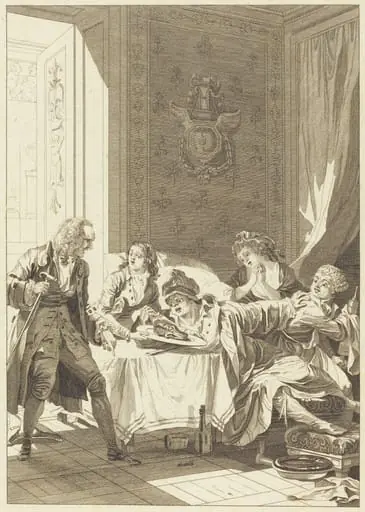
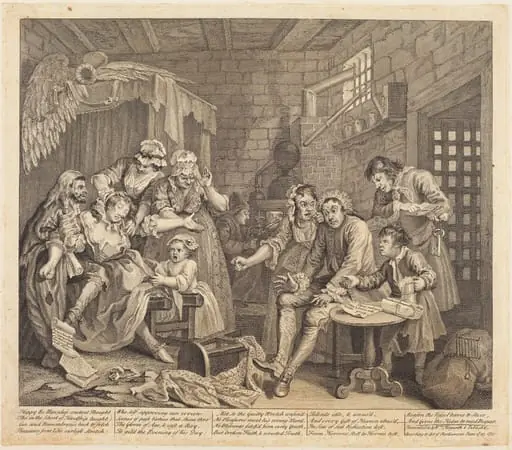
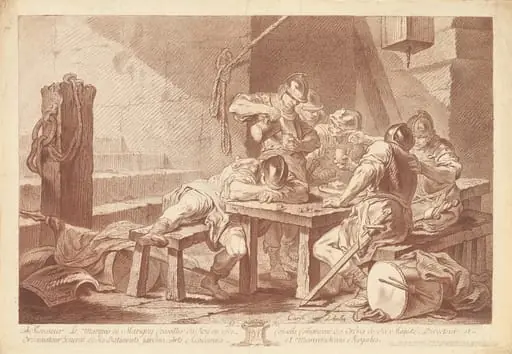
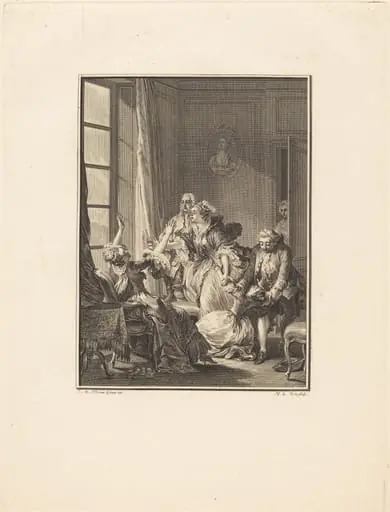
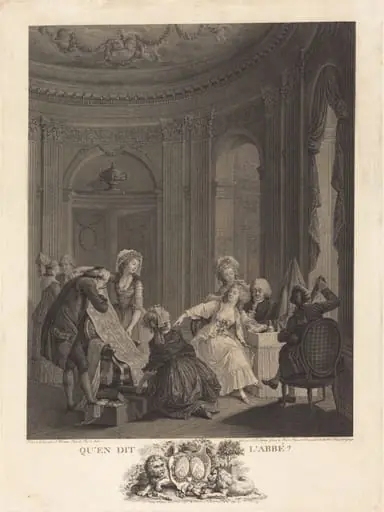
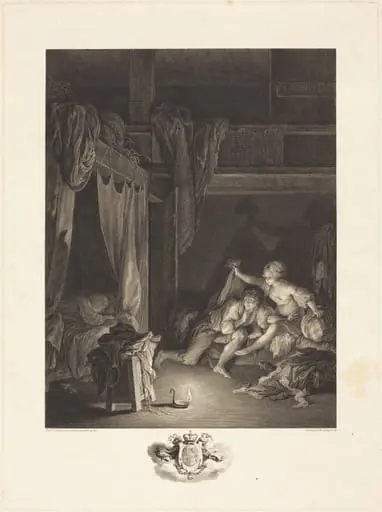
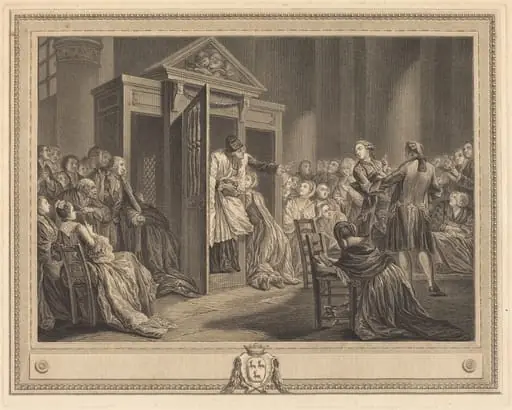
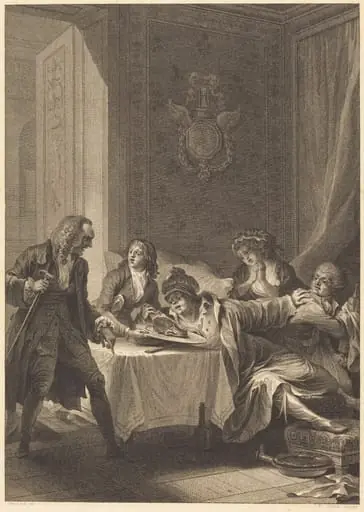
The scene depicts a group of men in 18th-century attire gathered in a confined chamber as one reads a death sentence aloud. A seated figure in the foreground, absorbed in a book, contrasts with the tense stillness of the others. The composition conveys the weight of institutional power and personal resignation, emphasizing the psychological gravity of judicial pronouncements rather than overt violence or drama.
Technique & Style
De Pian employs etching and aquatint to achieve subtle tonal gradations, enhancing the dim, claustrophobic atmosphere. The low ceiling and narrow window frame the space with architectural restraint, while the figures are rendered with precise, restrained linework. The chiaroscuro effect heightens emotional tension without melodrama, aligning with a documentary impulse rather than Romantic exaggeration.
History & Provenance
The print originates from a series documenting Venice’s Piombi prison, a space reserved for political detainees and those sentenced under the Republic’s secretive tribunals. De Pian, a Venetian artist and engraver, produced these works during the twilight of the Republic, shortly before its fall in 1797. The print entered the National Gallery of Art’s collection through established European print circulation networks in the 20th century.
Context
The Piombi were upper chambers of the Doge’s Palace, infamous for their isolation and harsh conditions. Sentences read here often resulted in life imprisonment or execution, delivered without public trial. De Pian’s image reflects the institutional secrecy of late Venetian governance, where justice was administered behind closed doors, and the visual record served as both testimony and critique.
Legacy
Though not widely exhibited, the print contributes to a small corpus of visual records from Venice’s penal system. It stands as a quiet historical document, preserving the somber ritual of judicial pronouncement in a republic nearing collapse. Its value lies in its unembellished observation, offering insight into the human dimension of state power during a period of political transition.
Artist & collection


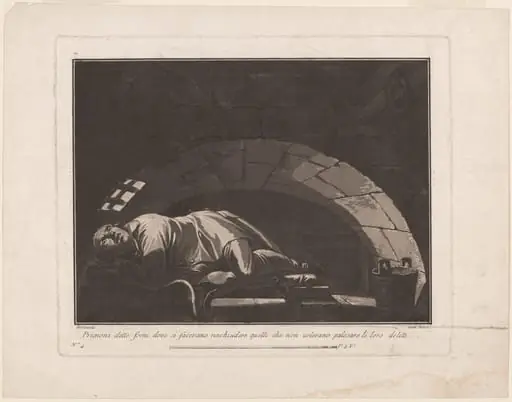 The "Ovens," for Those Who Wouldn't Admit Their Crimes
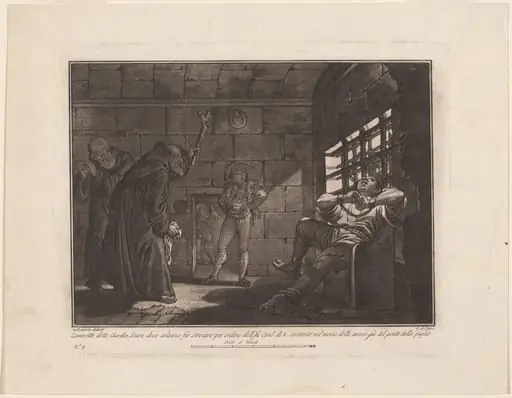 The "Giardin Scuro," for Executions by Strangling
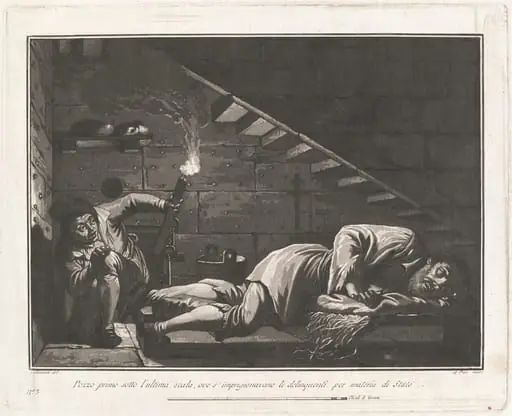 The "Well," for Violators of State Law
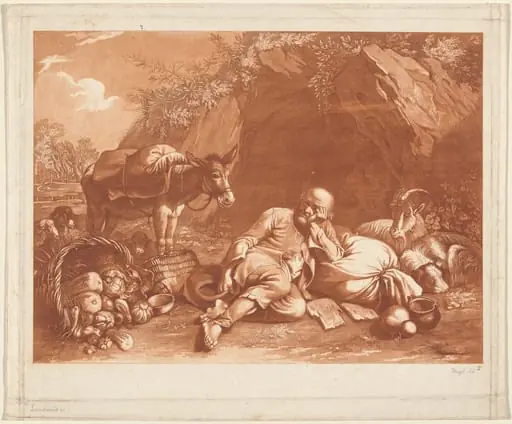 An Old Man Leaning on a Sack
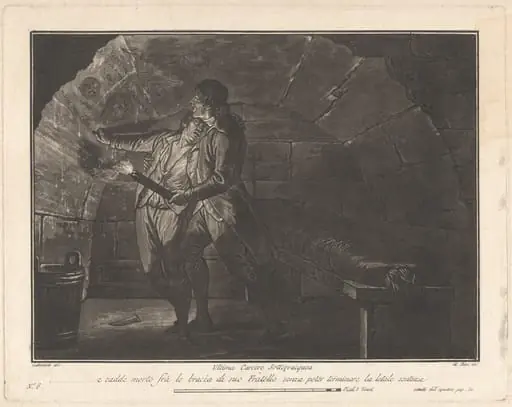 The Last Underground Prison: He Fell Dead into His Brother's Arms
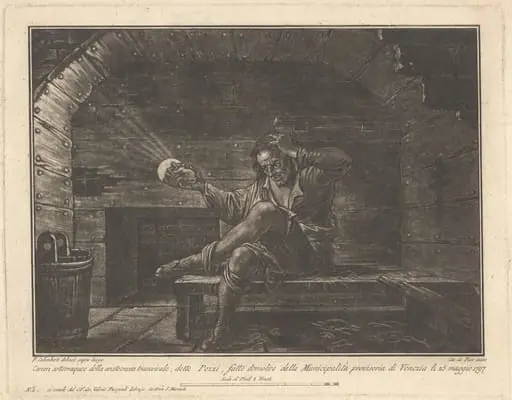 Underground Prisons, Known as "the Wells"
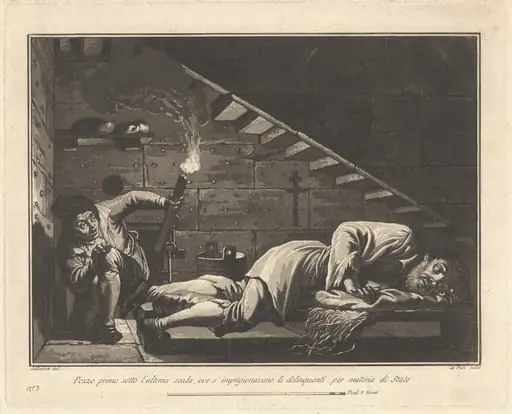 The "Well," for Violators of State Law
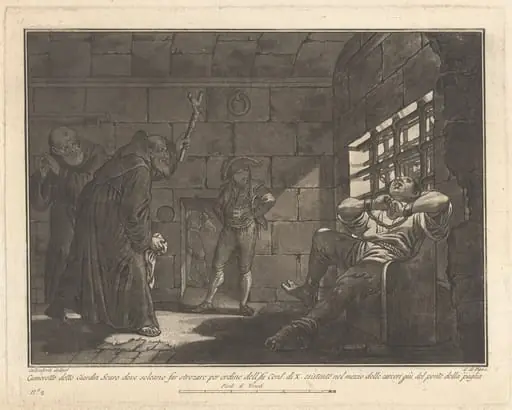 The "Giardin Scuro," for Executions by Strangling