Artwork
March of the King and Knights of the Holy Spirit in the Courtyard at Fontainebleau
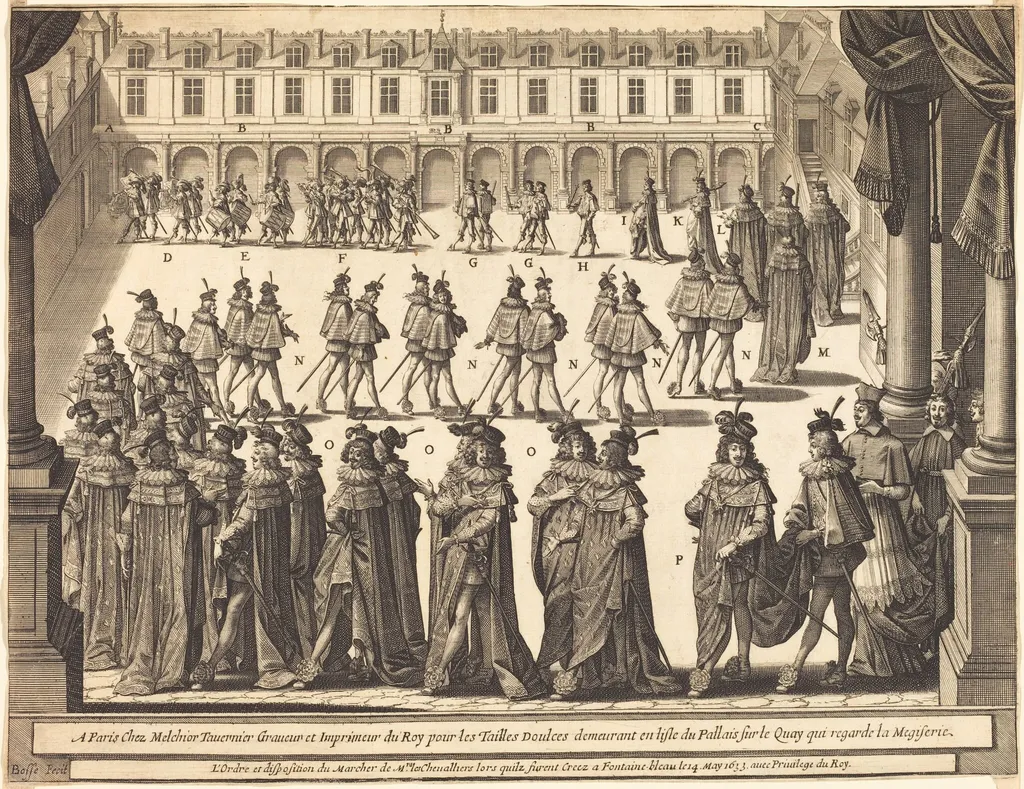
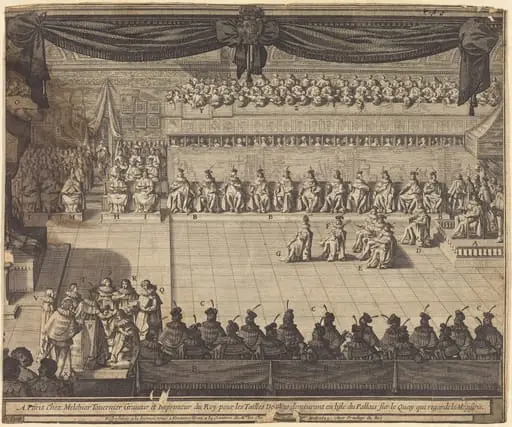
March of the King and Knights of the Holy Spirit in the Courtyard at Fontainebleau is an ink print by the Baroque artist Abraham Bosse. It dates from 1633 and is held in the collection of the National Gallery of Art.
About this work
Below, soldiers march in the middle, while men in fancy clothes—some with swords, others in robes—stand or walk in groups.
This black-and-white print shows a long line of people walking in a courtyard. At the top, a row of arches separates two buildings. Below, soldiers march in the middle, while men in fancy clothes—some with swords, others in robes—stand or walk in groups. A few figures on the right hold hats or staffs, and one person leans on a cane.
The text at the bottom names a specific event: a royal march in 1633. The artist used lines to show every fold of clothing and shadow, making the scene feel busy but orderly.
Next, look into etching to see how artists like Bosse carved these precise lines.
Overview
Created in 1633 by French printmaker Abraham Bosse, this black-and-white print captures a formal royal procession at the Château de Fontainebleau. Executed through the combined methods of etching and engraving, the work records a specific ceremonial event involving King Louis XIII and the Knights of the Holy Spirit. The composition is tightly structured, emphasizing architectural symmetry and the orderly movement of participants through the courtyard.
Subject & Meaning
The scene depicts a ritual march of the king and members of the Order of the Holy Spirit, a prestigious chivalric institution tied to royal authority. Figures are arranged in hierarchical order, with the monarch at the center of attention, surrounded by knights in ceremonial attire. The presence of staffs, swords, and ornate robes underscores the event’s political and religious significance, reinforcing the monarchy’s divine legitimacy through public display.
Technique & Style
Bosse employed fine, controlled lines characteristic of both etching and engraving to render intricate details of fabric, architecture, and posture. The density of linework creates a sense of texture and depth without color, relying on contrast and repetition to suggest volume and movement. The composition is meticulously organized, with arches framing the space and figures aligned in disciplined rows, reflecting the formality of the occasion.
History & Provenance
Produced in 1633, the print was likely made to commemorate or disseminate knowledge of a royal ceremony at Fontainebleau, a favored residence of French kings. As a professional printmaker, Bosse often documented court events for elite audiences. The work’s survival in multiple collections suggests it was circulated among nobility and collectors, serving as both record and status object in early 17th-century France.
Context
In the early 1600s, French royalty used ceremonial processions to project power and unity. The Knights of the Holy Spirit, established by Henry III, were central to court ritual. Bosse’s print aligns with a broader trend of using prints to visualize court life, bridging the gap between private ceremony and public perception. His precision reflects the growing role of print media in shaping political imagery during Louis XIII’s reign.
Legacy
Bosse’s technical mastery influenced later generations of printmakers, particularly in the depiction of architectural space and human figures in motion. While not widely known today, this work remains an important example of how printmaking served as a tool for documenting and legitimizing royal authority in pre-revolutionary France. Its detailed realism offers insight into the visual culture of the French court during a period of centralized monarchical development.
Artist & collection

Artist
Abraham Bosse (c. 1604 – 14 February 1676) was a French artist, mainly as a printmaker in etching, but also in watercolour.

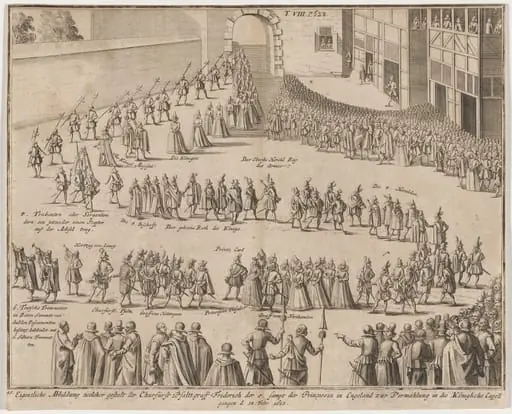 Marriage of Elizabeth to Frederick V of Bohemia, February 14, 1613
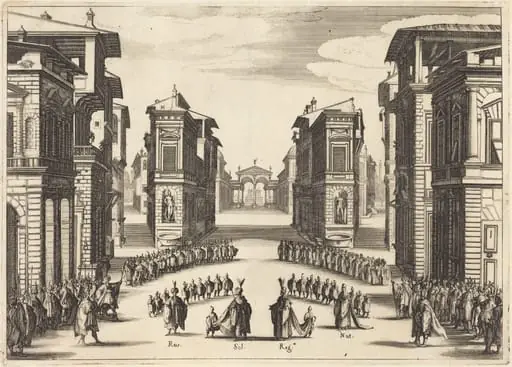 Il Solimano, Act II
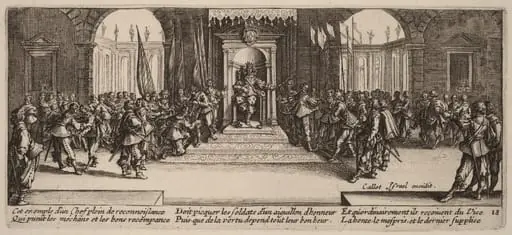 Distribution of Rewards
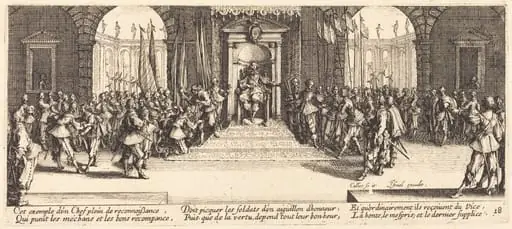 Distribution of Rewards
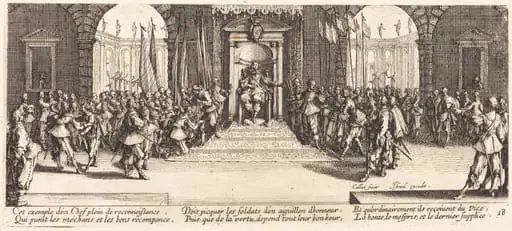 Distribution of Rewards
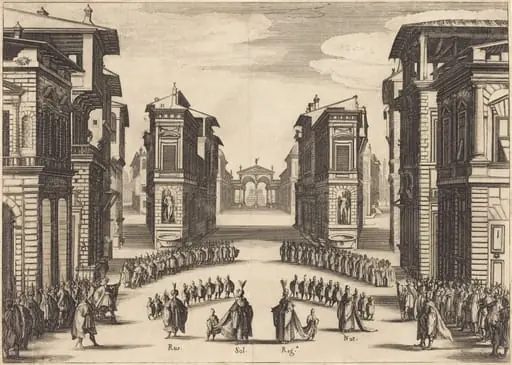 Il Solimano, Act II
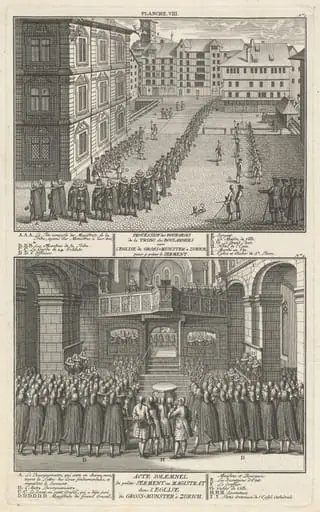 Procession des Bourgeois de la Tribu des Boulangers vers l’Eglise du Grossmunster à Zurich, pour y prêter le Serment; Acte Solemnel de prêter Serment au Magistrat dans l’eglise du Grossmunster à Zurich (Procession and Sermon at the Grossmunster)
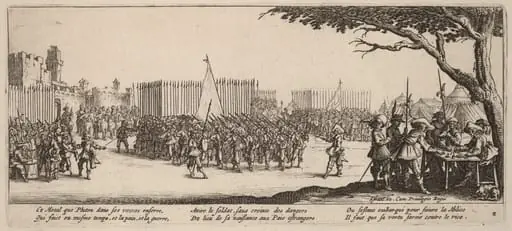 Recruitment of Troops
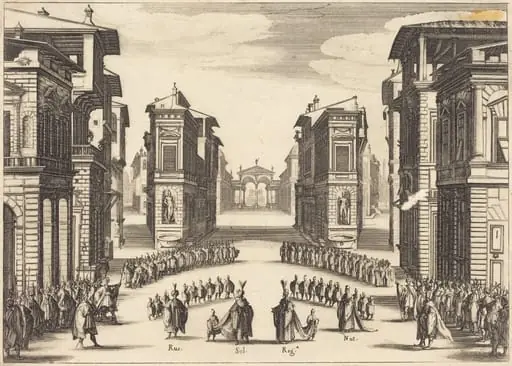 Il Solimano, Act II
 H Beard Print Collection
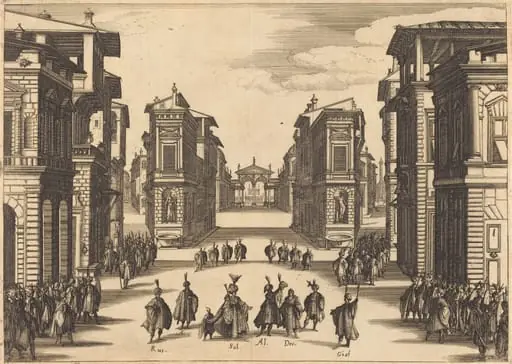 Il Solimano, Act IV
 Meeting in the Chapel at Fontainebleau