Artwork
Marriage of Elizabeth to Frederick V of Bohemia, February 14, 1613
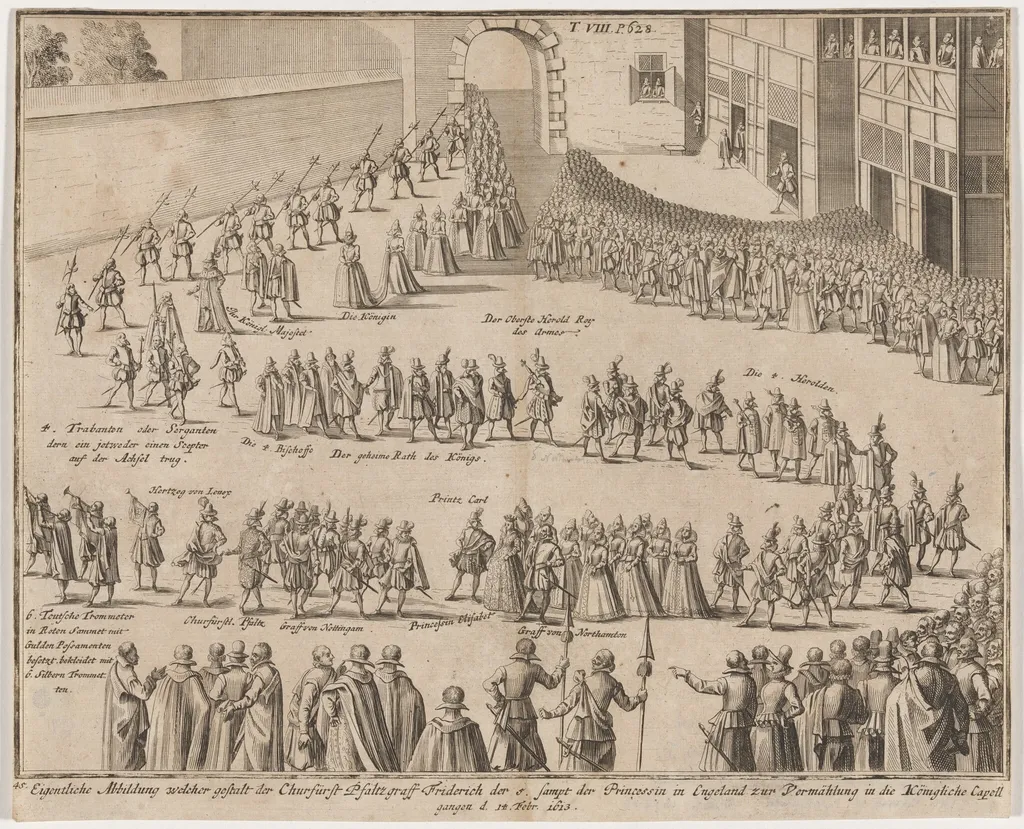
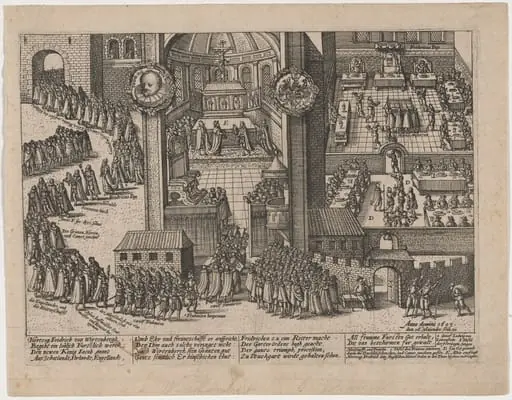
Marriage of Elizabeth to Frederick V of Bohemia, February 14, 1613 is an ink print by the Romanticist artist Unknown 19th Century. It dates from 1850 and is held in the collection of the National Gallery of Art. This 1613 engraving depicts a ceremonial scene of the marriage between Elizabeth and Frederick V of Bohemia.
About this work
Overview
The composition features a densely grouped crowd, predominantly men in hats and women in long dresses, gathered around a prominent archway.
This 1613 engraving depicts a ceremonial scene of the marriage between Elizabeth and Frederick V of Bohemia. The composition features a densely grouped crowd, predominantly men in hats and women in long dresses, gathered around a prominent archway. The atmosphere is one of anticipation, with all eyes directed towards an unseen event under the archway, set against the backdrop of a large, intricately detailed building.
Subject & Meaning
The engraving commemorates the union of Elizabeth (daughter of James I of England) and Frederick V, Elector Palatine, which took place on February 14, 1613. This marriage was a significant political alliance, reflecting the intricacies of European royal connections during the early 17th century.
Technique & Style
Executed in a style characterized by meticulous attention to detail and precise linework, the engraving showcases a high level of craftsmanship typical of early 17th-century printmaking. The detailed rendering of textures, clothing, and architecture highlights the engraver's skill.
History & Provenance
Created in 1613 to document the marriage, the engraving's provenance is not detailed here, though such works were often circulated among royal courts and nobility to disseminate news of significant alliances.
Context
While the visual note mentions Romanticism, this is a misattribution; the work's style and date align more closely with the Baroque or early 17th-century European engraving traditions, characterized by detailed realism and the depiction of grand events.
Legacy
As a historical document, the engraving provides valuable insight into 17th-century ceremonial attire, architecture, and the importance of royal marriages in European politics. Its artistic legacy lies in its representation of a precise moment in time, captured through the meticulous craft of engraving.
Artist & collection

Artist

 Frederick VI, Duke of Wurtenberg
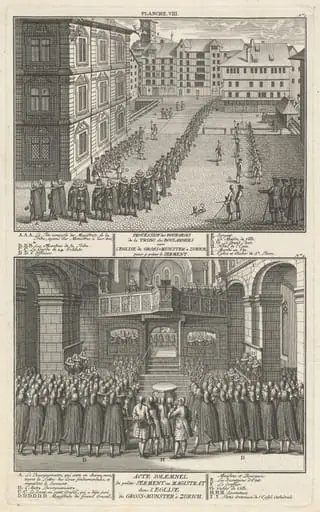 Procession des Bourgeois de la Tribu des Boulangers vers l’Eglise du Grossmunster à Zurich, pour y prêter le Serment; Acte Solemnel de prêter Serment au Magistrat dans l’eglise du Grossmunster à Zurich (Procession and Sermon at the Grossmunster)
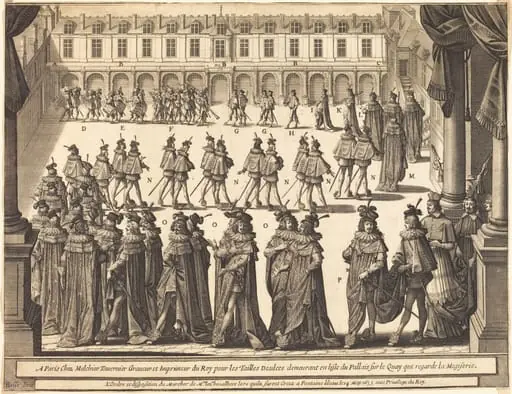 March of the King and Knights of the Holy Spirit in the Courtyard at Fontainebleau
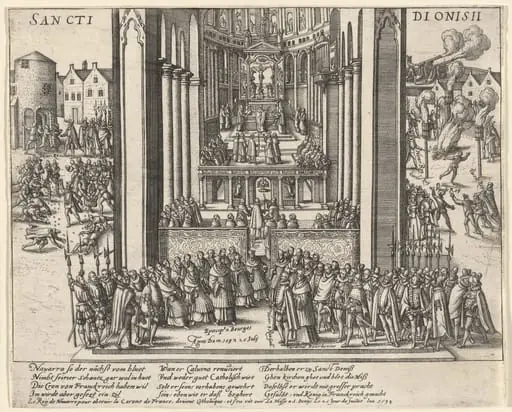 Composite Image Depicting Actions of Henri IV, King of France, upon His Abjuration of the Protestant Faith
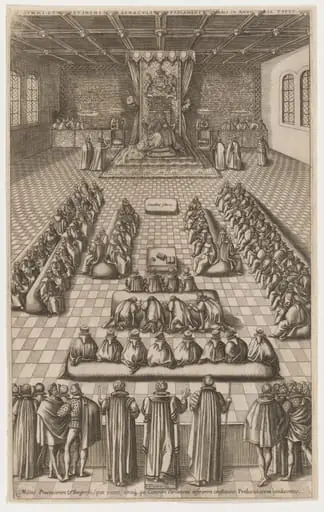 Queen Elizabeth in Parliament
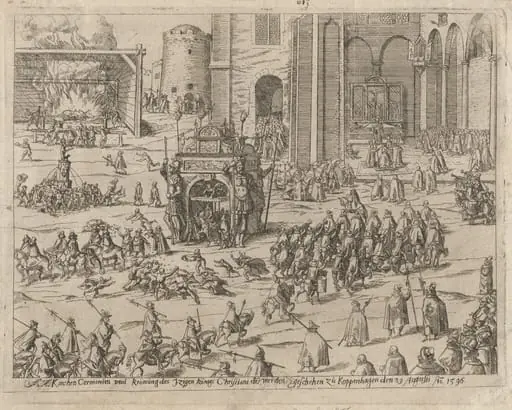 Kirchen Cermonien und Krönung des Zweigen Königs Christiani der Vierden... (Church Ceremonies and Coronation of the Eternal King Christian IV in Copenhagen on August 29, 1596
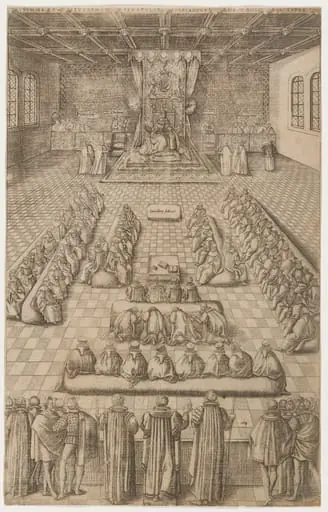 James I in Parliament
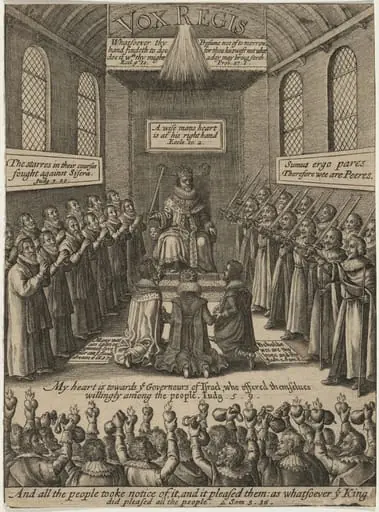 Vox Regis, by Thomas Scott
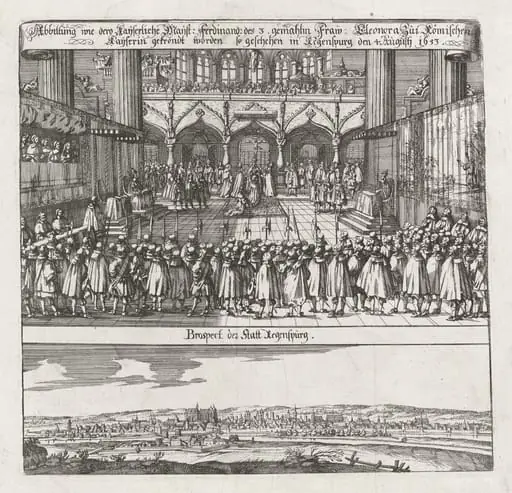 Krönung von Eleonora von Gonzaga, Gemahlin Kaiser Ferdinands III., zur Römisch-Deutschen Kaiserin ; Ansicht von Regensburg (Coronation of Eleonora von Gonzaga, wife of Emperor Ferdinand II, as Empress, with a View of Regensburg)
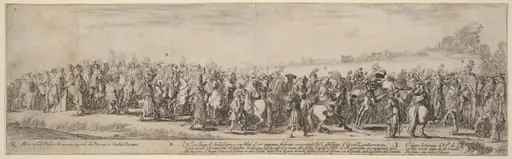 Polish Nobles, His Excellency the Ambassador, and His Carriage
![Entry into Ferrara [recto], by Jacques Callot](https://artifactworldgallery.com/img/jacques-callot--entry-into-ferrara-recto--0463f4a9351848b0-w320.webp) Entry into Ferrara [recto]
Entry into Ferrara [recto]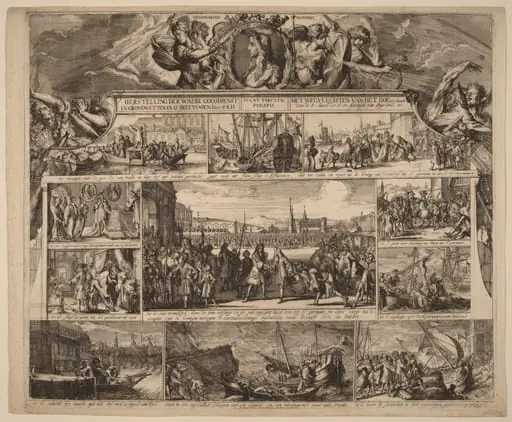 No Monarchy, No Popery