Artwork
Impressio Liborum (Printing Books)
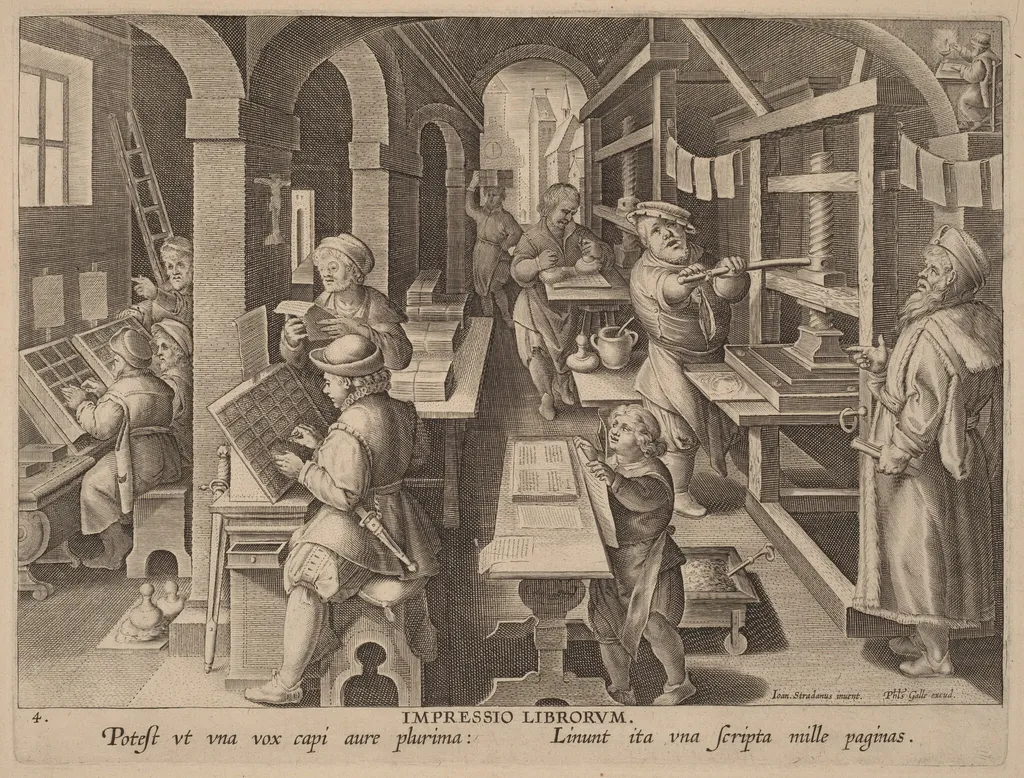
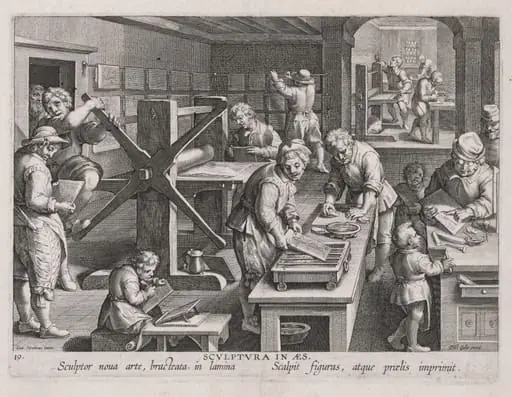
Impressio Liborum (Printing Books) is an ink print by the Renaissance artist Philip Galle. It dates from 1592 and is held in the collection of the National Gallery of Art.
About this work
Overview
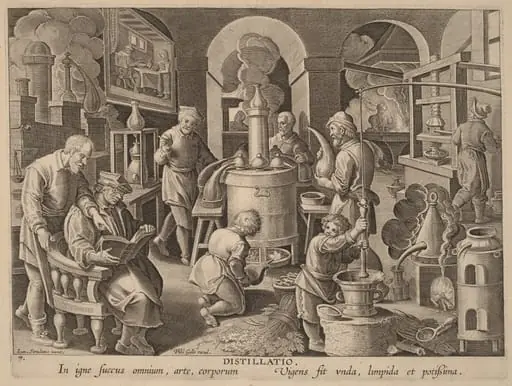
Philip Galle’s print *Impressio Liborum* is an engraving executed on laid paper, portraying a bustling book‑printing workshop.
Philip Galle’s print *Impressio Liborum* is an engraving executed on laid paper, portraying a bustling book‑printing workshop. The composition captures several workers engaged in the mechanical aspects of early modern publishing, surrounded by shelves laden with printed sheets and equipment. The image functions as a visual homage to the transformative impact of the printing press on the dissemination of knowledge.
Subject & Meaning
The scene centers on six figures operating printing tools, handling ink, paper, and presses, while a ladder leans against a wall of stacked volumes. A motto inscribed at the bottom references the efficiency of producing many pages from a single script, underscoring the print medium’s role in accelerating the spread of information and celebrating the new era of mass‑produced books.
Technique & Style
Created through the traditional engraving process, Galle incised the design onto a metal plate, which was then inked and pressed onto laid paper, yielding fine lines and a high level of detail. The monochrome palette emphasizes texture and depth, allowing the crowded interior and the intricate apparatus of the workshop to be rendered with clarity and precision.
History & Provenance
Philip Galle (c. 1537–1612), a Dutch publisher and engraver, was renowned for producing reproductive prints that replicated paintings and disseminated visual culture across Europe. *Impressio Liborum* reflects his broader interest in documenting contemporary trades and technologies, aligning with his reputation for creating informative, documentary‑type images for a learned audience.
Context
Printed in the late sixteenth or early seventeenth century, the work emerges at a time when the printing press had become an established industry in the Low Countries. The image documents the collaborative labor involved in book production, contrasting with earlier depictions that focused on solitary scribes, thereby illustrating the shift toward mechanized, collective knowledge creation.
Artist & collection
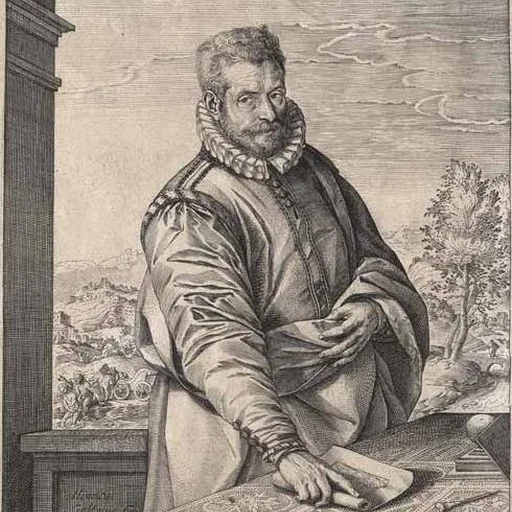
Artist
Philip (or Philips) Galle (1537 – March 1612) was a Dutch publisher, best known for publishing old master prints, which he also produced as designer and engraver. He is especially known for his reproductive engravings of paintings.

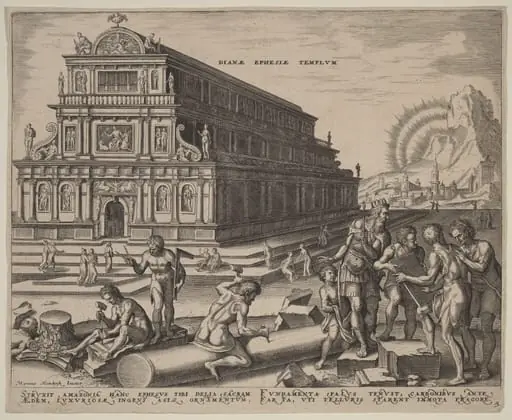 Dianae Ephesiae Templum (The Temple of Diana at Ephesus)
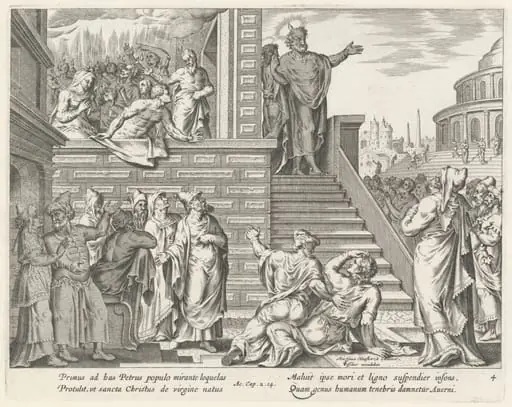 Saint Peter Speaks to the People about Christ
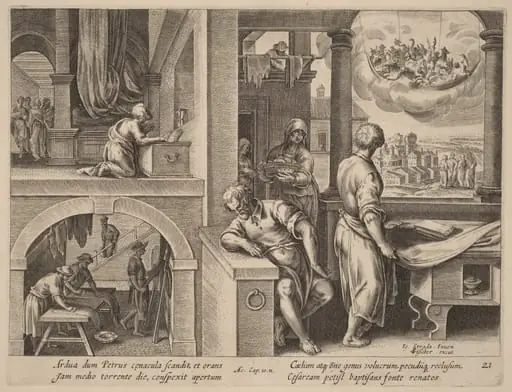 The Vision of Saint Peter
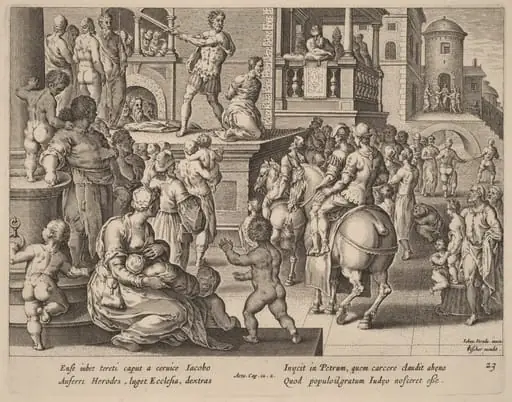 Beheading of Saint James
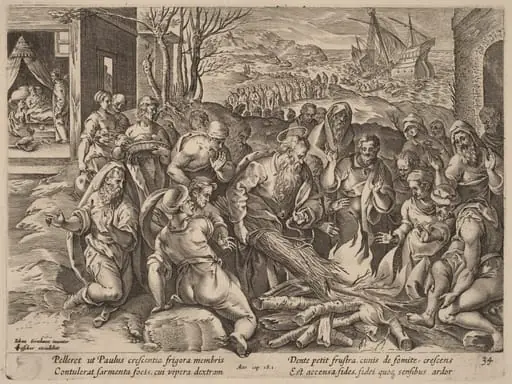 Saint Paul Shipwrecked on the Island of Melita
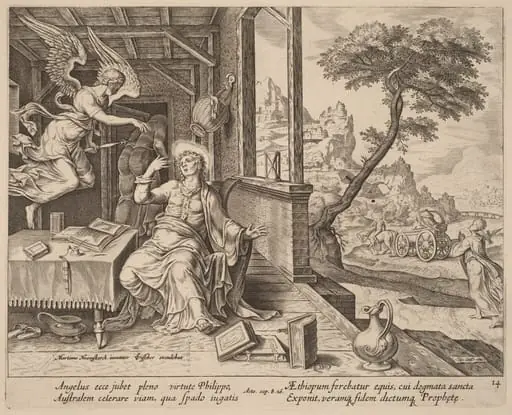 The Angel Orders Saint Philip to Accompany the Ethiopian Eunuch
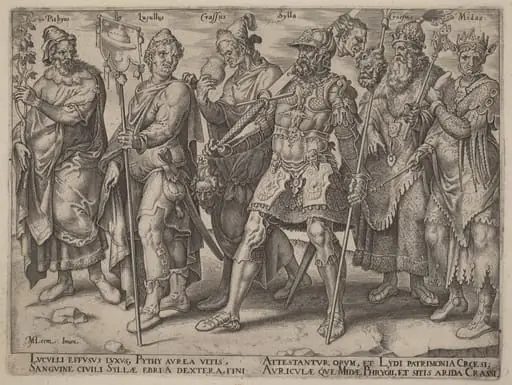 Notorious Examples of Wealth from Antiquity
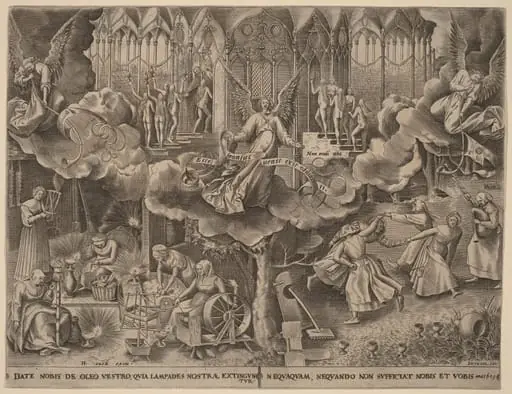
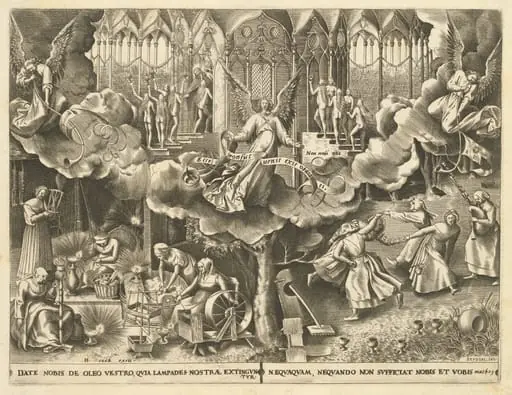 The Parable of the Wise and Foolish Virgins