Artwork
Apus
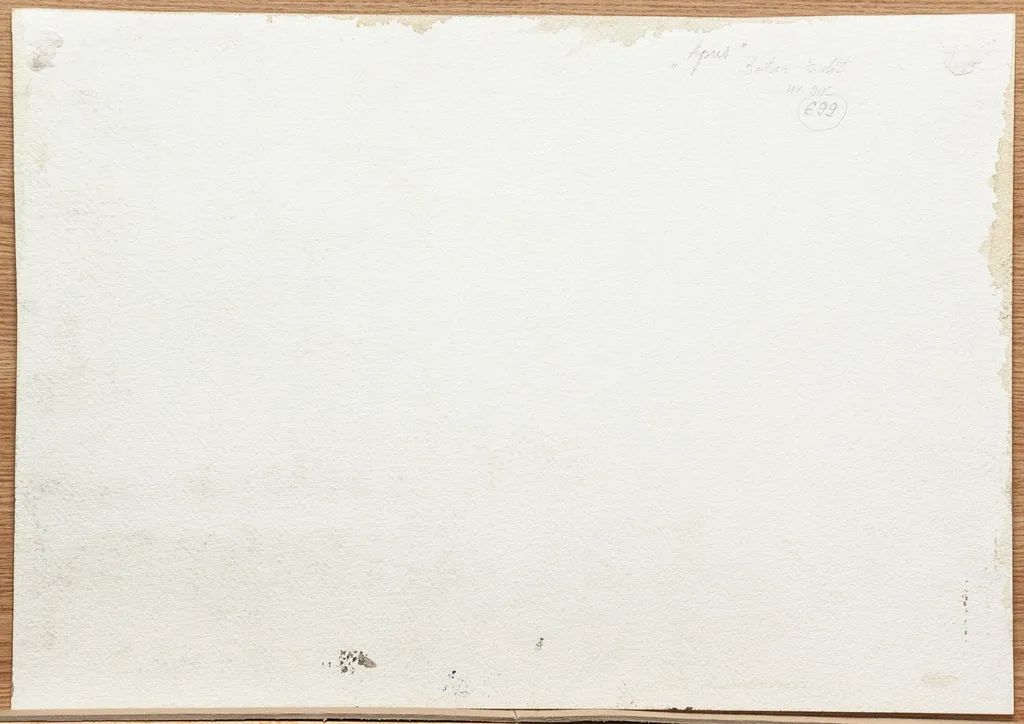
Apus is a print by Edith Botar. It dates from 1950 and is held in the collection of the Gavrila Simion Eco-Museum Research Institute Tulcea.
About this work
Overview
Its sparse appearance suggests it may have been an unfinished study or a deliberate act of reduction, leaving interpretation open to the viewer.
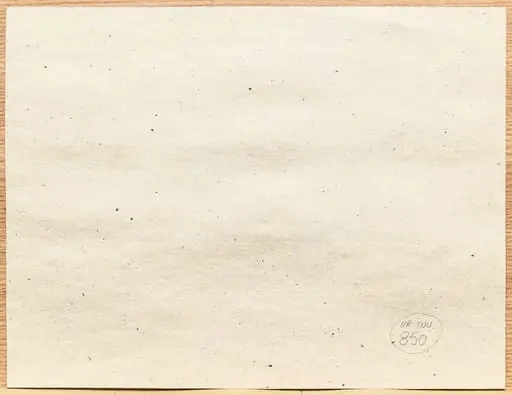
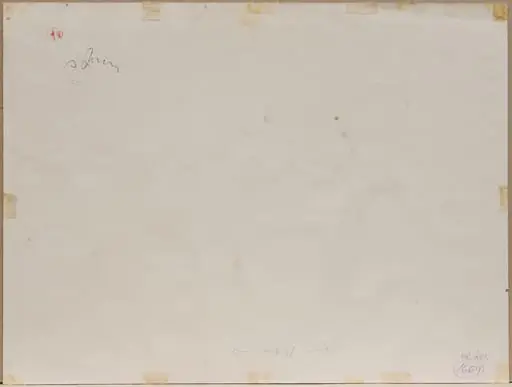
Created around 1950 by Edith Botar, this work consists of a plain sheet of paper with minimal markings, framed in wood. The surface bears faint traces, a small smudge near the center, and handwritten annotations in the upper right corner identifying the piece as 'Apus' and attributing it to Botar. Its sparse appearance suggests it may have been an unfinished study or a deliberate act of reduction, leaving interpretation open to the viewer.
Subject & Meaning
The title 'Apus'—a term historically linked to the Andean concept of a spirit or ancestral presence—hints at a conceptual or spiritual intent. The near-absence of visual form may reflect an attempt to evoke absence, memory, or the ineffable rather than depict a concrete subject. The handwritten label reinforces the personal nature of the work, positioning it as a private meditation rather than a public statement.
Technique & Style
Botar employed minimal means: pencil or ink on paper, with no visible brushwork or layered media. The faint marks and isolated smudge suggest spontaneous, tentative gestures, possibly made during a moment of reflection or experimentation. The framing in wood, though simple, elevates the object from sketch to artifact, framing emptiness as a deliberate aesthetic choice.
History & Provenance
The work entered the collection of the Museum of Ethnography, where it is preserved as part of Botar’s broader output. Its survival suggests it was deemed significant by the artist or an early collector, despite its unassuming appearance. The handwritten note, likely by Botar, provides the only direct link to its origin, offering a fragile anchor to its creation in the early 1950s.
Context
Emerging in the postwar period, this piece aligns with broader artistic inquiries into silence, void, and the limits of representation. While Botar’s other works are not widely documented, this piece resonates with contemporaneous movements that valued process over product, and suggestion over declaration—particularly in contexts where cultural or personal identity was being redefined.
Legacy
Though not widely exhibited or analyzed, 'Apus' endures as a quiet testament to the power of restraint in art. Its presence in a museum of ethnography invites reflection on how cultural meaning can be conveyed through absence, and how personal gestures, however subtle, can become historical records when preserved with intention.
Artist & collection
Artist
Edith Botar made prints and paintings rooted in the visual language of the mid-20th-century European avant-garde.
Museum
Gavrila Simion Eco-Museum Research Institute Tulcea
Continue through works from the same source collection.