Artwork
L'Ile aux Moines with Workers in a Field
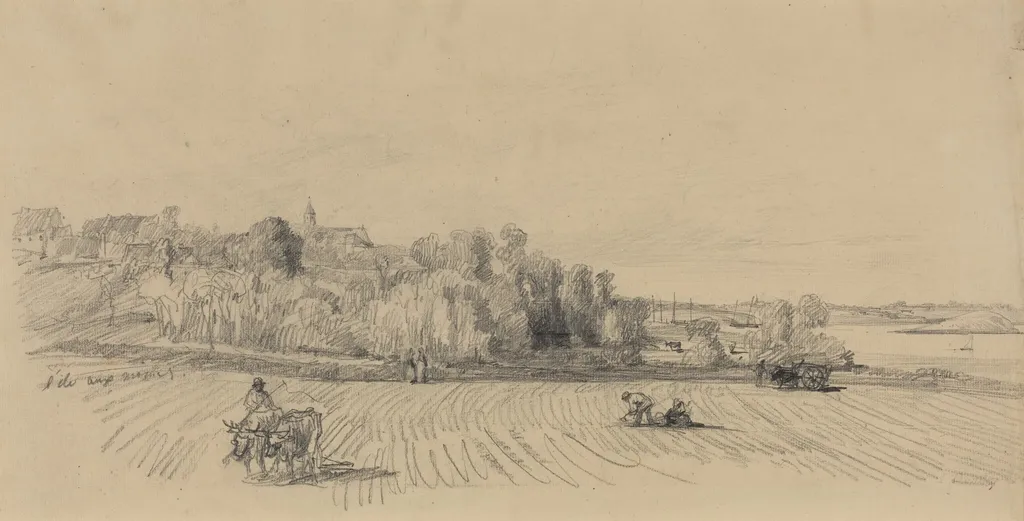
L'Ile aux Moines with Workers in a Field is a graphite drawing by the Impressionist artist Eugène Boudin. It dates from 1858 and is held in the collection of the National Gallery of Art.
About this work
Overview
L'Ile aux Moines with Workers in a Field is a graphite drawing created by French artist Eugène Boudin around 1858. It depicts a serene countryside scene on the island of Moines, contrasting with Boudin's more renowned marine subjects.
Subject & Meaning
The drawing captures a everyday moment of agricultural labor. Workers are shown tending to a field, with a nearby village and church steeple set against a coastal backdrop, emphasizing the interplay between daily life and the natural environment.
Technique & Style
Boudin employed quick, light graphite lines to convey a sense of movement and capture the play of light, resulting in a dynamic yet simple composition that feels spontaneous and observational.
History & Provenance
While specific provenance details are not provided, the work aligns with Boudin's period output, notable for its outdoor, direct observation style, which garnered acclaim from contemporaries like Charles Baudelaire and Jean Corot.
Context
This piece reflects Boudin's broader practice of documenting real-life scenes, though it diverges from his typical focus on marine and coastal subjects, instead highlighting rural labor and landscape.
Legacy
As part of Boudin's oeuvre, it contributes to the 19th-century shift towards outdoor, observational art, influencing subsequent generations of landscape and rural scene painters.
Artist & collection
Artist
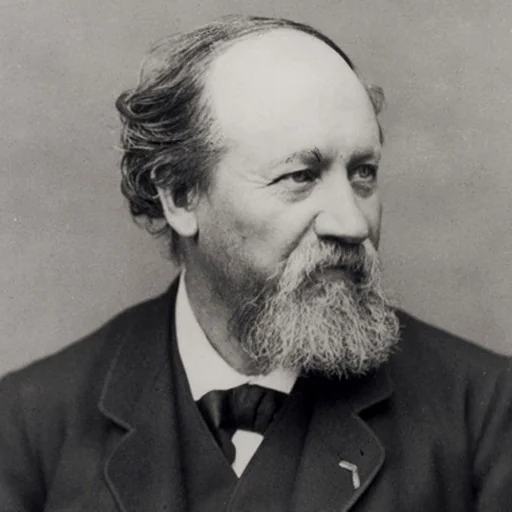
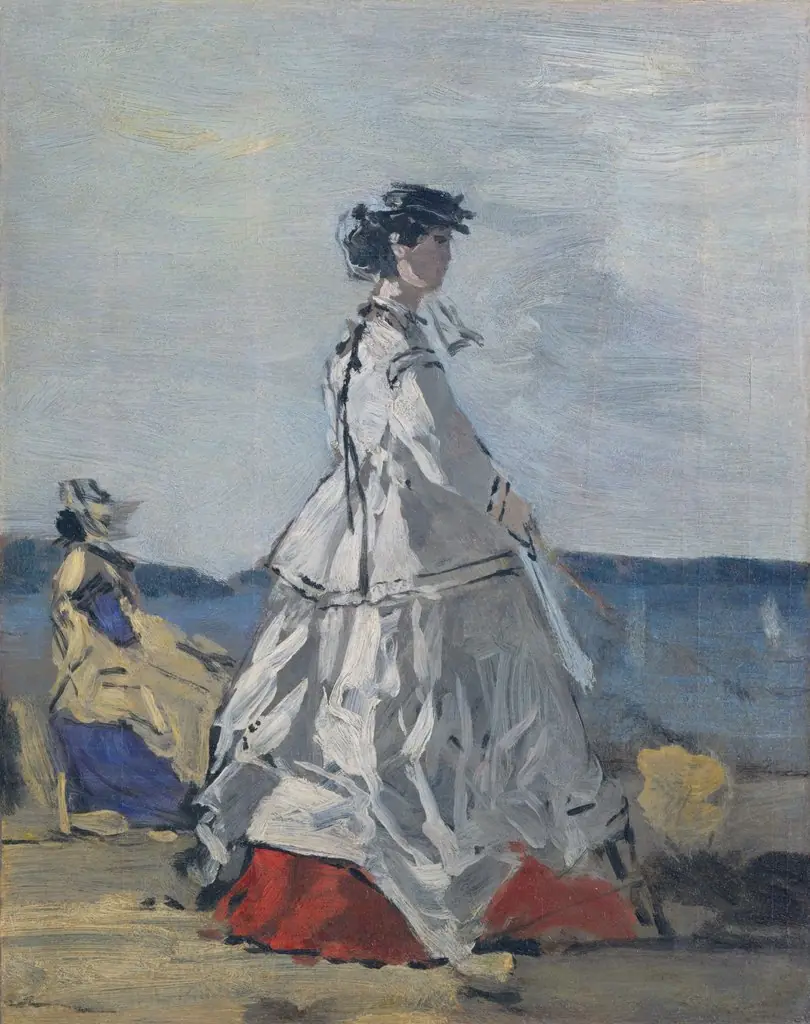
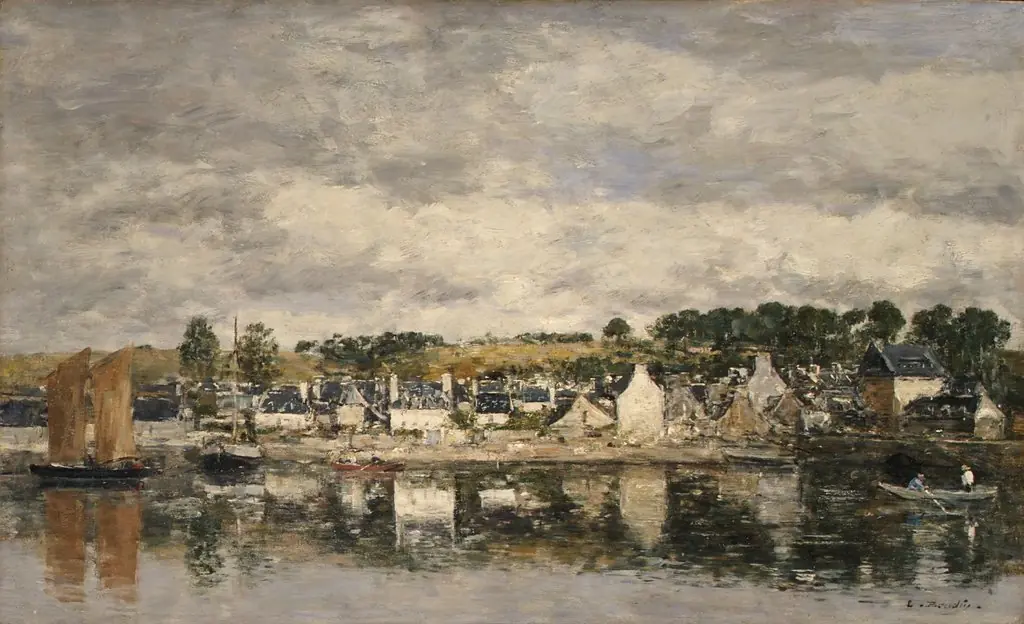
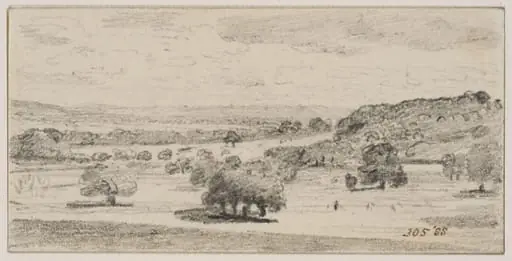
Eugène Louis Boudin (French: ; 12 July 1824 – 8 August 1898) was one of the first French landscape painters to paint outdoors.

 Wimbledon Park
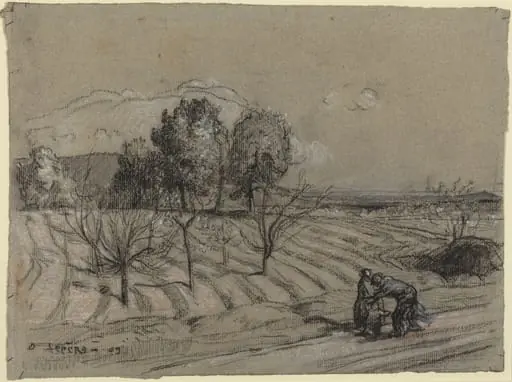 Spring
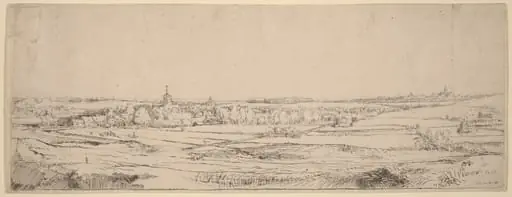 Landscape with a View Toward Haarlem (The Goldweigher's Field)
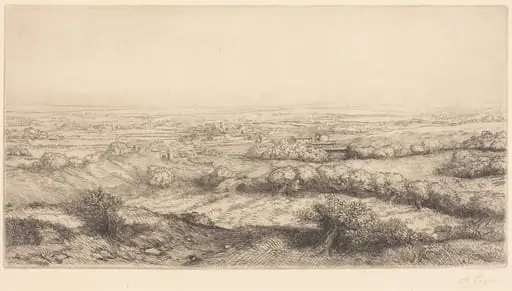 Valley in Bourgogne (Une vallee en Bourgogne)
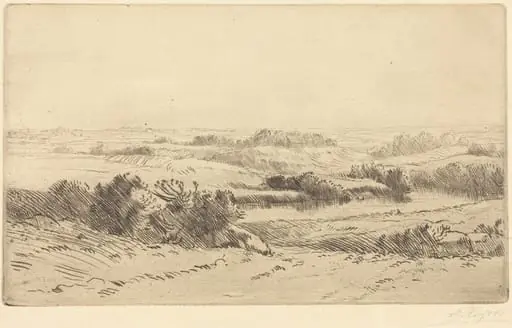 Banks of the Yanne (Les bords de la Yanne)
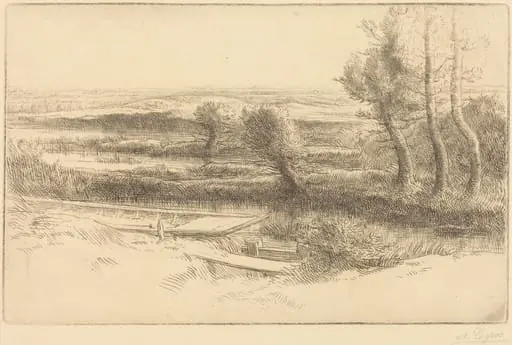 Landscape (Paysage)
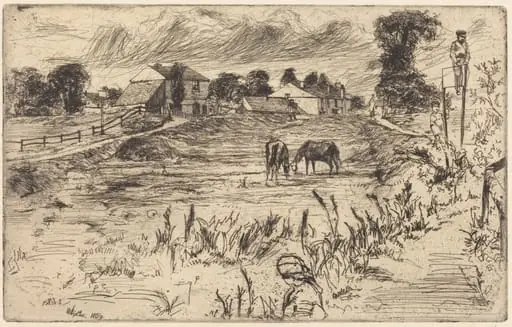 Landscape with Horses
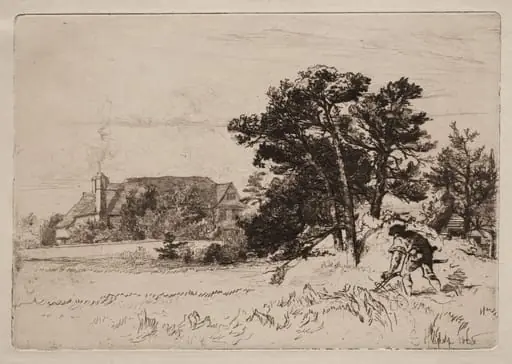 Old Willesley House
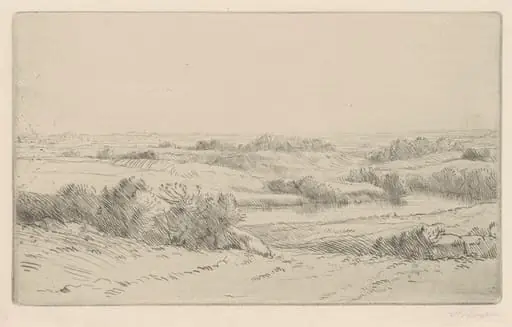 Banks of the Yanne (Les Bord de la Yanne)
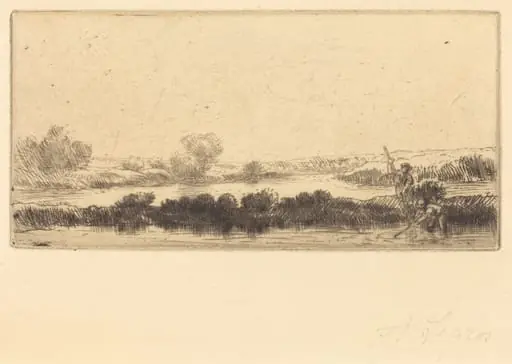 Landscape with Peat-bog; In the Marsh (Paysage des tourbieres; Dans les marais)